James Heale

James Heale

James Heale is The Spectator’s deputy political editor.

Why 2025 could redefine politics

22 min listen

Santa will have had a tricky time this year fulfilling all the Christmas wish lists in Westminster. Keir Starmer is desperately hoping for a change in the political weather, and Kemi Badenoch would like an in with Donald Trump. Ed Davey dreams that Labour’s electoral troubles will get so bad that proportional representation starts to look appealing. Nigel Farage, meanwhile, wants to avoid what usually happens with him and keep his party from falling out – or perhaps Elon Musk will give him a Christmas bonus in the form of a generous donation.

Jimmy Carter offered dignity in failure

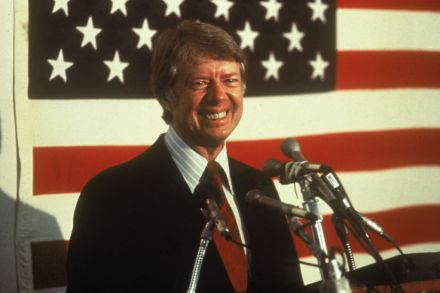
He was the peanut farmer from Georgia who rose to become the leader of the free world. Jimmy Carter, who has died at the age of 100, served as president of the United States from 1977 to 1981. While his term in office was not a success, his post-presidency – the longest in American history – was unparalleled in its public service. Uniquely among America’s modern leaders, he will be remembered more for what he did after the White House than what he did in it. Carter’s long life was characterised by service: service to country as a decorated lieutenant in the US navy just after world war two, service to God as a Baptist Sunday school teacher in his hometown of Plains, and then service to government as a Democratic state senator, governor and finally president.

Is Mandelson the right pick for US Ambassador?

14 min listen

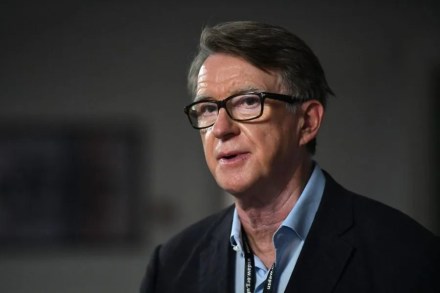
Last night we got the news that Peter Mandelson is expected to be named the next UK ambassador to Washington. Despite months of speculation, Labour held firm on making a decision until the results of the US election, and with Trump entering the White House in the new year they have gone with an experienced diplomat and a political appointment. A government source is quoted as telling the BBC: ‘The fact the Prime Minister has chosen to make a political appointment and sent Lord Mandelson to Washington shows just how importantly we see our relationship with the Trump administration.’ They cited the former Business Secretary’s ‘unrivalled political and policy experience’ and claimed he was ‘the ideal candidate to represent the UK’s economic and security interests.

Mandelson to be named US ambassador 

Peter Mandelson is expected to shortly be named the next UK ambassador to Washington. The announcement – broken by the Times – comes ahead of the inauguration of Donald Trump on 20 January. A government source is quoted as telling the BBC: ‘The fact the Prime Minister has chosen to make a political appointment and sent Lord Mandelson to Washington shows just how importantly we see our relationship with the Trump administration.’ They cited the former Business Secretary’s ‘unrivalled political and policy experience’ and claimed he was ‘the ideal candidate to represent the UK's economic and security interests.’ A formidable networker, Mandelson is regarded as a close ally of Keir Starmer’s chief of staff, Morgan McSweeney.

Starmer won’t get an easier Liaison Committee grilling than this

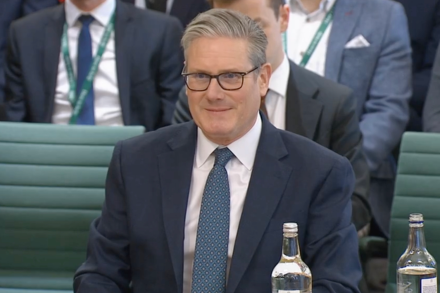
Close your eyes in today’s Liaison Committee hearing and you might have thought Rishi Sunak was still prime minister. Keir Starmer clearly shares his predecessor’s enthusiasm for this end-of-term parliamentary ritual. His smile was broad and his hands flurried as he relished the chance to show off his knowledge in front of two dozen select committee chairs. Gone are the days of the Boris Johnson era when such exchanges were characterised by mutual loathing. Such was Labour’s performance in July’s general election that the party now boasts two thirds of the select committee chairs. The likes of Meg Hillier and Liam Byrne were robust, but hardly intimidating, as Starmer handled with ease their respective questions on expenditure and business.

Chinese spy named, plus Farage meets Musk

11 min listen

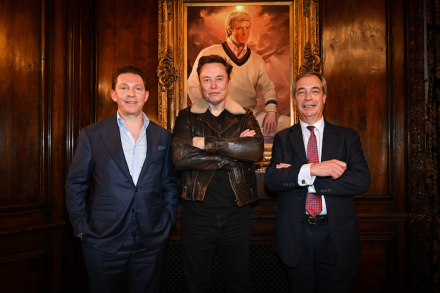
After days of speculation online, the alleged Chinese spy has been named as Yang Tegbo. This latest example of Chinese espionage has opened up a number of debates in Westminster, firstly around Labour's push to ‘reset’ its relationship with China, as well as the conversation around the Foreign Influence Registration Scheme – a number of China hawks such as IDS and Tom Tugendhat are pushing for it to be implemented sooner than summer 2025. Can Labour's China policy survive this latest wave of Sino-scepticism? Also on the podcast, it’s happened: Nigel Farage has met with Elon Musk to discuss his party’s electoral prospects. What’s the readout from their meeting? Katy Balls speaks to Cindy Yu and James Heale. Produced by Cindy Yu and Oscar Edmondson.

Rayner’s revolution enrages Reform

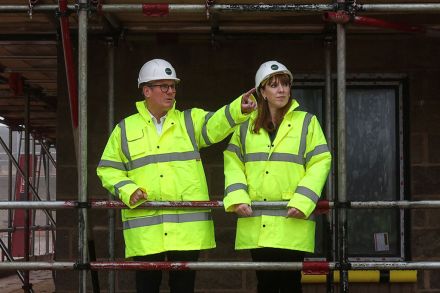
This afternoon Angela Rayner will unveil potentially the biggest shake-up of local government since the 1970s. The Housing Secretary will speak at 1:50 p.m. on her plans for a devolution ‘revolution’. All areas covered by two tiers of local government — generally district and county councils — will be asked to submit proposals to merge into single, unitary authorities. A white paper will be published after Rayner’s speech. The government’s line is that this move will save billions while simplifying how local democracy works. Local authorities will be expected to cover around 500,000 inhabitants, necessitating a likely cull of hundreds of councillors.

Could the local elections be cancelled?

14 min listen

Labour will reveal plans today to re-design local government, with district councils set to be abolished, and more elected mayors introduced across England. The plans could be the biggest reforms of their type since the 1970s, but with the May 2025 local elections set to be Labour’s first big electoral test since the general election, how will they be impacted? Local government minister Jim McMahon didn’t deny that the elections could be affected, or some even cancelled. Reform UK have called foul – what’s going on? James Heale speaks to Isabel Hardman and Katy Balls. Also on the podcast: rumours abound that a Chinese spy could be named in Parliament today – what does this story tell us about the UK’s complicated relationship with China?

Would Brexit voters really accept the return of freedom of movement?

19 min listen

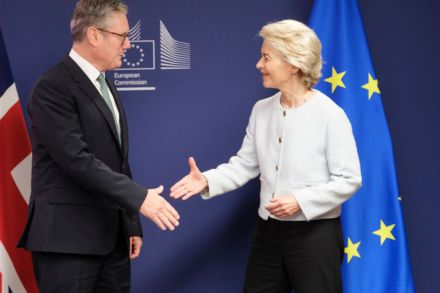
New research this week suggested that a majority of Brexit voters would accept the return of freedom of movement in exchange for access to the EU single market. The poll, conducted by the European Council on Foreign Relations (ECFR), found that 54% of Brexit voters – and 68% of all respondents – would accept this. Facing their own changing domestic concerns, how close can the UK and EU governments really get? Could Defence hold the key for collaboration? And how much is this driven by a more volatile geopolitical landscape ahead of Trump’s return as US president? James Heale speaks to Anand Menon, director of the think-tank UK in a Changing Europe, and Mark Leonard, director at the ECFR. Produced by Patrick Gibbons.

Is Rachel Reeves turning into George Osborne?

18 min listen

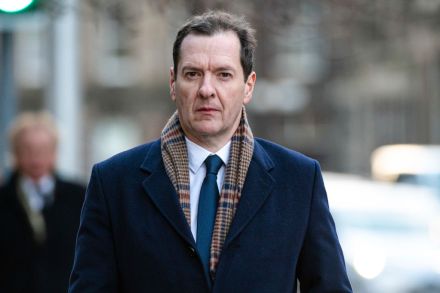
Labour is supposed to be going for growth, so Keir Starmer and Rachel Reeves will be disappointed with the news today that the economy unexpectedly shrank in October, and for the second month in a row. Rachel Reeves's mood seems to have visibly changed in the last month or so, is she having her George Osborne moment? And can she turn things around, or have the dynamics of the Labour–UK plc relationship changed irreversibly?  James Heale speaks to Katy Balls and Isabel Hardman. Produced by Patrick Gibbons and Oscar Edmondson.

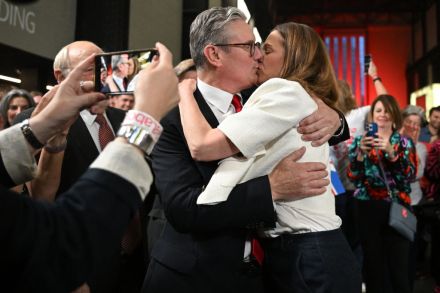
The role of political spouse has changed completely

The changing nature of political power was neatly demonstrated in Westminster yesterday. In the House of Lords, members debated Labour's plans to purge parliament of its hereditary peers. Yet down the corridor in the Commons, that same principle seems alive and well. Ten Labour MPs are descended from former members, including scions of the Benn, Kinnock and Chamberlain families. The trend is certainly a cross-party one: a tenth of all Conservative MPs have had family members serve as Honourable Members. They include Victoria Atkins, Andrew Mitchell, Jerome Mayhew and Bernard Jenkin, whose fathers served as ministers under Mrs Thatcher. But the shift between the last parliament and this is the number of ministers whose spouses are directly involved in politics themselves.

Have Labour got a grip of the prisons crisis?

12 min listen

Labour are planning to publish a 10-year plan to get on the front foot when it comes to the prisons crisis. Shifting from the previous government’s preference to run the system hot to a policy of early release and carving out more places, the headline figure is that there will be 14,000 more prison places by 2031. But the fear today is that these won’t be enough to tackle the critical lack of space in UK jails. So, will Labour’s ongoing sentencing review advocate for greater leniency for certain offenders? And will the public see that as justice being served? James Heale speaks to Katy Balls and Danny Shaw, former adviser to Yvette Cooper. Produced by Oscar Edmondson.

Gaza independents to register new party

There has been much focus in recent weeks on Reform's potential impact on British politics. But a rival quintet of insurgents has been quietly making their own plans too. In July, four independents were elected to parliament on a staunchly pro-Palestine ticket: Shockat Adam in Leicester South, Ayoub Khan who took Birmingham Perry Barr, Adnan Hussain won Blackburn and Iqbal Mohamed, victorious in Dewsbury and Batley. They have since formed an 'Independent Alliance' with Jeremy Corbyn, who stormed back in Islington North, and are referred to as 'the Gaza five.'Supporters are now understood to be stepping up their efforts to strengthen ties between members of the group.

Spending review: a return to austerity?

13 min listen

Preparations are stepping up for the government’s spending review, due in June. The Chancellor has taken a more personable approach to communicating with ministers, writing to them to outline how they plan to implement the Budget – with a crackdown on government waste and prioritising key public services. So, expect money for clean energy, the NHS, and more ‘difficult decisions’. Will Rachel Reeves’s war on waste work? How will this all go down within the Labour Party and the Cabinet? James Heale speaks to Katy Balls and Kate Andrews. Produced by Oscar Edmondson.

The new diplomacy of Nigel Farage

Nigel Farage is not generally seen as one of nature's diplomats. Yet the Reform leader is proving to be a formidable force in the international arena. This is most obvious in matters of transatlantic interest, with Donald Trump's return offering Farage the chance to try and derail Labour's Chagos Islands deal. But last week showed a different side to the Clacton MP on a sensitive overseas matter. On Tuesday, Farage met with Mandy Damari, the mother of the last remaining British captive in Gaza. Her 28-year-old daughter Emily was kidnapped on October 7 last year and has now been a hostage for 430 days. The pair were hosted in one of the Commons committee rooms, with Farage subsequently a video of support calling on David Lammy to do more for her.

How does the Syrian conflict affect Britain?

12 min listen

Following news that President Bashar Al-Assad's regime in Syria has fallen, Natasha Feroze discusses what comes next with James Heale and Michael Stephens, senior associate fellow at RUSI. What does the Syrian conflict mean for Britain? Do we need to reconsider our counter-terrorism policy? And how will Britain's historic relationship with Syria shape our path going forward?

Are the SNP exploiting Labour woes?

13 min listen

The SNP presented their budget this week in Holyrood with the news that all pensioners would receive a winter fuel allowance and a pledge to scrap the two-child benefit cap. Questions remain about how they will make this budget work financially, but it is clear that they have one eye on the 2026 Scottish Parliament elections. How could this impact Labour north, and south, of the border? And, after a torrid year for the SNP, can First Minister John Swinney turn things around?  Iain MacWhirter and Lucy Dunn join James Heale to discuss.  Produced by Patrick Gibbons.

Is immigration not a priority for Labour?

12 min listen

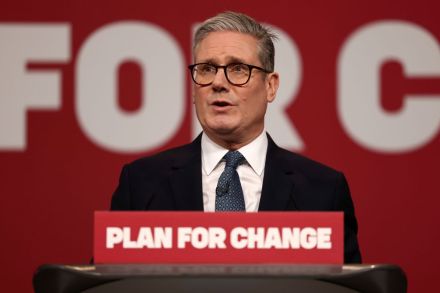
There is a feeling of deja-vu in Westminster today as Keir Starmer unveiled his plan for change and six 'milestones' (not pledges) to turn the country around. They are: raising living standards in every part of the UK; rebuilding Britain with 1.5 million homes and fast-tracking planning decisions on major infrastructure projects; ending hospital backlogs and meeting the standard of 92 per cent of patients being treated within 18 weeks; putting police back on the beat; giving children the best start in life; and securing homegrown energy and putting the UK on track to 95 per cent clean power by 2030. The problem with setting out any list of priorities is that others are conspicuous by their absence, namely immigration.

Is Starmer planning a foreign policy reset too?

18 min listen

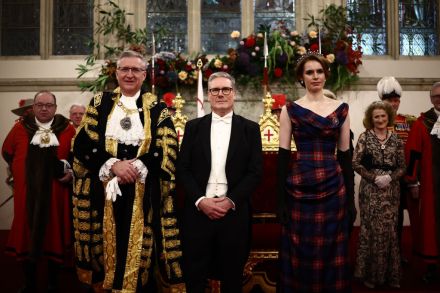
Keir Starmer is preparing to give his big reset speech on Thursday. But the more interesting address is perhaps the one he gave last night at the annual Lord Mayor’s Banquet, where the Prime Minister gave his first major speech on foreign policy. The most interesting passage saw Starmer reject the notion that Britain will need to pick sides between the US and the EU under the looming Trump presidency – particularly in the event of a trade war. How long can No. 10 afford to keep their foreign policy preferences ambiguous?  Also on the podcast, Sir Chris Wormald has been announced as the successor to Simon Case as Cabinet Secretary, in another example of Labour prizing experience when it comes to senior civil service roles.

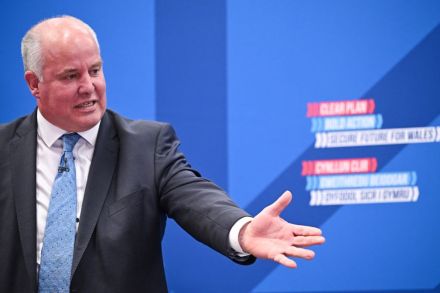
Why the Welsh Tory leader has quit

Andrew RT Davies has quit this lunchtime as the leader of the Conservative group in the Welsh parliament. It follows a confidence vote among the 16 Tory Senedd Members (MSs) who narrowly voted by nine to seven to keep him on as leader. With the group split how best to proceed, Davies has opted to fall on his sword. In a letter, he says he does so ‘with regret‘ after members of his frontbench threatened to resign last week if he did not. Davies described his position as ‘untenable’ following the vote, saying that ‘it was clear from the result that a substantial minority of the group do not support our approach’. This is despite Davies claiming it is ‘the only viable strategy available.