James Heale

James Heale

James Heale is The Spectator’s deputy political editor.

Labour’s Richard Hermer problem

13 min listen

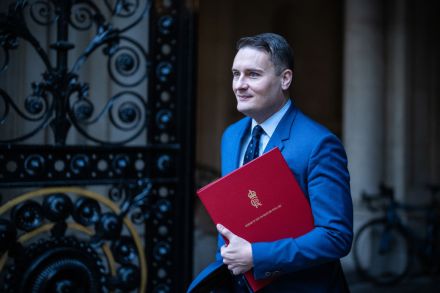
Richard Hermer was one of the surprise announcements from Keir Starmer’s first Cabinet, and one of the most controversial since. Starmer’s old pal came with some notable baggage: his former clients include Sri Lankan refugees to the Chagos Islands and ex-Sinn Féin leader Gerry Adams, as well as British-Bangladeshi Isis bride Shamima Begum. In government, Hermer has played a key role in several contentious decisions, such as the government’s withdrawal of the UK’s objections to the International Criminal Court’s arrest warrant for Benjamin Netanyahu, and his involvement in the Chagos Islands deal. And today he admitted that he has had to recuse himself ‘from certain matters’ due to potential conflicts of interest. Is the government hamstrung by Hermer?
Home Office: ‘two-tier’ police claims are an ‘extreme right-wing’ narrative

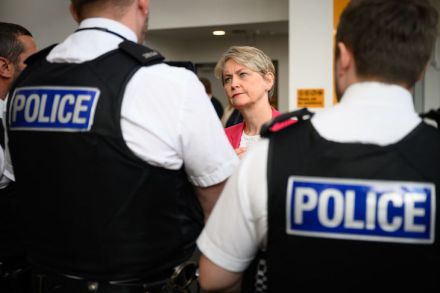
You can tell a government report has gone down badly when ministers are distancing themselves before it has been officially published. Today, it’s the Home Office’s ‘Rapid Analytical Sprint,’ commissioned in the aftermath of the Southport riots last August to determine future counter-extremism policy, that is causing trouble for ministers. The leaked document claims that fears over two-tier policing are an 'extreme right wing narrative'. It also says that grooming gangs – referred to as 'alleged group-based sexual abuse' – are an issue exploited by the far-right to stir hatred against Muslims.

What Labour and the Tories can learn from Pierre Poilievre

13 min listen

For the past fortnight, Canada’s Parliament has been empty. After Justin Trudeau resigned as Liberal leader, all the polls are pointing to the likelihood that Canada will become another example of the West’s shift to the right. This is partly due to the incumbency problem (and the ongoing internal struggles in the Liberal Party), but also the Canadian Conservatives’ firebrand leader: Pierre Poilievre. A skilled communicator who seamlessly mixes the online and offline world, Poilievre is in many ways one of the first Conservative influencers. And he has been picking up a number of admirers in the UK: Kemi Badenoch and Robert Jenrick have visited Canada to try to learn from his playbook, and Starmer seems to have been taking tips as well.

Do Reform want to bring back the death penalty?

10 min listen

Reform MP Rupert Lowe has called for the death penalty to be re-established in the wake of the sentencing of the Southport killer Axel Rudakubana. With the Assisted Dying Bill still making its way through Parliament, it has been decades since the topic of death has been so hotly debated by MPs.  Katy Balls speaks to James Heale and Isabel Hardman about the political reaction to Rudakubana's sentencing. How popular is the death penalty with both MPs and the public? Should we even be debating the issue? And could Reform officially back its return soon? Produced by Patrick Gibbons and Natasha Feroze.

John Healey hails Rolls-Royce’s £9bn nuclear submarine deal

A £9 billion deal for nuclear submarine reactors was announced this morning between the Ministry of Defence and Rolls-Royce, the biggest-ever agreement between the two. The eight-year contract, called Unity, is to design, make and provide support services to nuclear reactors that power the Royal Navy’s fleet of submarines. John Healey, the Defence Secretary, says the deal will make British reactors both greener and more efficient. A difficult battle looms between John Healey and Chancellor Rachel Reeves ‘It’s a boost to British jobs, British business. It’s a boost to our nuclear deterrent,’ he told Sky on a visit to the Rolls-Royce plant in Derby. ‘It really shows the way that defence is part of the engine for economic growth in this country.

Reeves vs Miliband

10 min listen

After last week’s bond market jitters, the Chancellor pledged to go ‘further and faster’ to improve the UK’s anaemic economic growth. It looks as though Rachel Reeves’ hunt for growth could come at the expense of Labour’s green agenda. Reeves is poised to make a series of announcements over the next month, starting with a softened stance on non-doms and approval for Heathrow’s third runway – as well as expansions at Gatwick and Luton airports. The move indicates a shift in priorities, with economic growth taking precedence over climate targets. Ed Miliband, the Energy Secretary, is believed to be privately opposed to the airport expansion scheme. What happened to the ‘green Chancellor’?

How Pierre Poilievre led Canada’s Conservatives back from the wilderness

Ottawa For the past fortnight, Canada’s parliament has been empty. When Justin Trudeau resigned as Liberal leader, he announced a prorogation so his party could focus on a two-month succession battle rather than the business of governing. Excited Tories see the empty assembly as symbolic of the void in national leadership. They are confident their party will soon fill it. If they do soon manage to end a decade of Liberal rule, it will chiefly be thanks to Pierre Poilievre, who has been Conservative leader since 2022. There are few party leaders who excite British Conservatives more: both Kemi Badenoch and Robert Jenrick have visited Canada to try to learn from his playbook.

Can Reeves get Heathrow’s third runway off the ground?

After last week’s bond market jitters, the Chancellor pledged to go ‘further and faster’ to improve the UK’s anaemic economic growth. An early test of that resolve looks now to be looming in the familiar form of a third runway at Heathrow airport. As I reported earlier this month, Reeves is poised to make a swathe of announcements intended to increase economic growth in a speech later this month. Among them includes giving a political green light to Heathrow’s third runway and an expansion of Gatwick and Luton airports, according to Bloomberg. Successive governments – of various stripes – have ducked Heathrow expansion for decades, with the airport’s last remaining diagonal runway being decommissioned in 2003.

Why wasn’t the Southport killer stopped?

13 min listen

At a press conference this morning, Keir Starmer moved quickly to announce a public inquiry into the Southport murders. This comes after Axel Rudakubana pleaded guilty to murdering three girls in a knife attack at a Taylor Swift–themed dance class last year. The Prime Minister promised that ‘no stone’ will be ‘left unturned’ when it comes to asking the ‘difficult questions… unburdened by cultural or institutional sensitivities’. Chief among these difficult questions is why – when Rudakubana had been referred to the counter-extremism Prevent programme three times – he wasn’t stopped? And is there any substance to claims by Nigel Farage of a ‘cover-up’? Katy Balls speaks to James Heale and Danny Shaw, former adviser to Yvette Cooper.

Trudeau’s assassin could be Canada’s next leader

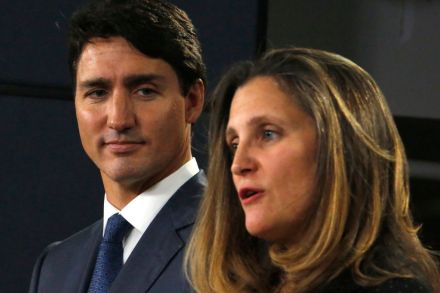
Less than 24 hours after Mark Carney's launch, Chrystia Freeland announced her bid to be the next Liberal party leader of Canada. The former finance minister – whose resignation last month triggered Justin Trudeau's downfall – put out a pithy six word statement this morning. 'I'm running to fight for Canada', it said, simply. She intends to officially launch her campaign on Sunday, having already gained public endorsements from Mark Holland and Diane Lebouthillier. The leadership field has narrowed considerably this week as possible contenders Christy Clark, Dominic LeBlanc, Francois Phillipe Champagne and Mélanie Joly all ruled themselves out. It leaves Freeland and Carney as the only two serious candidates for the post of Canada's next Prime Minister.

Mark Carney launches bid to succeed Trudeau

After nearly a decade of speculation about his political aspirations, Mark Carney has today formally declared that he wants be Canada's next Prime Minister. The former Bank of England Governor kicked off his campaign to be the next Liberal party leader at a community centre in Alberta, promising to build the fastest-growing economy in the G7 if elected. 'I'm doing this because Canada is the best country in the world, but it still could be even better,' he said. Carney was tipped as one of the first names to replace Justin Trudeau when the latter announced his resignation timetable ten days ago. He teased a bid on Tuesday when appearing on the Daily Show with Jon Stewart, suggesting that for the Liberals to win an election 'in a situation like this, you need change.

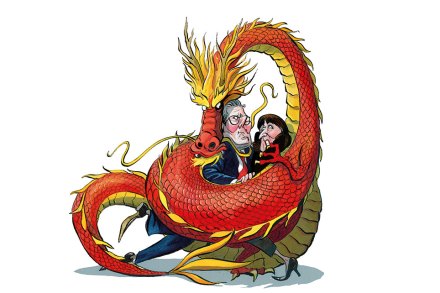
Why Labour is cosying up to China

It used to be said that parties were Eurosceptic in opposition but Europhile in government. The same might be true of China too. Under Keir Starmer’s leadership, Labour initially adopted a Sinosceptic stance, strongly condemning the Hong Kong crackdown and promising to recognise China’s treatment of the Uyghurs as genocide. Yet in office, they have abandoned such postures and instead sent various ministers out East. The latest to go and tout for trade is Rachel Reeves, in her never-ending quest for growth. For the first time in five years, the Chancellor will hold an Economic and Financial Dialogue between China and the UK tomorrow in Beijing.

Can Musk oust Starmer?

11 min listen

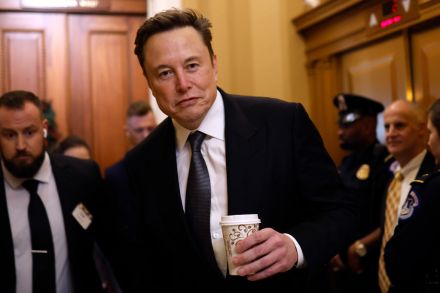
The war between Labour and Elon Musk continues to rage. Today the Financial Times reports that the tech tycoon has had discussions about ousting Keir Starmer before the next election, while the Mirror holds a report that the Home Office has been assessing Elon Musk's tweets as a part of their efforts to tackle online extremism. Cindy Yu talks to Katy Balls and James Heale about whether Musk can really threaten Starmer's position. Produced by Cindy Yu.

Borrowing costs soar – will Rachel Reeves have to go back on her word?

12 min listen

Long term borrowing costs for the government have reached levels not seen since 1998, and 10 year UK gilts are now at their highest point since the 2008 financial crash. Both surpass the levels seen during the Liz Truss premiership - and this hasn't gone unnoticed by the former PM. A set of similar circumstances, but could the consequences be the same? What are the economic - and political - challenges facing Keir Starmer and Rachel Reeves? James Heales speaks to Kate Andrews and Katy Balls to unpack the latest tranche of economic data. Produced by Patrick Gibbons.

Farage vs Musk

18 min listen

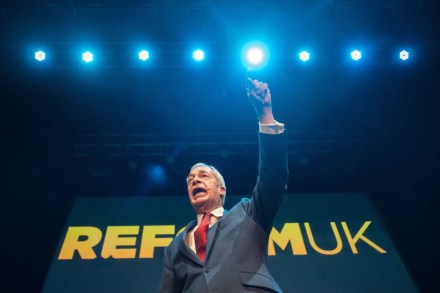
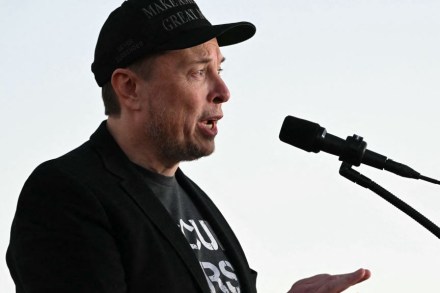
How do you solve a problem like Elon? We have spent much of the past week talking on the podcast about Labour vs Musk, and the tech billionaire’s vocal criticism of how the government is dealing with the grooming gang scandal. But Reform UK are having their own issues with the volatile owner of X. There have been questions over whether Musk could still bankroll the party after he called for Farage to step down following a disagreement over Musk’s support for the far-right activist Tommy Robinson – but in the last 24 hours, it seems the tech billionaire has rowed back a little on his stance and has returned to reposting Farage’s tweets.

Grooming gang row overshadows Starmer’s big NHS speech

17 min listen

In a speech this morning, the Prime Minister unveiled his plans to tackle the NHS backlog and hit back at comments Elon Musk has made regarding grooming gangs, the government's response to them, and about the Prime Minister’s own role in their prosecution. Whilst the Prime Minister's speech was plagued by the familiar platitudes about the NHS it was shortly followed by the government's NHS elective recovery plan, which does include some interesting proposals to shift healthcare away from hospitals – for example, giving cash incentives to GPs each time they consult with a specialist to see if there is an alternative to hospital visits. Is this plan the miracle cure the NHS needs? And will Starmer's robust response to Elon Musk finally put their spat to bed?

Keir Starmer defends his record on grooming gangs

Keir Starmer’s speech this morning served as a neat microcosm of his six-month premiership. There he was, all primed to explain his plans for cutting NHS waiting lists – and yet he ended up having to talk about grooming gangs. After a frenzied week in British politics, it served as the latest example of a carefully-crafted set piece occasion being hijacked by events overseas. Labour has sought to avoid confrontation with Elon Musk in the past six months, downplaying his increasingly vocal criticisms of the government on X. But after the Tesla billionaire attacked Starmer’s handling of child rape cases when he was director of public prosecutions, the Prime Minister clearly decided that silence was no longer an option. In his words today, ‘a line has been crossed’.

Justin Trudeau’s rule could end this week

The next 48 hours could well spell the end of Justin Trudeau. The Canadian Prime Minister – the last major western leader of the pre-Trump era – is reportedly considering resignation, ahead of a key national caucus meeting on Wednesday. Over Christmas, a growing chorus of Liberal MPs from across the country have been issuing calls for Trudeau to quit. The Globe and Mail newspaper quotes sources suggesting that he will make an announcement before the Wednesday meeting to avoid the appearance that he was forced out by Liberal opponents. Still, no one should be in any doubt: after almost ten years in office, Justin Trudeau’s luck may have finally run out. With an election due by October at the latest, Canadian Liberals are looking nervously at the polls.

Elon Musk and the outrage about Britain’s grooming gangs

19 min listen

The grooming gangs scandal is back in the news this week after Safeguarding Minister Jess Phillips rejected calls for a government inquiry into historic child abuse in Oldham, prompting a conservative backlash. Robert Jenrick, the Shadow Justice Secretary, called it ‘shameful’; Liz Truss, the former Prime Minister, labelled Phillips’s title ‘a perversion of the English language.’ Even Elon Musk, the owner of Twitter/X, has piled in, arguing that the Home Office minister ‘deserves to be in prison.’ As the grooming gangs story continues to gather traction, will we see an inquiry? And how should we assess the Home Secretary’s success six months into the job? Cindy Yu speaks to James Heale and Danny Shaw, a former adviser to Yvette Cooper.

Is Labour serious about social care reform?

14 min listen

Happy New Year and – of course – happy new long-term social care plan. Not only has Labour announced a ‘longer-term’ solution to a problem the party itself has acknowledged is urgent by setting up a commission that won’t report until 2028, but it has also taken steps to make that reform even harder to realise by saying it is looking for a ‘cross-party solution’. Should we interpret this as Labour kicking the can down the road? And is Labour developing a reputation for shirking its responsibility when it comes to the most vulnerable in society? Oscar Edmondson speaks to Isabel Hardman and James Heale. Produced by Oscar Edmondson.