James Heale

James Heale

James Heale is The Spectator’s deputy political editor.

Inside Team Kemi’s plan for power

In elections, as in wine, lesser years can still produce good vintages. Tony Blair and Gordon Brown first won their seats in 1983, the year of Labour’s ‘longest suicide note in history’; William Hague’s landslide defeat in 2001 gave us David Cameron, George Osborne and Boris Johnson. The 2017 election is not recalled fondly by many Conservatives. Yet it produced the cluster of ambitious Tories running the party today. Ahead of the party conference in October there will be a steady drumbeat of announcements Kemi Badenoch was marked for the top as soon as she entered parliament. ‘It was clear from the start she wasn’t there to make up the numbers,’ says a fellow member of the 2017 intake. She quickly made allies: Lee Rowley, Alex Burghart, Julia Lopez and Rachel Maclean.

Spring Statement or ‘Emergency Budget’?

12 min listen

The question that everyone in Westminster wants answered is what will actually be included in next week’s Spring Statement. Previously, the Spring Statement wasn’t looking like much to write home about – little more than an update. But with the economy taking a turn for the worse and her fiscal headroom narrowing, it has taken on renewed importance for Rachel Reeves, with the opposition trying their best to brand it as an ‘Emergency Budget’. What does Reeves need to do to calm the markets? Also on the podcast, Pensions Minister Torsten Bell gave an interesting interview to Newsnight last night, defending the government’s welfare reforms. Where are we with the fallout from Liz Kendall’s benefit crackdown? James Heale speaks to Isabel Hardman and Katy Balls.

Will Kemi’s anti-net zero campaign bother Labour?

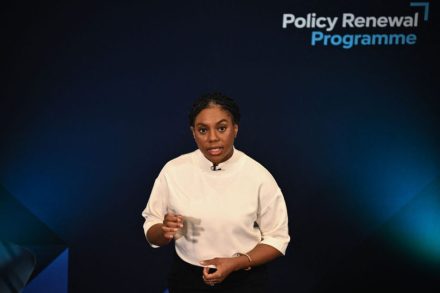
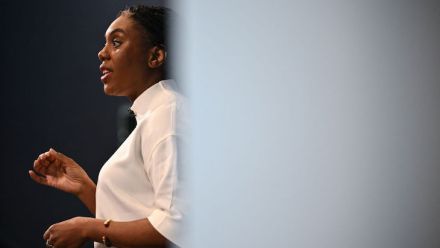
The people’s republic of Holborn and St Pancras is not exactly fertile Tory territory. But it was in a swanky office in Keir Starmer’s north London patch where Kemi Badenoch chose to make her big energy speech this morning. Rather than dwell on her long-awaited policy commissions, the Conservative leader spent the bulk of her speech explaining her decision to drop the party’s commitment to net zero by 2050. In something akin to a Tory TedTalk, she bestrode the stage, clicking through various slides, replete with charts explaining how the UK came to have ‘the highest electricity bills in the developed world.’ Virtually every element of current UK policy making in this field came under attack. Wind farms? Dependant on Chinese production from coal-fired power stations.

Why Kemi Badenoch is abandoning Net Zero

There are two big speeches being made in London today. Shortly after midday, Liz Kendall will rise in the House of Commons to explain how she intends to reform the welfare system. But before that, Kemi Badenoch will launch her policy commissions to put together a credible Conservative platform in 2029. Cutting benefits or making the Tories electable: one wonders which woman has the harder task. The challenge of opposition is always in getting your message heard. So it is to the credit of the Tory spinners then that they have managed to splash both the Mail and Telegraph with Badenoch’s claim that ‘Net Zero by 2050 is impossible.

Badenoch lays claim to Thatcher’s legacy

It is a hundred years in October since Margaret Thatcher's birth – so what Conservative leader would miss the chance to lay claim to the Iron Lady's legacy? Kemi Badenoch was up this afternoon as the keynote speaker at the Centre for Policy Studies' conference at the Guildhall in London. The theme of this year's annual Tory shindig has been 'remaking conservatism' – and Badenoch clearly sees an opening to remake conservatism in her image. Her remarks this afternoon were brief but kept to the pattern of her leadership bid last summer. Badenoch dubbed Mrs Thatcher 'the leader who saved our country: she didn't arrive in office to manage decline; she came to reverse it.

Can the Tories save their education legacy?

13 min listen

Bridget Phillipson's schools bill is back in the Commons today. The scope of the legislation is twofold: firstly, looking at the welfare of children in schools and secondly at fundamentally changing the landscape of secondary education by doing away with academies (and with it the legacy of the previous Conservative government on education). The plan has been read by many – including former head of Ofsted Amanda Spielman, who joins today's podcast – as Labour pandering to the unions and perhaps even prioritising the adults (union members) over the children. Amendments to the bill will be debated this afternoon, including a Tory amendment that would ban phones in schools, although it doesn't seem that Labour is in the mood to make any concessions. What is motivating Labour?

Can Dale Vince make Labour go even greener?

Dale Vince has donated millions of pounds to Labour, but the green energy tycoon is only just getting started in politics. Having helped remove the Tories from power last summer, Vince is turning his attention from party donations to offering ministers a ready-made policy platform instead. The 63-year-old wants to champion an eco-agenda for Keir Starmer’s government via his Green Britain Foundation. The six-man outfit works to apply ‘green principles to transport, food, sport, telecoms, jewellery’ – and now the world of Whitehall too. When we speak over Zoom, Vince is critical of Labour’s decision to press on with both carbon capture and the Sizewell C reactor.

Starmer insists ceasefire coalition has momentum

Following Thursday's big speech on public sector reform, Sir Keir Starmer has since turned his attention back to foreign affairs. This morning the Prime Minister hosted a conference call with European and Commonwealth counterparts to discuss support for Ukraine. The 'coalition of the willing' met to discuss their response to Vladimir Putin's contemptuous dismissal of their efforts on Thursday night. With the Russian President seemingly reluctant to entertain an imminent ceasefire, today's 'virtual summit' was about maintaining a united front for the pre-negotiations. In his remarks, Starmer told coalition leaders that 'what this week has shown' is that Ukraine is 'the party of peace' as President Zelenskyy is the one who 'has committed to a 30-day unconditional ceasefire.

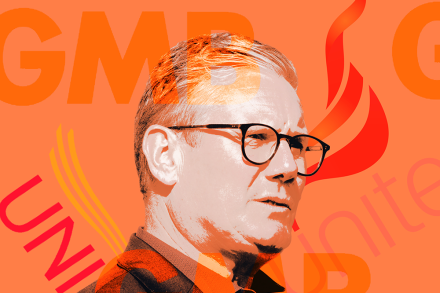
Is Keir Starmer a Tory?

19 min listen

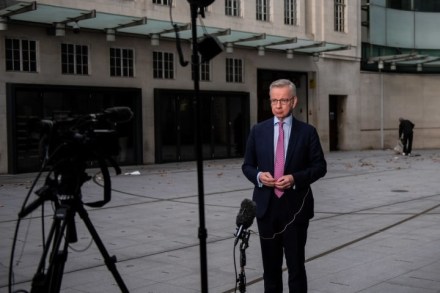
Slashing the winter fuel allowance, maintaining the two child benefit cap, cutting international aid, cutting the civil service, axing NHS bureaucracy, possibly slashing welfare expenditure... you'd be forgiven for thinking the Conservatives were in power. But no, these are all policies pursued by the current Labour government. So on today's Saturday Shots Cindy Yu asks Michael Gove and James Heale, is Keir Starmer a Tory? While Michael admits to giving Starmer a 'painful' two cheers, he does say there is historic precedent for Labour governments enacting right-leaning measures: from Jim Callaghan's migration policies to the economic ones of Ramsay MacDonald. How has Starmer got away with it? And what does his premiership of pragmatism tell us about the future direction of Labour?

The UK economy is shrinking – how much pressure is Rachel Reeves under?

14 min listen

New figures from the Office for National Statistics show the UK economy unexpectedly shrunk by 0.1% in January. This comes only a few weeks after the Chancellor's pro-growth speech, and a fortnight ahead of her Spring Statement. Just how much pressure is Rachel Reeves under? And how likely is it that Labour will change their approach? Economics editor Michael Simmons and deputy political editor James Heale join Patrick Gibbons to discuss, as well as a look ahead to next week's expected announcement on reducing the welfare bill. Produced by Patrick Gibbons.

Why Labour are abolishing NHS England

10 min listen

It was widely briefed that the main focus of Sir Keir Starmer’s speech in Yorkshire today was his plan to do away with Whitehall red tape. What was kept under wraps was the Prime Minister’s plans for the NHS – specifically to scrap NHS England. In a bid to tackle bureaucracy in the health service, the PM this morning told reporters that the ‘arms-length NHS’ needed to go – adding that the move will ‘shift money to the front line’ and free the health service to ‘focus on patients’. What's the point of abolishing NHS England? And are Labour 'doing the things that the Tories only dreamed of'?  Lucy Dunn speaks James Heale and Michael Gove.  Produced by Oscar Edmondson and Megan McElroy.

The trouble with Starmer’s plan for change

At his speech at a Hull business campus this morning, Keir Starmer was introduced by a man who proudly noted that the site was home to various brands, including Durex. So it was fitting that 'protection' was a constant theme throughout the Prime Minister's speech on his planned reforms to the civil service – and his announcement that NHS England is to be scrapped. 'National security for national renewal', the PM promised, stressing the need to have an 'active state' to deal with challenges both abroad and at home. The beginning of the Ukraine war gave Boris Johnson's premiership purpose in 2022; the conflict's looming close offers Starmer a narrative for overhauling warfare and welfare. It was a critique which will have many Tories nodding along in agreement.

What will Nicola Sturgeon’s legacy be?

12 min listen

Nicola Sturgeon has announced her intention to step down at the next Scottish Parliament election in May 2026. One of the original MSPs elected to Holyrood in 1999, Sturgeon has dominated Scottish and UK politics over the past two decades. The Salmond-Sturgeon era began in 2004 and she went on to serve as First Minister for the best part of a decade. Stewart McDonald, former SNP MP for Glasgow South 2015-24, and Lucy Dunn join James Heale on this special Coffee House Scots to discuss Sturgeon's legacy. She brought Scotland the closest to independence for 300 years, yet resigned in 2023 under a cloud over party management. Attention turns to next year's election, could the SNP's winning streak continue without her? Produced by Patrick Gibbons and Natasha Feroze.

Trump escalates his tariff war on Canada

He has done it again. Donald Trump has announced that, from tomorrow, tariffs on Canadian steel and aluminium imports will be doubled to 50 per cent. In a statement on Truth Social, the President reiterated his call for Canada – which he labelled ‘one of the highest tariffing nations anywhere in the world’ – to become ‘the Fifty First State’. He explained that he was imposing the latest tariffs in response to a decision by Ontario premier Doug Ford to slap a 25 per cent tax on electricity exports to northern US states. Doug Ford’s policy was itself issued in retaliation to the sweeping 25 per cent tariffs that Trump had initially placed on imports from Canada. It is fair to say that this trade equivalent of tit-for-tat is not impressing the markets.

Starmer facing welfare rebellion

15 min listen

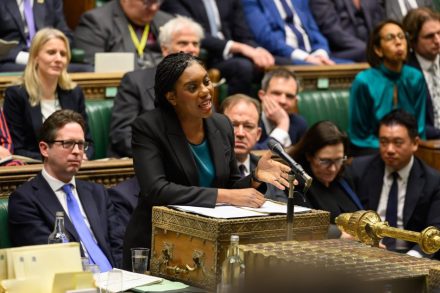
There is a row on the horizon over welfare cuts. Yesterday’s meeting of the Parliamentary Labour Party (PLP) was packed, with many lobby journalists expecting fireworks. The Prime Minister got a positive reaction for his message on Ukraine, with MPs impressed by his strong response since Trump took office, but there was some scepticism in the room about his plan to make £6 billion in welfare cuts. This is a difficult topic that cuts to the heart of the Labour Party and its position as the party of welfare – about 80 Labour MPs are said to oppose the government’s proposals. Can Keir Starmer weather the storm? James Heale speaks to Katy Balls and John McTernan, former political adviser to Tony Blair. Produced by Oscar Edmondson.

Have Reform blown it?

18 min listen

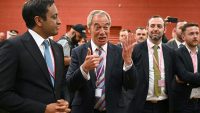
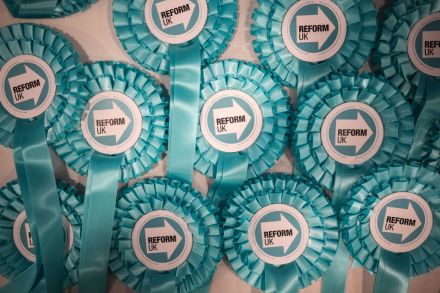
Loyal listeners will remember that just three months ago we released a podcast asking: Is 2025 Farage’s year? The answer was ‘yes’, provided Reform UK can keep their five MPs in line... As predicted – and despite all the talk of professionalisation – Nigel Farage’s latest political outfit is following the pattern of the parties that came before: infighting. On Friday night, the Reform party stripped Rupert Lowe of the whip after referring him to the police. Lowe stands accused of workplace bullying and threatening behaviour towards party chair Zia Yusuf. These are allegations that he strongly denies, calling the whole affair a ‘witch hunt’. How long has there been tension between Lowe and the party leadership?

Mark Carney is Canada’s new PM

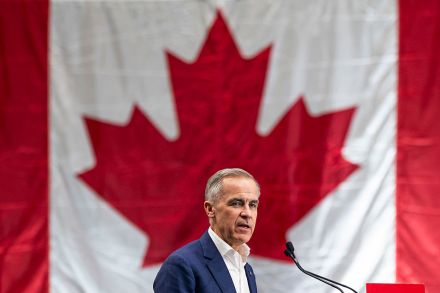
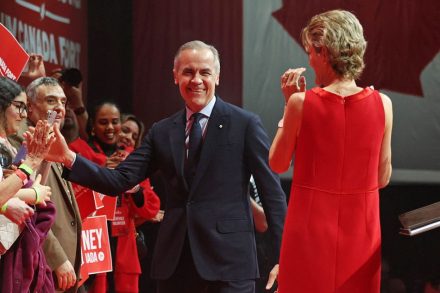
The race to replace Justin Trudeau has been not so much a contest, as a coronation. Mark Carney, the former Governor of the Bank of England, won the Liberal leadership in a landslide last night, obtaining 85 per cent of the vote and crushing rival Chrystia Freeland. He will now be sworn in as Prime Minister in the coming days, with a general election expected to be called within weeks. Speaking after his victory in the two-month-long contest, Carney says his nation faces 'dark, dark days, brought on by a country we can no longer trust'. That is a reference to the single issue which has dominated his leadership campaign: Donald Trump's tariff threats.

mark carney

Mark Carney is Canada’s new prime minister

From our US edition

It is difficult to overstate how much Donald Trump has changed the dynamics of Canadian politics. When Justin Trudeau resigned on January 6, his Liberal party was on just 16 percent in the polls — 25 points behind Pierre Poilievre’s Conservatives. Within six weeks, that had narrowed substantially, with Nanos suggesting there was just two points between the two parties. The top issue of national concern? Donald Trump and US relations. Visiting Ottawa in January, I was struck by the remark which one Member of Parliament made to me. “We don’t see America and tariffs as foreign affairs — we see them as actually an extension of our domestic economic policies.

Who would be a Conservative? – Kate Andrews vs Michael Gove

25 min listen

It’s a special (and emotional) edition of Coffee House Shots this Saturday because it is the last with Kate Andrews on this side of the Atlantic. She joins our editor Michael Gove and political correspondent James Heale for a debate on ideology. Kate – a liberal, in the classical British sense – explains exactly why she is not a Conservative and the various tenets that distinguish liberalism from conservatism, whilst Michael makes the case for being a 'pessimistic' conservative.  So, what makes a liberal? What makes a conservative? And was Hayek right in saying that while there isn’t much to choose between these two political creeds, ultimately, they need each other.  Produced by Cindy Yu and Oscar Edmondson.

Reform refer Rupert Lowe to the police

After months of leading in the polls, Reform UK is now in meltdown. This afternoon, the party chairman, Zia Yusuf, and the chief whip, Lee Anderson, released a joint statement which says that they have now referred Rupert Lowe to the police. The pair say that they have ‘received complaints from two female employees about serious bullying’ in Lowe’s offices and that ‘we understand complaints have been made to parliamentary authorities’. They allege that evidence has been provided of workplace bullying, with female staff who raised concerns being targeted. They suggest too that Lowe made ‘derogatory and discriminatory remarks’ about women, ‘including reference to a perceived disability’.