James Heale

James Heale

James Heale is The Spectator’s deputy political editor.

The changing face of Nigel Farage

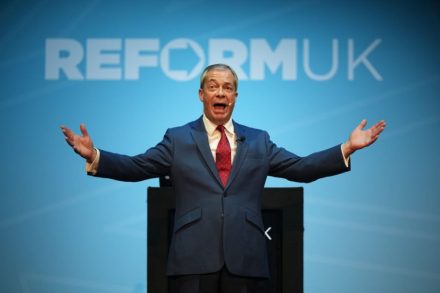
On Monday night, a hundred Reform staff and donors met at a Marylebone pub to toast the local election results. A jubilant Nigel Farage addressed his troops, who ran up a five-figure bill. They had good reason to celebrate. With 30 per cent of the vote, Reform crushed Labour (20 per cent) and the Tories (15 per cent). They won 677 wards, ten councils and a fifth MP in the Runcorn by-election. Certain results were particularly satisfying: in Ed Miliband’s Doncaster North, Reform won more seats than any other party. Three speeches defined Reform’s campaign. First, there was the Birmingham rally at the end of March. Farage arrived on a JCB digger, presenting himself as a ‘Mr Fixit’ for the woes of ‘Broken Britain’.

Do the Tories hate free trade? Plus, Reform hits new polling high

15 min listen

Lots to talk about today, including new polling which puts Reform on 29 points compared to the Tories on just 17. We’ve also just had the first PMQs since the local elections. But the trade deal announced yesterday between the UK and India is dominating the headlines, with many concerned about some of the concessions made – namely the decision to exempt some short-term Indian workers from national insurance as part of the new agreement. This comes barely a week after the local elections, where immigration has been widely considered the most salient issue.

Tories slump to 17 per cent in poll

A new YouGov poll published this morning makes for grim reading for Kemi Badenoch's team. It finds that, in the wake of the local elections, Reform are now on 29 points compared to Labour on 22 and the Tories on just 17, with the Liberal Democrats on 16. That is the joint-lowest ever Conservative poll rating, tying with June 2019, during the dark days of the Brexit wars. According to YouGov: Naturally, these results are quite striking, but they are probably in line with what we would expect after the locals. With Reform performing so well Thursday, and the positive media coverage that is associate with such a result, it is not surprising they have received this boost. The test will be whether this is a blip or whether it will sustain over the coming weeks.

Why Reform’s rise isn’t a surprise

13 min listen

It’s day five of recriminations after the local elections, with politicians, pollsters and journalists alike still trying to make sense of what just happened. On today’s podcast, Rachel Wolf gives her verdict: we should not be shocked by Reform’s surge. She argues that Nigel Farage’s success should have been predicted – that it’s the same, distinctly anti-political silent majority who ‘surprised’ us during Brexit, ‘surprised’ us in 2019 and are ‘surprising’ us now.  How will Labour respond? Will they U-turn on winter fuel? And is Boris Johnson the only one who can win back these disillusioned voters for the Tories? Oscar Edmondson speaks to James Heale and Rachel Wolf, CEO of Public First and former adviser to Boris Johnson.

Local elections live: is Reform unstoppable?

15 min listen

The word ‘unprecedented’ is often overused in politics, but these local elections have proved to be just that. The headline is: sweeping success for Reform.  Nigel Farage's 'teal tsunami' comes at the expense of the main parties – turning the two-party consensus on its head. The recriminations for Labour and the Tories have already begun. On the left, a number of MPs have broken cover and urged the government to shift its position on high-salience issues such as winter fuel. On the right, Kemi Badenoch’s leadership is looking increasingly shaky, with Tory MPs and staff warning that a step change is needed. Where do the main parties go from here? And can anyone stop Nigel?

The Labour left turns on Starmer

After defeat, comes the recriminations. The bulk of council seats are still yet to declare but already the blame game within Labour has started after the loss of their Runcorn safe seat. A handful of MPs on the left of the party have started publicly demanding a change of direction by the government. Richard Burgon says ministers 'must urgently change course' by ditching disability benefit cuts and introducing a wealth tax. Diane Abbott remarks it has been a 'disastrous night' for Keir Starmer; Kim Johnson claims that only 'bold hopeful policies' can defeat 'the far right.' It is a sentiment echoed by Brian Leishman who reflects that 'the first ten months haven't been good enough.' Many within Labour will regard these criticisms as little more than the 'usual suspects' sounding off.

Local elections: Reform seizes Runcorn in teal tsunami

14 min listen

Votes are being counted across England, but there is a clear early winner from these local elections: Nigel Farage. His party triumphed in the Runcorn and Helsby by-election this morning, overturning a 14,000-odd majority and winning by just six votes! Elsewhere, Andrea Jenkyns triumphed in Lincolnshire; Reform came second in a number of mayoral races; and their 38 per cent vote share in Runcorn matches the best-ever performance that Ukip achieved in a by-election. So far, the story is one of teal triumph – at the expense of the two main parties. Labour are already pointing to the difficulty incumbents often face at local elections, and will claim victory after narrowly holding out in three mayoral races: North Tyneside, the West of England and Doncaster.

Reform seizes Runcorn in teal tsunami

Less than 10 per cent of council seats have declared thus far. But there already looks to be a clear early winner from these local elections: Nigel Farage. His party triumphed in the Runcorn and Helsby by-election this morning after a long night of drama. Only four votes separated Labour and Reform in the initial count. Just after 6 a.m, the final result came in: Reform on 12,645 votes and Labour on 12,639, a margin of just six. That is the closest by-election result since 1892 and is a testament to the effort that both parties invested. Between 350 to 400 Labour and Reform campaigners were out door-knocking yesterday, resulting in a high by-election turnout of 46.3 per cent. Farage's result suggests he and Zia Yusuf have built a formidable election-winning machine since July.

Michael Gove on how to spin a bad election

12 min listen

Voters have gone to the polls today for a historic set of local elections. The polling indicates a rough night for the two main parties and a good showing for Reform, the Lib Dems and the Greens. So be prepared for a lot of election-night spin from both Labour and the Tories. To talk through the various ways in which politicians can claim victory in the face of defeat, James Heale is joined by our editor, Michael Gove – no stranger to the media round himself. They discuss the best candidates to face up to the media from both the Tories and Labour, as well as some of the greatest examples of post-election spin from history.

Labour vs the unions

At the start of February, trade union chiefs assembled in No. 10 with their agenda for government. Top of the list was the Employment Rights Bill, which makes it easier to strike, picket and join a union. It will shortly pass into law: proof, Labour MPs say, of a Prime Minister willing to ignore squeals from business leaders. Yet the danger for Keir Starmer is that the unions, having banked this win, will keep returning for more. Starmer is perhaps the most union-friendly PM since the 1970s. Staff happily reel off a series of ‘wins’ he has already delivered for Britain’s 6.4 million trade union workers: a higher minimum wage, public sector pay rises and subsidies for Grangemouth refinery.

Badenoch attacks Starmer over rape gangs

All politics is local – and no more so than this week. With various voters set to head to the polls across England tomorrow, the different party leaders were hoping to land their last-minute messages at today’s session of Prime Ministers’ Questions. For Kemi Badenoch, the approach seems to have been ‘if it ain’t broke, don’t fix it’. Labour’s stubborn refusal to hold a national inquiry into rape gangs is clearly making their front bench uncomfortable, months after the subject was first raised. So Badenoch chose to spend all six questions on the theme, winning today’s session comfortably. Badenoch’s peppy performance will cheer the Tories For the first half of the exchange, it was pretty much a stalemate between the two.

What is Tony Blair up to?

'Just what is Tony up to?' That was what one Labour MP asked, quizzically, when I bumped into them in Westminster this morning. Blair has made quite the splash with his latest political intervention, writing an introduction to a pamphlet that criticises net zero. The former prime minister warns that the debate on climate change had become 'irrational', with people in rich countries no longer willing to make financial sacrifices 'when they know that their impact on global emissions is minimal'. Attempts to phase out fossil fuels are – in the short term – ‘doomed to fail'.

What is Tony Blair up to?

15 min listen

Tony Blair is making waves in Westminster today after his institute published a report on net zero that appears to undermine Ed Miliband and Labour’s green agenda. In his foreword – while not directly critical of the UK government – he encouraged governments around the world to reconsider the cost of net zero. Many have compared Blair’s comments to those made by Kemi Badenoch several weeks ago and questioned the timing – just 48 hours before the local elections. What is Blair up to? Should Labour listen to Tony? Also on the podcast, with the local elections tomorrow, we take one final look at the polling. With Labour expecting big losses, how can the party spin the results?

Revenge of the centrists: Carney wins in Canada

13 min listen

Mark Carney has won the Canadian election, leading the Liberal Party to a fourth term. Having only been Prime Minister for 6 weeks, succeeding Justin Trudeau, this is an impressive achievement when you consider that Pierre Poilievre’s Conservatives were over 20 percentage points ahead in the polls earlier this year. Trump’s rhetoric against Canada – engaging in a trade war and calling for the country to become the 51st state – is credited as turning around the fortunes of the Liberals. Are there lessons for conservatives across the anglosphere, including Kemi Badenoch? Patrick Gibbons speaks to James Heale and Michael Martins. Produced by Patrick Gibbons.

Mark Carney pulls off exceptional win in Canadian election

Results are still flooding in from Canada – but Mark Carney looks to have done the impossible. The Liberal leader will return to office as Prime Minister, after his Conservative rival Pierre Poilievre formally conceded. The key question is whether Carney will win a majority of 172 seats of Canada's 343 electoral districts in the new House of Commons. National broadcaster CBC projects the Liberals to win 163 seats, with the Tories on 149 and the Bloc Quebecois on 23. What Carney has pulled off is nothing short of exceptional. The former Bank of England governor entered the race to replace Justin Trudeau in mid-January, when the Liberals were languishing 25 points behind the Conservatives.

‘The spring of discontent’

11 min listen

Are we looking at a spring of discontent? It’s the final push ahead of this week’s local elections, and what Keir Starmer wants to talk about is expanding the NHS app – which he says will cut waiting lists and end the days of the health service living in the ‘dark ages’. However, what people are actually talking about is public sector pay. The independent pay review body has recommended pay rises of around 4 per cent for teachers and nurses. Will there be industrial action? Are Labour going to be pushed into another round of public sector pay increases? Meanwhile, after Ben Houchen’s comments this weekend, the murmurs of a Tory/Reform pact refuse to go away. Was his a helpful intervention? Lucy Dunn speaks to James Heale and Isabel Hardman. Produced by Oscar Edmondson.

Will Labour’s migration crackdown work?

Who is the most powerful woman in government? For some, it is the Home Secretary, Yvette Cooper. Next month, her department will publish a new White Paper, outlining its plans to curb legal migration. It is expected to make it harder for foreign students who come to the UK on graduate visas to stay here through taking low-paid jobs such as healthcare roles. Officials are reportedly exploring ways to close this loophole by setting a wage threshold for the types of jobs to which foreign graduates can switch. Cooper’s preference is for a time-limited visa regime for highly skilled workers in occupations where there is a shortage. Inevitably, such changes will spark a chorus of protest.

Three problems with a Tory-Reform pact

The final week of the local election campaign begins today. Much of the weekend discourse was dominated by the fall-out from Robert Jenrick's comments about a potential 'coalition' with Reform. Strikingly, Ben Houchen – the most senior Conservative left in elected office – used his appearance on Laura Kuenssberg's BBC show to suggest that if both parties win seats in 2029 then 'obviously there is going to be a conversation to form a coalition or some sort of pact' to keep Labour out. Now, in one sense, Houchen is correct to say that, in the event of a 2010-style hung parliament, it would make sense to discuss a deal with Reform.

‘An era of five-party politics’: John Curtice on the significance of the local elections

20 min listen

Legendary pollster Prof Sir John Curtice joins the Spectator’s deputy political editor James Heale to look ahead to next week’s local elections. The actual number of seats may be small, as John points out, but the political significance could be much greater. If polling is correct, Reform could win a ‘fresh’ by-election for the first time, the mayoralties could be shared between three or more parties, and we could see a fairly even split in terms of vote share across five parties (Labour, the Liberal Democrats, the Conservatives, the Green party, and Reform UK).  The 2024 general election saw five GB-wide parties contest most seats for the first time. These set of local elections could solidify this ‘five-party political system'.