James Heale

James Heale

James Heale is The Spectator’s deputy political editor.

The welfare state is Nigel Farage’s new battleground

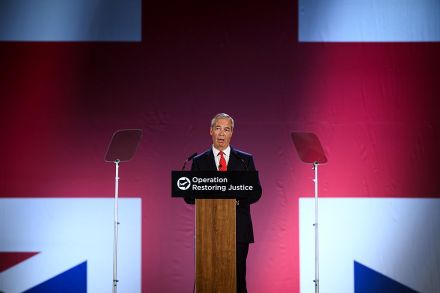
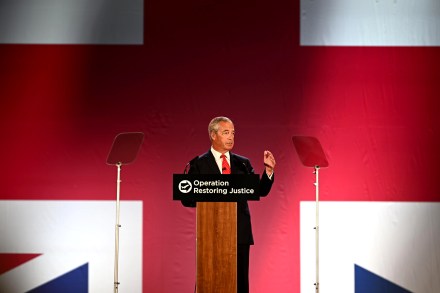
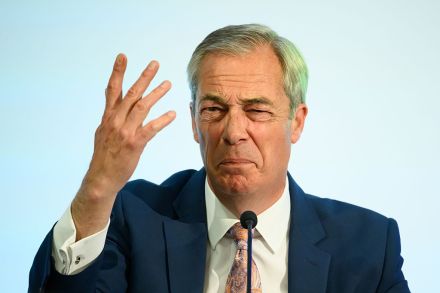
What, if anything, can stop Nigel Farage? That’s the question many in Westminster are asking as they try to reconcile themselves to the rise of Reform UK. The party has soared to 30 per cent in the polls – and is now seeking further gains. Farage’s speech this morning was his attempt to make hay from Labour’s woes on welfare. Reform, he pledged, would scrap both the winter fuel cut and the two-child benefit cap, while introducing a new tax allowance to reward married couples. It was all part of Farage’s pitch to frame himself as the defender of the welfare state, besieged by cuts at home and invaders from abroad. He argues that, currently, social services are a perverse inversion, offering little to British voters while generously subsidising foreign citizens.

Man arrested after Liverpool parade car crash

A 53-year-old man was arrested on Monday after a car ploughed into a crowd of Liverpool supporters during their Premier League trophy parade. Thousands were out on the streets to celebrate when the car drove through the crowds and collided with pedestrians, shortly after 6 p.m. The incident occurred in the heart of Liverpool city centre, with emergency services quick to arrive on the scene. Witnesses described a scene of panic as fans left the parade area, telling local media that the driver went past a police van before mounting the kerb. At a press conference at 11 p.m on Monday night, Merseyside emergency services provided an update on the victims affected by the crash. There were 27 patients taken to hospitals across Liverpool, including four children.

Russia seizes on Kemi’s ‘proxy’ comment

It has not been an enjoyable bank holiday weekend for Kemi Badenoch. The Sunday Times contained not one, but two, critical stories of the Tory leader. The first was about her choice of car in government; the second about a recent shadow cabinet meeting at which her MPs were instructed on 'management theory and values.' Labour opponents outside the party were quick to leap on the first story; Tory critics are circulating the second as proof of her ineffectiveness. Badenoch had one of the prized slots on the Sunday morning round to answer back. On GB News, Camilla Tominey credited her guest for shouldering the burden on media commitments – unlike other members of the Tory frontbench. But it was on Sky that Badenoch came somewhat unstuck.

James Heale, Angus Colwell, Alice Loxton, Lloyd Evans, Richard Bratby, Christopher Howse and Catriona Olding

38 min listen

On this week’s Spectator Out Loud: James Heale analyses the splits in Labour over direction and policy (1:27); Angus Colwell asks if the ‘lanyard class’ are the new enemy (6:21); Alice Loxton explains why bite-sized histories have big appeal (9:58); Lloyd Evans reports on how Butlin’s is cashing in on nostalgia (15:00); Richard Bratby on Retrospect Opera, the non-profit record label that resurrects the forgotten works of British opera (20:40); Christopher Howse provides his notes of typos (27:27); and, Catriona Olding reflects on the death of her partner, the Spectator’s Jeremy Clarke, two years ago this week (32:15).  Produced and presented by Patrick Gibbons.

David Gauke on prisons, probation & the political reaction to his review

18 min listen

Former Justice Secretary and Lord Chancellor David Gauke joins James Heale to talk about his review into prison sentencing. The former Tory minister was appointed by the current Labour Justice Secretary Shabana Mahmood, but says there is a clear centre-right argument for prison reform. He talks James through his policy proposals and the political reaction to them, the thinking behind expanding chemical castration for sex offenders and why deportation is complicated when dealing with the very worst foreign criminals. Ultimately his review is designed to reduce what is currently the highest incarceration rate in Europe. Produced by Patrick Gibbons.

The Chagos deal will haunt Keir Starmer

After months of negotiation, the UK has today signed a deal to hand over the Chagos Islands to Mauritius. Under the terms of the agreement, Britain will lease back the military base there for an annual rate of £101 million. The net value of the payments from the UK under the treaty will reach £3.4 billion. Keir Starmer insisted that the Chagos deal is in Britain's best interests The Prime Minister insists that the deal – which involves a lease on the base for 99 years ‘and beyond’ – is in the country’s national interest. It comes after an ‘advisory opinion’ by the UN’s International Court of Justice (ICJ), that the Chagos Islands belonged to Mauritius.

Live by the rule of law, die by the rule of law

11 min listen

The Independent Sentencing Review chaired by former Lord Chancellor David Gauke has today announced its suggested reforms which sees a major shift from imprisonment to community-led sentencing. Measures include the recommendation that convicted criminals leave prisons after serving around one-third of their sentence, that short prison sentences of up to 12 months are drastically reduced and – the attention grabbing – expansion of chemical castration for paedophiles. What are the political ramifications of these policies, and will they work?  Danny Shaw, former advisor to Home Secretary Yvette Cooper, and James Heale discuss with Lucy Dunn.

Starmer owes Sunak for halving net migration

A year ago today, Rishi Sunak called the general election. Watching the rain-drenched prime minister struggling to deliver his speech, it seemed like the inglorious end to an unremarkable premiership. But 12 months on, the decisions Sunak took in office continue to yield results. This morning, the Office for National Statistics (ONS) confirmed that net migration fell to 431,000 in 2024 – down almost 50 per cent on the previous year’s total. Overall, some 948,000 people came to the UK in 2024, down almost a third on the previous year That is thanks primarily to the package of measures which Sunak and James Cleverly, his Home Secretary, introduced at the end of 2023. These followed significant pressure from parts of the Conservative party, led by Robert Jenrick.

What do ‘Labour values’ actually mean?

Keir Starmer’s appearance before Labour MPs on Monday was a crowded affair. Such was the level of excitement that organisers set up an overspill room in parliament. A fortnight after a dire set of local election results, the Prime Minister promised to fight the next election ‘as Labour’. Yet his troops seem increasingly divided as to what that actually means. More than two dozen MPs spoke at that meeting, criticising Starmer’s Gaza policy, migration speech and welfare cuts. It is those benefit changes that are causing the most immediate grief to the whips. Ministers want to restrict the eligibility requirements for disability payments, meaning only those with the most serious conditions can claim support. The hope is this will save £5 billion a year by 2030.

Winter fuel U-turn and a rift at the heart of government

12 min listen

After sustained speculation and a local elections drubbing, Keir Starmer announced today at PMQs that the government will be softening their policy on winter fuel. Whilst it won’t come into effect for some time, they have agreed to ensure that ‘more pensioners are eligible for winter fuel payment.’  This comes hours after a memo was mysteriously leaked to the Telegraph. It contains an extensive list of recommendations from Deputy Prime Minister Angela Rayner to the Treasury, including a set of eight tax rises such as reinstating the pensions lifetime allowance and altering dividend taxes. This amounts to a direct challenge to Rachel Reeves’s fiscal approach and preference for spending cuts.

What has reaction been to the UK-EU deal?

18 min listen

Fallout continues from yesterday's summit and the announcement of a deal between the UK and EU – or is it fair to call it 'fallout' as, despite criticism over the deal from Nigel Farage and Kemi Badenoch, has the public got Brexit fatigue?  James Heale and Michael Simmons join Patrick Gibbons to talk about the reaction to the deal. Fisheries has taken up most discussion but Michael points out a lesser talked about commitment to energy policy. And, with the government keen to talk about it in tandem with recent deals with India and the US – and Gulf states soon, according to Rachel Reeves this morning – what's the political narrative around the summit? Produced by Patrick Gibbons.

Could Boris make a comeback?

Events have a useful way of illustrating changing fortunes in political stock. Keir Starmer's EU reset yesterday proved to be one such occasion. The fishing deal, mobility scheme and legal obligations prompted predictable fury from the Tory press. But one voice dominated in the chorus of criticism: Boris Johnson. It was the former prime minister's arresting description of Starmer as ‘the orange ball-chewing gimp of Brussels’ which led both the Telegraph and Mail’s write-ups today. A minority in his party view Boris Johnson as the only character big enough to eclipse Nigel Farage and his Cheshire cat grin Such prominence is not unsurprising.

Starmer’s EU ‘reset’ risks pleasing no one

Keir Starmer has just wrapped up his press conference with European Commission chief Ursula von der Leyen. The Prime Minister sought to bang the drum for his EU reset, citing his three 'driving principles': more jobs, lower costs and enhanced border control. Starmer boasted that his deal ensures 'unprecedented access to the EU market, the best of any country outside of the EU or Efta', while ensuring Britain remains outside the single market and customs union, with no return to freedom of movement. The text of today's agreement is still being scrutinised – yet the risk is it ends up pleasing neither Remainers nor Brexiteers. Both the UK and EU have agreed to 'work towards' a youth mobility scheme, but there is no detail on a cap or timeframe.

EU-UK reset: ‘brexit betrayal’?

15 min listen

As EU leaders arrive in London for a summit hosted by Keir Starmer, there has been an announcement that the UK and EU have reached a deal. The UK has extended its agreement on EU fishing boats in British waters, while in return fewer checks on British food exports are expected. There have also been discussions about a defence pact, reduced tuition fees for EU students and access to electronic passport gates for British holiday-makers.  While we await further details, deputy political editor James Heale and director of the Centre for European Reform Charles Grant join Lucy Dunn to unpack what we know so far. Will the deal be an easy sell, or does it risk being seen as a ‘brexit betrayal’?

Is Starmer’s EU meeting a ‘surrender summit’?

Ed Miliband's team appear to have also achieved their goals A pragmatic 'reset' or a 'surrender summit'? The spin has already started ahead of today's big UK-EU jamboree at Lancaster House. Three main items are expected to be announced today: a security pact, a declaration on global issues, and a 'common understanding' of future topics to be negotiated. Expect plenty of the greatest hits from the Brexit years: cries of 'betrayal', talks going 'down to the wire' and endless cliches about how 'nothing is agreed until everything is agreed.' As with every negotiation, there are likely to be both winners and losers from today's conference. A defence deal is likely, enabling greater co-operation and, potentially, further UK access to EU databases too.

Joe Biden diagnosed with prostate cancer

Joe Biden has been diagnosed with an 'aggressive form' of prostate cancer, according to a statement released by his office on Sunday. Biden, 82, was diagnosed on Friday, after he saw a doctor last week for urinary symptoms. The former US president and his family are now reviewing treatment options, with the cancer cells now having spread to the bone. Prostate cancers are ranked on a 'Gleason score' that measures, on a scale of one to 10, how the cancerous cells look compared with normal cells. Biden’s office said his score was nine, suggesting his cancer is among the most aggressive. Metastasised cancer is much harder to treat than localised cancer because it can be hard for drugs to reach all the tumours and completely root out the disease.

Debate: should Kemi Badenoch go?

30 min listen

Kemi Badenoch has come in for criticism since becoming leader of the opposition – for her energy, her performances at PMQs and her inability to galvanise her shadow cabinet. On this podcast, James Heale hosts the trial of Kemi Badenoch and asks whether someone else might be better placed to take the Tories into the next election and – more importantly – who that prince (or princess) across the water could be. The Spectator’s assistant content editor William Atkinson makes the case for the prosecution, while Michael Gove sets out why the Tories should stick with Kemi. Lara Brown, our new commissioning editor, acts as the jury. ‘If your house is on fire you don’t wait a year to call the fire brigade,’ says William.

Can the assisted dying bill survive?

16 min listen

Labour MP Kim Leadbeater’s assisted dying bill is back in the Commons for the report stage today – returning to parliament for the first time since major changes were made to the legislation. While Leadbeater has insisted the bill is coming back ‘even stronger’ than before, support among MPs appears to be fading. The mood in parliament was different to the second reading – which listeners will remember as a self-congratulatory affair, hailed as a ‘historic’ day by Leadbeater – but today’s debate was notably more ill-tempered. The majority of speeches seemed to oppose the bill rather than support it, and a late intervention by Esther Rantzen did not help.

Parliament is changing its mind on assisted dying

There was a markedly different feel to today's debate on Assisted Dying. The last time the House debated Kim Leadbeater's Bill at the end of November, there was plenty of pep and self-congratulation among the speeches. But today, it was a decidedly more bad-tempered affair, as MPs met for the first day on the Bill's report stage, ahead of its Third Reading in a month's time. There are four obvious reasons why today saw a shift in the mood of the House. The first was the chop-and-change of the Bill's safeguards during committee stage, with roughly 150 changes since the last vote. Labour's Florence Eshalomi gave one of the most powerful speeches, declaring she was 'even more worried now' about the Bill than before, citing coercion fears.

Inside Zia Yusuf’s Reform masterplan

On Monday, I sat down for a lengthy interview on Spectator TV with Zia Yusuf, the chairman of Reform UK. This weekend, many of his party's 677 newly-elected councillors will come to London to hear from him on how to make the most of their bridgehead in local government. One thing that Yusuf is clearly thinking hard about is the role of these councillors in crafting Reform's narrative for 2029. He believes that they will demonstrate that his party is fit to govern and expose the failings of the established parties in office. Much of his focus will be fighting the Home Office in court to stop asylum-seekers being put up in Reform–controlled areas.