James Forsyth

James Forsyth

James Forsyth is former political editor of The Spectator.

Hammond must make sure his political tin ear doesn’t derail the government

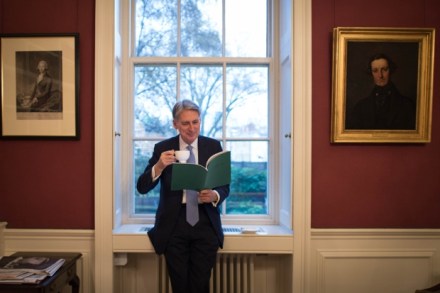
Philip Hammond has a bit of a political tin ear. He can be very unaware of how he sounds to other people. This is what lay behind the extraordinary sexism row at Cabinet on Tuesday which I write about in The Sun today. Hammond’s tin ear has already caused trouble for the government. In the Budget, he announced a national insurance hike for the self-employed despite the fact that the 2015 Tory manifesto had ruled out an increase in this tax. This all makes some Cabinet Ministers rather worried about this autumn Budget, which will be inherently tricky. Hammond doesn’t have much room for manoeuvre. But he has to deal with the Cabinet’s desire for a relaxation of the 1 percent public sector pay cap and find money for the national insurance u-turn and the DUP deal.
‘Everyone’s out for Boris’

There is nowhere better to plot than the Palace of Westminster. There are alcoves to conspire in, little-used corridors and discreet watering holes. And no group enjoys plotting more than Tory MPs. Add a general election result that made the Tory leader a lame duck and you have the perfect ingredients for political mischief. But the Tories aren’t just plotting against Theresa May — that would be too simple, since her departure is a question of when not if. Nor is the principal conversation about who the leader should be. No, for a Tory the first stages of any leader-ship battle is to identify who they don’t want and then to set about destroying them. No one is more plotted against than Boris Johnson.

Why Theresa May was right to withdraw the whip from Tory MP over racist comment

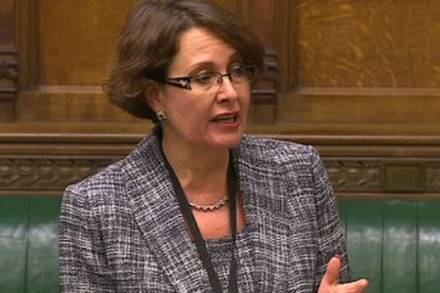
Theresa May has withdrawn the whip from the Tory MP Anne Marie Morris after Morris talked about ‘the n----- in the woodpile’ at a think tank meeting. May has made the right decision. Morris claims that her use of the phrase was unintentional, but it is hard to see how that could be the case. There are certain phrases—such as call a spade, spade—that have racist connotations that most people are unaware of. But this phrase is not one of them; the first word in it rather gives the game away. Morris’ behaviour feels far short of what we should expect from our MPs, so the withdrawal of the whip was the appropriate response. There are those this evening pointing to how other politicians have got away with using this kind of language.

What Theresa May should say on her anniversary

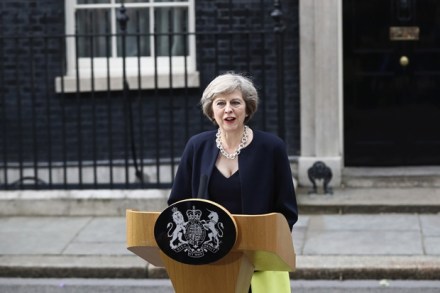
Thursday marks the first anniversary of Theresa May becoming Prime Minister. As I say in The Sun this morning, several of her closest allies regard this as an opportunity to start trying to win back voters’ trust and respect. May has, by necessity, got rather good at apologising post-election. Her it's my mess and I'll get us out of it line to the 1922 Committee staved off an immediate leadership challenge. While her humility at the Tory donors ball at the Hurlingham Club went down well with the party’s money men. But what May hasn’t had is a moment of contrition with the public.

Corbyn can be beaten – here’s how

The Tory party is suffering from an intellectual crisis of confidence. Before 8 June, its collective view was that Jeremy Corbyn was simply too left-wing to be a serious candidate for the prime ministership in modern Britain. He hadn’t learnt the lessons of Labour’s defeats in the 1980s, and while he might excite a noisy 35 per cent of the electorate, thought the Tories, he’d never be able to put together a general election-winning coalition. Corbyn, however, came closer to victory than any Tory had expected. His Labour party got 40 per cent of the vote and took seats off the Tories. Not one of them had seen it coming and, a month on, they are still trying to come to terms with what happened.

May turns back the clock to the Cameron and Osborne era at PMQs

During the general election campaign, Theresa May was strikingly reluctant to defend the Tories’ economic record. But today at PMQs, Theresa May sounded like the man she sacked as Chancellor as soon as she became PM. She defended the Tories economic record with vigour, pointing out how much progress the party had made in reducing the deficit it inherited from Labour and even chucking in a reference to Greece for good measure. It was like going back to 2014. The Tory benches lapped up this return to the old religion. May was also helped by the fact that Jeremy Corbyn didn’t make as much of the money that the Tories have found for the DUP deal as he should have done.

To save the Tories and boost her own legacy, Theresa May must stay

Sometimes crises end simply because all of the participants are exhausted. Essentially, this is what has happened with the post-election Tory leadership crisis. No one has the energy for a fight, so Theresa May carries on as Prime Minister. Conservative MPs say it is now almost certain that she will make it to the summer break and will still be in place at party conference. If the coronation of a new leader could be arranged, things would be very different. But it can’t be. From the great offices of state down, the Tories are simply too split – over both policy and personnel – for the succession to be resolved without a contest.

The whips mustn’t crush every Tory who thinks about the future

The next Tory leadership race promises to be a crowded affair. As I say in The Sun this morning, the whips are now worried about Rory Stewart’s ambitions. In a meeting with the government’s parliamentary private secretaries, the deputy Chief Whip Julian Smith demanded that anyone who had been to dinner at Stewart’s house the night before raise their hand. He said that he was determined to put all those with leadership ambitions ‘back in their box’. But this is the wrong approach. Leave aside, that those at dinner claim that it was a farewell to Stewart’s PPS Amanda Solloway, who lost her seat at the election, not a plotting supper. For even if Stewart is planning a leadership bid, he is no threat to Theresa May.

Why May must stay

Sometimes crises end simply because all of the participants are exhausted. Essentially, this is what has happened with the post-election Tory leadership crisis. No one has the energy for a fight, so Theresa May carries on as Prime Minister. Conservative MPs say it is now almost certain that she will make it to the summer break and will still be in place at party conference. If the coronation of a new leader could be arranged, things would be very different. But it can’t be. From the great offices of state down, the Tories are simply too split – over both policy and personnel – for the succession to be resolved without a contest.

Theresa May reassures Tory MPs at PMQs

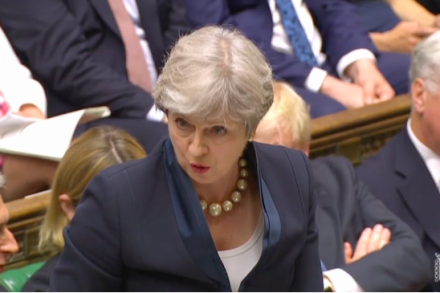
This PMQs was always going to be a very different affair for Theresa May. Post-election, her aura has gone and, for the first time, Jeremy Corbyn now has his benches behind him. Given the circumstances, Theresa May turned in one of her best PMQs performances. She has never been a natural at the despatch box, but she was solid today. Her performance will have reassured Tory MPs that she is able to keep going. Jeremy Corbyn began on the Grenfell fire. At first, his questions were detailed and precise. He got May to admit that her understanding is that the cladding on Grenfell tower was not compliant with building regulations. But then Corbyn went uber-partisan, blaming Grenfell on austerity and ‘disregard for working class communities’.

The DUP deal is a vulnerability for the Tories

The DUP deal is a vulnerability for the Tories. Whatever justifications ministers come up with for the extra money for Northern Ireland, there’s no getting around the fact that it wouldn’t be going there if Theresa May didn’t need the DUP’s support to be PM. But in the House today, Labour failed to land any blows on the arrangement. Damian Green’s debating points were effective and neither Emily Thornberry nor the SNP were nimble enough to trip him up. Nigel Dodds, the DUP’s Westminster leader, joked that in the interests of transparency he might publish the DUP’s correspondence with Labour and the SNP at the start of the 2010 hung parliament, which rather took the wind out of the opposition benches sails.

Why some Tories are deeply worried about the DUP deal

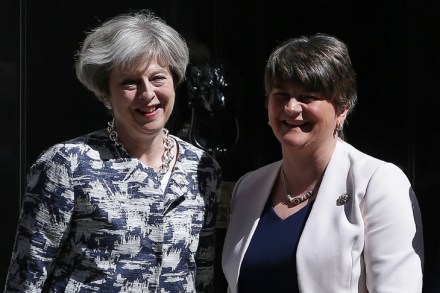
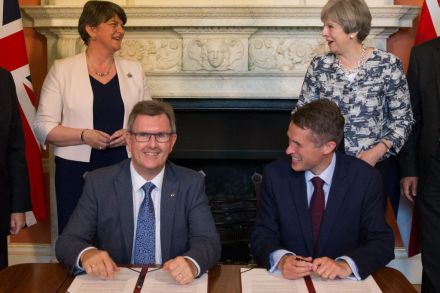
The Tory DUP deal has been signed in Downing Street this morning, the text of it is on the government website and there’ll be a statement in the Commons on it later. This is as formal as a confidence and supply deal can get. So, why were the Tories so keen on such a formal deal? Well, there were three reasons for it. The whips’ office wanted the certainty of a written agreement rather than having to survive hand to mouth; note that the deal was signed by the chief whip not the Prime Minister. The whips’ hope that this certainty will mean both that the government can get its business through and that there won’t be constant speculation about it collapsing.

Why Theresa May’s position is safe, for now

It would be hard to describe Theresa May’s post-election, premiership as anything other than weak. But, weirdly, this weakness is turning into something of a strength as I say in The Sun this morning. No one in the Cabinet thinks that May can recover sufficiently to lead the Tories into the next election, so no one is in a huge rush to replace her. May is also helped by the fact that there would have to be a leadership contest if she went. ‘No candidate is reconcilable with both Leave and Remain’ laments one Cabinet Minister who has explored whether a coronation would be possible. With no appetite for a time consuming and potentially bloody leadership race, May’s position is safe for the immediate future.

The next few years will be critical for the Tories

The Tory party is having the wrong conversation. Whenever two or three Conservative MPs are gathered together, they discuss who should succeed Theresa May. They lament that the front-runners all have their flaws, scan the ministerial list for a ‘dark horse’ candidate — and debate whether it’d be better for May to go at this autumn’s conference or to hang on until the end of the Brexit talks. But rather than discussing who should succeed May, and when, they should be thinking about what should succeed her. The general election campaign confirmed that the Prime Minister is no saleswoman. What should worry the Tories more, though, is how little she had to sell. Back in government, the threadbare nature of the Tory agenda is even more obvious.

Theresa May holds the fort

Theresa May has never been a scintillating parliamentary performer. She has never been particularly comfortable with that very House of Commons brand of humour that marks occasions such as today. So, in her first major appearance at the despatch box since the election, May played to her strengths. She largely eschewed humour and was instead earnest and serious. She apologised as Prime Minister for the failings of government, both local and national, in the immediate aftermath of the Grenfell fire and spoke at length about the various terrorist incidents of recent months. Overall, this approach worked for May. Her workmanlike performance steadied things.

The May manifesto has gone – and the era of Cabinet politics begins

When Theresa May launched what she called ‘my manifesto’ just over a month ago, she batted away questions about whether it was a Mayite document. But this was faux-modesty. The manifesto was a deliberate move away from traditional Tory thinking. May and her team believed that her own standing with the public meant that she could pull off this shift without proper consultation with her Cabinet. But now, with her authority shot, May cannot try and do this. The Queen’s Speech didn’t include many of the Mayite policies that she had stood on in the general election. If it was not for the Brexit legislation, this would have been a very thin Queen’s Speech.

The Tories desperately need new ideas to keep Corbyn out of power

Every discussion with a Tory Minister or MP now ends up with a go through of the runners and riders for the leadership. But just as important as the personality is the policies. One of the major problems for the Tories at the last election was that they had almost no positive offer; what did they offer a thirty something on fifty thousand a year who didn’t stand to inherit anything? Tories can’t expect young people to be capitalists, when they have no capital. This makes the need for new ideas on the centre-right a matter of some urgency. Without them, Jeremy Corbyn—or someone very like him—will be Prime Minister at some point in the near future.

Why an extended, Brexit transition is now on the cards

The Brexit talks start on Monday. Theresa May hoped that they would be beginning with the UK government's hand strengthened by her enhanced majority. But, as I say in The Sun this morning, the opposite has happened. The indecisive election result means that there is again uncertainty about the government’s Brexit position. There is lots of talk about what Philip Hammond wants, and how he might seek to ‘soften’ Brexit. Leave supporting ministers are certainly anxious about what he’s up to. One fumes that if Hammond succeeds in watering down Brexit then he’ll cause ‘a schism in the Tory party’ and multiple Cabinet ministers will resign.

The Maybot 3000

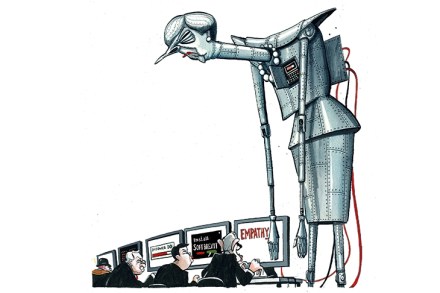
Had Theresa May won the election with the landslide she expected, she’d have fired several of the cabinet with her trademark brutality. They knew who they were. And last Monday, three of them took the opportunity to tell the Prime Minister where she had gone wrong. In the first meeting of the political cabinet since she blew her party’s majority, Philip Hammond asked why there had been no economic message in the campaign. Andrea Leadsom said that while May had repeatedly claimed the election was all about Brexit, she had never said what Brexit was actually for. The most pointed contribution, though, came from Sajid Javid, who lambasted the high-handed way that May’s team had run No. 10. However, this was ritual humiliation, not a mutiny.

Tim Farron quits as Lib Dem leader

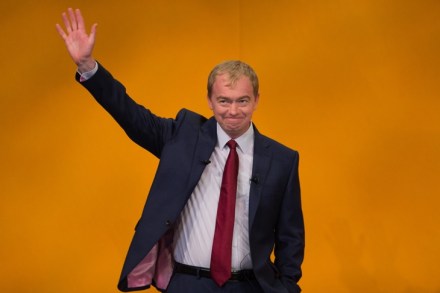
Tim Farron has resigned as Liberal Democrat leader. The Liberal Democrats did make a net gain of four seats but this was far lower than what they had been hoping for; early on in the campaign Farron talked about his desire to double the number of Lib Dem MPs. At the same time, their share of the popular vote fell half a percentage point—with them now down to a mere 7.4% share. Given that these were uniquely promising circumstances for the party, they were the only UK-wide party opposed to Brexit, these elections results were particularly disappointing for them. Farron’s leadership style has received much of the blame for their failure to gain much ground at this election.