James Forsyth

James Forsyth

James Forsyth is former political editor of The Spectator.

Theresa May should throw herself on Tory MPs’ mercy

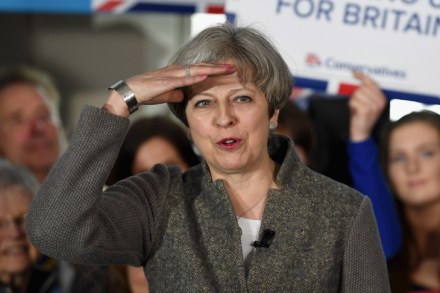
When Theresa May appears in front of the 1922 Committee this evening, her first words should be ‘I am sorry’. She should apologise to those who lost their seats, to the party for the damage she has done to it and to the country for the chaos that she has plunged it into with this unnecessary election. Once she has done with those mea culpas, she should say sorry for the way she ran Number 10. She should make clear that this will now change, that there will be a return to Cabinet government and that she will see the 1922 executive every fortnight; you can count on the fingers of one hand the number of times she has seen the ’22 executive since becoming PM. The next thing May should do is acknowledge that she can’t lead the Tories into another general election.
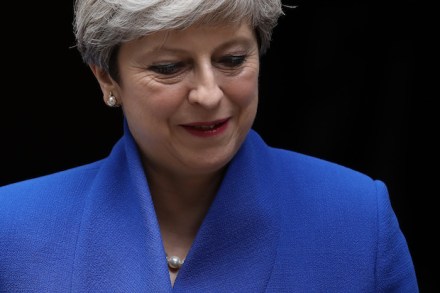
Fallon: Cabinet have told Theresa May she has to change

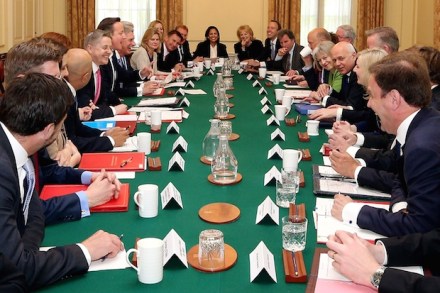
Theresa May might still be in office, but she is not in power in anything like the way she was before. On the Marr Show, Michael Fallon made clear that the Cabinet had told Theresa May to drop her two chiefs of staff, Nick Timothy and Fiona Hill, and that they had told her that there would have to be more collective decision making from now on. Fallon’s interview made clear that May now serves at the pleasure of the Cabinet. I suspect that as soon as they think she can be removed without prompting another election, she will be. But one thing helping May stay in Number 10 is that there couldn’t be a Tory coronation, the party is too divided over both policy—the nature of Brexit—and personnel, Boris fans and those who think he has 35 million problems, for that.

May’s two chiefs of staff quit as she tries to placate the Cabinet

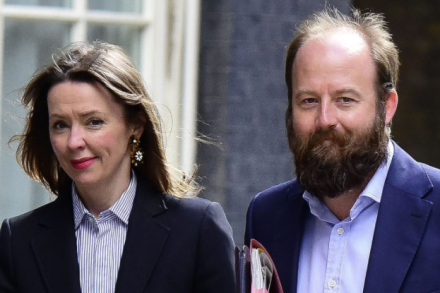
Theresa May’s two chiefs of staff Nick Timothy and Fiona Hill have resigned. The pair have good claim to be the most powerful special advisers in British political history, their hold on Mrs May was even greater than that of Alastair Campbell and Jonathan Powell on Tony Blair. Yesterday, one Tory who knows the trio well wondered whether May would be able to function without them. But May will now have to. If Timothy and Hill had stayed, it would have prompted a leadership challenge. A growing number of Cabinet Ministers have been clear since Thursday night that the departure of her chiefs of staff was required if Mrs May was to stay in office. The Cabinet resented both their power and their manner, they did little to disguise who they thought was really in charge.

The Cabinet will now assert themselves

One upshot of May’s election fail is that the Cabinet will now be far more influential, as I say in The Sun this morning. They are determined to force her to listen to them more and not just rely on her two chiefs of staff. ‘She needs to realise she can’t do this all on her own’, complains one Secretary of State. ‘She needs a bit of help’. The Cabinet are brutally clear about how the Tories losing their majority is May’s fault. ‘Her limitations have been fully exposed in public’, one tells me. But May’s position is safe for now. Why? Because the Tories don’t want another election. They fear that the momentum is with Labour and that they would do even worse in an autumn poll.

It would have been wiser of Theresa May to show some contrition and humility

Theresa May was determined to suggest that nothing had really changed in her statement outside Downing Street after seeing the Queen. She talked about her plans for the next five years, which is—to put it mildly—ambitious. She emphasised the mandate that came from the Brexit referendum, but made no real reference to last night’s events. She emphasised certainty and indicated it was all business as usual.  Tonally, May’s approach was a mistake. It would have been better to level with voters about what had happened, to tell the country that she would work to regain its trust. It is jarring to talk about how the country needs certainty, when the election that you called has injected huge uncertainty into the political system.

Why Theresa May needs a deputy Prime Minister

Bizarrely, many of the Cabinet haven’t yet heard from Theresa May or her closest aides. Number 10 need to get on the phones—and quick. She will need the Cabinet’s support in a way she never has before in the next few weeks and months, and securing that support will require actively consulting them. Several senior Tories are arguing that May should appoint a deputy Prime Minister. The thinking is that this would force May to consult beyond her own, extremely tight inner circle. Following this advice would be a smart move by Theresa May. It would reassure the Cabinet that things genuinely will be different now, and that May is prepared to change the way he governs.

What went wrong for the Tories?

Inside CCHQ there is a sense that three things cost them their majority in this election. First, the public were fed up with austerity. With the Tories taking the deficit off the table as an issue, they had no plan to balance the books in the next five years, and they had no response to Jeremy Corbyn’s promise to spend more on pretty much everything. Second, there was a Brexit backlash. Those who had voted Remain turned up in great numbers at this election and voted against the Tory candidate. Third, Theresa May turned out not to be who the voters thought she was. Voters liked her because they thought she was a different kind of politician.

Theresa May has no one else to blame for this chaos

If there is ever an inquest into who torpedoed Theresa May’s chances of winning the 2017 election outright, the answer should not be in doubt. The Prime Minister was the author of her own destruction – or, at least, the staggering and needless destruction of her party’s majority. The decision to hold an early election was taken not in political cabinet, but on a walking holiday with her husband. None of her cabinet colleagues advised her to personalise her campaign to such a bizarre extent; her disastrous manifesto was as much of a surprise to them as it was to the public. Theresa May did all this herself, with a few handpicked aides – and if she had triumphed, she’d have governed in this way.

Why hasn’t the Remain dog barked in this election?

The hopes of those who want Britain to stay in the EU have been dashed by this election. There has been no Brexit backlash. The party that wanted to overturn the result, the Liberal Democrats, have had a minimal impact on the campaign. By the time Britain next goes to the polls in a general election, the deed will have been done: this country will have left both the EU and the single market. Straight after the referendum last year, some Leavers feared victory would be snatched from them. They worried that a general election could lead to a parliament that was prepared to go back on the result. Instead, this election has served to confirm that Brexit is happening. It now has the endorsement not only of a referendum, but of a general election too.

Will the Tory majority be bigger than expected?

The overall result of the general election isn’t really in doubt: the Tories will be returned to government tomorrow with an increased majority. But just how big that majority is will have a huge impact on what happens at Westminster over the next few years—and that is much less clear. There are two reasons for this. First, the British polling industry remains in crisis; meaning that it is hard to have confidence in the numbers they are pumping out today. Second, in this election, there isn’t going to be a national swing, but a series of regional swings. For example, I hear that the Tories are sending extra resources into Battersea, a seat where they have an almost 8,000 majority.

How to tackle the terrorist threat: four steps we must now consider

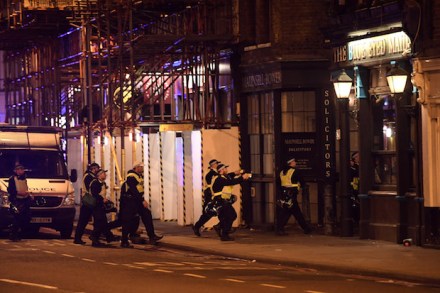
For the second time in this election, political campaigning is suspended because of a terrorist attack. Given the volume of terrorist attacks—three in the last three months and five other plots disrupted—you might think that the issue would have dominated the campaign. But it hasn’t. Until Theresa May’s statement today talking about how there has been too much tolerance for extremism, there has been remarkably little discussion about how this country should deal with this problem. Now, you can say that we shouldn’t allow the terrorists to set the agenda. But I fear that the main reason for the absence of debate is that no one is quite sure what to do. However, it is imperative that we start talking seriously about the steps we can take.

Brexit and tax to be Tory focus in campaign’s final days

The Tories want to make their closing argument in this campaign about Brexit and how Labour would raise taxes, I write in The Sun this morning. I understand that Lynton Crosby held a meeting with senior Cabinet Ministers on Tuesday which set out this strategy. I’m told that the meeting made clear that Crosby is now in charge and that this will be the party’s closing message. It is, though, a sign of how narrowly run this campaign has been that several of those present say that this was the most they have been consulted on—or informed—about the party’s strategy in this election. Interestingly, Philip Hammond wasn’t at this meeting. His absence doesn’t bode well for him post-election.

Confident May tells audience, I had the balls to call this election

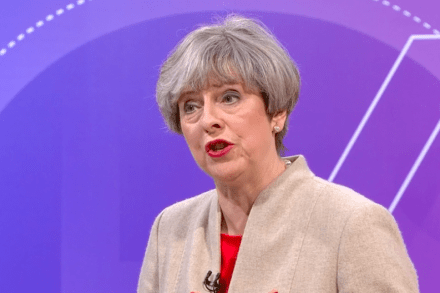
Theresa May turned in what, I think, was her best TV performance of the election tonight. May engaged with the questions more than she has in previous TV events, and was more confident and fluent than she had been on Monday night. After a prolonged Tory wobble, her performance will have steadied jangling Tory nerves. May pitched hard for the Brexit vote. She said that she had called the election ‘for Brexit’ and that if you voted Leave, you needed to make sure you got it. When she was accused of calling the election for political gain, she hit back saying that she had had the balls to call an election rather than just serving out the term the Tories had won in 2015. Her deliberate use of the word balls was very Thatcheresque, deliberately flipping the language of gender.

Weak and wobbly

When Theresa May decided to go for an early election, she transformed the nature of her premiership. Up to that point she had been the steady hand on the tiller, righting a ship of state buffeted by the Brexit referendum. By going to the country to win her own mandate, she sought to become more than that. She wanted her own sizeable majority and, in so doing, invited comparison with the two prime ministers who have done the most to shape modern Britain: Margaret Thatcher and Tony Blair. She was asking to be judged against their electoral triumphs. At the start of this campaign, May looked comfortable in this company. The polls suggested that she would get a higher vote share than either Thatcher or Blair and win a majority to stand any comparison with their landslides.

Chaotic BBC debate fails to move the dial

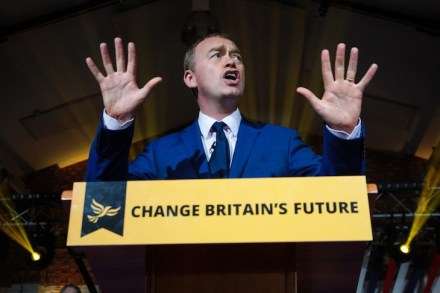
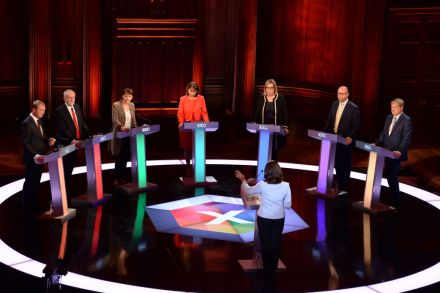
The BBC’s seven-way election debate proved that you can’t have a proper debate with seven people in it. It was a shouty, bity affair in which no one really stood out. This meant that Theresa May pretty much got away with her decision not to turn up. Jeremy Corbyn wasn’t as good on this programme as he had been on the Sky / Channel 4 election programme on Monday night. It was also a problem for him that Caroline Lucas was delivering essentially the same argument as him, but in a more compelling way. Tim Farron, again, tried his northern funny man routine. He had some good quips; his line that as Theresa May didn’t have time to turn up to this debate, voters shouldn’t have time for her was effective. But, overall, he came across as lacking in gravitas.

Corbyn piles pressure on May by agreeing to BBC debate

Jeremy Corbyn has just announced that he will be doing the BBC Election debate tonight. This means that all the UK-wide party leaders will be there apart from Theresa May. Corbyn’s move is clever politics. He has little to lose, and by turning up, he’ll be able to accuse May of being both too scared to defend her record and of arrogantly taking the voters for granted. It will enable him to continue his attack on her leadership style, an attack that has more of a chance of succeeding following her social care U-turn. May being asked about why she isn't doing #BBCDebate is the televisual equivalent of haemorrhoids for the eyes pic.twitter.com/TFxKpfAFON— Felicity Morse (@FelicityMorse) May 31, 2017 The move isn’t entirely without risk for him, though.

Corbyn turns in one of his best media performances

Jeremy Corbyn turned in one of his most assured media performances in the Sky / Channel 4  ‘Battle for Number 10’ programme. Answering questions from the audience, Corbyn was confident and kept his temper under some hostile questioning. He took every opportunity to return to his key messages. He framed them in a reasonable, rather than ideological manner. Now, this is not to say that Corbyn was telling the whole truth. On Northern Ireland, he suggested that all he had ever wanted was a peace process and a dialogue. But his activity at the time was far closer to sympathy for the IRA, then support for a peace process.

Jeremy Corbyn always blames Britain first

Jeremy Corbyn and his crowd always blame Britain first, I argue in The Sun today. They view the West as being responsible for the world’s ills. It was this worldview that led Corbyn to say in his first speech since the Manchester attack that British foreign policy increases the risk of terrorism at home. Now, to my mind, his view is wrong headed for the reason I outlined here. If Corbyn were to become PM, the country would be led by someone who regards Britain as part of the problem, not part of the solution. Up to now, the Tories haven’t been vocal enough about making this point. Yesterday, with Fallon, Boris Johnson and Theresa May’s words they began to. But they need to hammer this message home in the next 12 days.

Corbyn confronted by his past

Jeremy Corbyn first became an MP 30-odd years ago. Until he became Labour leader, Corbyn was a relatively unknown figure with all sorts of fringe views. Corbyn said, and did, a lot of things with minimal scrutiny because no one thought he would ever be in a position of power. But Corbyn is now Labour’s candidate to be Prime Minister in a general election campaign in which the polls are tightening. Tonight, Andrew Neil confronted Corbyn with a lot of his past statements. When questioned over his past sympathy for the IRA, Corbyn had no answer to the specifics of any of the questions.

Corbyn: British foreign policy leads to terrorism here at home

One might have expected the general election campaign to resume in a softly-softly fashion following the Manchester bombing. But Jeremy Corbyn’s speech tomorrow morning will lead to some of the most vigorous political debate we have seen in recent times. Corbyn will say ‘Many experts, including professionals in our intelligence and security services, have pointed to the connections between wars our government has supported or fought in other countries and terrorism here at home.’ Suggesting that UK foreign policy bears responsibility for terrorist attacks here just days after a terrorist atrocity has killed so many children is, to put it mildly, controversial. Now, Corbyn will add that ‘That assessment in no way reduces the guilt of those who attack our children.