James Forsyth

James Forsyth

James Forsyth is former political editor of The Spectator.

Will tonight’s Brexit supper be the dinner party from hell?

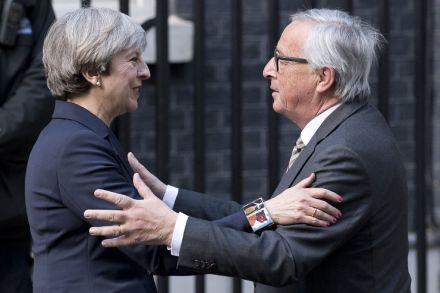
Theresa May heads to Brussels this evening for supper with Jean-Claude Juncker, Michel Barnier and Martin Selmayr. The good news for her is that this meeting can hardly be more disastrous than the last time she dined with this trio. Then, a very unflattering account of the meal appeared in the German press and led to May angrily denouncing attempts to interfere in the UK general election. On Thursday, the European Council are almost certain to declare that there has been insufficient progress to move on to trade talks. But what May’s frenetic diplomacy is about is pushing for an indication that sufficient progress is likely to have been made by December’s meeting to move on to trade and some public acknowledgement that a transition deal is acceptable to the EU.
The government needs to know what kind of Brexit deal it wants

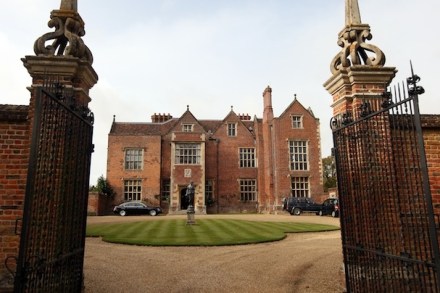
Theresa May needs to invite the Cabinet down to Chequers to thrash out the government’s position on Brexit, I say in The Sun this morning. Remarkably, the Cabinet have never had a proper discussion about what the final deal with the EU should be. One senior Cabinet Minister tells me that ‘The million dollar question is the trade-off between regulatory compliance and market access and we haven’t had that discussion yet’. This failure to talk is frustrating Cabinet Ministers, breeding distrust and contributing to the current break down of discipline within the government. As the policy isn’t decided yet, ministers keep trying to push it this way or that.

The plots thicken

‘Worst week ever’ is one of those phrases that journalists are, perhaps, too quick to use. Alastair Campbell once quipped that if you added up all Tony Blair’s worst weeks, you got a full year. The real worry for the Tories, however, is not that last week was Theresa May’s worst ever, but that it represented the new normal. Even inside Downing Street, there are those who worry that leadership plotting and the like will continue until Mrs May leaves the building. They worry that while they are strong enough to repel the plotters — as they did so effectively this time — she isn’t powerful enough to take back control. So the whole cycle will continue, with the rebels coming back for another crack every time the Prime Minister looks vulnerable.

Theresa May concedes that the European Court of Justice will have a role during the Brexit transition

Most of Theresa May’s statement today was simply a reiteration of what she had said in Florence. But we did get clarity on one crucial point. In answer to a question from Jacob Rees-Mogg, Theresa May explicitly accepted that the European Court of Justice would have a role during the transition. She said that she hoped it would be replaced at some point by a new dispute resolution mechanism. But at the beginning of the transition, the ECJ will be the arbiter. Now, there will be Brexiteers who don’t like this; Jacob Rees-Mogg’s question was seeking an assurance that this would not be the case. But if the transition is to see the UK stay inside the single market in everything but name, it is hard to see how this can be avoided.

Theresa May should appoint a Secretary of State for No Deal

The Brexit talks collapsing would be a bad thing. It shouldn’t be the aim of the UK government, but it should be something that the government is prepared for. After all, there is a non-negligible chance of this happening. Compounding this is that the United Kingdom can’t credibly threaten to walk away from the table unless it is actually ready to do so. Without the ability to walk away, Theresa May will be left having to accept whatever the EU offers. It’s evident that Britain is not currently prepared for a no deal scenario. There needs to be a massive push if the UK is to get itself anywhere near ready.

The three things Theresa May must do

Even loyal Cabinet Minister admit that the Tories can’t go on like this for another 18 months. As I say in The Sun this morning, Theresa May needs to show that the situation is going to improve. I think there are three things that May needs to do. First, she needs to show that she is enjoying the job. Tory MPs are, genuinely, beginning to worry that May’s sense of duty is such that she’ll stay on even if she is being crushed by the burdens of office. Now, those who work for the Prime Minister in Number 10 are adamant that she is relishing the job and wants to stay. But she needs to demonstrate that publicly. Second, May needs a more radical domestic agenda. Even if her speech hadn’t been hit by those three disasters, it would have been inadequate to the moment.

The Conservatives admit they have a problem – but can they solve it?

For those who don’t want Jeremy Corbyn to be prime minister, the Tory conference was half encouraging and half depressing. The encouraging part is that the Tory party has grasped the problem. There seems to be near universal acceptance that a ‘rigged’ housing market is making the under-40s feel that they have little chance of ever owning a home — and you can’t expect those without capital to be capitalists. But the solutions that the Tories are currently offering are inadequate. The decline of the property-owning democracy is an existential threat to the Tory party. Homeowners tend to vote Tory, so the fact that home ownership is at a 30-year low has, obvious political implications for the party.

Theresa May’s luck appears to have run out

‘I know he’s a good general, but is he lucky?’ Napoleon used to ask. Theresa May was certainly a lucky politician when she ran for the Tory leadership. Her rivals imploded one after another in that contest leaving May the victor. But in recent months, May hasn’t had much luck. Today, it was truly atrocious. This speech was meant to be the moment that May rebooted her premiership. But few people will recall what she said today. Instead, they will remember the three disasters that befell this speech. First, a comedian making it to the conference stage and handing her a mock P45. Second, her voice not just croaking but actually going. Sitting in the hall, there were moments when I thought that someone else would have to finish the speech for her.

Philip Hammond’s conference speech was woefully short on solutions

Philip Hammond’s speech to Tory conference was deeply frustrating. On the one hand, his diagnosis of the problem—that young people feel the housing market is rigged against them and that property ownership is out of reach for them—is right. But on the other, his speech was woefully short on solutions to this problem. Hammond devoted most of his address to an attack on Jeremy Corbyn and John McDonnell’s left-wing economics. He gave a very decent PPE essay on why their solutions haven’t worked in anytime or place. Though, the problem is the examples cited are either historical—the 1970s—or sound over the top: Cuba, Venezuela, Zimbabwe.

Ruth Davidson reminds English Tories what they’re missing

Ruth Davidson reminded English Tories of what they were missing with her conference speech. It was confident, funny and optimistic. She told the Tories to stop panicking, pull themselves together and beat Jeremy Corbyn. She argued that the bursting of the SNP bubble showed that the Corbyn bubble could be burst. But she warned that this would only happen if the Tories pulled together and put the work in. On Brexit, Davidson told the Tories that it is time that we ‘made it clear –  that we’re not Leavers or Remainers anymore – we’re just Brits.’ This got huge applause, and is undoubtedly the right sentiment. But Davidson, as with her Saturday attack on Boris Johnson, doesn’t always follow this advice herself.

Theresa May’s unconvincing performance on the Andrew Marr Show

This morning has been a reminder of how difficult this conference will be for the Tories. Two policies were announced overnight and neither have landed well. Theresa May then delivered a nervy performance on the Andrew Marr Show that will have done little to reassure Tories that she can turn things round. On tuition fees, the Tories have announced a freeze in their levels. It is hard to understand the politics behind this. It raises the salience of the issue without coming up with a solution. Those who went Labour because of their policy of abolishing fees won’t be won over by this. The other policy announcement is more money for George Osborne’s old Help to Buy scheme. But this doesn’t deal with the fundamental housing problem, a lack of supply.

Theresa May needs to show some urgency

Tomorrow is Theresa May’s birthday. But as I say in The Sun this morning, Tory activists won’t be giving her presents. Instead, they’ll be letting her know what they think went wrong with the election campaign. My information is that Theresa May won’t apologise for the campaign. But she will make clear that she intends to accept the recommendations of the report by former party chairman Eric Pickles and the 1922 chair Graham Brady into the election debacle. But May needs to do more than begin to repair relations with her party. She needs to speak to the country too. At Labour conference last week, Jeremy Corbyn painted the Tories as tired, out of ideas and clinging to power for power’s sake.

A clear run for Corbyn

Jeremy Corbyn, Prime Minister. This used to be one of the Tories’ favourite lines. They thought that just to say it out loud was to expose its absurdity. The strategic debate within the Tory party was over whether to attack Corbyn himself, or to use him to contaminate the whole Labour brand. But Corbyn has transformed that brand, not damaged it. He has successfully fused together a Social Democratic party with a radical left one. Labour conference this week was the gathering of a movement that thinks it is close to power; just look at the disciplined way delegates justified the decision not to debate Brexit, on the grounds that it would just have created divisions. Having polled 40 per cent in June and seen its share of the vote soar, Labour thinks it will win next time.

Prime Minister Jeremy Corbyn is no longer a joke

Jeremy Corbyn’s speech to Labour conference started strongly before flagging in an overly long middle section. But I suspect this won’t matter much. Those in the hall could have listened to Corbyn for hours and the speech will, I suspect, clip down neatly for the news. The speech was a reminder of why the words Jeremy Corbyn, Prime Minister are no longer funny to Tories. At the start of the speech, Corbyn had a grand old time mocking the Tories for their divisions over Brexit, their billion-pound deal with the DUP and the failures of the election campaign. Corbyn’s jokes might not have been great, but they were effective.

The big questions Theresa May must answer

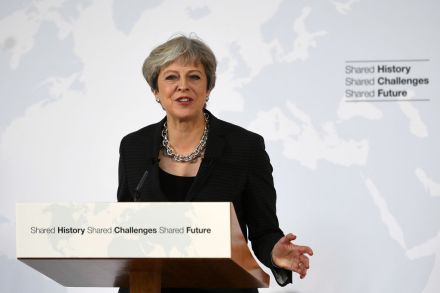
Theresa May’s speech in Florence was fine as far as it went, I say in The Sun this morning. A time limited transition is a sensible way to smooth out Brexit. But May didn’t answer the really big questions in this speech: what kind of future relationship with the EU does the UK want? How does it think regulatory divergence should be managed? The problem is that the Cabinet is divided on these questions—and neither side is strong enough to win the argument. So, Boris and Gove can stop Hammond and Heywood from getting what they want. But they can’t win the debate themselves. The result is a stalemate. This means the government doesn’t have clear direction on this crucial question.

May’s Brexit speech leaves some key questions unanswered

Theresa May’s speech in Florence set out more detail on the government’s position on transition. But it did not answer the question of what the UK’s final relationship with the EU should be, and how the UK thinks regulatory divergence between it and the EU should be managed. May’s transition proposal, though she still prefers the term implementation period, would see the UK continue to obey all EU rules and regulations and accept free movement, albeit with registrations of new arrivals. In effect, Britain would be staying in the EU but as a non-voting member. She suggested that this transition last two years. But she also said it should go on for as long as necessary for the new systems to be put in place.

Brexit wars

The time for choosing is fast approaching for Theresa May. Soon she must make a decision that will define her premiership and her country’s future. The past few days have shown how hard, if not impossible, it will be for her to keep her entire cabinet on board with whatever EU deal she signs. It is imperative that she now picks what kind of Brexit she wants. But doing so will risk alienating — or even losing — various cabinet members. She has been trying to blur the lines for months, but as one of those closely involved in this drama warns: ‘She can’t fudge this forever.’ Another participant in the struggle says: ‘She’s got to decide who she wants sitting round the cabinet table.

The biggest Cabinet Brexit split

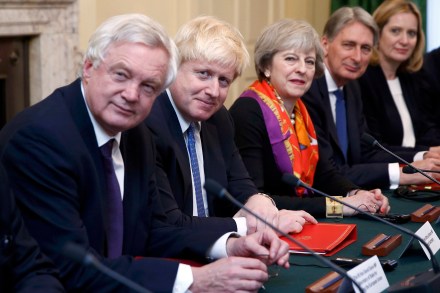
The Cabinet remains divided on one of the most fundamental Brexit questions. Everyone in the Cabinet does accept that Britain is leaving not just the EU but the single market too. But there remains a split over whether Britain should be aiming for an EEA minus deal with the EU or a CETA plus one. This might sound techy but it is fundamental to Britain’s future. Free movement makes it a political non-starter for Britain to stay in the single market. However, several of the most senior members of the Cabinet, backed by the institutional Treasury, think that Britain should stay as closely aligned to the single market as possible. They want Britain to shadow the EU’s regulatory structures and transpose European Court of Justice judgements.

Can Theresa May satisfy both Boris and the EU?

We are only six days away from Theresa May’s big Brexit speech in Florence. But it is far from certain what will be in it, as I say in The Sun today. The biggest domestic challenge for May, insiders say, is squaring Boris Johnson. I’m told that ‘there is quite a lot of nervousness about that’. ‘Boris has been the most hard-line’ of the Cabinet Brexiteers an insider tells me. One of those involved in the negotiations between the two camps predicts ‘it is going to be a tetchy week.’ Boris’s issue is money. He is opposed to paying a big exit payment to the EU and he’s told Number 10 that he wants that £350 million for the NHS.

Can anyone unite the Tory tribes?

One of the reasons that coalition governments are so unusual in Britain is that both main parties are coalitions themselves. The Tories have long been a party of both social conservatives and libertarians, Eurosceptics and Europhiles, buccaneering free traders and economic nationalists. Labour has always brought together Methodists and Marxists, middle-class liberals and working-class trade unionists, hawks and doves. These internal alliances mean the parties mostly avoid the need for an external one. But the Labour and Conservative coalitions are nearing breaking point. Labour’s problem is that its far left now dominates, making the party unbalanced. The two years since Jeremy Corbyn won the leadership have seen his wing gain ever more control.