James Forsyth

James Forsyth

James Forsyth is former political editor of The Spectator.

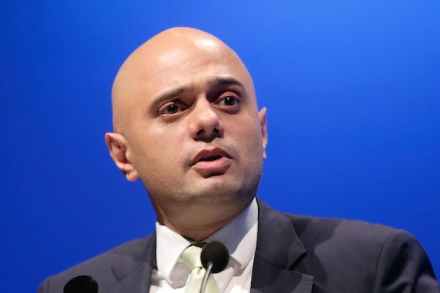
Why Sajid Javid’s appointment as Home Secretary is striking

Sajid Javid is the new Home Secretary. His appointment is striking in several ways. First, he and May have clashed repeatedly in the past—Javid was one of the ministers most frequently briefed against during the May ascendancy. He was also brutal in the first post-election political Cabinet in detailing all the problems with how May’s Downing Street had been run. So, the promotion of this independent-minded individual suggests that May is now prepared to accept some fresh thinking in the Home Office. This is desperately needed. The tens of thousands immigration policy looks at the whole issue in the wrong way. Immigration shouldn’t be a numbers game, rather it should be about what is best for the economy and society.
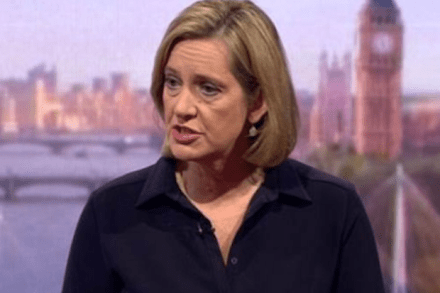
With Amber Rudd gone, the Windrush scandal moves closer to Theresa May

Alastair Campbell denies that he ever said that no Cabinet Minister can survive a negative story lasting ten, eleven or 14 days. But even if he didn’t say it, it is not a bad rule and one that Amber Rudd has fallen foul of. Rudd’s resignation is a result of the fact that more and more keeps coming on this story, and she is now faced with admitting that she either deliberately misled parliament or really didn’t know what was going on. She has gone before Monday’s statement in the Commons which would have been an exceptionally difficult moment for her. At some point, there is only so much a senior minister can take before there position becomes untenable, as I say in the podcast (click below). Her departure causes multiple problems for Theresa May.

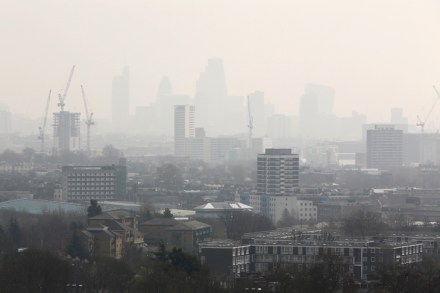
London shows what happens to the Tories when homeowners become a minority

Next Saturday had long been circled in Tory plotters’ diaries as the date on which the next effort to remove Theresa May would begin. But as I say in The Sun this morning, even May’s most ardent Tory critics now accept that next week’s local elections aren’t going to lead to her downfall. Why, because expectations are so low for the Tories that they are almost bound to surpass them. (May’s own position is also stronger than it was in January thanks to her handling of the Salisbury attack.) Tory insiders now believe that they are likely to hold one of their London flagship councils, Westminster and Wandsworth.

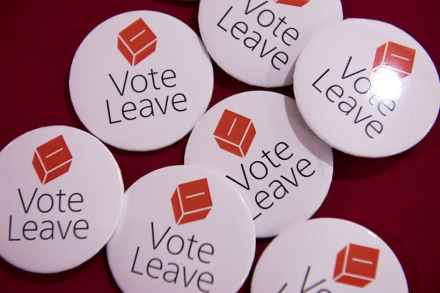
Vote Leave’s statement to the Electoral Commission

A few weeks ago, Westminster went into a frenzy over allegations in The Observer about the relationship between Vote Leave and the campaign group BeLeave. I have seen a copy of a statement that Vote Leave has sent to the Electoral Commission which they believe proves that they did not destroy evidence. Vote Leave statement: This statement concerns a serious allegation against Ms Victoria Woodcock recently made by Shahmir Sanni et al, which we have reviewed urgently and needed to respond to more immediately, alleging what was variously described as data deletion on, or removal of access permissions from, Vote leave's 'BeLeave' folder on March 17th 2017. We are now in a position to respond on this matter following a forensic review of Vote Leave's Google Drive.

Beware a Brexiteer who feels betrayed

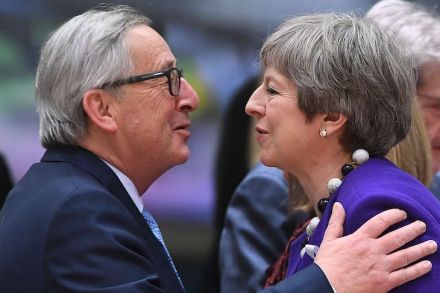
It is sometimes tempting to imagine that the Brexit negotiations will follow the course of a Sunday night TV drama: weeks of suspense, then everything is miraculously resolved with five minutes to go. Last December’s agreement was a case in point. Theresa May turned up to see Jean-Claude Juncker, the Commission President, expecting to do a deal; then the Irish border hit and the whole process seemed in danger. But the Prime Minister made a pre-dawn dash to Brussels just four days later and a deal was done. This has all added to Westminster’s sense that, ultimately, everything will be alright on the night. This means Westminster is underestimating the danger of the negotiations failing. In December, problems could be postponed.

Len McCluskey inflames Labour’s anti-Semitism row

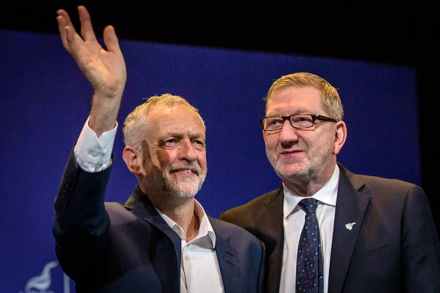
Len McCluskey, the secretary-general of Unite and a key Corbyn ally, has poured petrol on the flames of the Labour row over anti-Semitism. In a piece in the forthcoming issue of the New Statesman, he accuses a group of backbench Labour MPs of using the anti-Semitism issue  ‘to attack and undermine Jeremy Corbyn’. McCluskey claims that there is a significant overlap between those criticising Jeremy Corbyn for his approach to dealing with anti-Semitism in the party and those who backed Theresa May over the Syria strikes. McCluskey singles out Chris Leslie, Neil Coyle, John Woodcock, Wes Streeting, Ian Austin and Angela Smith for particular criticism.

May and Boris in Cabinet clash over immigration amnesty

At Cabinet today, ministers discussed the fallout from the Windrush scandal. I understand that Boris Johnson made the point that there needed to be a broader immigration amnesty for long-standing Commonwealth immigrants. He argued that this was necessary to prevent others from getting caught up in the same situation, having to produce overly onerous amounts of evidence to show that they have been living here for years. Obviously, this amnesty wouldn’t apply to those with a criminal record. I’m told that Theresa May then rather acidly remarked that Boris had previously called for an amnesty for all immigrants, which he did first in 2008 and then again in 2016 when he privately proposed one for those who had been here for over a decade.

Why Brexiteer ministers are so concerned at the moment

Senior Cabinet Brexiteers are more concerned about the project than they have been in some time, I write in The Sun this morning. The reason for this is that there is a concerted push underway to keep Britain in a customs union with the EU for good even after December 2020. If Britain is to take full advantage of the opportunities that Brexit offers, this must be resisted. A customs-arrangements between Britain and the EU which speeds up checks, minimises bureaucracy and helps maintain cross border supply chains would be sensible, and mutually beneficial. What wouldn’t be, is a situation where the EU determines both the taxes charged on goods coming into this country from the rest of the world and which countries can export their goods to Britain tariff and quota free.

Corbyn shows his true colours

The Tories’ great worry after the last election was that they had effectively vaccinated the electorate against Jeremy Corbyn. They feared that the next time they tried to show that he was extreme, weak on national security and too friendly with the West’s enemies, voters would yawn and declare that they had heard it all before. They would be immune to any attacks on the Labour leader. Compounding this worry was the fear that Corbyn would present himself, as he had quite successfully during the general election campaign, as a more mainstream figure than he really is. If Corbyn had followed this ‘kindly grandad’ approach, the Conservatives would be in deep trouble right now. Labour’s moderates would also lack any obvious cause for complaint.

Theresa May explains herself to parliament

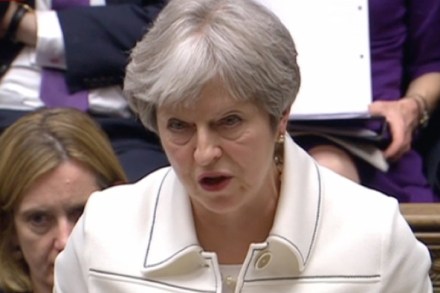
Theresa May came to the House today to explain why the UK joined in the strikes on Syria’s chemical weapons facilities and why she had not consulted the House first. May argued, rightly, that there was no prospect of getting UN authorisation for action because Russia would simply veto anything that affected its client regime in Damascus. She also pointed out that if the democratic world had failed to act against Assad following these attacks, we would be slipping back to a time when the use of chemical weapons was regarded as normal. But, perhaps, the most controversial part of her statement was on why she had not consulted parliament first.

Theresa May reveals her hawkish side

So, what are strikes on Syria meant to achieve? Well, as I write in The Sun today, Boris Johnson was clear at Thursday’s Cabinet what they aren’t trying to do. The Foreign Secretary emphasised that this wasn’t about regime change in Damascus or altering the course of the Syrian civil war. Instead, it was about maintaining the prohibition on the use of chemical weapons. The aim is to ensure that Bashar al-Assad’s regime realises that if it uses gas, it will face consequences. If no action is taken, Assad’s forces will step up their use of chemical weapons. Why, because they are trying to clear out opponents who are dug in and prepared to fight to the death and gas is one of the most effective ways of doing that.

A new world role for Britain

Britain’s imperial past distorts the debate about our place in the world, but not in the way that is commonly assumed. It is often asserted that claims about this country’s international importance are a form of nostalgia. It would be more accurate to say that Britain tends to underestimate its power because it is no longer the global hegemon. Britain might not be, in 1066 and All That terms, ‘top nation’ any more. On any objective reading, however, the United Kingdom is still an influential global player. It is a permanent member of the UN Security Council, the sixth largest economy in the world, a nuclear weapons state, a member of the world’s most powerful intelligence agreement and a cultural superpower.

Trump warns Russia: the missiles are coming

Not content with firing his Secretary of State by Twitter, Donald Trump is now issuing warnings of forthcoming US military action by it. He has just tweeted that: https://twitter.com/realDonaldTrump/status/984022625440747520?ref_src=twsrc%5Etfw This tweet complicates things for Theresa May. It makes it abundantly clear that the US is going to launch strikes on Syria. But the bellicose tone of this message, to put it mildly, will increase doubts here about whether these strikes are such a good idea and how rapidly the situation with Russia could escalate. I still suspect that the UK will ultimately join in military action. It would be odd not to given how much this has become about Russia where the UK has received robust Western support since the Salisbury attack.

Amber Rudd’s third way on stop and search

With more than fifty murders in London alone this year, crime is rising up the political agenda. Today, Amber Rudd unveiled the government’s much anticipated strategy for dealing with violent crime. Rudd’s argument is that drugs is the ‘biggest driver’ of this spike in violent crime. This strategy concentrates on what can be done to try and halt this drugs trading, and particularly the use of children as drug mules. There’s £11 million extra for early interventions designed to stop this happening and more money to try and tackle how the drugs trade is moving out from the big cities. But the main political controversies are over whether the fall in police numbers and the decline in stop and search have contributed to the rise in violent crime.

How should the police and the politicians respond to this spate of murders?

With more than fifty murders in London already this year and knife crime up by 21% in England and Wales according to the latest figures, there’s a clear need for action on violent crime. As I write in The Sun this morning, the government’s long awaited violent crime reduction strategy is out next week. The Home Secretary Amber Rudd briefed the Cabinet on this strategy a few weeks ago. Cabinet Ministers tell me that it is impressive but very much focused on early intervention: the aim is to stop people from turning into violent criminals in the first place. This is a sensible strategy. But there is a need for action now. First, there needs to be more use of the Section 60 power which allows the police to stop anyone in a given area.

Sergei Skripal being out of a critical condition doesn’t get Moscow off the hook

The latest news from the Salisbury attack is that Sergei Skripal is no longer in a critical condition and that his daughter Yulia is now talking and will be well enough to leave hospital at some point. This, obviously, has implications for the investigation into their attempted assassination. Yulia will, presumably, soon be able to tell the police about what happened in the days and hours leading up to them both being found on the verge of death in Salisbury city centre. Internet conspiracy theorists will, I’m sure, declare that the fact the Skripals are not dead is proof that the Russians weren’t behind this. But given that it appears that the Skripals absorbed the nerve agent through their skin rather than breathing it in, it is unsurprising that it was less effective.

Moderate Labour MPs have nowhere to go

The case for Labour moderates leaving their party strengthens by the day. Jeremy Corbyn’s behaviour demonstrates that he is not going to change. His decision to attend a Seder with Jewdas, a fringe group who have claimed that the anti-Semitism scandal is being whipped up by his political opponents, shows how determined he is to stay in his own comfort zone. A poll showing that 80 per cent of Labour members think he’s doing a good job as leader highlights how impossible it would be to remove him. But a more interesting question than whether Labour moderates should go is what they should do once they have. One option would be to set themselves up as the Labour party-in-exile.

The political weather has changed

It might be raining outside but the political weather has changed, I say in The Sun this morning. Theresa May is now in the strongest position she’s been in since the general election, and Jeremy Corbyn the weakest. When May addressed the 1922 Committee of Tory backbenchers on Wednesday, she received a—rather unusual—standing ovation. She herself was in upbeat form telling the meeting that the economy had turned a corner. This, perhaps, explains why the government is now prepared to talk about extra money for the NHS and defence. The Prime Minister who cut such a reduced figure after the election is now marshalling the Western coalition that is pushing back against Russian President Vladimir Putin.

David Davis: There’s no deal without a trade deal

With a year and a day to go to Brexit, David Davis sat down for an interview with Andrew Neil this evening. Davis was clear that there wouldn’t be a deal, and thus a £37bn payment to the EU, unless there was an agreement on the future relationship too. Contrary to the received wisdom, David Davis told this special Spectator event that the UK and the EU will ‘get pretty substantively close’ to a free trade agreement by October. He argued that this meant that the withdrawal agreement would have a lot of detail on what the future trading relationship would be. He said that he thought that this would be necessary to get it – and permission to pay the EU £37bn – through parliament.

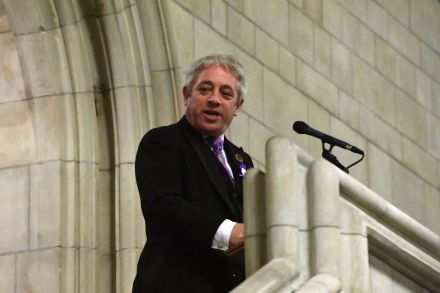
John Bercow should keep his opinions to himself

Late on in PMQs today, Joanna Cherry, an SNP MP, asked Theresa May about the case of a Syrian refugee in her constituency who can’t go on a school holiday to Spain as he doesn’t have the necessary papers and the Home Office are saying it will take three months to sort this out. Cherry asked the Prime Minister to intervene, to speed up the process. So, a standard, good constituency question. As was May’s reply, she said that the Home Secretary had heard what Cherry had said and would look into it. But then John Bercow rose from the chair and said ‘good’. This was completely inappropriate. It is not the job of the Speaker to opine on whether what the Prime Minister is saying at the despatch box is ‘good’ or ‘bad’.