James Forsyth

James Forsyth

James Forsyth is former political editor of The Spectator.

David Davis takes back control

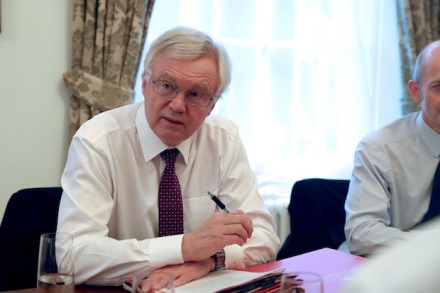
In the last few months, David Davis has appeared a rather peripheral figure. After the December deal, all the talk was all of how Olly Robbins and Jeremy Heywood were now the key figures in Theresa May’s Brexit team. But, as I say in The Sun today, this week David Davis reasserted himself. I understand that on Wednesday night he was shuttling back and forth from Number 10 fixing the paper on the future economic partnership. As one member of the inner Cabinet puts it, the paper ‘needed pulling over to a more realistic view of what Brexit meant against a more Heywood view of what it meant’. The paper Theresa May produced at Chequers was, to borrow a phrase, highly aligned with the DD position. Under this plan, the UK will not automatically take every new EU rule.
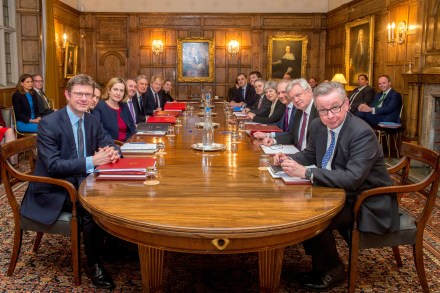
Brexit inner Cabinet agree a common position, and it favours divergence

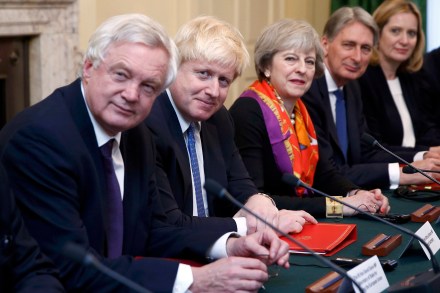
‘Divergence has won the day’, a source told me after the inner Cabinet’s Brexit away day at Chequers. I am informed that Theresa May’s view expressed at the meeting is closer to the Boris Johnson position than the Philip Hammond one. However, I am also told that there were ‘no winners’; unsurprisingly, no one is getting everything that they wanted. In the words of one insider, ‘everyone gave some ground’. But I understand there is now a position that May can present to the Cabinet next week. This is based around the UK’s opening position being that it wants mutual recognition on goods standards. However, the UK will declare that it intends to maintain standards, and that there’ll be no race to deregulate.

The Tories’ dilemma: to spend or not to spend

While the rest of the country waits for this spring to arrive, in Westminster the talk is all of spring 2019. That’s when the United Kingdom formally leaves the European Union, and when a slew of cabinet ministers think the Tory leadership contest will begin in earnest. But something else will happen in the spring of next year that will be almost as important: the review setting out departmental spending from 2020 to 2023. It will reveal how the Conservatives intend to fight the next election: do they plan to take on Jeremy Corbyn with a no-new-taxes pledge or will their strategy be to say that they are increasing spending but more responsibly than Labour would?

In praise of the ‘brainy’ Brexit Brits

Democratic debate functions best when it is accepted that there are people of good will and good arguments on both sides. In the Brexit debate, this sense has too often been missing. There’s plenty of blame for this to go round. To put it crudely, too many on the Leave side have been too quick to question the motives of those arguing the Remain case. While too many of those who backed the status quo have refused to accept that there are any credible arguments for leaving the EU.   So the launch by two Cambridge academics, Robert Tombs and Graham Gudgin, of Briefings for Brexit is a welcome development.

There’s a Brexit deal to be done on security

Theresa May was pushing at an open door in her Munich speech when she warned against ‘rigid institutional restrictions’ harming security cooperation after Brexit, I say in The Sun today. Member states are reluctant to follow the Commission’s tough line on this as they know how valuable the UK’s contribution in this field is. I understand that when the Commission told the 27 that the UK would have to be treated like other third countries on security after Brexit, several member states pushed back. They argued that it must be possible to find sensible compromises. Security is where it is most clearly in the interests of EU member states to find an accommodation with the UK in these negotiations.

Labour deny that Jeremy Corbyn was a paid informant during the cold war

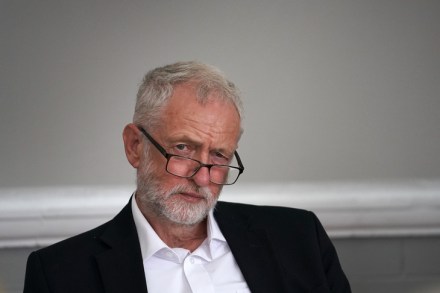
The case of Jeremy Corbyn and the Czechoslovakian diplomat has taken another turn today. The officer who met Corbyn has alleged that Corbyn took money from them and was a paid informant. The Labour leader’s office has vigorously denied the charge, citing the director of the Czech security force archive who has said that their records don’t back up this version of events. There’s clearly a contradiction between the accounts of Corbyn and the Czechoslovakian diplomat—and the Labour leader is entitled to the presumption of innocence on this point. Corbyn, though, would undoubtedly be the most anti-Western figure ever to become Britain’s Prime Minister.

A Brexit deal depends on Tory unity

In a hung parliament, recess takes on a particular importance for the government. It is a chance for ministers to travel, free from the fear that they might be called back for a crunch vote at any moment. Explaining to your European hosts, for instance, that you have to cancel all meetings with them and go home now, or else the government might fall, doesn’t send quite the right message. Helpful though it is, recess will get ministers only so far. Those doing the rounds of European capitals this week still don’t have a detailed Brexit position to sell to their counterparts. This is a problem. Next month’s European Council meeting is expected to set out the Commission’s mandate for the next stage of the negotiations, which will cover any UK-EU trade deal.

‘Old Boris’ is back

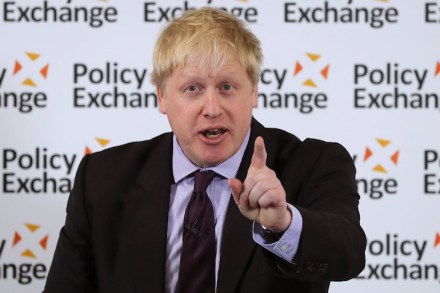
Boris Johnson has been down in the mouth in recent months. The ‘old Boris’ appeared to have been worn down by the cares of the office. Also, for a politician who loves to be loved, it has been difficult adjusting to his more divisive post-referendum status. But today was far more of the old Boris. He returned to his 2016 case for Brexit in a speech that was full of his trademark optimism and humour, including a slightly off-colour joke about dogging. Today had been billed as Boris reaching out to the 48 per cent—and there was a bit of that. But the real audience for this speech were the fellow members of the Brexit inner Cabinet.

The Oxfam scandal will unearth some difficult facts for ministers

When the media talk about government outsourcing, they normally concentrate on Capita, G4s or, recently, Carillion. But when it comes to aid, the government outsources too. The majority of the UK’s aid budget is sent directly to the country concerned. Just over a third of it is spent through partner organisations. The bulk of this money goes through organisations such as the World Bank. But some of it is spent with charities such as Oxfam. The UK government gave Oxfam £31.7 million in 2016 which isn’t a huge amount in government terms but is considerable in charity terms. This means that the scandal engulfing the aid world, which started with the revelations about the behaviour of certain Oxfam employees in Haiti, also involves the use of public money.

Where the Brexit inner Cabinet is heading

There have been two meetings of the Brexit inner Cabinet this week. But as I say in The Sun this week, the government is still making its way towards a detailed, negotiating position. Indeed, in one of the meetings this week, Theresa May emphasised that the ministers didn’t need to come to a decision that day. That may have led to a more constructive conversation. But as Jeremy Heywood delicately pointed out, taking these decisions won’t get easier with time. With the crunch EU council meeting next month, the UK doesn’t have much more time either. The longer the UK waits, the harder it will be to build diplomatic support for its preferred solutions. The Brexit inner Cabinet remains divided on the best way ahead.

Brexit belongs to the Tories

The Tory party is the party of Brexit, whether it likes it or not. The referendum was called by a Tory prime minister, Tory politicians led Vote Leave and it is a Tory government that is taking Britain out of the European Union. Theresa May might equivocate when asked if she’d vote Leave in another referendum, but to the average voter, Brexit is a Tory policy. Mrs May’s reluctance to say she’d back Brexit in another vote is revealing of a broader Conservative desire to avoid being too closely associated with the project. A classic example is Philip Hammond’s view that the £350 million a week supposedly promised to the National Health Service is Boris Johnson’s problem, not his.

May’s indecision is not helping Tory Brexit tensions

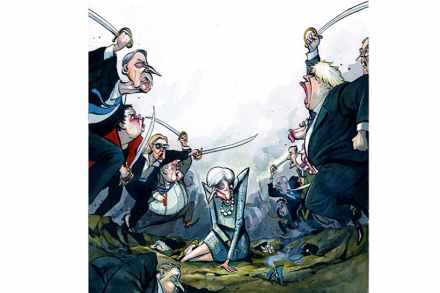
After PMQs today, Theresa May will rush back to Downing Street to chair a meeting of the Brexit inner Cabinet. This meeting will take place against a backdrop of heightened Tory infighting over Europe. This isn’t being caused by the Cabinet, who have been fairly well behaved in recent days, but the backbenches. May’s problem is that both wings of the Tory party think that her policy is, to a certain extent, equidistant between them. So, whenever one side ratchets up the rhetoric, the other feels obliged to follow suit. Since Jacob Rees-Mogg took over as chair of the European Research Group, the main Brexiteer group in the Tory party, it has taken a far more confrontational approach to the government.

Pardoning the suffragettes would be wrong

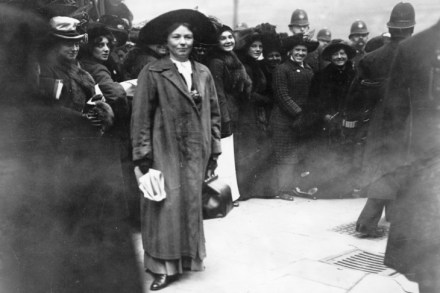
On this, the centenary of some women getting the right to vote, there has been a lot of talk of pardoning the suffragettes. Jeremy Corbyn and Ruth Davidson have both said they back the idea, and the Home Secretary Amber Rudd has said she’ll look into it. But pardoning the suffragettes would be wrong. For many of them deliberately chose to be arrested and to go to jail to highlight the injustice they were fighting. The present has no right to reach back into the past and wipe their convictions, in both senses of the word, from the record. Take Christabel Pankhurst who, in 1905, deliberately assaulted a policeman, albeit only by spitting at him, with the aim of being arrested. She then refused to pay the fine so that she would be sent to prison.

The best way to avoid a Tory split? Decisive leadership

At political Cabinet this week, the chief whip warned ministers how difficult it was to hold the Tory party together, I write in The Sun this morning. Julian Smith warned them that noises off from the Cabinet made it even more of a struggle to maintain unity. Smith is right. The Tory party is dangerously divided, a split is a real possibility. He’s also right that ministers sounding off over Brexit heighten these tensions. But what he didn’t mention is the most important thing, the need for leadership. Ministers are putting forward their views on Brexit so publicly because there isn’t a clear government position. They think everything is still to play for, so a bit of public lobbying is justified.

Theresa’s choice

The Brexit ‘inner cabinet’ met on Monday. It was meant to be an important meeting, one which made some real progress on deciding what kind of economic relationship with the EU the UK is seeking. Senior civil servants had been told that the crucial topic of the Irish border would be on the agenda. This is one of the hardest parts of the Brexit equation to solve, and the answer will reveal plenty about the kind of trade deal the UK is seeking and the trade-offs it is prepared to make. But when the agenda for the meeting was circulated on Friday night, Ireland was not there. This left only data and security — the two least controversial of the nine questions that the Brexit cabinet is meant to address.

Theresa May must lead or go

The Brexit ‘inner cabinet’ met on Monday. It was meant to be an important meeting, one which made some real progress on deciding what kind of economic relationship with the EU the UK is seeking. Senior civil servants had been told that the crucial topic of the Irish border would be on the agenda. This is one of the hardest parts of the Brexit equation to solve, and the answer will reveal plenty about the kind of trade deal the UK is seeking and the trade-offs it is prepared to make. But when the agenda for the meeting was circulated on Friday night, Ireland was not there. This left only data and security — the two least controversial of the nine questions that the Brexit cabinet is meant to address.

Don’t sweat the Brexit transition deal

There are many things to worry about with Brexit, but the terms of the transition should be pretty low down that list. The transition was always going to have to be off-the-shelf (if you could negotiate a bespoke transition, you might as well do the final deal) and as long as it is time-limited, it shouldn’t be a problem. Indeed, it should help smooth out Britain’s exit from the European Union. Bill Cash’s urgent question today was another sign of how some Tory Eurosceptics are becoming more and more concerned about the terms of the transition, and how it will make Britain—in effect—a non-voting member of the EU. Jacob Rees-Mogg’s charge that it makes Britain a ‘vassal state’ has resonated with many of them.

Theresa May’s lack of a Brexit vision is costing her, and the country

Boris Johnson and Philip Hammond are further apart on Brexit than anyone else in the inner Cabinet. But there is one thing they agree on, I say in The Sun this morning. In the last 10 days, both of them have expressed their frustration to close allies that Theresa May won’t make a decision; that Britain is at a nation-defining moment in its history and that there is no real leadership. Their interventions are an attempt to provide that leadership, to give people an idea of what Brexit will be like. Absurdly, the Brexit inner Cabinet did not meet this week despite the fact that there is not yet a detailed UK position on what trade deal it wants with the EU. This lack of a position is creating the vacuum that both Boris and Hammond are trying to fill.

Philip Hammond’s soft Brexit remarks are a mistake

This afternoon has provided a preview of just how difficult the next few weeks are going to be for Theresa May. First, we had word of a speech from Jacob Rees-Mogg, the new chairman of the European Research Group of Tory MPs, warning that the government’s whole tone on Brexit must change and that it mustn’t be treated as just a ‘damage limitation exercise’. Rees-Mogg also made clear that, to his group, close alignment with EU rules is unacceptable. Then the FT broke news of Philip Hammond telling a Davos audience that he only wanted ‘very modest’ changes to the UK’s relationship with the EU. So as one Whitehall source put it to me, how can Theresa May square this circle?

Tory MPs are worried Theresa May wants to fight the next election

Theresa May remains in place because there is still no agreed successor, I say in the magazine this week. As one senior Tory backbencher put it to me, ‘We take the view that while things are bloody awful, we don’t want to risk making things worse’. So does this mean that despite all the drama of the last seven days, nothing has changed? Well, no—I think some things have changed. First, nearly all Tories now agree that the May government is listless. Perhaps the more remarkable thing about the reaction to that Nick Boles tweet is how no one is really trying to argue with the substance of it. Even some of May’s most loyal supporters admit that the government doesn’t have much of a domestic agenda; they blame this on how all-consuming Brexit is.