James Forsyth

James Forsyth

James Forsyth is former political editor of The Spectator.

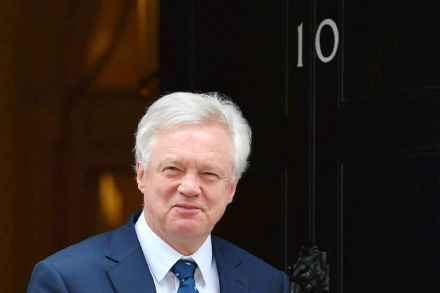
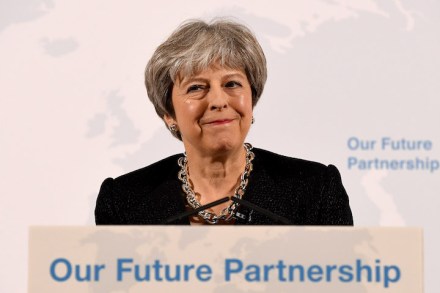
Theresa May gives David Davis a backstop concession

After a morning of high drama in Westminster, the UK government now has a backstop proposal to put to the EU. Last night, the backstop text said that it was time limited but didn’t specify an end date. In two meetings with the Prime Minister this morning, David Davis demanded changes. He has got some concessions: the text now talks about how ‘The UK expects the future arrangement to be in place by December 2021’. But there is no hard cut-off date in the text. Theresa May was acutely aware that if one had been included, the EU would have rejected it out of hand. We now wait to see what the EU says about it. Michel Barnier has already tweeted his three tests for it.

Hedgers vs Ditchers: the new Brexit divide

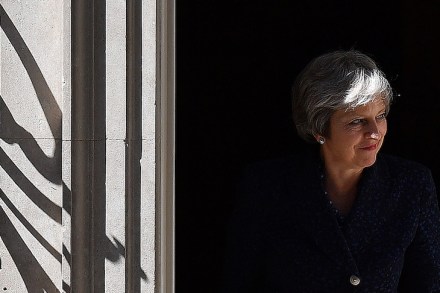
Brexit could look very different by the end of this month. In the coming days, the government is expected to present a new version of the ‘backstop’, which is meant to address the Irish border problem. This would see the whole of the UK stay in a customs union with the EU and copy EU rules on goods and agriculture until, and unless, a comprehensive trade deal is done. So much for taking back control. There is another great danger in this approach — it would result in a permanent Brexit limbo. Britain would be a rule-taker unable to pursue a meaningfully different economic model. Once the ‘backstop’ is in place, it’s hard to see what incentive the EU would have to negotiate and approve a big free-trade deal.

Why the Brexit backstop is causing trouble

The government’s proposal for a UK-wide backstop will not contain an end date. This, as the Times' Sam Coates points out, is bound to be controversial. For if the backstop contains no end date, it could end up running indefinitely. Indeed, with the UK in a customs union and having to follow EU rules on goods and agriculture, it is hard to see what incentive the EU would have to discuss a trade deal. After all, what would be left to discuss would be services: where the UK has a £92 billion surplus. There is a meeting of the Brexit inner Cabinet tomorrow. But as Tom Newton Dunn and Harry Cole point out in this morning’s Sun, this is not meant to be discussing the backstop but tidying up other issues related to the withdrawal agreement.

Can the EU withdrawal bill survive its return to the Commons?

Put June 12th in your diary, for that’s when the EU withdrawal bill will return to the House of Commons. Julian Smith, the chief whip, has written to Tory MPs telling them, ‘There will be a number of divisions that day’ as the government attempts to overturn the Lords’ amendments to the bill. Smith’s letter includes a pointed reference to the Tory manifesto, which included a commitment to leave the customs union. This is designed to remind potential Tory rebels that they’d be breaking with the manifesto on which they were elected if they vote for the customs union amendment. But it’ll take more than this to get the government through these votes. One Cabinet minister tells me that it is ‘going to get messy’.

Sajid Javid can combat the extremists’ narrative

The government will launch its new counter-terrorism strategy next week, I write in The Sun today. It’ll also introduce a new bill to ensure longer sentences for terrorists. This strategy will see more resources for the Prevent programme in high priority areas such as London, Manchester, Birmingham and Bradford. There’ll are plans too, to recruit over a thousand more staff to the security services so that a greater number of suspects can be kept under close surveillance at any one time. There’ll be steps taken to ensure that those released from prison are monitored more closely once they have been released. There’ll also be a fresh push to get the tech companies to do more to combat terrorist material online.

Will Italy’s first fight with Brussels be over immigration?

Italy has a new Prime Minister: Giuseppe Conte, who heads up a Five Star / Lega coalition. He presented his list of ministers to President Mattarella this morning and, with the Eurosceptic economist Paolo Savona moved from Finance to European affairs, it was accepted. The way is now paved for this Five Star / Lega coalition to start governing. President Mattarella has succeeded in preventing Savona’s appointment as Finance Minister without collapsing the whole government, which must be considered a success for him. But his victory is not total. Savona is still in the government and will be able to cause plenty of trouble from his role as Europe minister. His likely replacement as Finance Minister, Giovanni Tria, has also been deeply critical of the single currency.

Trump’s trade war is back on

The threat of a global trade war is back. The Trump administration has announced that the US will impose tariffs on aluminium and steel imports from the European Union, Canada and Mexico. The EU is already promising to respond to Trump’s tariffs in kind. It is all too easy to see how this situation escalates. The EU slaps tariffs on bourbon and Harley Davidsons in response, an infuriated Trump then hits a slew of EU products with tariffs and on it goes. The Trump’s administration decision to impose tariffs is a historic mistake.

Could a eurozone crisis benefit Britain?

Is it better to negotiate with a confident, optimistic European Union or a nervous, fretful one? Even Brexiteers are split on this question. Some take the view that the European Union’s difficulty is Britain’s opportunity and that bad news for Brussels is good news for Brexit. But most, and especially those in government, tend to think that a more confident EU will be less scared of other countries following Britain’s lead, and so more inclined to do a decent deal. In the immediate aftermath of the referendum, there were worries in Brussels that Brexit was just the start. Senior European political figures feared that 2017 could see the populist Geert Wilders top the poll in Holland and Marine Le Pen break the 40 per cent barrier in France.

The problem taxing the Tories

Political Cabinet on Tuesday was treated to a polling presentation that highlighted the dilemma the Tories are facing. When voters are asked what the most important issue facing the country is, they reply Brexit and the NHS. But when they are asked what the most pressing issue for them personally is, they say the cost of living. And what’s the most popular Tory policy since the election? The stamp duty cut for first time buyers. As I write in the Sun this morning, the political implications of all this is clear: Voters, who are most worried about the cost of living, won’t thank politicians who hike their taxes.

Tory MPs brace themselves for EU Withdrawal Bill showdown

The Chief Whip has just told Tory MPs that the EU Withdrawal Bill will be coming back to the Commons in early to mid-June. He told a meeting of the 1922 Committee that all leave was cancelled, and that there would be no slipping as the Government tried to overturn the Lords amendments. He was, I am informed, clear that the Government isn’t changing its mind on either the EEA or a customs union. There had been speculation that the Government would try and hold the withdrawal bill back until the autumn. But I understand that this option was never really a goer because of the number of statutory instruments associated with it.

Why the Tory Brexiteers are swallowing May’s compromises

This week, Theresa May got her Brexit inner Cabinet to agree that, in the event of no trade deal being in place by December 2020, the UK would continue to apply the EU’s common external tariff. In The Sun this morning, I try and explain why Brexiteers aren’t kicking off about this and the other concessions May is making, or preparing to make. One influential figure puts it to me like this, ‘it is all very unsatisfactory, but it is what it is’. In other words, given the mistakes that have been made—with the lack of proper no deal planning and the backstop--there isn’t really an alternative.

Who can bridge the great divide?

Amid all the argument in Westminster, everyone can agree on one thing: the country is bitterly divided. The 52:48 divisions of the Brexit referendum are still there, and possibly even more entrenched than during the campaign itself. The result hasn’t been followed by a period of national healing — quite the opposite. Even the cabinet appears to be split along Leave and Remain lines. You would have to go back a quarter of a century to find a time when the two main parties were so far apart. The public, however, shows no sign of deciding which path it wants to choose. The general election resulted in a hung Parliament, and the local elections earlier this month suggest that if Theresa May went to the country tomorrow, the result would be even more inconclusive.

Why Karen Bradley is, for the next few days, the most important person in the government

In the Brexit inner Cabinet meeting last week, it was clear that Theresa May’s main objection to ‘max fac’, the customs arrangement favoured by Brexiteers, is that it wasn’t consistent with her aims for the Irish border. So, Karen Bradley, the Northern Ireland Secretary, has been put on the Cabinet’s max fac working group to examine if it is compatible with the government’s position on the Irish border. As I say in The Sun this morning, if, at the end of this process, Bradley says that it could work in Northern Ireland then Mrs May would be able to climbdown with dignity. Bradley is a May loyalist—she was one of her junior ministers at Home Office.

Brexit is fast becoming a Tory no-win

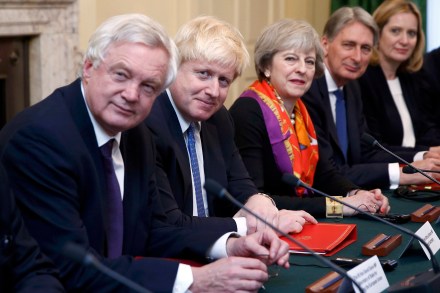
Theresa May’s Brexit dilemma is becoming more acute. Last week, she failed to garner the support of the Brexit inner cabinet for a so-called ‘new customs partnership’ with the European Union. Even so, May can’t and won’t drop the idea. She’s convinced that it is critical for solving the Irish border issue, and thus unlocking a deal. But the bad news for Mrs May is that opinion has hardened against her scheme (which would see the UK collecting tariff revenue for the EU even after Brexit). Boris Johnson has publicly attacked it as ‘crazy’ and in no way ‘taking back control’. Tellingly, Downing Street didn’t feel it could slap him down for this.

Aussie rules | 10 May 2018

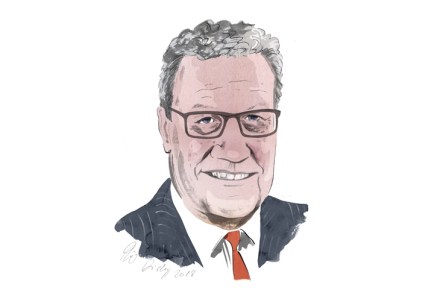
When friends speak, you should listen — and you would be hard pressed to find a better friend of this country in the London diplomatic corps than Alexander Downer. The 66-year-old, who has just finished a four-year stint as the Australian High Commissioner, is an Anglophile by instinct and upbringing. He spent much of his childhood here because his father was appointed to the job in 1964. When Downer’s father left in 1972, he worried about this country joining the European Economic Community and what that would mean for relations with Australia and other Commonwealth countries. So there is a neat symmetry in his son being High Commissioner when Britain decided to reverse that decision. But Downer is not particularly ideological about Brexit.

The Brexit compromise that satisfies nobody

The EU referendum result was relatively narrow. 52/ 48 per cent is a very different result from 55/ 45 per cent or 60/ 40 per cent. In these circumstances, seeking some kind of compromise to try and unite the country seems sensible. But the problem is that while there is a coherent case for leaving the EU and a coherent one for staying in, it is hard to see what the coherent case is for leaving the EU only to become a permanent member of the EEA and stay in a customs union with the EU. A compromise along these lines would satisfy nobody. It wouldn’t deal with the sovereignty concerns of Brexiteers and it wouldn’t satisfy those Remainers who want to be at the European top table as the rules are made.

Theresa May won’t abandon her customs partnership idea: but she should

Theresa May has received a shot in the arm from the local election results. But, as I say in The Sun this morning, she still needs to deal with the whole customs partnership question. Even after the remarkable rebuff that the ‘new customs partnership’ received from the Brexit inner Cabinet on Wednesday, despite the Prime Minister putting her authority on the line by making clear her support for it, Number 10 won’t give up on the idea. It believes that with a few changes it can be made to work. Already, ministers are being told that what really matters is getting out of the EU. The case is being made that once Britain is no longer, legally a member of the EU all these problems can be ironed out.

Theresa May’s good night

Theresa May has not had a good week. She has lost her Home Secretary and had the Brexit inner Cabinet knock back her customs partnership. But the overnight results in the local elections won’t increase the pressure on her. For the Tories have quite comfortably beaten expectations, which were—as Katy says —pretty low. Back in January, those Tory MPs who want May out thought that the local elections results would provide an opportunity for a renewed push against her. This is now clearly not the case. No one will be sending their letters in because of these results and no Tory MP will be more worried about losing their seat at the next election than they were this time yesterday.

Theresa May’s diminishing authority

What happened yesterday is quite remarkable. The Prime Minister summed her inner Cabinet to discuss the biggest question facing the country, the defining issue of her premiership. She told them what she thought the right solution was. Then, a majority of the committee rejected her preferred outcome. What makes this rebuff of Theresa May all the more extraordinary is that two of the members of the committee who went against her are people who she has recently promoted. On Monday, Theresa May elevated Sajid Javid to a great office of state. On Wednesday, he took the opposite position to her in this crunch meeting of the Brexit inner Cabinet.

Things can only get worse

The European Union might have many flaws, but one of its great strengths is its ability to sense weakness. It is telling, then, that Michel Barnier didn’t mince his words on his trip to the Irish border this week as he made the case for a goods border in the Irish sea. This is something that Theresa May has said no British prime minister could ever accept, and it’s anathema to most of her cabinet colleagues, not to mention the Democratic Unionist party’s MPs on whom she relies for support. So why would Barnier return to this theme? Because even from Brussels, it’s clear what a bind Mrs May is in. Not so long ago, she was hailed as the indestructible Maybot: the queen of all she surveyed.