James Forsyth

James Forsyth

James Forsyth is former political editor of The Spectator.

May’s toxic legacy

At David Cameron’s final Prime Minister’s Questions, a Labour MP asked him how his plan to get the Tories to ‘stop banging on about Europe’ was going. The chamber erupted in laughter and Cameron gave a rather sheepish response. Afterwards, one of those who had prepared Cameron for PMQs wondered whether he should have given a more robust answer. Surely, he argued, the party would stop banging on about Europe now that the referendum had settled the question. How naive that seems in retrospect. It is now becoming clear that the referendum only succeeded in ushering in the most bitter battle in the Tories’ 40-year civil war over Europe.
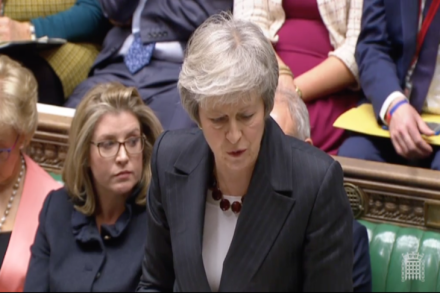
Theresa May fails to calm her Brexit critics at PMQs

Jeremy Corbyn is not a forensic Commons performer. He is uncomfortable adjusting his questions to take into account Theresa May’s responses. This limits his ability to pin May down. Today, he asked a question on a customs and regulatory border in the Irish Sea. May emphasised that there wouldn’t be a customs border there. But Corbyn didn’t then pursue what kind of regulatory border there would be. The result was that May sustained no damage during their exchanges.  Once again, the lack of support in the chamber for May’s deal was striking. There were a couple of supportive questions from the Tory benches, but more hostile ones. The most difficult question of the session came from George Freeman, May’s former policy chief.

Why Theresa May should say she’ll go once her Brexit deal is passed

Right now, Theresa May’s Brexit deal isn’t passing the House of Commons. I argue in The Sun this morning, that Theresa May needs something to change the dynamic. What would do that? Well, if May said she would stand down once the withdrawal agreement was through, that would change things. It would separate off the question of how May has handled the Brexit negotiations so far, from the issue of what parliament should do now. If May pre-announced her departure, it would enable MPs to vote for the deal without that being an endorsement of her handling of Brexit or an invitation for her to go and negotiate the next stage of Brexit, the UK/EU trade deal. Interestingly, one Cabinet Minister tells me that May is now an impediment to this deal passing.

Michael Gove will not resign from DEFRA

Michael Gove is staying as DEFRA Secretary. Yesterday, Theresa May offered him the job of Brexit Secretary. Gove said that he could only do that job if he was given the opportunity to pursue his own course. May said that she wanted the Brexit Secretary to stay on the exact same course she had plotted. So, Gove turned down the job. May, though, asked him to stay as DEFRA Secretary and Gove has now decided to do so. So, why is he staying? Well, I understand that he didn’t see what would be achieved by going. It might doom this deal, but there would be nothing to put in its place. He felt it would be a nihilistic act, not a constructive one.

How close are we to 48 letters of no confidence in Theresa May?

So, where are we? There is now an open effort to get the 48 letters required to force a vote of no confidence in Theresa May. Personally, I don’t think it is a racing certainty that this succeeds. The ERG WhatsApp group has had some influential people urging caution, and telling people not to put their letters in. But if the letters do go in, the risk is greater to Mrs May than conventional wisdom has it. In the privacy of the ballot box, I think a decent chunk of the payroll would vote against the Prime Minister. Interestingly, one minister who is agnostic on the deal told me that they thought May was now an obstacle to it passing; that a new leader would have a better chance of getting it through. Even the possibility of winning a no confidence vote could be dangerous for her.

Esther McVey’s resignation adds to Theresa May’s woes

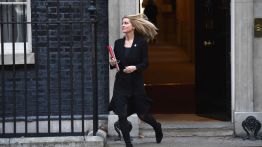
Esther McVey has quit the government. The Work and Pensions Secretary has long known to be unhappy with Theresa May’s Brexit policy and at yesterday’s Cabinet pushed repeatedly for a vote, so she could register her objection to the withdrawal agreement. Having been denied that vote, she realised that the only way a Cabinet Minister can really show that they oppose a policy is by resigning—and has done so this morning. McVey’s resignation is less of a blow to May than Raab’s; most Tory MPs were expecting her to go at some point. But it adds to the sense of crisis surrounding the government this morning. In total, four ministers have quit the government so far this morning—Suella Braverman, a junior DEXEU Minister, and Shailesh Vara have also gone.

Dominic Raab resigns from the government – who will follow?

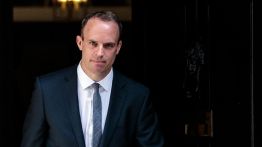
Dominic Raab has resigned as Brexit Secretary following yesterday’s cabinet meeting. This is a bigger blow to Theresa May and her hopes of passing a Brexit deal than the resignations of David Davis and Boris Johnson after Chequers. It now seems almost impossible that this deal can pass the Commons without wholesale Labour support. Indeed, that Raab listed Northern Ireland’s separate treatment as one of his reasons for quitting shows how unlikely it is that the DUP can be persuaded to back this deal. Confirming that, Nigel Dodds, the Westminster leader of the DUP, immediately praised Raab for ‘standing up for the Union’. So, what happens now?

May’s maths problem

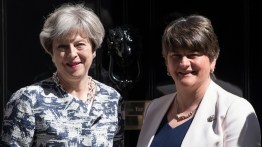
The bad news for Theresa May is that Brexit isn’t over. She might have agreed terms with the European Commission and discussed these with her cabinet, but perhaps her most difficult task awaits: she must now get it through Parliament. Even if she had struck a good deal, it would have struggled to pass. May only has a majority thanks to her confidence-and-supply deal with the Democratic Unionist Party. Northern Ireland was always going to be one of the most contentious parts of Brexit, as the EU has demanded that its future is decided first — in the legally binding withdrawal agreement — rather than in the coming UK/EU trade negotiations. In theory, the DUP has agreed to support the Tories over Brexit.

May’s Brexit cabinet: the rows, the threats, the deal

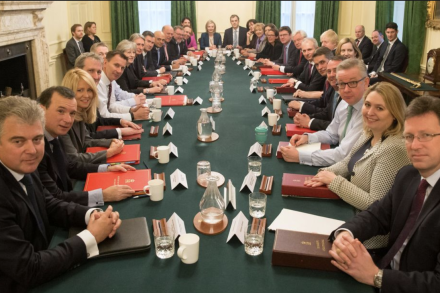
Five hours of cabinet discussion produced several memorable moments. Esther McVey’s push for a formal vote, I understand, went on for several minutes and ended with Mark Sedwill, the new Cabinet Secretary, looking up the rules on procedure. Perhaps more worryingly for No. 10, both Jeremy Hunt, the Foreign Secretary, and Dominic Raab, the Brexit Secretary, urged Theresa May to go to Brussels and get more before putting the deal to Parliament. Geoffrey Cox, the Attorney General, was his usual colourful self. His argument was that this life raft, constructed of oil drums and a plastic sail, needed to make it out on to the open ocean. But when those in favour are calling it an ‘ugly sister’ deal you know there are going to be problems down the line.

Cabinet backs Theresa May’s Brexit deal – but only just

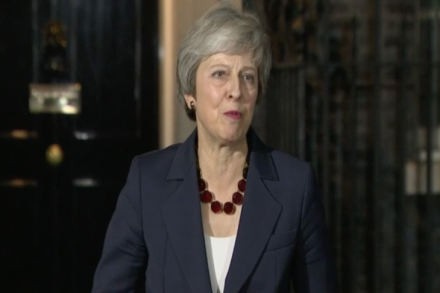
After a five-hour Cabinet meeting, Theresa May emerged from Number 10 to say that the Cabinet have decided to back the withdrawal agreement and the political declaration. She admitted that the debate had been ‘impassioned’, which is presumably code for an argument. I gather that about a third of the Cabinet spoke against her deal. The choices, she said, had been difficult, particularly when it came to Northern Ireland. Sajid Javid and Jeremy Hunt are understood to have spoken against it - to have the Home Secretary and Foreign Secretary against you is quite something. May then immediately moved to frame the choice as between her deal, no deal and no Brexit. This is how Number 10 will try and sell this agreement over the next few weeks.

Theresa May’s uphill struggle to sell her Brexit deal

Right now, the government can’t try and sell the Brexit agreement as Theresa May is currently engaged in the delicate task of trying to persuade Cabinet Ministers—several of whom will have deep doubts about it—to back it. But Boris Johnson, the ERG and the DUP are trying to fill the vacuum this silence from the government is creating. They are trying to define the deal before May has even sold the Cabinet on it. Now, their critics will be quick to point out that they haven’t actually read it. However, the broad contours of this deal are relatively well established. The problem for May is that this focus on the broad outline of the deal makes it harder for her to emphasise the progress she has made.

The only case Mrs May can make for her Brexit deal

Jo Johnson’s resignation, the DUP kicking off and the European Commission's Article 50 task-force talking about a lack of progress mean that it hasn’t been a good end to the week for Theresa May. As I write in The Sun this morning, one government source says ‘if there’s no November Council, then no deal goes into overdrive’. But given Theresa May’s desire to avoid no deal there probably will be some sort of agreement in the not too distant future. But it will be flawed—and Theresa May should say so. Why would a Prime Minister admit that a deal they’ve negotiated isn’t great?

Deal or no deal?

When the Lisbon Treaty was signed in 2007, the inclusion of Article 50 was hailed as a concession to British Eurosceptics. For the first time there was an exit clause: a clear, legal way for a country to leave the European Union. Whatever concerns Britain had about the federalist direction of the EU, it was now at least enshrined in treaty that this country had a right to get out should MPs vote for it to do so. It was intended as a reassurance that the United Kingdom had the sovereign right to leave the EU if it wanted to. What worries cabinet members about the current Brexit plan is there is no clear exit clause. Because of the so-called ‘backstop’, the UK will not be able to leave unilaterally. Even Downing Street has admitted this.

Second Cabinet this week to decide on Brexit backstop

It looks like today’s Cabinet will only be the first of two meetings this week. I understand that another one, which may well make an actual decision, is now likely to be held later in the week. Today’s was significant for an intervention from Geoffrey Cox, the attorney general. Cox’s contribution was about balancing risks. He, I am told, did say that Northern Ireland would be under various, different regulations under the current proposals. But he said that a unilateral withdrawal mechanism—which a large number of Cabinet ministers again backed—wouldn’t be a panacea to all the UK’s problems in the Brexit talks.

Brexiteers in government nervous about what’s going on in the negotiations

It is quiet out there, too quiet in the views of many Brexiteers in government. As I say in The Sun this morning, they fear that right now a deal is being done that they’ll be bounced into supporting. They worry that since last week’s Cabinet meeting, there hasn’t been any new Brexit offer put either to Cabinet or the inner Cabinet yet technical talks have resumed in Brussels. They fear that a deal will be agreed and then they’ll be faced with a choice of rejecting it and having to take the blame for no deal and the chaos that would involve or accepting the agreement with all its flaws. This fear of being bounced has been heightened by Theresa May’s mood.

Tracey Crouch resigns over fixed odds betting delay

The Budget appeared to have landed well. Tory MPs at PMQs on Wednesday were in a notably better mood than normal; a fight with Labour over a tax cut cheered them all up. But this evening some of the sheen has come off the Budget with the resignation of the Sports Minister Tracey Crouch. Crouch has gone over the fact that the stake limit for fixed odds betting terminals is not coming in as quickly as expected. Crouch’s resignation is embarrassing for the government as the main reason that this ban, which would take the maximum stake down from £100 to £2, isn’t coming in quicker is the amount of tax revenue the government makes out of these machines.

Spending Corbyn’s inheritance

There’s a spectre haunting the Tories — the spectre of 1997. Tories fear that history could be about to repeat itself. That after several years in office, they spend a parliamentary term arguing about Europe and plotting against their weak leader with the result that Labour wins the next election by a handsome margin. Back then, the Tories left Labour with a ‘golden inheritance’. John Major’s government had done the responsible thing on the economy. It had pared down the deficit, even putting VAT on domestic fuel in an attempt to help balance the books. But the party’s reward for this was its worst defeat since universal suffrage was introduced.

Why a no-deal Brexit would require an emergency Budget

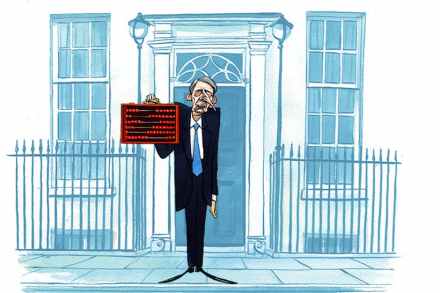
Brexit overshadows this Budget. The story this morning has all been about Number 10 saying that the Budget won’t change in the event of no deal, in apparent contradiction of what Philip Hammond said yesterday. In truth, no deal would—obviously—have consequences for the public finances but the government’s initial reaction would be to try and stimulate the economy. Whatever anyone says now, no government would respond to no deal by taking demand out of the economy. So, yes there would be an emergency Budget. But it would be expansionary, not contractionary. It is not just Brexit though that has left Hammond with limited room for manoeuvre.

Will Hammond take this Budget opportunity?

Monday’s Budget comes at a delicate point in the Brexit negotiations. I say in The Sun this morning, that a bolder government and Chancellor would turn this timing to their advantage. They would use this Budget to give a preview of what the UK would do in the event of no deal. No deal planning shouldn’t just be about logistics, but about how the UK would respond economically to this challenge. Philip Hammond could announce that if it is ‘no deal’ the UK would slash to zero tariffs on manufactured goods from all around the world, bring in complete tax relief on all business investment for the next three years and cut capital gains tax. The EU, which doesn’t want a hyper-competitive economy 26 miles off its coastline, would notice.

Tensions flare as Cabinet members are accused of politicising the backstop

If you want to know how fractious things are getting in the Cabinet just consider this. On Tuesday, as I report in the new issue of the magazine, Claire Perry, the energy minister, accused others in the Cabinet of using the discussion over the backstop to advance their own leadership ambitions. This is a remarkable charge to hurl against a fellow member of the Cabinet. Those present took this barb to be aimed at Jeremy Hunt. He had led the charge on the need for an escape clause from the backstop that the EU couldn’t unilaterally stop the UK from triggering. But, in a rather comic turn, the Foreign Secretary missed Perry’s dig at him as he had slipped out to change into his morning suit ahead of a meeting with the Dutch royal family.