James Forsyth

James Forsyth

James Forsyth is former political editor of The Spectator.

Even ministers don’t understand Brexit

The Brexit negotiations are becoming so complicated that even the cabinet admits that it doesn’t understand what is going on. The Prime Minister has been told by several of her colleagues that they won’t back any deal she agrees until they have seen written legal advice, setting out what it means. If a Brexit deal is going to be impenetrable even to secretaries of state who have followed every step of the negotiations, what hope does the public have? This extraordinary state of affairs was summed up by the cabinet meeting this week during which ministers discussed where the negotiations stand. Theresa May would agree on the money to pay the EU, but not the full terms of Brexit: those negotiations would be ongoing.
Tories rally round Theresa May, but the difficult decisions remain

Theresa May should offer to go to the 1922 Committee every week between now and March 2019. Her appearance led to a, predictable, rallying round. There was the usual desk banging and lots of calls for unity. I’m told there were about half a dozen questions on tone and language following the hideous quotes given to the Sunday papers. Tellingly, Steve Baker, the ERG’s lead organiser, tried to turn the tables and present his group as the real loyalists. He asked the Prime Minister if those Tory MPs saying they would vote down no deal were hurting the her negotiating position. She agreed that this was not helpful. As one Cabinet Minister said to me afterwards, if you’re expecting fireworks when the Prime Minister comes to the 1922, you’ll always be disappointed.

From Dante’s first circle of hell to Black Wednesday, this week’s Cabinet meeting

If last week’s Cabinet was a unified affair with everyone agreeing about the problems with the EU’s version of the backstop, today’s was not. On the one hand, you had Geoffrey Cox warning that the backstop would be like being stuck in Dante’s first circle of hell. On the other, you had David Lidington, the effective deputy Prime Minister, telling ministers that he was the only one who had been an MP on Black Wednesday and they couldn’t have that level of chaos again, which—by implication—there would be with no deal. I understand that Jeremy Hunt spoke very forcefully about how the UK couldn’t be stuck in an indefinite backstop and that the EU mustn’t be able to unilaterally stop this country from leaving it.

What has changed with Tory leadership plotting

Ever since Chequers there has been almost constant speculation about an attempt to remove Theresa May but with nothing actually happening. So it is tempting to ignore it all, to conclude that those agitating against Mrs May are all hat and no cattle. But this weekend, something does appear to have changed. Whether it leads to anything remains to be seen, but the shift in the mood does seem worth relating. Yesterday, I received a phone call from a former Cabinet Minister who had never told me before that May should go. This time, he was clear not only that she should, but that there was an active effort underway to bring this about. The thing that I was struck most about was this former Secretary of State’s anger, there was much Anglo-Saxon language and talk of national humiliation.

Why Theresa May needs an escape clause

Theresa May has one route to a Brexit deal that can avoid irrevocably splitting her party and bringing down her government, I say in The Sun this morning. She needs to persuade the European Union to replace the Northern Ireland backstop with a UK-wide one and to accept an escape clause to show that this temporary UK/EU customs union won’t become permanent. Influential Cabinet Ministers expect the government to decide on the escape clause it will propose to Brussels in the coming days. The Brexit negotiations will then resume with the EU in the second half of next week. Key Cabinet Ministers have one test for the escape clause: is it legally meaningful.

Extending the transition period won’t solve May’s Brexit woes

There is no Brexit transition period without a withdrawal agreement. There can be no withdrawal agreement without a deal on the Irish border, the trickiest issue as I say in the magazine this week, so extending the transition cannot solve this problem. Now, some say that extending the transition makes it less likely that the Northern Irish backstop would ever have to be used. But it is worth remembering that the DUP’s objections to the backstop are philosophical as much as practical, they don’t like even acknowledging the idea that Northern Ireland should be treated so differently to the rest of the UK.

The Irish problem | 18 October 2018

The story of Britain and Ireland’s relationship has, all too often, been one of mutual incomprehension: 1066 and All That summed up the view on this side of St George’s Channel with the line that ‘Every time the English tried to solve the Irish question, the Irish changed the question.’ But Theresa May’s problem right now is that the Irish — and the European Union — won’t change the question and the only answers they’ll accept are unacceptable to Mrs May and her cabinet. To the astonishment of many, the Irish border has become the defining issue of Brexit.

Corbyn pinpoints May’s Brexit weak spot

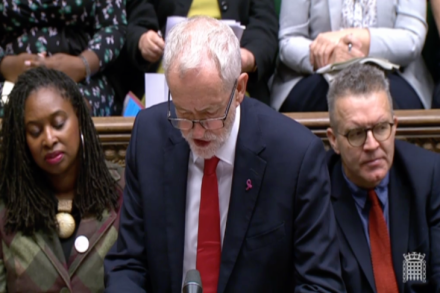
The most testing half an hour of Theresa May’s day won’t be PMQs. Instead it’ll come this evening when she addresses EU leaders on Brexit. Jeremy Corbyn did, though, go on Brexit. The Labour leader rightly identified the December joint report, which Theresa May agreed to, as her biggest area of weakness. Much of what May now says is unacceptable when it comes to Northern Ireland flows from that document. But, as is so often the case, his questioning wasn’t forensic enough. He didn’t pin the Prime Minister down or follow up on her answers. This was a fairly low-key session of PMQs. John Bercow spoke less than usual, perhaps a product of the controversy following the Cox report.

Brexit is the only thing keeping John Bercow in the Speaker’s chair

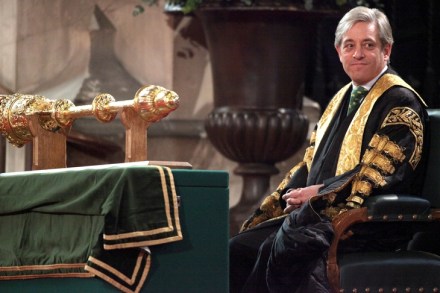
John Bercow’s job is being saved by Brexit. Not just because the Brexit drama means that Dame Laura Cox QC’s damning report into the bullying and harassment of parliamentary staff is receiving less attention than it otherwise would, but also because many MPs are prepared to forgive Bercow’s failings because they think he is the Speaker who’ll give them the biggest chance to influence things if the government and the EU fail to reach a deal. The majority of MPs are opposed to no-deal. I suspect that even if the EU refused to budge an inch from its current unreasonable position, there would still be a Commons majority against it. But with parliament having voted to invoke Article 50, no-deal is the default scenario.

What can break the Brexit impasse?

The Brexit Secretary Dominic Raab travelled to Brussels this afternoon, but not to shake on a deal. Rather, he was there to tell Michel Barnier that there are bits of the Irish protocol that the UK cannot accept. If the two sides can’t come to an agreement on this, then there will be ‘no deal’—an outcome that neither the UK or the EU 27 wants but is now more likely than it has been at any point since the UK triggered Article 50. So, what happens next? Well, there’ll be many on the EU side—particularly, in the Commission—who think that if they just sit tight, the UK will come to them.

Are we heading for a Salzburg-style smash?

Sunday night was when the deal on the Irish backstop was meant to be done. But, as I say in The Sun this morning, this now seems unlikely to happen. The UK  and the EU are just too far apart on too many issues. There are two big issues at play. One, whether there should be a UK-wide backstop or one for Great Britain and another for Northern Ireland. I am told that at Thursday’s meeting of the inner Cabinet, ministers were told that the EU has not yet agreed to a UK-wide customs backstop. The second question is whether the backstop should be time limited. One member of the inner Cabinet who attended its discussion on Thursday night tells me that the meeting ‘didn’t really settle anything’. I am told that ‘The PM chaired as opposed to opined’.

The DUP is showing that its Brexit threats aren’t a bluff

Things are escalating fast in the row between the government and the DUP. Yesterday’s threat to vote against the Budget was followed by them abstaining on the agriculture bill. The message is clear: if we don’t like what you sign up to on the backstop, we’ll make it impossible for you to govern. So, what is going on here? Well, a large part of it — as Katy Balls says on Coffee House — is about trust. The DUP suspect Downing Street and the civil service, in particular, of being ready to sell them out, and so aren’t inclined to believe their assurances.

How can Philip Hammond budget for Brexit?

Before every Budget, George Osborne would tell his aides to prepare for it as if it were their last. His thinking was that chancellors only have so many opportunities to tilt the country in the direction they want it to go. Osborne’s Budget record was far from perfect, but that mindset did at least mean that he achieved some lasting change. Philip Hammond is approaching this month’s Budget differently. Unlike Osborne or Gordon Brown, he is not a political strategist, and it shows. The Treasury is treating this month’s Budget like a holding exercise. To be fair to Hammond, one of the reasons the Treasury is taking such a cautious approach is because of the uncertainty around Brexit.

Will Theresa May call the DUP’s bluff on Brexit?

The threat that the DUP might vote against the Budget if it isn’t happy with where the Irish border backstop is after the October European Council all fits with their effort to persuade Number 10 that they really are serious. As I say in tomorrow's Spectator, some in government believe that, ultimately, May is going to have to call the DUP’s bluff on extra regulatory checks in the Irish Sea. They argue that the DUP will never risk putting Jeremy Corbyn, a man who favours a united Ireland and was deeply sympathetic to the IRA, in Downing Street.

Have the DUP just softened their Brexit position?

The next ten days are key for the prospects of a Brexit deal. By the end of dinner next Wednesday night, we’ll know whether the EU and Britain are getting close enough to strike a withdrawal agreement in November, or if they are heading for no-deal. In the run-up to this, things are going to be particularly febrile. In this climate, it would be all too easy to over-interpret Jean-Claude Juncker’s May-esque dancing or (as spotted by an eagle-eyed FT journalist) Olly Robbins’s early evening glass of red wine. The Irish border still remains the biggest obstacle to a withdrawal agreement.

Ending austerity won’t be as simple as May made it sound

It was the line in her conference speech that demonstrated Theresa May’s desire to stay on as Prime Minister after Brexit. But it was also the line that will cause her the most trouble. I say in The Sun this morning that May’s declaration that austerity is over will cause problems even if the Tories couldn’t have fought another election on austerity. First of all, they have already pledged to spend an extra £20 billion on the NHS. At the time, many senior Tories regarded this as the party making a choice to spend ‘the proceeds of growth’ on the health service. But by now announcing the end of austerity, May has suggested that the taps will be turned on elsewhere too.

What Theresa May’s successor must do

Jeremy Corbyn used to be a punchline at the Conservative party conference. Tories believed that his election as Labour leader guaranteed them electoral success. But the picture that emerged from this year’s conference is of a Tory party that is desperately trying to work out how to counter Corbyn, and how to win a fourth term in office — something that even New Labour couldn’t achieve. Senior Tories now recognise that the questions Labour are asking deserve a response. In his conference speech, Philip Hammond acknowledged that people feel ‘that they are working for the system but the system isn’t working for them’. And on the fringe, various Tories set out their own answers to Corbyn.

Theresa May lifts her party’s spirits – but it won’t last long

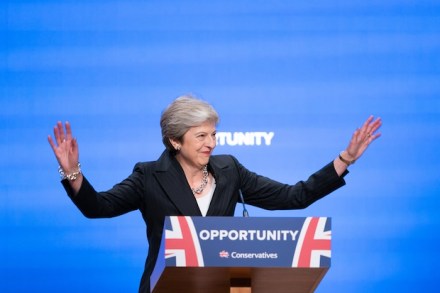
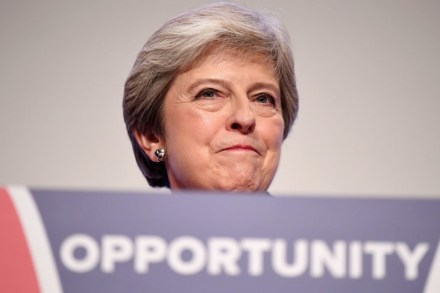
Theresa May delivered one of her best conference speeches. In normal times, the political boost she’d get from this would carry her through to Christmas. But these are not normal times—and Brexit will soon reassert itself. There’s a European Council in two weeks time and that will soon dominate everything else. The speech was authentically Theresa May. She cast herself as a centre ground politician, keen on civility and motivated by the national interest. She emphasised how much of a break from the Labour tradition Jeremy Corbyn was, to try and persuade voters that a Corbyn government would be very different from a typical Labour government.

How Theresa May could be toppled by cock-up rather than conspiracy

James Duddridge has chosen to take advantage of the run-up to the Prime Minister’s conference speech to announce that he’s sent a letter of no confidence in Theresa May to the chairman of the 1922 Committee Graham Brady. This is, to state the obvious, a stunt. I doubt it presages a more serious effort to get to 48 letters and by sending it in before May has even spoken, he has made it clear just how pre-meditated it all is. Right now, the more senior figures in the ERG, the main Brexiter lobby in the party, don’t want a vote of no confidence in May. They calculate, correctly, that she would win it—and that would give her more room to make further compromises in the Brexit negotiations as she couldn’t be challenged for another year.

What Ruth Davidson’s speech says about the second referendum debate

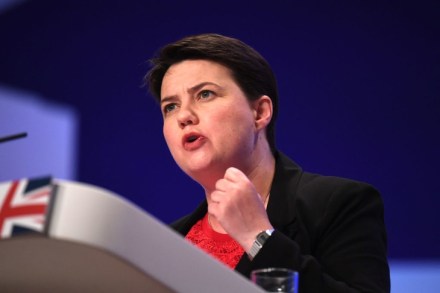
For a certain wing of the Tory party, Ruth Davidson is their Queen over the water. Their fondness for her was only increased by her saying that she won’t run for leader because she cares too much for her mental health and relationship. So it was striking that the Tories decided that the best use of Davidson at this conference was to argue against a second referendum. Davidson made all the usual arguments against a second referendum with typical gusto. She argued that another Brexit vote would lead ‘to more division, more rancour and a politics trapped in the past.’ But what was most interesting was the fact that this was the focus of her speech. It suggests that there is more concern about another referendum at the top of the Tory party than most of us had realised.