James Forsyth

James Forsyth

James Forsyth is former political editor of The Spectator.

Jeremy Hunt proposes a plan to make the backstop time-limited

Cabinet today was not as dramatic as some had expected. No one argued for ministers being allowed a free vote on the Cooper / Boles amendment. Indeed, I’m told the Chief Whip’s plea for ministers to stick to collective responsibility went unchallenged. Perhaps, the two most interesting contributions came from Jeremy Hunt and David Gauke. Gauke questioned the government’s new approach. He said he was worried that even if the government did get something on the backstop, there still wouldn’t be enough Tory MPs backing the deal for it to pass. While Hunt argued that the best thing for the government to do was to get parliamentary support for a plan on time-limiting the backstop.

May goes back to the backstop

Today’s Cabinet conference call was more illuminating in terms of direction of travel than the details of what Theresa May is actually going to do. It is now clear that May’s approach is to try and put the Tory DUP alliance back together by getting something on the backstop rather than trying to find some cross party consensus. One of the reasons for this is that the Labour leadership’s reluctance to play ball makes it very hard to get the numbers for any compromise deal. I am told that David Lidington, who had been leading the cross party talks, reluctantly acknowledged this point. As one Cabinet Minister put it to me, ‘This kills the system’s desire for a customs-union style solution.

Why a customs union is looking less likely

Immediately after the government’s crushing defeat on Tuesday night, a slew of Cabinet Ministers thought that it was inevitable that Theresa May would have to make some kind of concession on the customs union to get a deal through parliament. But, as I say in The Sun this morning, this option has run into two obstacles. First, Corbyn and McDonnell aren’t playing ball. Without their blessing, there is no way you could get 116 Labour MPs to vote with a Tory PM. Secondly, it has become clear that agreeing to a customs union would not only split the Tory party, lead to at least one Cabinet resignation, but would also—according to one senior Cabinet Minister—lose the support of 40 MPs who voted for the deal on Tuesday night.

The Norway v People’s Vote fight

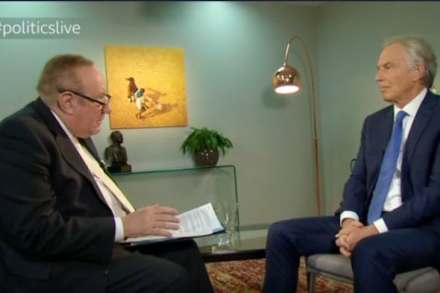
One of the bitterest divides in British politics right now is between advocates of a second referendum and those who favour the Norway option. They both want to be the last alternative standing to no deal; and are happy to trash each other in the process. On Politics Live tonight, Tony Blair, the most prominent advocate of a second referendum, laid into the Norway option. He derided it as a ‘pointless Brexit’, as it would leave the UK following the rules of the single market but with less say in how they are made. Nick Boles, the principal Tory advocate of Norway plus, then hit back in his own interview with Andrew Neil.

How long can Corbyn hold out against a second referendum?

Jeremy Corbyn is no enthusiast for a second referendum. He wants to, as his speech today suggested, hold further motions of no confidence in the government to try and force an election rather than have to decide on what other option he is going to support. But having tried and failed in one confidence motion, this is a more difficult position for him to maintain. Vince Cable has now said that Corbyn can’t rely on Lib Dem support in future confidence motions and has suggested that other opposition parties will soon take the same view. The aim of this tactic, to make clear that Labour can’t force a general election and so Corbyn needs to decide on a second referendum. Now, Labour are already attacking the Lib Dems for being prepared to prop up the Tories.

The rebel alliance

Straight after the government’s epic defeat in the House of Commons on Tuesday night, the Chancellor, Philip Hammond, the Business Secretary, Greg Clark, and the Brexit Secretary, Steve Barclay, held a conference call with business leaders to try to reassure them. The principal worry was about ‘no deal’. The Chancellor’s message of comfort was revealing of where power has shifted to. He emphasised how backbenchers are manoeuvring to stop no deal. In other words, they needn’t take his word that it wasn’t going to happen; they should take parliament’s. It was an admission that the government is no longer in control of Brexit.

Corbyn moved too soon – and let May take over the House again

Theresa May has won her no confidence vote, and by a decent margin – with a majority of 19. As we expected, the vote has allowed the Tories to — temporarily – unite. May can now say that despite suffering a record defeat for any government on her single most important policy, she commands the confidence of the House. The Tories will also hope that the failure of this confidence motion will push Labour’s own Brexit divisions up the agenda. Those Labour MPs who want a second referendum will now become more vocal. They’ll say that Labour have tried and failed to get an election, so — by the conference motion -- Corbyn should now swing behind a second vote.

How tonight’s no confidence vote could help Theresa May

Another day, another big vote in the Commons. But as with yesterday, there is a sense in Westminster that tonight’s vote is a foregone conclusion. Theresa May is expected to win it as the DUP are still backing her, as are the ERG and no Tory second referendum types have come out against her. Now, it might seem odd that the Commons can inflict the biggest defeat on a government of the modern era, on the defining issue of the parliament on Tuesday and then affirm its confidence in that government on the Wednesday. But that is British politics right now. If this no confidence vote goes as expected, it will help Theresa May. It will allow her to say that she still has the confidence of the Commons and so can carry on governing.

What options does Theresa May have left after this defeat?

Westminster was braced for a heavy government defeat. But few were expecting a loss on this scale: 230 votes. It is hard to believe that the 116 MPs May needs for a majority can be persuaded to change their minds by tweaks to the backstop. So, what May thought would be her plan, going back to Brussels, trying to get something and then bringing the deal back is now off the table. In her response to the defeat, May made clear that she accepts she needs to reach out across the House before going back to Brussels. But the problem is it is very hard to see what combination of changes gains her the support of 116 MPs. For example, if May went for a customs union she’d gain some Labour support, but likely see some Tories fall into the other column.

Why a no confidence motion may help Theresa May

We have got used to a lot of odd things in British politics recently. Many of the usual rules have been suspended: Theresa May has survived losing her majority in an election she called and we've seen the departure of not one, but two Brexit Secretaries. But tonight she will defeated by a massive margin on the central plank of her governing programme. The consequences of this will be unpredictable—which is precisely why the government pulled the vote in December. Things could spiral out of Theresa May’s control very quickly. So far, the government looks out of luck in its attempt to limit the damage.

Is John Bercow preparing to pull off another procedural trick?

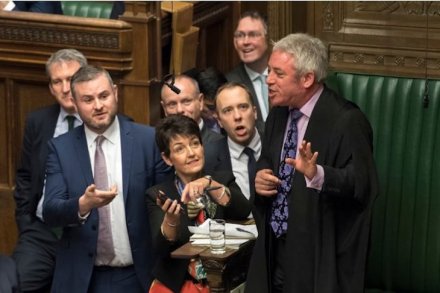
There has just been another series of pointed exchanges between government backbenchers and the Speaker over procedure. Following the Sunday papers and the Boles plan released earlier today, several Tory MPs sought reassurance on procedure from John Bercow. Bercow was strikingly unwilling to give it. He approvingly quoted Willie Whitelaw’s dictum that bridges are best crossed when you come to them. If Bercow’s intention was to wind up the government frontbench and Tory MPs, he certainly succeeded. When Bercow gave a lengthy reply to Kevin Brennan's point of order about how people who act as the lickspittles of the whips’ don’t get much respect, one minister heckled.

The EU’s latest effort won’t help May pass her Brexit deal

The letter from Jean-Claude Juncker and Donald Tusk ahead of tomorrow’s vote is not the cavalry arriving. It is more a restatement of what has gone before than anything else. If the EU is to make a big play to help Theresa May’s deal pass it will come before a second vote; as one Secretary of State lamented to me last week the EU has already written off this vote. But the letter is a reminder that May hasn’t sold this deal as well as she could. As the letter states, ‘the Withdrawal Agreement is also clear that any new act that the European Union proposes should be added to the Protocol will require the agreement of the United Kingdom in the Joint Committee’.

What will be May’s Plan B?

The Cabinet aren’t even waiting for the meaningful vote to be lost to start discussing Plan Bs. As I say in The Sun this morning, multiple ministers are expecting a major row when Cabinet meets on Tuesday morning—ahead of the meaningful vote. The row will be about what to do once the government has lost. One faction in the Cabinet believes that, in the words of one Secretary of State, ‘the only realistic route to go down is to force it into the EU’s hands’. This would involve devising a motion that made clear under what conditions parliament would back the deal. Then saying to the EU, if you want to avoid no deal this is what we need to address.

Does May even have a Plan B?

Cabinets these days are fractious affairs. Ministers take increasingly unsubtle digs at each other as they rehearse the same old arguments. But this week, Theresa May chose to have a pop at someone who wasn’t there. ‘We’re still suffering from George,’ she told her colleagues — a reference to the former chancellor George Osborne. Her complaint was that Osborne’s over-the-top threats of a punishment Budget and other such claims during the 2016 referendum campaign had made it far harder to get Tory MPs and the public to take warnings of the consequences of no deal seriously. For her, this is a big problem. Her Brexit deal will only get through because of fear of the supposed alternatives: no deal or a second referendum.

The two problems with Dominic Grieve’s Brexit amendment

Another day, another defeat for the government—this time on Dominic Grieve’s amendment, which requires Theresa May to set out within three sitting days what she’ll do next if the meaningful vote doesn’t pass. The significance of this is that Grieve thinks that the motion the government would put down would be amendable, so MPs would be able to tell the government what they want to happen. But what does this mean in practise? Well, the first thing to note is that there isn’t currently a majority for anything in the Commons. This suggest that no amendment—whether it be for a second referendum or Norway Plus—would be able to pass the Commons. So, the will of parliament would not be clear.

What the government’s ‘no-deal’ defeat in the Commons actually means

The government has been defeated in the House of Commons. Yvette Cooper’s amendment designed to limit the Treasury’s ‘no deal’ powers has passed by seven votes. Now, the Treasury view is that the changes mandated by this amendment are ‘fairly minor’ and won’t stop no deal from happening, or the government continuing to prepare for it. But what this vote does show is that there is a Commons majority to frustrate ‘no deal’. If this coalition wants to stop a ‘no deal’ Brexit, rather than just make one more difficult, and the government really is prepared to go down this route, then they would have to do more than pass amendments such as this.

Theresa May’s Brexit deal still looks doomed

Taking the temperature in Westminster today, it appears that Theresa May doesn’t have much more of a chance of winning the meaningful vote than she did when she pulled it before Christmas. The mood has improved a bit for her deal, but by nowhere near enough for her to pass it. Indeed, interestingly the full bore Brexiteers appear to be embracing ‘no deal’ more firmly than before. Boris Johnson’s Daily Telegraph column today is striking for the willingness with which it embraces no deal, rather than just arguing for a pivot to Canada. I understand that the Government expects the EU’s pre-vote help to come towards the end of this week.

New Year, same old May

Theresa May doesn’t yet have anything concrete to offer MPs who have concerns about her Brexit deal. On Marr this morning, May repeatedly talked about how she was seeking ‘assurances’ on the backstop. But she clearly hasn’t got them yet. Interestingly, May indicated that the assurances she’s looking for are around a start date for the new relationship; rather than a time limit or clearer exit mechanism. This would mean that the backstop would not be ‘indefinite’ as there’d be a start date for the future trade relationship. However, this approach immediately raises two questions. First, would the future relationship apply to the whole of the UK or just Great Britain?

Can Theresa May get the DUP back on board?

Westminster might it be on its Christmas holidays, but the question that is still on everyone in government’s mind is can Theresa May find a way to get the DUP to back her Brexit deal. As I write in The Sun this morning, key Cabinet Ministers believe that her only chance of winning the meaningful vote comes from getting the DUP on side. One Secretary of State who has kept open lines of communication with them, tells me that ‘by grim necessity, they will need something more than cosmetic concessions to vote for the deal’. This minister explains that ‘the DUP want a bankable reassurance that the backstop won’t be permanent and that there won’t be progressive divergence between Great Britain and Northern Ireland’.

John Bercow rules on the ‘stupid woman’ controversy

John Bercow has just ruled on the whole row about whether or not Jeremy Corbyn mouthed the words ‘stupid woman’ at PMQs today. Bercow said that the lip speakers he had consulted thought Corbyn had said that, but no lip speaker or lip reader could be 100 per cent sure what words were used. He then invited Corbyn to speak. Corbyn said that he didn’t say ‘stupid woman’ but ‘stupid people’ to which the Tory benches shouted 'rubbish'. I think Bercow’s opinion was worse for Corbyn than expected. Given that Corbyn is denying he said it, Bercow could hardly say he wasn’t telling the truth.