James Forsyth

James Forsyth

James Forsyth is former political editor of The Spectator.

The UK’s significant decision to draft the Brexit legal texts

The UK will table a draft legal text for a UK / EU free trade agreement before the next round of trade negotiations, which start on the 18 March. This is a significant step by the UK. In the first round of the Brexit talks, the UK left itself vulnerable by barely submitting any legal text – leaving it to work off the EU’s drafts. This was a major mistake. The fact that it was the EU who turned the December 2017 Joint Report into legal text gave it a structural edge in the negotiations. It will be fascinating to see the UK’s joint legal text. One of the UK’s main arguments in the negotiations so far is that it isn’t asking for anything the EU hasn’t agreed to before.
Why Boris Johnson is so determined to stand by Priti Patel

Internally, Boris Johnson has given short shrift to those who have suggested that he distance himself from the Home Secretary. There is a view in Downing Street that several of the most dramatic charges against her don’t stack up. Number 10 knows, though, that it has a fight on its hands to save Patel. One source tells me, ‘Yes, she can survive. But there’s no smoke without fire. It is shaping up to be quiet a big struggle’. Part of the issue is that there is a view among senior civil servants that because the top civil servant at the Home Office has quit because of this row, Patel should go too. But Downing Street know that if Patel goes, it would become harder to push reform through the system.

How far will the government go to compensate those hit by coronavirus?

One of those at the heart of the government’s response to coronavirus predicts that the Budget might not even be the biggest story on Wednesday. Their view is that its spread over the coming weeks will be such that ‘nobody alive will have experienced anything like it’. Though, as I say in The Sun this morning, the fact that the virus spares children and only has a 1 per cent death rate means that the emotional toll of it will be contained. These circumstances mean that the Budget has been scaled back. Inside the Treasury it has been dubbed the ‘manifesto Budget’.

The Budget’s corona contagion

When Sajid Javid resigned in a row with No. 10, there was much speculation about what would be in the coming Budget. No one, though, predicted that it would end up being overshadowed by coronavirus. The short-term economic effects of this outbreak are almost unknowable. It is still hard to work out how serious it is going to be. One of those drawing up the government response plan tells me they would be happy if, in a year’s time, people thought they had wildly overreacted. Boris Johnson once said that the mayor in Jaws — who keeps the beaches open despite reports of a shark — was his hero for resisting the clamour for action. But now that he is in Downing Street he has no intention of taking a similar risk.

Planet Corona: is this the tipping point for globalisation?

38 min listen

As the coronavirus sweeps across the globe, it's causing businesses, consumers, and governments to rethink their globalised lives. Is this a tipping point for hyper-globalisation (1:00)? Plus, is the government slimming down its Budget plans (13:40)? And last, is it harder to be eco-friendly if you are a woman (26:35)?

Coronavirus is putting politics on hold

The coronavirus is putting politics on hold. The Budget, as I say in this week’s magazine, will be a much less dramatic event because of it. Given the level of economic uncertainty the virus is creating, it would be sensible to wait for the autumn Budget — when the situation should be clearer — before making big, fiscal policy decisions. The Budget, as a consequence of this, will largely be about ‘delivering’ on the Tories’ manifesto commitments. In Downing Street they know that trust is a huge issue for both the government and Boris Johnson personally, so they want to show that they are keeping their promises.

His response to the coronavirus could come to define Boris Johnson’s first year in office

Premierships are often defined by unexpected events. When Tony Blair was re-elected in 2001, few thought that his time in office would be defined by terrorism and the Middle East. Boris Johnson’s first full year in Downing Street may well come to be defined by his handling of coronavirus, I say in The Sun this morning. Over the last week, concern in Whitehall over the disease has shot up. ‘The infection curve in Italy and Germany has changed things’, says one of those spearheading the government’s response. ‘We’re not far off it absorbing all of the government’s energies’, one Downing Street figure tells me.

Le crunch: are the Brexit talks doomed before they begin?

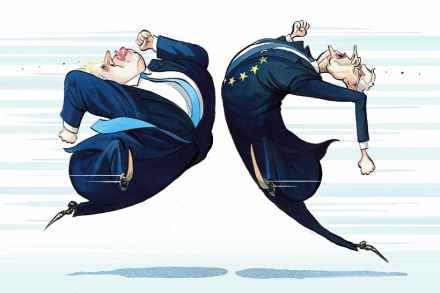
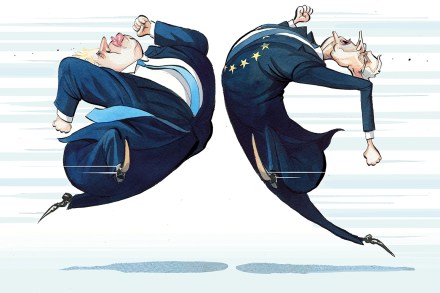
When Boris Johnson and the new European Commission President Ursula von der Leyen met in Downing Street last month, they agreed on one thing immediately: that it was time to stop the sniping, animosity and backbiting that had characterised the first round of the Brexit talks. The Prime Minister emphasised that Britain wanted to be the EU’s close friend and ally. Only a few weeks later, and already the Brexit wars are back. The two sides are so far apart that many diplomats think there is a better-than-even chance that the talks will fail. One member state is already planning around the central assumption that there will be no deal by the December deadline. For its part, No. 10 is braced for the talks to collapse sooner rather than later.

The Edition: can the UK and EU bridge their Brexit gap?

41 min listen

Next week, the trade negotiations between the EU and the UK begin in earnest. But in the days ahead, the positions set out by both sides are so far apart that the negotiations can only be heading towards an almighty row. James Forsyth writes in this week's issue that it's better if they get this over with quickly, in order to move on to the compromise 'landing zone' that is a deal by the end of the year. On the podcast, I speak to him and Peter Foster, Europe editor of the Telegraph. It gets a little fiery as Peter challenges James on exactly why Britain would want to diverge, anyway. I also speak to Colin Freeman, whose piece in the Spectator this week takes a look at Alpha Condé, the Guinean president who is trying to abolish term limits.

Why those who want a Brexit deal are spoiling for a fight

The Brexit talks are heading for a breakdown. Next week’s meeting will be a stand-off between the two sides. As I say in the magazine this week, the EU will make its demands on level playing field provisions and the UK will say they are unacceptable and render the talks pointless. The government’s hope is that by saying it will walk out of the talks in June it can persuade the EU to shift from its current, maximalist position. The EU will offer carrot and stick in these talks. They’ll make clear that if the two sides agree a trade deal, they’ll go for a light touch at the border designed to minimise disruption. But if the talks break down, they’ll take a fingernail approach to border enforcement.