Has Sweden got it right?
16 min listen
Unlike the UK and most of Europe, Sweden hasn't locked down its population. What explains its difference in approach? Plus, what does the government's coronavirus exit strategy look like?


James Forsyth is former political editor of The Spectator.
16 min listen
Unlike the UK and most of Europe, Sweden hasn't locked down its population. What explains its difference in approach? Plus, what does the government's coronavirus exit strategy look like?
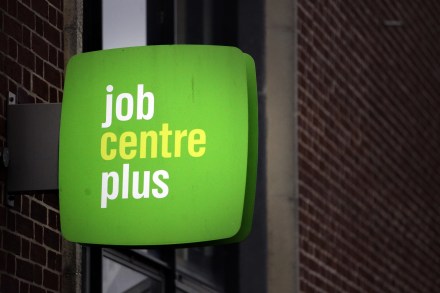
The economic, and social, damage being caused by coronavirus is becoming clearer by the day. In the UK, we had the news on Wednesday that 850,000 more people than usual have applied for universal credit in the past fortnight. Across the Atlantic, the number of jobs lost in the last few week is approaching 10 million – that’s more than were lost in the Great Depression. This economic news underlines the need for an ‘exit strategy’ from this crisis. The lockdown is right at the moment; it appears to be the least-worst way to keep this virus within the NHS’s capacity to deal with it and so save lives.
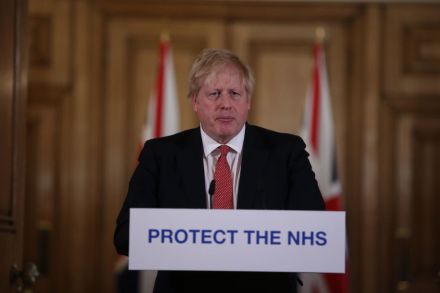
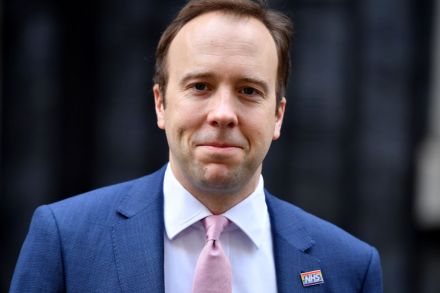
The government had a strategy for this evening’s press conference, which differentiated it from several this week. Matt Hancock, who was himself returning from self-isolation, came with a big headline announcement: there would be 100,000 tests a day by the end of this month. He took lots of questions from journalists and allowed follow-ups which made him look like he was being frank and answering the question. It was all fairly basic stuff, but it had been missing yesterday. There is, though, the question of whether this target of 100,000 tests a day can be met — and how far off it is. The 850,000 more claims than usual for universal credit in the past fortnight is a reminder of how long a month is in the current circumstances.

12 min listen
Wednesday evening's figures for new claims for Universal Credit are sobering and a reminder of the economic - and moral - consequences of the shuttering of huge swathes of the economy. Despite the government offering to pay 80 per cent of the wages of furloughed workers, 850,000 more people than usual have applied for Universal Credit in the past fortnight. Right now, the shutdown is, I think, justified by the fact that it is the least worst way of preventing hospitals from being overwhelmed and the number of coronavirus deaths increasing to ever more horrific levels. But no one who backs the current policy should pretend that it doesn’t come at its own human cost.
17 min listen
12 min listen

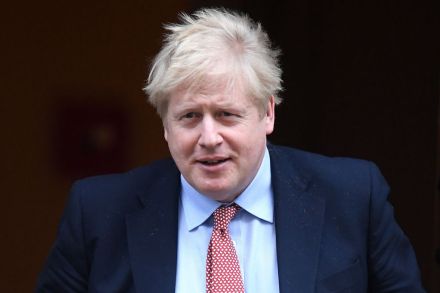
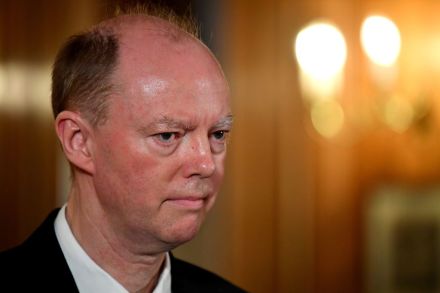
The government is adjusting to the reality of dealing with the coronavirus crisis, while three of its most important figures – the PM, the Health Secretary and the Chief Medical Officer – are in isolation. All have mild symptoms so far and modern technology means that this is not the devastating blow it would have been even a decade ago. The government now think that this crisis is going to come to a head quicker than expected. The week beginning 12 April, not mid-May, is expected to be the peak of the virus. One of those leading the government’s response to the crisis tells me that after that is ‘when we’d expect to see things level off’.
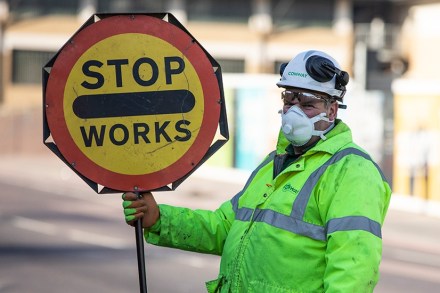
In the past ten days we have seen the greatest expansion of state power in British history. The state has shut down huge swaths of the economy, taken on paying the bulk of the wages of millions of private sector workers, and told citizens that they can leave their homes only for a very limited number of approved activities. Boris Johnson likes to say that Britain is ‘at war’ with Covid-19. The parallel is hardly exact, but this expansion in state power is what you would expect in a war of national survival. It is worth remembering, as A.J.P Taylor wrote, that before ‘August 1914 a sensible, law-abiding Englishman could pass through life and hardly notice the existence of the state, beyond the Post Office and the policeman’.
39 min listen
How prepared is the NHS for the coming battle with coronavirus (1:20)? Plus, what will Britain look like after the epidemic (12:20)? And last, just how are children so good at make-believe (29:25)?With Dr Max Pemberton, Dr Kieran Mullan, James Forsyth, William Hague, Mary Wakefield and Piers Torday.Presented by Cindy Yu and Katy Balls.Produced by Cindy Yu and Gus Carter.

14 min listen

Coronavirus, and the response to it, is going to change a lot of things about UK politics. Perhaps, the biggest shift will come in this country’s attitude to China. I write in the magazine this week that the desire for supply chain security, and particularly for medical goods, will lead to a national policy aim of manufacturing more here. In the same way that policy makers wanted to achieve ‘food security’ after World War Two, coronavirus will lead to a desire for ‘medical security’: that’ll mean the ability to produce medical equipment, vaccines and drugs here.
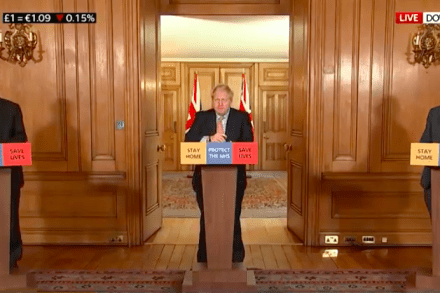
Today was Boris Johnson’s first press conference since announcing that people would only be allowed to leave their homes for a small number of state-sanctioned activities. But in a sign of how fast this crisis is moving, there were few questions on this. Instead, the focus was on testing and why the UK hasn’t managed to ramp it up yet. The government is most excited about the idea of an antibody test that would show who has had the virus. This would transform the situation: it would mean that NHS staff who had had coronavirus could carry on working even if they had symptoms, it would mean we would know who could volunteer without taking any risk with their own health and it would enable those who have had it to resume something approaching normal life.

14 min listen
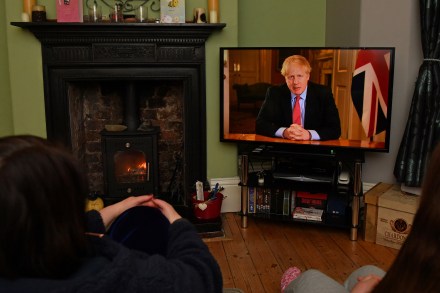
It is hard to think of a prime minister doing something that so goes against their political instincts as Boris Johnson declaring that people can only leave their homes for a list of state-approved activities. One of the constants of his political and journalistic career has been his opposition to the state infringing on people’s liberties. But the coronavirus and the public health challenges posed by a pandemic have forced him to shift. The fact that the authorities will be able to enforce these new rules is a big shift from Sunday’s press conference when Boris Johnson seemed taken aback by the idea that the police could be asked to enforce the rules on social distancing.

12 min listen
15 min listen
No one would ever have expected a Conservative Chancellor to announce that the state will pay 80 per cent of people’s wages up to the average income. It is something that even Jeremy Corbyn wouldn’t have dared propose before this crisis hit. But the alternative to the package that Rishi Sunak announced last night was mass unemployment. This would have caused huge hardship and meant that even once this virus had passed, the economy would have taken months to get back in gear. Expensive as it is, this package makes a V-shaped recovery more likely. Businesses have been offered unprecedented levels of help by government. They must now pass that on; and furlough their staff rather than sack them.
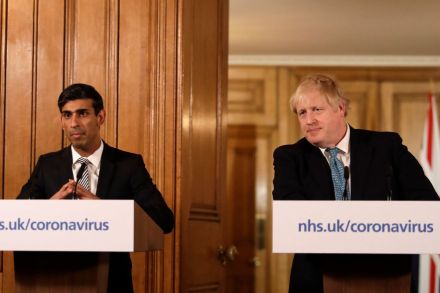

We are in a make-or-break moment for trust, not just in this government but in the British state itself. The measures that were announced by Boris Johnson and Rishi Sunak this week are extraordinary in economic, social and legal terms. When the Covid-19 crisis is finally over, the state will be judged against how effective they were. None of us will have lived through anything like what we are about to experience. If this country gets it broadly right, then trust in our politicians and the state will rise. But if it gets it wrong, then the nature of the relationship between the citizen and the state will be changed for at least a generation. People will be far more reluctant to follow official advice in future. Johnson now talks about this being a ‘wartime government’.