James Forsyth

James Forsyth

James Forsyth is former political editor of The Spectator.

Will the government be left suffering from ‘long Covid’?

The first full week of the new national lockdown had the potential to be very difficult for Boris Johnson. Although just 34 Tory MPs voted against this England-wide measure, many more are unhappy about it. They have, as Tory MPs now do when they come across things they dislike, set up a group with a three-letter abbreviation: in this case, the CRG (Covid Recovery Group), which will oppose further lockdowns. Adding to the discontent among backbenchers, No. 10 had just U-turned on extending free school meals into the holidays. Tory MPs were left wondering why — as with exam result appeals — they had bothered taking so much flak from the media and the public if the government was going to give way in the end.
The next parliamentary scandal waiting to happen

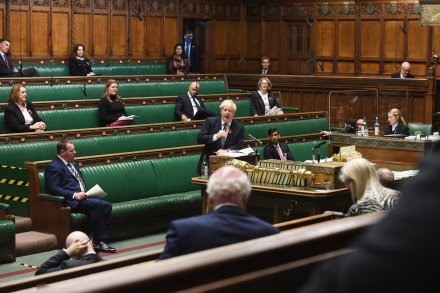
David Davis said something remarkable yesterday. In a debate on the membership of the Committee on Standards, he told MPs that the Tory deputy chief whip has 203 proxy votes. If Davis’s numbers are right, that is more than half the Tory parliamentary party. Obviously this is a consequence of Covid. But it has profound constitutional implications. If MPs can simply let their whips vote for them, they won’t have to think about what they are supporting in the same way they would if they had to walk through the division lobbies. The system will also, if left unchecked, lead to pressure on MPs to simply give their whip their vote and exercise it by proxy. The pandemic has inevitably forced changes on Parliament.

Why is No. 10 so cautious about a Covid vaccine?

14 min listen

The Pfizer vaccine is being lauded by many as the silver bullet that could end the Covid crisis. Meanwhile, the UK has seen a record number of redundancies. Also, No. 10 suffered serious defeat in the Lords last night over its controversial Brexit bill. Katy Balls talks to James Forsyth and Kate Andrews.

Are we on the brink of a Covid vaccine?

14 min listen

The drugs firm Pfizer has announced that its vaccine — currently in stage three trials — is 90% effective. Meanwhile, Britain and the EU are entering the final stage of trade negotiations. Finally, No. 10 is ramping up its inquiry to discover who leaked news of England's second lockdown. Katy Balls speaks to Fraser Nelson and James Forsyth.

What does Biden’s win mean for Britain?

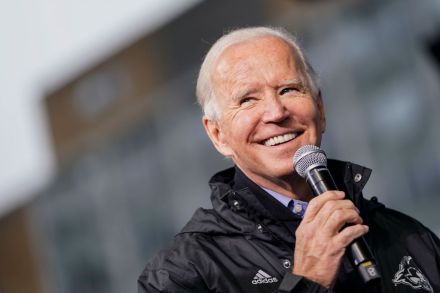
So, how will Joe Biden’s victory affect US-UK relations? As I write in the Times, the downsides for this government are obvious. Biden fiercely opposed Brexit and those around him, like many on the American left, look to London and see a mini-Trump. They will regard other leaders from Merkel to Macron as more natural partners for them. The first phone calls are likely to go to them, not to Johnson. If the transition period ends without a trade deal and the Northern Ireland clauses of the Internal Market Bill come into force, that will further strain relations. The bulk of Biden’s key appointments will need to be confirmed by the Senate, which will – depending on the Georgia run-offs – probably have a narrow Republican majority.

Was the three tier system working all along?

14 min listen

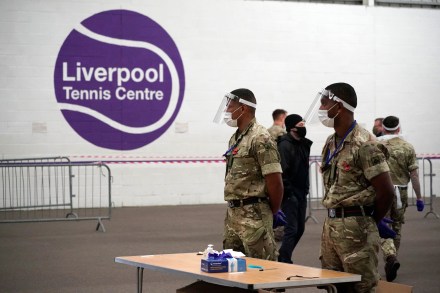
As Liverpool begins it's mass testing trial, ONS figures published today show that the coronavirus infection rate was fell in the week ending October 31. So was the tiered system working all along, meaning the new lockdown is unnecessary? Katy Balls speaks to Fraser Nelson and James Forsyth about the new data, Scottish independence, and the US election.

Has Rishi Sunak lost the argument?

14 min listen

The Chancellor announced new furlough measures today, something that he has long been opposed to. Katy Balls speaks to Kate Andrews and James Forsyth about whether or not Rishi Sunak has lost the argument.

Boris can’t afford a third lockdown

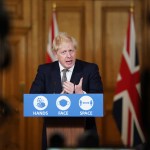
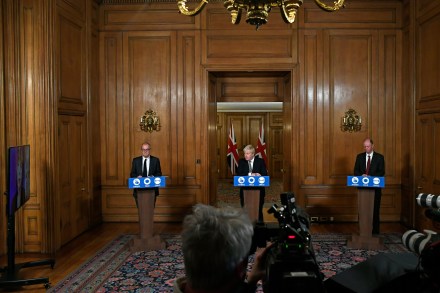
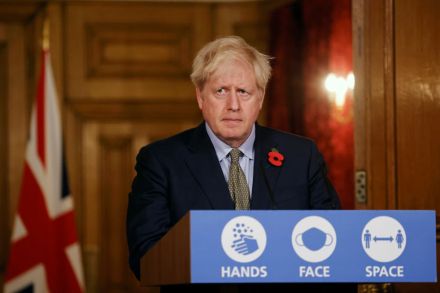
Boris Johnson is holding a press conference at 5 p.m. on the new England-wide lockdown. This follows last night’s vote where thirty-odd Tory MPs voted against the new measures. But listening to that debate, it was clear that even among many of the Tories who voted for the lockdown there is deep scepticism about the measure. The biggest danger for the government, as I say in the magazine this week, is that this lockdown turns out to be tactical, not strategic. The driving force behind it was the fear that the NHS would be overwhelmed. Johnson has indicated that if infection levels are falling on 2 December, he will deem his measures to have worked. But no one is arguing that lockdown does anything other than buy time.

This lockdown comes at a high political cost

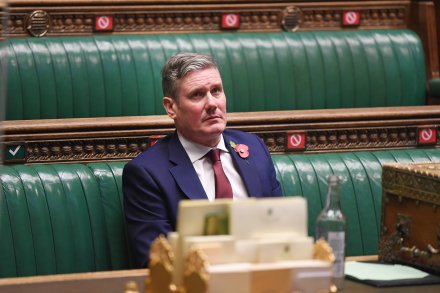
Keir Starmer has his first attack line of the next general election campaign. He will say that England’s second lockdown was longer than it needed to be because the Prime Minister didn’t act when he had the chance. If Boris Johnson had listened to the scientists, Labour will say, we’d have had a two week ‘circuit-breaker’ and controlled the virus. As things stand, a man who set his face against lockdown was then forced to adopt one — making it longer, more painful and costing far more jobs. A couple of weeks ago, there was a clear dividing line: Labour wanted national measures; the Tories wanted regional ones. So Starmer can now claim to have won the argument. This has depressed Tory MPs.

PMQs: Starmer failed to land his punch

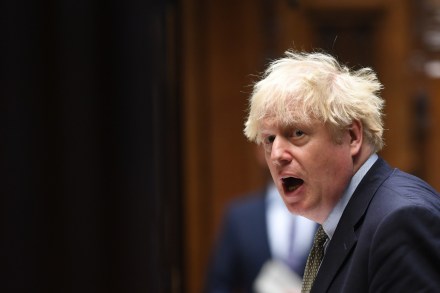
Today’s PMQs was not an enlightening affair. Keir Starmer tried to drag out of Boris Johnson an admission that the England-wide lockdown would continue past 2 December if the virus was not in retreat. But Johnson dodged that question. Johnson's own side, while grumpy, is not in outright rebellion Of more concern for Labour will be the fact that Starmer failed to land his most effective point: that Johnson has now adopted the policy Labour was calling for on 13 October. The move from a regional system of tiered restrictions to a nationwide lockdown is a big shift from Johnson — but Starmer couldn’t pithily sum that up today.

Should the government take a stance on the US election?

13 min listen

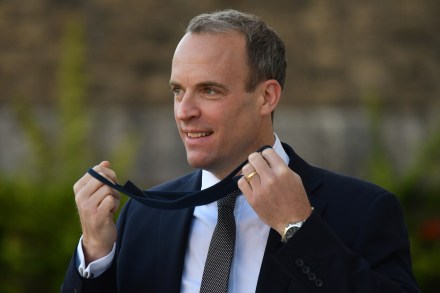
Dominic Raab refused to comment on Donald Trump's claims of election 'fraud' this morning, after the President said he planned to contest the result in the Supreme Court. Boris Johnson also refrained from being drawn into a conversation about the race, saying at PMQs that the UK would not comment 'on the democratic processes of our friends and allies'. Is the the government right not to take a stance? Cindy Yu speaks to James Forsyth and Katy Balls.

Is mass testing the way out of lockdown?

16 min listen

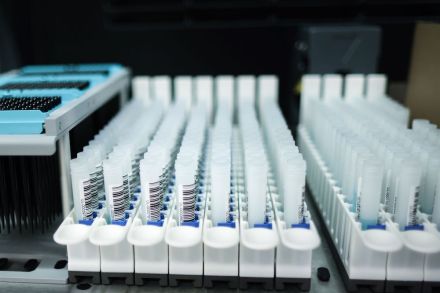
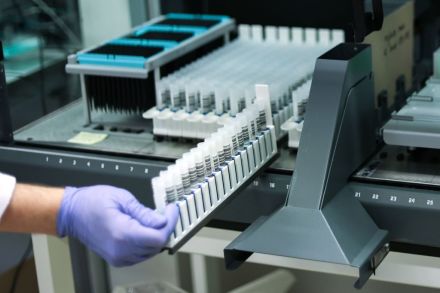
As England heads into a second lockdown, today brings a glimmer of hope. Liverpool will be the first UK city to undergo mass testing, including a fast turnaround saliva test. John Connolly talks to Katy Balls and James Forsyth about whether Moonshot, this time around, is more realistic. Tell us your thoughts on our podcasts and be in for a chance to win a bottle of Pol Roger champagne by filling out our podcast survey. Visit spectator.co.uk/podcastsurvey.

Johnson lays out the lockdown exit strategy

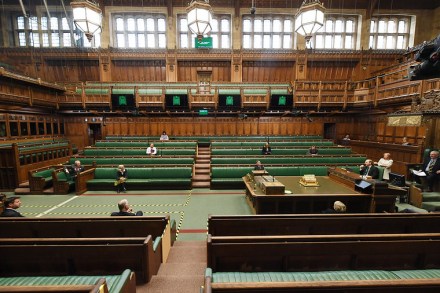
Boris Johnson’s statement to the House of Commons this afternoon was a reminder of how much more difficult this second lockdown will be politically for the government. Before he could begin, he had to sit through the Speaker ticking the government off for the fact that news of the lockdown had leaked to the media on Friday night. Johnson’s statement was very similar to what he had said at Saturday’s press conference. But at the end, he was clearer about what the government’s exit strategy was. He said that its plan was to use mass testing to stay on top of the virus once this England-wide lockdown has ended. Now, given that test and trace was meant to help prevent a second lockdown, there is understandable scepticism about this plan.

Why a Tory lockdown rebellion should worry Boris

18 min listen

After Boris Johnson announced that England would be put into another nationwide lockdown this Thursday, backbench Tory MPs quickly made their opposition known. Graham Brady, chairman of the powerful 1922 Committee, said the restrictions would be denounced 'as a form of evil' if enforced in a totalitarian state. But with Labour's backing meaning the measures will pass, why should a Conservative rebellion worry the PM? Fraser Nelson speaks to James Forsyth and Katy Balls.

Why a new lockdown is so difficult for Boris Johnson

Boris Johnson had set his face against an England-wide lockdown. He rejected the idea when Sage proposed it back in September, lambasted it when Keir Starmer backed it, but today he is announcing it.  What makes this situation so politically difficult for Johnson is that his own parliamentary party is deeply uncomfortable with the idea of an England-wide lockdown. They preferred a targeted, regional approach – and there is anger among MPs that this is being superseded by an England-wide approach just weeks after the regional tier system was introduced.  Now, you can point out that Emmanuel Macron and the Irish government have also been forced to reverse themselves on the question of a second national lockdown.

Is a second national lockdown imminent?

17 min listen

The whole of England could be put into lockdown again, reports this morning claim, as coronavirus cases continue to rise at a rate above the worst-case scenario modelled by SAGE. It comes as newly published minutes from the first week of October show the advisory group pushed the government to take action sooner. Katy Balls speaks to Fraser Nelson and James Forsyth.

Britain must learn from Asia’s pandemic response

Across Europe, more and more states are imposing stricter and stricter restrictions to try and slow coronavirus’s spread. The Irish, despite having initially rejected the advice of their scientists to move to the highest level of restrictions, have now done so. Emmanuel Macron set himself against another national lockdown, but then announced one on Wednesday night, albeit with schools staying open. But, as I say in the Times this morning, life in Asia continues to return to normal. Case numbers are pancake-like in Japan, China, South Korea, Vietnam, Thailand and Singapore, while Taiwan has gone 200 days without a locally transmitted case.

Will there be a Labour civil war?

15 min listen

Though there are grumblings from the left of the Labour party over Corbyn's suspension, Keir Starmer has taken today to set the narrative in his favour. The polls, showing Labour in the lead, also help. Cindy Yu talks to Katy Balls and James Forsyth about how Starmer may have nipped a civil war in the bud.