James Forsyth

James Forsyth

James Forsyth is former political editor of The Spectator.

Can the government appease disgruntled Tory MPs?

14 min listen

The return to the tier system will be voted on in the Commons next week, but from the grumblings in the Conservative party, it sounds like the government may need Opposition votes in order to get the legislation through. That's never a comfortable position for a government, so on the podcast, Katy Balls discusses with James Forsyth and Fraser Nelson what the government needs to do in order to appease its backbenchers.
Aftermath: when will the country truly recover from the virus?

31 min listen

The vaccine might be just around the corner, but can the country truly recover? (01:00) How can the Labour party win back the working class? (11:15) And finally, should we celebrate the new statue of Mary Wollstonecraft? (23:10)With The Spectator's political editor James Forsyth, chair of the Health Select Committee Jeremy Hunt, firefighter and writer Paul Embery, Times Radio presenter and former Labour MP Gloria de Piero, The Spectator's radio critic Kate Chisholm, and Spectator contributor and feminist writer Julie Bindel. Presented by Lara Prendergast.Produced by Cindy Yu, Max Jeffery, Matt Taylor and Sam Russell.

Will Tory MPs rebel over the Tier system?

15 min listen

England's tier system returns today. With some areas in a stricter tier than they were before the lockdown, as well as a general mistrust amongst Tory lockdown sceptics for the government, many MPs are not happy. But is there anything they can do about it? Katy Balls and James Forsyth discuss.

A vaccine won’t heal the scarring of lockdown

Ever since the pandemic struck, a spectre has haunted Boris Johnson: would Britain ever escape from this? His scientific advisers had given him a terrifying vision. Only 7 per cent of the public had caught Covid in the first wave, they said, meaning 93 per cent were still susceptible. So what was to stop his premiership being a never-ending cycle of lockdowns? Now, he has his answer: not one but three vaccines, two with efficacy rates of 95 per cent. This has transformed his outlook. The war against Covid is not over, but victory looks imminent. The Prime Minister has a weakness for wartime metaphors, but this time they are more appropriate than he might find comfortable. For months, his government has had one overriding priority: defeating the viral enemy, no cost spared.

The foreign aid cut marks a change of priorities

The proposed reduction in international aid from 0.7 to 0.5 per cent of GDP has elicited a furious reaction from some quarters. It has been condemned by five former prime ministers, three of whom never met the target when they were in office. What is missing from this debate is the historical context. The rise in development spending was part of the peace dividend that followed the end of the cold war. But the just-concluded defence spending settlement marks a UK recognition that this peace dividend is over — great power competition is back and this country’s military spending now needs to increase. Over the next decade or so, military spend is likely heading back to the level it was when the Berlin Wall fell.

Why is Rishi Sunak going back on a manifesto pledge?

20 min listen

Pandemic finances are different to normal finances, as seen by today's new figures from the OBR which show that the UK's economy will not be back to pre-pandemic levels until 2022. In today's spending review, the Chancellor broke a manifesto pledge by cutting the overseas aid budget. Is this a taste of things to come? Katy Balls speaks to Kate Andrews and James Forsyth.

Will there be a Tory revolt over Tier 3 restrictions?

13 min listen

The Prime Minister announced yesterday that the nationwide lockdown would come to an end on December 2. In the updated tier system, pubs and restaurants will be closed at the highest level of restrictions, but gyms and non-essential shops will remain open. Isabel Hardman speaks to Katy Balls and James Forsyth about whether Conservative MPs will accept the changes.

Will Oxford’s vaccine bring back normality?

13 min listen

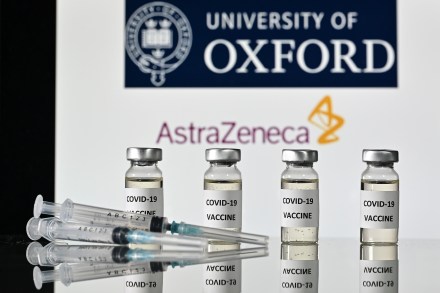
Oxford University's vaccine could be up to 90 per cent effective, data from phase III trials shows today. With the UK government ordering 100 million doses of the jab, could it mean a return to normality is on the horizon? Katy Balls speaks to Fraser Nelson and James Forsyth.

Oxford’s vaccine success could mean a return to normal by April

One consequence of the positive Oxford vaccine news this morning is that the UK will shift to a strategy of attempting to vaccinate as much of the adult population as possible. We know from NHS documents obtained by the Health Service Journal that the aim is to have 75 per cent of the population vaccinated by April. If this was the case, all social distancing measures could be ended that month, with even nightclubs open as before. The Oxford vaccine is particularly well suited to a mass vaccination programme. Unlike the Pfizer one, it can be stored at fridge temperature making distribution of it far easier. Rolling this vaccine out will, obviously, be a logistical challenge.

Nationwide vaccination could end social distancing in April

The NHS plans to vaccinate everyone who wants a jab by early April, according to leaked documents seen by the Health Service Journal. This marks a shift in strategy from the government’s previous plan to only vaccinate the vulnerable. If successful, it would mean that all social distancing measures could be ended in April. The documents operate on a 75 per cent take-up rate for the vaccine among the general population, which seems a touch high given polling on the subject. It assumes that the NHS would be vaccinating 4.5 million people per week and for both the Oxford and Pfizer vaccines people would need to take two doses, 28 days apart.

Why Priti Patel is staying put

13 min listen

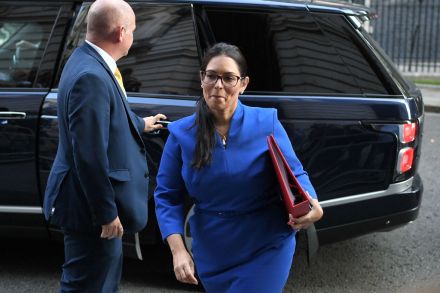
Sir Alex Allen, a top civil servant in charge of the report into allegations of bullying at the Home Office, has resigned, but the Home Secretary Priti Patel, who is at the centre of it all, has not. Why is the Prime Minister so keen to 'stick with Prit'? Fraser Nelson talks to James Forsyth and Katy Balls.

Boris should heed Douglas Ross’s warning about the Union

Boris Johnson’s comments about devolution having been a ‘disaster’ were not entirely wrong: it is hard to point to a problem devolution has solved. But given the popular support for devolution, it was a mistake for Johnson to say this out loud, I say in the magazine this week. The comment was a gift to Scottish Nationalists who will now claim that Scots must vote for independence to stop Westminster from taking away their parliament. Given that the SNP could deprive him of his premiership — and end this 300-year-old Union — Johnson must learn how his words will be interpreted north of the border. His enemies seek to portray him as a blundering, aloof Old Etonian who embodies a dysfunctional UK government. He mustn’t give them the ammunition to do so.

More devolution in England could save the Union

Tory MPs are already starting to talk about May’s various elections. Boris Johnson’s first post-Covid electoral test will take place on 6 May and will show the durability — or otherwise — of his 2019 electoral coalition now that Brexit is ‘done’ and Jeremy Corbyn is gone. Can the Tories hold on to the much-prized Teesside and West Midlands mayoralties? If the answer is yes, the party will feel it can face the future with confidence. If not, it will start to panic. But the most significant result of the night will be the most predictable one: a Scottish National party victory in Holyrood. The SNP is currently polling comfortably, and consistently, at more than 50 per cent.

What’s behind Boris’s green agenda?

18 min listen

Boris Johnson has today announced a raft of new environmental policies, following the departure of Dominic Cummings and Lee Cain last week. Will it reset the direction of Number 10, or are more comprehensive changes needed? Cindy Yu speaks to Fraser Nelson, James Forsyth and Katy Balls.

Has devolution been a disaster?

13 min listen

Boris Johnson told northern MPs last night that he thought Scottish devolution had been a 'disaster', a comment that was immediately disowned by the Scottish Tory leader Douglas Ross. Katy Balls talks to Fraser Nelson and James Forsyth.

The strategic consequences of a no-deal Brexit

If it was not for the drama in Downing Street, Brexit would be dominating the news right now. Next week is regarded as a crucial week for the negotiations. If they don’t make progress, then the UK leaving without a trade deal will become the most likely outcome. The geopolitical consequences of this failure would dwarf the economic ones, I say in the Times today. No deal would be acrimonious. The EU would probably take a hard-line approach to border checks to try to force Britain back to the table. Boris Johnson would, as the Internal Market Bill proposes, override parts of the withdrawal agreement that he himself signed. The EU would take legal action.

Cummings set to leave No. 10 by Christmas

Dominic Cummings will leave Downing Street at the end of this year, the BBC’s political editor Laura Kuenssberg is reporting. Cummings is one of those rare individuals who has bent the arc of history. He has been crucial, if not indispensable, to several key moments in this country’s recent past. His work at Business for Sterling is one of the things that put Tony Blair off attempting to take the UK into the Euro. Even more importantly, it is hard to believe that Leave would have won the 2016 referendum without the brilliant, heterodox campaign that Cummings devised. Cummings has long been more interested in how government works The victory in that Brexit referendum might have come to very little if Cummings had not returned to the fray in 2019.

Why No. 10 is cautious about the Covid vaccine

The news about the Pfizer vaccine has persuaded Tory MPs that there is now a route out of this crisis, and that this country can avoid being dragged into a cycle of lockdowns, I say in the magazine this week. No. 10 is being deliberately cautious about the vaccine. There are huge logistical obstacles to overcome before the vaccine can be rolled out. It needs to win approval from the regulators (although if it passes the safety test, that should happen quickly). It must also be kept colder than the North Pole until it is sent out to be delivered to patients.  But in Whitehall the view is that Pfizer’s vaccine breakthrough will be followed by others, because the apparent success shows that a mRNA vaccine (rather than one using a weakened or dead form of the virus) can work.