James Forsyth

James Forsyth

James Forsyth is former political editor of The Spectator.

Boris’s Covid balancing act is getting harder

I’m pro-cake and pro-eating it’, Boris Johnson used to quip. But now he is in a hideously difficult position as he tries to balance the needs of public health and the economy. He is damned if he does and damned if he doesn’t, I say in the magazine this week. Starmer’s decision to call for the circuit-breaker lockdown which Sage recommended but Boris Johnson rejected has further raised the stakes; it marks an end to the major parties’ consensus on how to handle Covid.  If the death toll this winter is high, Labour will claim that had Johnson ‘followed the science’ and gone for the circuit-breaker option, fewer people would have died. Equally, if he goes for it and there are still many excess deaths, people will ask what the point was.
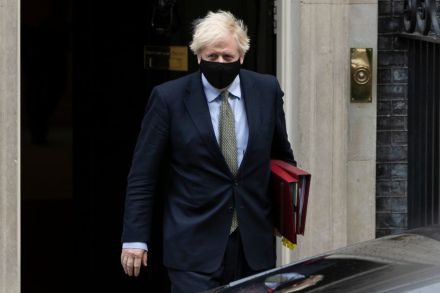
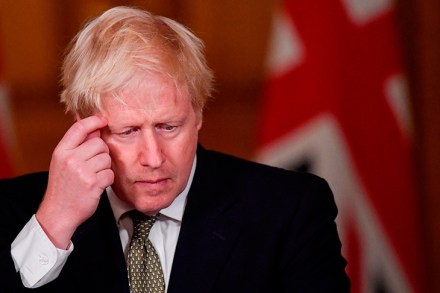
There are no good choices for Boris Johnson

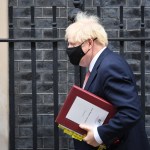
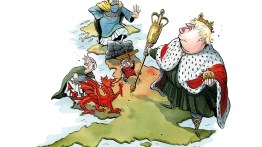
Boris Johnson used to be defined by his commitment to having his cake and eating it. But now he isn’t having any cake, let alone getting a chance to enjoy it. He is in a hideously difficult position as he tries to balance the needs of public health and the economy. There are no good choices. He is damned if he does and damned if he doesn’t. Since the end of the first lockdown, the government’s policy has been to try to control the virus without shutting down the economy. This is becoming increasingly difficult.

Will Boris be dragged into a second lockdown?

16 min listen

A paper to be published by Sage scientists today claims that more than 7,000 lives could be saved if the government imposes a two-week 'circuit breaker'. With Keir Starmer today saying the policy would be in the 'national interest', Katy Balls speaks to Fraser Nelson and James Forsyth about whether Boris could put Britain into lockdown again.

Chris Whitty: tier three alone will not be enough

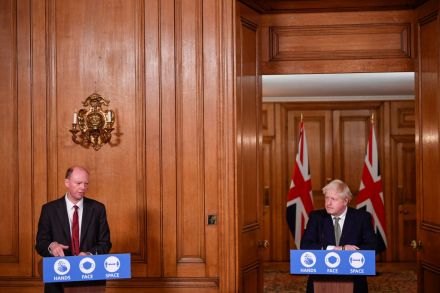
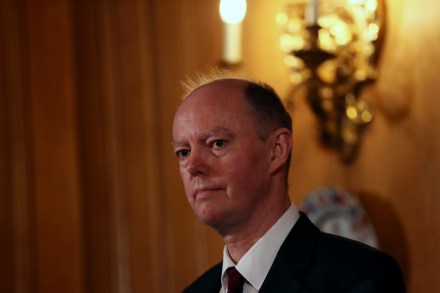
Chris Whitty made clear at tonight’s press conference with the Prime Minister and the Chancellor that he doesn’t think that the tier three restrictions are enough to get on top of the virus in the worst hit places. He was explicit that local councils will need to go even further in terms of closures in some places. Later in the press conference he said that the government ‘knew full lockdown works’ but it was also aware of the societal and economic harm it does, and the government rightly wants to keep schools open. Taken together, the answers strongly implied that Whitty thinks that in Covid hotspots everything apart from schools should be under consideration for being closed. https://www.youtube.com/watch?

Tory MPs won’t like Boris’s response to Steve Baker’s Covid question

Today’s statement by Boris Johnson was a reminder of how difficult the politics of this second wave is going to be. In the first 50 minutes, there were only two Tory soft balls to the PM. The other questions from his own benches all had a degree of scepticism in them, and some were clearly hostile. Andrew Mitchell, the former Tory chief whip, echoed the Mayor of the West Midlands Andy Street’s complaint that the region had been placed in tier 2. Caroline Ansell, the Eastbourne MP, argued that hyper local restrictions would be better than this new system. Perhaps the most interesting exchange, though, came when Steve Baker – one of the Tory MPs who is most sceptical of these restrictions – asked when the vulnerable would be vaccinated.

Will the three-tier system backfire on Boris?

12 min listen

A three-tier system of coronavirus restrictions is set to be announced today, but the government is still locked in negotiations with local authorities over the financial support they will receive if they are placed at the highest level. With a growing number of Tory backbenchers coming out against harsher measures, could the new system backfire on the PM? Isabel Hardman speaks to Katy Balls and James Forsyth.

Starmer passes the Mary Cameron test

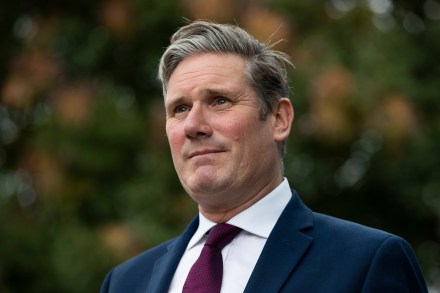
Keir Starmer’s political position is stronger than people would have expected a few months ago. The improvement in Labour’s poll position is giving him more personal authority within the party, allowing him to move on from the Corbyn era faster than expected. 'The Labour party has the smell of power in its nostrils now and that’s enough to anaesthetise about 90 per cent of them', one Johnson confidant fretted to me recently. As I say in the Times today, one particular benefit of this for him is that it allows him to sidestep Tory attempts to drag him into culture war skirmishes. One reason why culture war attacks bounce off Keir Starmer is that he passes the Mary Cameron test.

Divided nation: will Covid rules tear the country apart?

37 min listen

In this second round of restrictions, the lockdown is no longer national. But a regional approach is full of political perils (00:45). Plus, the real reason to be disappointed in Aung San Suu Kyi (12:50) and is Sally Rooney's Normal People just overrated (26:15).With The Spectator's political editor James Forsyth; Middlesbrough mayor Andrew Preston; historian Francis Pike; the Myanmar bureau chief for Reuters Poppy McPherson; journalist Emily Hill; and The Times's deputy books editor James Marriott.Presented by Cindy Yu.Produced by Cindy Yu and Max Jeffery.

What will the North’s new restrictions look like?

11 min listen

Overnight, news broke of the three-tier system that the government has in store for the country. First to be put into the strictest tier is likely to be large parts of the North of England, from next week onwards. Cindy Yu discusses with Katy Balls and James Forsyth the political fallout over the next few days.

Could local lockdowns cost Boris Johnson the north?

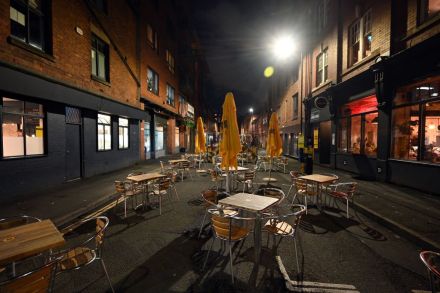
When the lockdown tiers are announced, it is inevitable that huge swathes of the north will be under much tighter restrictions than the south. It is not hard to see how a divided Britain translates into political trouble, as I say in the magazine this week. Labour and northern leaders will claim that support packages would be more generous — and the situation better handled — if it was the south that was bearing the brunt. ‘It’ll be like flooding,’ warns one cabinet minister. ‘People will say: they’d take it more seriously if it was happening in Surrey.’ There’s a Tory worry that this situation could provide Labour with a wedge to drive between Johnson and his new northern supporters.

Divided nation: will Covid rules tear the country apart?

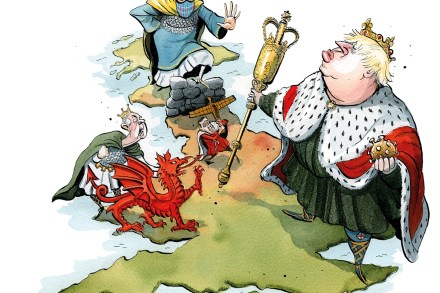
‘From this evening, I must give the British people a very simple instruction — you must stay at home,’ Boris Johnson declared on 23 March. At the beginning of the pandemic, when infection levels first began to rise, the country was all in it together. The prescription was a national one, and the Prime Minister could speak to the nation as one. Though infection levels have begun to surge again, the restrictions are now specific and local. The PM can no longer address the country as a whole, and this poses a problem for him. Last time, at least, there could be no claims that the Tories were favouring one particular area at the expense of the rest.

What’s behind Sturgeon’s coronavirus crackdown?

12 min listen

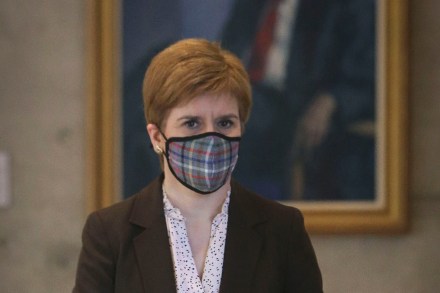
Nicola Sturgeon today announced that 3.4 million Scots will be placed under increased Covid restrictions, with bars and restaurants shutting across a central belt which includes Glasgow and Edinburgh. What's behind the crackdown, and could similar measures be announced in England? Katy Balls speaks to Fraser Nelson and James Forsyth.

Johnson looks to the future while ignoring the present

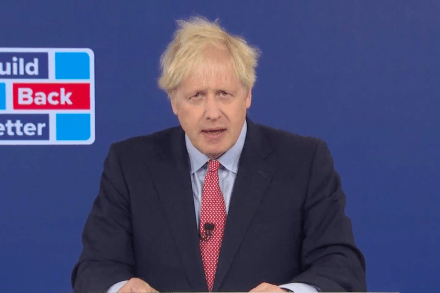
Boris Johnson’s whole rhetorical style is designed to elicit a response from the audience. So there was something particularly bizarre about him delivering his conference speech to an empty room. At one point, Johnson even imagined how the delegates would be reacting to his announcements if they were there. The speech was a deliberate attempt to be very upbeat. He began by promising conference that by next year’s gathering there would be no restrictions on the size of events even indoors and no social distancing. Johnson’s view is that there’ll be a gamechanger by March: either a vaccine or instant spit testing. But if this is wrong, and there are still restrictions in place this time next year, the mood in the Tory party will be very bleak indeed.

Is there still hope for Unionism?

21 min listen

The SNP has had a torrid week as the inquiry into Alex Salmond's trial came to a head, topped off with MP Margaret Ferrier's Covid breach. But Nicola Sturgeon has not sustained damage - so is there still any hope for Unionism? Katy Balls talks to Fraser Nelson and Stephen Daisley, with a cameo appearance from James Forsyth.

Boris can’t cancel Christmas

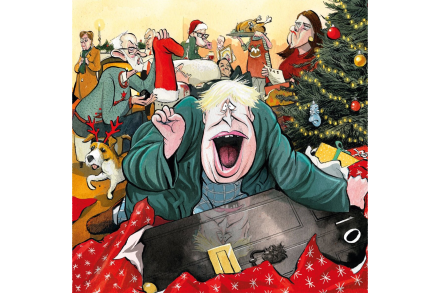
An event where multiple generations gather indoors, exchange gifts and drink alcohol having travelled from far and wide sounds like a nightmare in coronavirus terms. On this basis, Christmas is one event that should definitely be cancelled. But, as I say in the Times today, regardless of whether they are hawks or doves when it comes to the virus, leading figures in government think that it needs to be saved. 'If otherwise law-abiding people decide the rules are unworkable, then the whole system falls into total disrepute' One key Johnson ally says, bluntly, 'Christmas is not cancellable'. This could change, of course, if intensive care units are full in December.