James Forsyth

James Forsyth

James Forsyth is former political editor of The Spectator.

The Christmas Special

49 min listen

How will the UK's economy recover from Covid-19, and what has the pandemic revealed about the West? (01:20) Was 2020 the year we dealt a mortal blow to future viruses? (15:05) And finally, what makes Mary Gaitskill a brilliant writer, and why does Elif Shafak work to heavy metal music? (29:25)With The Spectator's political editor James Forsyth, deputy political editor Katy Balls, writer and biologist Matt Ridley, behavioural psychologist Dr Stuart Ritchie, The Spectator's literary editor Sam Leith and writer Elif Shafak.Presented by Lara Prendergast. Produced by Max Jeffery and Sam Russell.
How Britain will counter China’s wolf-warrior diplomacy

The most significant and lasting change brought about by Covid is that it has woken the West up to the threat posed by Communist China. The fact that the initial severity of the outbreak was covered up by Chinese Communist party authorities did not surprise western governments. It was Beijing’s ‘wolf warrior diplomacy’ as the virus raged round the globe that made them grasp the true nature of President Xi’s China. In March, the UK government was taken aback by the extreme misinformation promoted by the CCP to try to suggest that the US military was somehow to blame for the emergence of the virus.

Is Boris now braced for a Brexit deal?

13 min listen

While the government wrangles with Christmas coronavirus rules, negotiations in Brussels are continuing. Boris Johnson seemed more upbeat about the prospect of a deal at PMQs today, telling SNP leader Ian Blackford that that there was 'every opportunity, every hope' of a deal. Is the PM bracing for an agreement? Katy Balls speaks to Isabel Hardman and James Forsyth.

Keir Starmer’s late criticism of Christmas easing

Boris Johnson and Keir Starmer both assumed that today was the last PMQs before Christmas, suggesting that they don’t expect Parliament to be sitting next Wednesday. Their exchanges were particularly unenlightening this week. Starmer argued that his concerns about the tier system had been justified by the fact that cases are rising in three quarters of tier 2 areas and half of tier 3. Johnson again attacked him for abstaining on the vote on the tier system. Interestingly, Starmer set himself fully against the Christmas easing calling it ‘the next big mistake’ and approvingly quoted the joint Health Service Journal / British Medical Journal editorial, which called for a ban on household mixing at Christmas.

Boris’s Heathrow runway problem returns

It looked like the courts had solved Boris Johnson’s third Heathrow runway problem when they ruled it illegal in February because of the actions the government is committed to on climate change. But this morning, the Supreme Court has overturned the Court of Appeals’ decision. This means that Heathrow can now seek planning permission for a third runway. There’s a long way from seeking planning permission to the bulldozers, which Johnson has promised to lie down in front of, moving in. There will undoubtedly be more legal challenges and court cases before this is finally resolved one way or the other; the government first backed a third runway at Heathrow when Gordon Brown was still prime minister.

Could Christmas still be cancelled?

13 min listen

The government is coming under pressure to reverse the Christmas relaxation of Covid rules, with two of the country's leading health journals - the Health Service Journal and the British Medical Journal - jointly calling for a rethink. Keir Starmer, meanwhile, has called on Boris Johnson to hold an emergency COBRA meeting to review the plans. Will the government cancel Christmas? Isabel Hardman speaks to James Forsyth and Katy Balls.

Will the relaxation of the Christmas Covid rules be reversed?

The plans of the UK and devolved governments to ease restrictions over Christmas are coming under increasing criticism. Matt Hancock faced repeated questioning last night on whether this was wise given the new strain that he thinks might be behind the more rapid spread of the virus in London and the south east. This morning, the British Medical Journal and the Health Service Journal have called in a joint editorial for the government to scrap the Christmas easing entirely and ban all household mixing this Christmas. The two editors write that ‘we believe the government is about to blunder into another major error that will cost many lives. If our political leaders fail to take swift and decisive action, they can no longer claim to be ‘protecting the NHS.

Hancock warns of a new Covid strain

Matt Hancock has just announced that London and the surrounding area will be put into Tier 3 from one minute past midnight on Wednesday. Hancock said that government scientists had identified a new strain of Covid that they think might be behind the more rapid spread of the virus in the south east in recent weeks. Alarming as this sounds, he did emphasise that it doesn’t seem to cause more serious illness and there’s no reason to think it won’t respond to the vaccine. The news of this strain does raise further questions about the Christmas easing. The risk now is that as people head home for the holidays they will carry this new, more rapidly spreading strain of the virus around the country — and that could make the situation worse in January.

London heading for at least Tier 3

12 min listen

London is set to enter the highest set of coronavirus restrictions. Normally this would see restaurants, pubs and indoor entertainment venues forced to close, but could the capital see the introduction even tighter rules? John Connolly speaks to Katy Balls and James Forsyth.

Are we any closer to a Brexit deal?

12 min listen

Boris Johnson and Ursula von der Leyen have decided to continue Brexit negotiations, it was announced today. A deal between the two sides seemed distant after the pair met for dinner last week, and they decided to take stock over the following days. Does the announcement mean real progress is now being made? Katy Balls speaks to James Forsyth.

Brexit talks extended as the consequences of no deal start to sink in

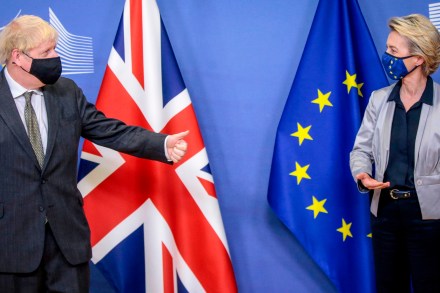
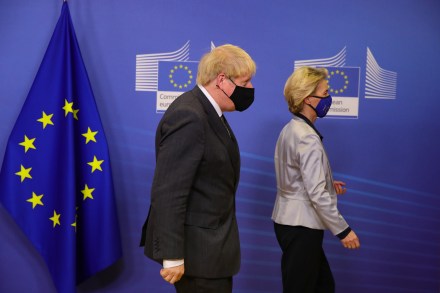
Another Brexit deadline has come and gone. The Commission President Ursula von der Leyen and Boris Johnson have just announced that the negotiations will continue despite the talk that today marked a hard stop for the negotiations. Strikingly, they haven’t set a new deadline for when the talks have to conclude suggesting that they may go on for some time yet and that the end of the transition period on 31 December is now the only deadline that really counts. The tone of the Johnson / von der Leyen joint statement is notably more upbeat than the briefing that followed their Wednesday night dinner. It calls their conversation today ‘useful’; von der Leyen called it ‘constructive and useful’ in her televised statement.

Are we heading for a tier clampdown?

14 min listen

While Brexit negotiations rumble on, important decisions about Covid still have to be made. Next week, the government will review the tier system and decide whether the localised restrictions need to be eased or tightened. Katy Balls speaks to James Forsyth about what might change.

How to solve Brexit’s ratchet clause problem

At the moment, the biggest single obstacle in the Brexit talks is the so-called ‘ratchet clause’. This is what Boris Johnson is complaining about with his slightly torturous analogy that the EU wants to treat Britain like a twin with the right to punish the UK if it doesn’t get the same haircut or buy the same handbag. As I say in the Times this morning, the problem with this proposed ratchet clause is that the EU wants the right to unilaterally impose tariffs in the circumstances where it has tightened its regulations and the UK has not followed suit. There would be no obligation to show that the UK’s different standards were distorting trade. The EU would simply be able to act. But the UK would not be able to hit back.

Is no-deal now the default?

13 min listen

A Brexit breakthrough seemed possible when Boris Johnson met European Commission president Ursula von der Leyen for dinner last night. This evening, however, the PM has warned that there was a 'strong possibility' of no-deal. What's changed, and is no-deal now the most likely outcome? James Forsyth speaks to Katy Balls.

Biden’s Burden: can he save the free world?

42 min listen

Joe Biden wants his administration to be a departure from the days of Donald Trump, but will a change in foreign policy harm American interests? (01:00) Why is it taking so long to reach a Brexit deal? (17:10) And finally, should cyclists be given priority on London's roads? (29:35)With The Spectator’s deputy US editor Dominic Green, Chatham House's Leslie Vinjamuri, The Spectator's political editor James Forsyth, EurasiaGroup's managing director Mujtaba Rahman, journalist Christian Wolmar and writer, actor, and comedian Griff Rhys Jones.Presented by Lara Prendergast.Produced by Max Jeffery, Matt Taylor and Alexa Rendell.

Two reasons why a Brexit breakthrough might be difficult

The failure to achieve a breakthrough at the Boris Johnson/ Ursula von der Leyen dinner last night has left no deal looking more likely. But those who think there’ll be a deal in the end often point to the fact that things looked even bleaker last autumn, yet a deal was done in the end. There are, though (as I say in the magazine this week) two reasons why now is not like last October. The first is that back then only Ireland was directly affected by the issues under discussion. This meant that if the Irish were happy, the rest of the EU would be too. Now, most of the EU’s 27 member states have interests at stake. Von der Leyen is acutely aware that she is speaking on behalf of 27 countries given France’s public threat to veto any deal it doesn’t like.

The deal-or-no-deal debate is different this time

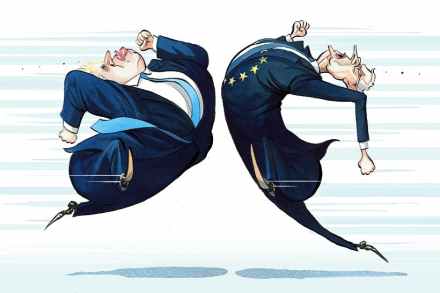
When a deadline is missed for Brexit negotiations, it is tempting to think there will be another chance to keep talks going. Last week, the UK and the EU agreed that things needed to be wrapped up by Sunday night or Monday afternoon at the latest. The thinking was that if a deal was not done by then, the return of the Internal Market Bill to the Commons would scupper negotiations. But Monday afternoon passed with no agreement. The two sides now admit that the only real deadline is the end of the transition period on 31 December. The talks are currently in a state of suspended animation. After nine months, the sticking points are the same three issues: the so-called level playing field, fish and governance. Boris Johnson and Ursula von der Leyen each think the other wants a deal.