James Forsyth

James Forsyth

James Forsyth is former political editor of The Spectator.

Westminster must avoid the Sturgeon trap

The challenge for the UK government in the coming months is to make Nicola Sturgeon look like a constitutional obsessive. The SNP wants to frame the situation as Boris Johnson and the Tories denying the people of Scotland a referendum. The election results suggest there is no overwhelming clamour for a second referendum, with no SNP overall majority and the votes split evenly between pro and anti-Union parties. But UK government ministers should avoid giving the SNP the headlines they crave. They should side-step constitutional questions and instead emphasise co-operation on dealing with the after-effects of the pandemic. Ministers should force Sturgeon to make all the running on the second referendum question.

Can the UK government navigate the SNP’s calls for a second referendum?

The Unionist tactical voting in Scotland makes it tempting to see the country as split down the middle between pro-independence and anti-independence voters. But this is not quite right. There is a good argument that the Scottish electorate is actually split three ways between Unionists, Nationalists and those who aren’t fully decided on the constitutional question. It is this third group who will determine the result of any second referendum. So, the UK government has to have them in mind when thinking about how to handle the inevitable request for a Section 30 order and a second referendum. The first thing to say is that the UK government should ensure Nicola Sturgeon is making the running on this. Headlines such as ‘PM: No new Scottish referendum’ are not helpful.

Andy Street’s success is part of the English political realignment

Andy Street won the West Midlands mayoralty in 2017 by the slimmest of margins, with 50.4 percent of the vote to Labour’s 49.6 percent in the second round. He has been re-elected by a far more comfortable margin: 54 percent in the second round, and was within eight thousand votes of winning on the first round. Street’s success is part of the broader English political realignment. Just look at his vote share in the Black Country. But he also has a distinct political style, emphasising his business experience - he’s the former boss of John Lewis - and a more consensual approach. Voters have clearly decided that they prefer this style to the more traditional, partisan posturing of the Labour candidate, former Cabinet Minister Liam Byrne.

No SNP majority, now what?

13 min listen

Scotland will have a pro-independence majority at Holyrood, but the SNP has fallen short of an overall majority. What does this mean for the party, its leader Nicola Sturgeon, and the campaign for a second independence referendum? Katy Balls speaks to James Forsyth and Stephen Daisley. James Forsyth: ‘In a way, this is why this (election) is a bad proxy for the question of independence opinion in Scotland, because there are obviously three sizeable, pro-Union parties in Scotland: Tories, Labour and Liberal Democrats. And on the pro-independence side, there's the SNP, there are the Greens, who are interestingly, a poll during the campaign suggested that most Green voters weren't actually in favour of independence.

What the Hartlepool loss means for Starmer

14 min listen

The local election results are coming in over the weekend, but the bombshell came early with Hartlepool going to the tories in a massive 16-point swing. Isabel Hardman speaks to James Forsyth and Katy Balls about how much the red wall has left to give.

Tories win Hartlepool, throwing Starmer’s leadership into crisis

The Tories have taken Hartlepool on a remarkable 16 per cent swing from Labour. The Tories saw the biggest increase — 23 per cent — in a governing party’s share of the vote in a by-election in the post-war era. Labour has been trounced in a seat that has been theirs since its creation in 1974. Labour’s defeat shows that Keir Starmer is nowhere near stopping the party’s bleeding in the red wall. It suggests that the 2019 election was not a freak result driven by voters' desire to get Brexit done and their fear of Jeremy Corbyn but rather part of a realignment of English politics — and that things might get even worse for Labour in these areas. Any hopes that voters would simply snap back to Labour with Brexit done and Corbyn gone have been dashed.

What are the Royal Navy doing in Jersey’s waters?

11 min listen

Once again it's all about the fish - following protests from French fisherman over their rights in the waters surrounding Jersey, Boris Johnson has despatched Royal Navy boats to the Channel. Isabel Hardman speaks to James Forsyth and Katy Balls about why tensions escalated so quickly.

What’s next for the Union?

The Union faces two simultaneous challenges in Northern Ireland and Scotland that both look set to worsen in the coming years. In Northern Ireland, the immediate problem is that Brexit has disturbed the fragile balance there. (A more persistent problem is the fact that after the Good Friday agreement, the Democratic Unionist party and Sinn Fein replaced the more moderate Ulster Unionists and the Social Democratic and Labour party as the main Unionist and Nationalist parties.) The debate over where various borders should go has turned into a question of identity. Unionists argue that the UK government’s agreement to create half a border in the Irish Sea threatens Northern Ireland’s place in the United Kingdom.

How serious would Labour losing Hartlepool be?

12 min listen

A poll last night gave the Tories a 17-point lead in Hartlepool. Tomorrow's by-election in the red wall seat is to be one of the first barometers of Keir Starmer's leadership so far. How serious would a Labour loss be? Isabel Hardman speaks to Fraser Nelson and James Forsyth.

Hartlepool turning blue would mean a Labour crisis

We have two years of elections on Thursday. But in England, the Hartlepool by-election is fast becoming the defining contest. If the Tories take the seat, which has always been Labour's, it will show that Keir Starmer hasn’t stopped the bleeding for Labour in the red wall. It will indicate that the realignment of English politics is continuing even without Brexit and Corbyn. A Tory win would suggest that the 2019 general election was not a freak result or a unique product of voters’ desire to get Brexit done combined with their concerns about Corbyn, but rather part of a substantial shift in the electoral geography of England. Hartlepool turning blue would precipitate a Labour crisis.

What does the DUP shakeup mean for Northern Ireland?

21 min listen

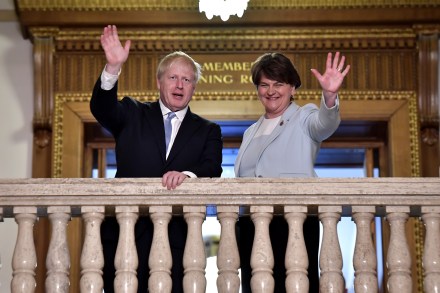
Arlene Foster's departure has left the DUP in a difficult place. Unionists could become disaffected if another relative moderate takes over, but younger voters might abandon the party if a hardliner becomes leader. What does this mean for Northern Ireland? Katy Balls speaks to James Forsyth and Denis Staunton, London editor of the Irish Times.

Unionist opinion will harden unless the EU gives ground

Arlene Foster has been forced out as DUP leader because of Unionist anger about the Northern Ireland protocol. She is blamed for being far too trusting of Boris Johnson. Her party’s anger with her has been compounded by how it has fallen in the polls since the protocol started being implemented. But as I say in theTimes this morning, the protocol isn’t even yet in full effect. If the protocol were to be implemented in full, Unionist opposition towards it would escalate to the next level. Next year’s Stormont election would turn into a proxy referendum on the protocol, with unionist parties arguing that if they can get a majority, they can vote to scrap it.

Has Starmer misfired on wallpaper-gate?

12 min listen

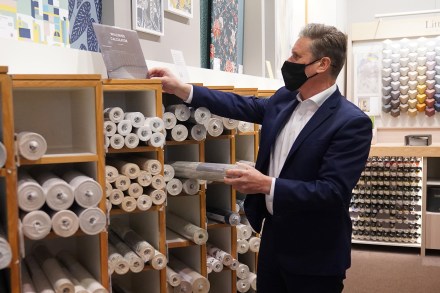
Keir Starmer was pictured shopping for wallpaper in John Lewis today, poking fun at Boris's ongoing No. 10 refurbishment troubles. But is the Labour leader really just playing to the PM's advantages? Katy Balls speaks to James Forsyth.

The nightmare: Boris’s battles are just beginning

When Boris Johnson parted company with Dominic Cummings at the end of last year, it was inevitable there would be trouble further down the line. To pick a fight with one of Britain’s most formidable campaigners and his allies was always going to have consequences. It’s now becoming clear what they are. Some of the revelations from Johnson’s enemies are quotable: for example, the allegation that he said in private he’d rather let ‘bodies pile high’ than allow a third lockdown. But what he said in anger, or what he considered doing, matters a lot less than what he actually did. That’s why the most serious question he’s facing is about the financing of the renovation of the Downing Street flat.

Does Simon Case have all the answers?

11 min listen

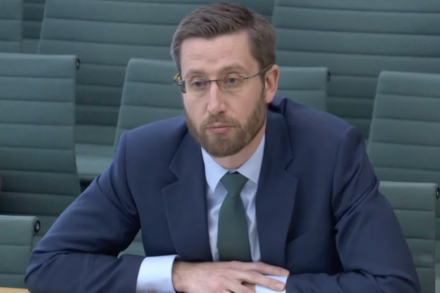
Simon Case dodged questions from MPs about his lockdown leak inquiry at a select committee appearance this afternoon, and refused to go into details about how Boris Johnson paid for the refurbishment of his Downing Street flat, saying the PM would make the 'relevant declarations'. Why did Case stonewall the committee? Katy Balls speaks to James Forsyth and Isabel Hardman.

Simon Case’s answers left us with more questions

Simon Case was determined not to make news at his select committee appearance today. But his sheer desire not to make news told a story in itself as the Commons Public Administration committee got increasingly frustrated with him. The row over who is responsible will rumble on Case dodged a string of questions on the lockdown leak inquiry and then declared, ‘What I can say I have already said to the committee.’ Case did, though, reveal a couple of things. First, it will be weeks not months before the inquiry concludes and the reason he couldn’t say much on it was that while the leak was not criminal, the investigation is using techniques he can’t talk about it in public.