James Forsyth

James Forsyth

James Forsyth is former political editor of The Spectator.

The future looks bleak for Tory free-marketeers

The free-market Tory right’s victory on the Australia trade deal obscures the fact that the economic direction of the party has turned against them since the Brexit vote. As I say in the Times today, this is a big-spending Tory government that believes in an active role for the state in fostering innovation and driving growth. As one cabinet minister puts it, 'It is a kind of Faustian bargain. The Tory right defeated the One Nation Tories on Europe but had to become One Nation Tories on the economy.' There are several reasons why Brexit hasn’t ushered in the shift to the right on economics that many hoped (or feared). The electoral coalition that delivered both the referendum and the Tory majority in 2019 is not a libertarian one.
Why is Boris optimistic about 21 June?

9 min listen

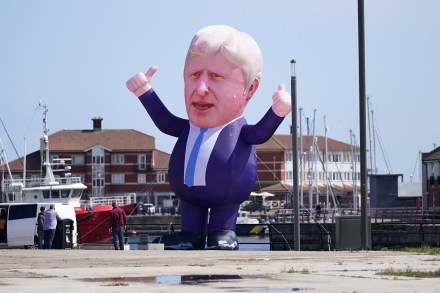
Boris Johnson is increasingly confident that Britain will drop the majority of Covid restrictions on 21 June. But with the Indian variant forcing case rates in Bolton to more than ten times the national average, and in Blackburn to more than six, why is he optimistic? Katy Balls speaks to Fraser Nelson and James Forsyth.

Have the Lidl free marketeers won the day?

12 min listen

Despite some misgivings in Cabinet, free marketeers seem to have won the argument on the Australia trade deal, one of the first major deals to be struck after Brexit. Katy Balls talks to James Forsyth and Isabel Hardman about the latest discussions in government.

Brussels should give ground on the Northern Ireland Protocol

The dominant issue in UK/EU relations in the coming months is going to be Northern Ireland. The UK is trying to ‘sandpaper’ down the protocol to lessen its impact on the ground in Northern Ireland. But the EU is resisting, pointing out that the UK signed up to the deal in the first place. In an interview in this week’s Spectator David Frost admits that ‘The problem we’ve got is that the boundary for trade purposes is proving more of a deterrent to trade and more of a generation of trade diversion than many people expected.’ Frost’s deliberate use of the phrase ‘diversion’ is significant.

Bloc buster: David Frost on Brexit, Barnier and the backstop

In an eyrie at the top of the Cabinet Office sits David Frost, Boris Johnson’s former Brexit negotiator who is now the cabinet minister responsible for handling the European Union. His office has the genial feel of a don’s study — there’s a book of Anglo-Saxon verse on his table alongside one of Greek poetry — yet mention Frost’s name to even the most mild-mannered EU diplomats and they begin to fume. In an effort to understand the apparent mismatch, I ask Frost if he feels the need to be aggressive in negotiations. ‘I hope not,’ he replies. But he does admit that he did feel that way when he first took on the job.

The Australian trade deal is about more than just trade

What happens with an Australia trade deal won’t just reveal how serious this country is about free trade but also how committed it is to helping democratic countries stand up to China. China is Australia’s largest trading partner but since Australia called for an independent inquiry into the origins of coronavirus, Australian-Chinese relations have severely deteriorated. Beijing is now trying to use this economic relationship to get Canberra to fall into line.  China has imposed huge tariffs on Australian barley and on wine for the next five years, while technical reasons have been found to bar most Australian timber and beef from the country.

Should Starmer let the cameras in?

11 min listen

Keir Starmer is reportedly thinking about giving access to a camera crew in order to create a fly-on-the-wall documentary about his leadership of the Labour party. Is this a good idea? Isabel Hardman talks to Katy Balls and James Forsyth.

Could 21 June be delayed?

12 min listen

As England moves into the next phase of its lockdown easing today, the Indian variant threatens to throw the final phase off schedule. Could the government delay 21 June? Isabel Hardman speaks to James Forsyth and Katy Balls.

Does Boris have a southern problem?

16 min listen

While the local elections bore fruit for the Tories in the red wall, the party’s rebranding has had some southern shire MPs worried – does the party under Boris Johnson still speak for them and their voters? Cindy Yu speaks to James Forsyth and Katy Balls about this growing fracture.

Edwin Poots’s narrow leadership win is a sign of DUP divisions

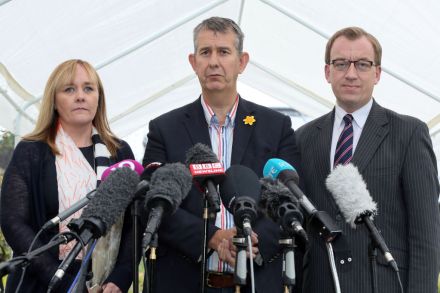
Edwin Poots is the new leader of the DUP. He defeated Jeffrey Donaldson by 19 votes to 17. The closeness of the race, the DUP’s first ever leadership contest, is a sign of how deeply divided the party is. While Poots is the new DUP leader, he will not be First Minister. He has been clear that he will leave that job to a party colleague. Donaldson, like Arlene Foster, has come to the DUP from the Ulster Unionist Party. In party terms, he is a more moderate figure. Poots, though, was born into the DUP and is a more hardline social conservative. He will likely concentrate on winning back those DUP voters who have moved over to the Traditional Unionist Voice, largely prompted by anger at the Northern Ireland protocol.

Why the Tories mustn’t give in to the Nimbys

A 15-point YouGov poll lead and last week’s election performance suggests that things look good for the Tories in England. But some results are still causing concern in Tory ranks. In Cambridgeshire, the party lost control of the county council; in Oxfordshire, the Tory council leader lost his seat; and the Conservatives had their majority on Surrey County Council slashed. Some Tories are quick to point the finger at proposed developments for these losses, as I say in the Times today. They argue that a radical shake-up of the planning system, such as the one the government is proposing, will make this problem far worse. They fear this could put parliamentary seats across the southeast in danger.

Will the India variant delay the roadmap?

13 min listen

Cases of the Indian coronavirus variant have more than doubled in the last week, and Nadhim Zahawi, the vaccines minister, this morning said that jabs could be deployed in areas with higher case loads to contain its spread. Will the variant delay the 21 June unlocking? Cindy Yu speaks to James Forsyth and Katy Balls. Listen to the podcast Cindy mentions about healthcare in Brexit Britain.

Can Labour survive the next election?

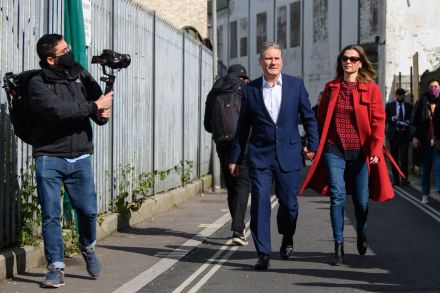
Keir Starmer is having a torrid time. Today brings another poll showing his personal approval rating falling. The Labour leader is now down to a net score of minus 22. But Starmer's leadership, or lack of it, is far from being Labour’s biggest problem.  The party’s fundamental issue is that its old electoral coalition has fallen apart in recent years; the 2014 Scottish referendum and the 2016 Brexit referendum detached large sections of the party’s traditional base from it. Starmer’s problem is that the constituent parts of the traditional Labour coalition are moving ever further apart. Many of his metropolitan voters regard Brexity provincials with disdain.

Keir Starmer isn’t Labour’s biggest problem

Keir Starmer has turned a drama into a crisis. The local elections were always going to be difficult for Labour. The government is enjoying the political dividend of the vaccine rollout, and approval for its handling of the Covid crisis is now back to where it was a month into the first national lockdown. Much of the world is still struggling, but Britain has the lowest Covid levels in Europe and Boris Johnson’s approval rating is far higher as a result. He triumphed, and Labour struggled. But Starmer made this so much worse by his actions before and after polling day. The first error was to hold the Hartlepool by-election on the same day as the local elections.

What could surface from a Covid inquiry?

13 min listen

Boris Johnson has announced that an inquiry into the government's Covid response will be launched next year. Katy Balls talks to James Forsyth and Fraser Nelson about what could surface and whether it will shed any light.

Has Angela Rayner got the upper hand?

17 min listen

Carolyn Harris, a key Starmer aide, has resigned her post as his parliamentary private secretary over allegations that she was behind some of the negative briefing against Angela Rayner. On the podcast, Katy Balls talks to James Forsyth and Isabel Hardman about whether Angela Rayner has come out of Labour's scrap, on top.

Could the Tories lose the South?

The coming Batley and Spen by-election — triggered by the incumbent MP's election as the first mayor of West Yorkshire — is currently attracting a lot of attention. It is a northern constituency that Labour won at the last election with less than 50 per cent of the vote and that voted to Leave, which has led people to wonder if the Tories can repeat their by-election success there. (It is, though, worth noting that the 2019 Labour share of the vote in Batley and Spen was 43 per cent compared to 38 per cent in Hartlepool).  But there is a group of Tory MPs who’ll be watching the Chesham and Amersham by-election even more closely. On paper, the seat looks as safe as houses for the Tories.

How Keir Starmer’s reshuffle backfired

13 min listen

After a messy and delayed reshuffle, there is more rancour in the Labour party than there was before the weekend. Has Keir Starmer taken a serious hit to his authority? Isabel Hardman speaks to James Forsyth and Katy Balls about the possible future for Labour.