James Forsyth

James Forsyth

James Forsyth is former political editor of The Spectator.

Can Rishi Sunak get the G7 on side?

13 min listen

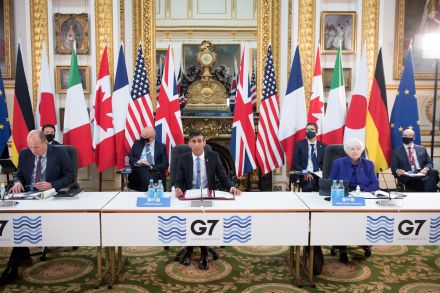
With the G7 looming the range of subjects on the agenda is vast. One of the first items up is the proposal of a global corporate tax rate which President Joe Biden has already endorsed. The potential issue with this that James pointed out on the pod was:"For this to work, this global corporate minimum tax, you need all the major players in the world economy signed up to it."But how will the first meeting of Boris and Biden go and is possible the G7 could become the G10?"For Boris Johnson, not to over stress it, but it is about making personal connections, that haven't been possible because of the pandemic" - Katy Balls Katy Balls and James Forsyth discuss with Cindy Yu their thoughts on what to expect.
Could travel this summer be stricter than last?

10 min listen

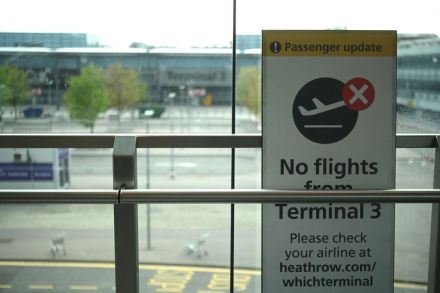
It's been a stressful day for those who've booked foreign holidays, as the government updated the latest countries on its various coloured travel lists. No new countries were added to the green list, but some were moved to amber. On the podcast, James Forsyth explains how this decision is down to a desire to prioritise domestic reopening to liberalisation of our borders: 'I think Boris Johnson doesn't like closing borders instinctively, but if that's what it takes to get rid of the one-metre rule, I suspect that might be a trade-off he would make.' But Cindy Yu asks - if this is the guiding philosophy, when will Britain really open up, given the patchiness of vaccination in the rest of the world?

No. 10 should expect an aid rebellion

If a vote is called on the government’s aid cut on Monday, it will be very tight for the government. Andrew Mitchell is a former chief whip as well as a former development secretary and it is hard to believe that he would have put this amendment down if he didn’t have the numbers to defeat the government. This is, in some ways, an odd rebellion. The rebels claim they are not really rebels at all and just trying to uphold the Tory manifesto from the last election. But the size of this rebellion should concern Boris Johnson and the Tory whips. It highlights how many former ministers there now are on the backbenchers who are prepared to defy the government.

Prepare for China’s nationalist turn

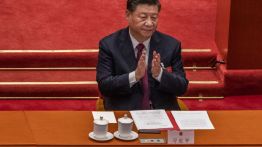
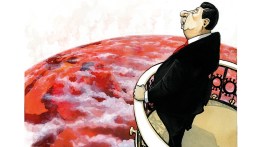
In recent days, it has been striking how many people in Westminster and Whitehall now think the lab leak theory is the most plausible explanation of Covid’s origins. China’s apparent success last year at stamping out the virus at home — with technological competence and sheer brutality — while cases spiked in the West, created a fear that the future belonged to Beijing.  But, as I say in the magazine this week, the growing plausibility that the virus leaked from a lab highlights the Achilles’ heel of the Chinese system: its lack of a mechanism for error correction. It is not that a lab leak couldn’t have happened in the democratic world, but it is far harder to imagine it being covered up here.

China is not as strong as it appears

The theory that the pandemic began with a leak from a research laboratory in Wuhan is rapidly gaining currency. Since Matt Ridley’s cover piece for The Spectator last week, Joe Biden has ordered US intelligence agencies to ‘re-double their efforts’ and report to him within 90 days on the origins of Covid. The US administration has made it clear that the various intelligence agencies are split on whether they believe the virus is natural or man-made. It is doubtful whether the US agencies will be able to come to a conclusion with any great confidence. Definitive evidence is unlikely to emerge.

Is £1.4 billion enough for schools?

13 min listen

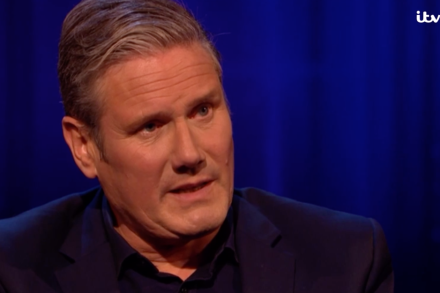
The government's education tsar Kevan Collins resigned this afternoon, saying that the £1.4 billion pledged by the government for schools is only a tenth of what is needed. Cindy Yu speaks to James Forsyth and Katy Balls about who will take the flack. On the podcast, James says Collins's resignation is 'embarrassing for the government'. The former education tsar was, he adds: 'someone who managed to bridge the various high divides in the world of schooling in England.'  The team also talks about Keir Starmer's interview with Piers Morgan, which aired last night. The Labour leader refused to admit taking drugs at university, expressed regret at his mother not seeing him become an MP, and tried to show the public more of his personality.

Keir Starmer’s interview gamble pays off

One of the biggest challenges for any leader of the opposition is getting noticed. Doing that requires taking some risks and Keir Starmer’s sit down with Piers Morgan was a bit of a risk – politicians can get caught out in these more personal formats. Starmer did well, though. He didn’t fall into any Nick Clegg style traps; navigating the sex and drugs questions with relative ease. He talked movingly about his mother, and how she coped with her long illness. His relationship with his own father clearly wasn’t easy, Starmer said the only time his father ever said he was proud of him was when he passed the 11-plus, and it was touching to hear him talk about how he tries to parent his own kids differently.

What difference does a wedding make?

12 min listen

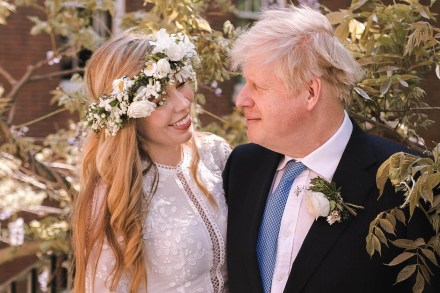
Now officially in June, the significance of the 21st seems even greater for the country, but with the Indian variant still on the rise how safe is the date? Katy Balls says that for the government: 'The plan is to offer all over fifties two doses before June 21st.'And a glorious weekend of weather for the Prime Minister's secret nuptials, but what does this wedding mean for the warring factions that circle No. 10?

The cold reality facing Sajid Javid

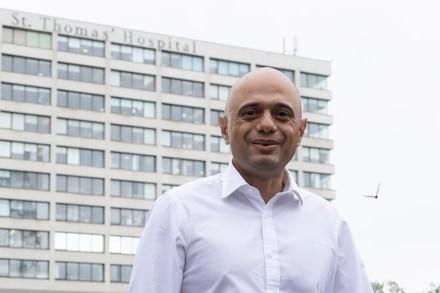
The most difficult time for a new secretary of state is normally the first three months in the job. An early mistake can sink confidence among both the public and Whitehall officials. But for Sajid Javid, his first three months as health secretary will be his easiest. The real challenge will come later. The easing of restrictions on 19 July will almost certainly go ahead, which means Javid will be able to point to an early success. I understand that the current plan, which the government will set out next week (though the formal decision on whether to proceed will only be taken a week beforehand), is for a comprehensive reopening. The one-metre rule will be ditched, masks will no longer be compulsory and venues will be allowed to operate at full capacity again.

Will the DUP lose ground under Edwin Poots?

11 min listen

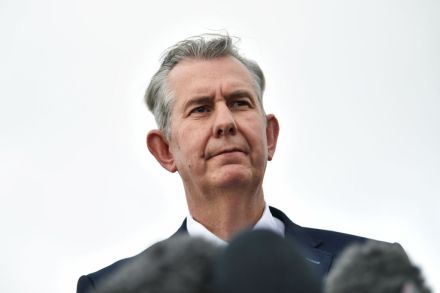
This week Edwin Poots was formally endorsed as the DUP's new leader, in a meeting which Arlene Foster, Sir Jeffrey Donaldson (Poots's rival in the leadership campaign) and other senior DUP politicians walked out of before Poots gave a speech. What does the future hold for the divided political party that held so much sway in Westminster during the Brexit process? Katy Balls talks to James Forsyth and the Irish Times's Denis Staunton. On the podcast, Denis suggests three ways forward for disgruntled DUP politicians like Foster and Donaldson. One, they could try to topple Poots. Two, they could go back to the Ulster Unionist Party (from which they defected in 2004). Or three, they could form their own party.

Will Hancock cling on?

14 min listen

Matt Hancock defended his position at a Downing Street press conference yesterday. He told journalists that, by his 'recollection of events', he told the Prime Minister that hospital patients would be tested before being sent to care homes 'when we could do it'. Dominic Cummings says the Health Secretary promised all patients would receive a test.On the podcast, Isabel Hardman says the press conference setup was 'a bit shifty', as journalists were denied follow up questions. 'What had started off being a reasonably good day for Hancock - he didn't get a drubbing in the Commons - ended really badly for him. The front pages were hastily rewritten, so he was on the front of many of the newspapers dodging questions,' Isabel adds.

Could 21 June be delayed?

There are two key questions ahead of the 21 June reopening. First, as I say in the magazine this week, there is the issue of how much more transmissible the Indian variant is than the Kent one. According to papers published by Sage, it is a ‘realistic possibility’ that it is up to 50 per cent more transmissible. If the true figure is at the top of this range, then a full reopening would likely lead to another big wave of cases and put pressure on hospitals. But the view in Whitehall is that if it is only 30 per cent more transmissible, then it should be safe to proceed with reopening. More data on this is expected next week. The second question is how many people have had their second jab by then.

Will Hancock hit back?

11 min listen

After the hanger full of Dom bombs that were dropped in yesterday's epic seven hour hearing, health secretary Matt Hancock got a sizeable chunk of Cummings wrath. Isabel Hardman talks to Katy Balls and James Forsyth about how Hancock has been handling himself since the allegations were levelled at him. James points out on the podcast that Hancock was never going to have a particularly hard time in the Commons, quoting Jack Straw, saying:’The safest place for a minister in a crisis is at despatch box in the House of Commons.

How much damage to the government has Dom’s bomb done?

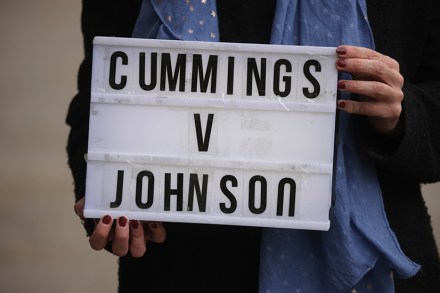
The more anticipated a parliamentary appearance, the less it tends to live up to its billing. But Dominic Cummings’s testimony before MPs on Wednesday was one of the more remarkable parliamentary moments of this century. His attacks on his former boss were jaw--dropping. He said that it wouldn’t have helped if Boris Johnson had chaired Cobra meetings at the start of the crisis since the Prime Minister didn’t take Covid seriously and that it was ‘completely crazy’ that the country had to choose between Johnson and Jeremy Corbyn at the last election (this remark was particularly astonishing given Cummings’s influence on the Conservative campaign). But his criticisms of the entire way that the British state works were just as significant.

Will Cummings’s accusations damage Boris Johnson?

One of Dominic Cummings’s strengths as a campaigner was his genius for a clear message – think ‘Take Back Control’ or ‘Get Brexit Done’. But the case that he was trying to make today was more complicated. He was trying to persuade people both that the Prime Minister was not up to the job and that the system has failed. Cummings’s testimony today made Geoffrey Howe’s resignation speech look like a paean of praise The problem for him is that these two arguments cut against each other. If, as he himself acknowledged, even a Bill Gates-style figure would have struggled to deal with the problems of the Whitehall machine then Johnson’s failings seem less important.

What we learnt from the Cummings evidence

17 min listen

From accusing Matt Hancock of criminal incompetence, to lifting the lid on the true nature of his relationship with Boris Johnson, Dominic Cummings's evidence was nothing short of explosive. Katy Balls talks to Isabel Hardman and James Forsyth about the highlights and what we learnt. There were few who escaped Cummings's censure. But in some ways, the sheer scale of alleged incompetence means that no one accusation will stick in the way that they might have done had they been made individually.

How damaging is the Tory Islamophobia report?

11 min listen

Islamophobia 'remains a problem' in the Conservative party, a report has found. Professor Swaran Singh, who analysed more than a thousand complaints of misconduct for his investigation, said that some Tories needed a 'completely new mindset'. Boris Johnson himself gave evidence to the inquiry, and when asked about his column saying a group of black people had 'watermelon smiles' said: 'Would I use some of the offending language from my past writings today? Now that I am prime minister, I would not.'On the podcast, James Forsyth says: 'There's an interesting question now about whether Boris Johnson goes further. Normally he is very reluctant to get drawn into specific newspaper articles.' And one year on from Dominic Cummings's extraordinary press conference in the No.

Britain is right to punish Belarus for its plane hijacking

Belarus forcing down a civilian airliner flying between two EU, and Nato, capitals is a grave threat to the international order. If any flight crossing the airspace of an autocratic regime is vulnerable to such an attack, the world begins to look a very different ­– and more dangerous – place. The challenge to the free world now is to hit Minsk with such a set of punishments that it doesn’t dare repeat its action and that no other autocratic country tries to pull the same trick. Dominic Raab has just announced in the Commons that Belavia, the Belarusian national carrier, has had its operating license suspended, meanings its flights can’t land at any UK airport. (UK airlines have also been advised not to fly though Belarusian air space.

What will Dominic Cummings say?

10 min listen

When Dominic Cummings appears in front of a parliamentary committee on Wednesday, the former aide is expected to attack Whitehall's institutional structure, a lack of government transparency in the pandemic, and the Prime Minister himself.In a still growing Twitter thread, the former aide has laid out his critique of how the government handled Covid-19. He says herd immunity was 'literally the official plan' in March, and that a detailed response was 'bodged amid total & utter chaos.'But how much damage can he do the PM? The Conservatives are just coming out of a successful local election campaign, the country is on course for social restrictions to end on 21 June, and the latest YouGov poll shows just 14 per cent of Brits trust Cummings.

What could a reformed BBC look like?

14 min listen

Politicians have buttressed Prince William and Prince Harry's criticisms of the BBC in the wake of the Dyson report, which detailed Martin Bashir's forgeries to get access to Princess Diana, and the BBC cover up which ensued. Cindy Yu talks to James Forsyth and Isabel Hardman about the renewed scrutiny on the broadcaster.