James Forsyth

James Forsyth

James Forsyth is former political editor of The Spectator.

Three essential columns

While we wait for the local election results, I’d thoroughly recommend reading this morning's columns by Mary Ann Sieghart, Iain Martin and Martin Bright. The three of them, brilliantly distil what has gone wrong for Gordon Brown. Sieghart, reminding us of what we have been missing since she’s stopped writing regularly for The Times’s op-ed page, articulates why the Labour whips office is going to have such trouble enforcing party discipline if things gets worse for Gordon. Iain Martin explains why Stephen Carter’s organisational fixes can’t solve the Prime Minister’s problems which are essentially politically. While Martin Brights points to the tipping point question: So what would be so awful about the Tories getting back into power?

The Evening Standard endorses Boris

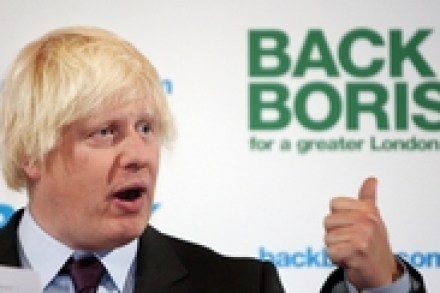
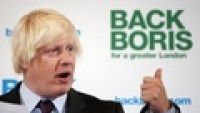
Today, The Evening Standard formally threw its support behind Boris Johnson for Mayor. Here's the conclusion of their very solid editorial: This paper believes that the key issues in this contest are honesty and competence. On both, Mr Livingstone falls down badly. His broken promises and the irregularities surrounding some of his closest associates - exposed by our reporting - show that he cannot be trusted to maintain the standards of integrity that his office demands. Boris Johnson can offer London a fresh vision. He has mastered the complexities of London's government to come up with policies that offer a real alternative to those of Mr Livingstone. He has the intelligence and honesty to redeem the office of Mayor.

Do the Brown new guard see Alan Johnson as Labour’s saviour?

Last week, The Daily Mirror reported that Alan Johnson would be made the chief whip and the government front man in a post-May day reshuffle. Now, Kevin Maguire’s New Statesman column passes on word that Stephen Carter tried to persuade Johnson to take the job of deputy Prime Minister. Johnson would certainly be a good foil to Brown—he’s English and relaxed—but rumours like this are going to put a target on his back.

How to vote for Boris

If you’re voting in London tomorrow, you are going to be given three ballot papers—one for the mayoralty, one for the constituency section of the London assembly and one for the proportional vote. In the mayoral vote, you can vote for a first preference—we’d recommend putting a tick next to Boris—and a second preference. If your first preference is Boris or Ken, then your second preference is irrelevant. But if you’re voting for one of the other candidates, your second preference is key. In reality, there’s not much point putting anyone other than one of the two leading candidates as your second preference as the votes will be reallocated between the two people who finish with the most first preferences votes.

Cameron is walking into an elephant trap on 42 days

Like Fraser, I thought that David Cameron went on the wrong topic today. But I think the bigger mistake the Tories might be making is in trying to turn 42 days into a trial of Brown’s political strength. Regardless of what one thinks about 42 days, and a good case can be made both ways, there is something deeply unappealing about people playing politics with the issue. Now, you can say that both sides are doing it but today Cameron looked like the main offender. The Tories also face the problem of what do they do if, as looks likely, they defeat Brown on this issue. The sight of them celebrating would be distinctly unseemly, it certainly was in 2005. There is also the most hideous scenario of all to be contemplated: that another terrorist attack succeeds.

In crisis, there’ll be an opportunity for Brown

If Livingstone loses on Thursday and the Labour vote slumps elsewhere in the country, the headlines for Gordon Brown will be dire and he’ll be plunged further into the mire. But in this crisis there will be a brief window of opportunity for him. The press will be in full ‘government in crisis mode’ and getting so excited by the remote prospect of a leadership challenge that Brown will actually have the freedom to carry out a drastic reshuffle. It will be embarrassing and humiliating for Brown to sack or demote those who he chose less than a year ago, but Brown will already be embarrassed and humiliated so he might as well get all the bad news out at once.

Hoey’s ‘clarification’ is perfectly compatible with voting for Boris

Reading Kate Hoey’s ‘clarification’, which Fraser just posted, this sentence jumped out at me.I will be voting for my party and Labour candidates on Thursday. Note, no mention of Ken. Now, considering that everyone who votes in London on Thursday will have the opportunity to vote on three ballot papers—one for Mayor, one for the constituency element of the London Assembly and one for the proportional element--a lawyer would tell you that Hoey could vote for Boris on Thursday while fulfilling her pledge to vote 'for my party and Labour candidates on Thursday.' Hoey says that she is not endorsing Boris for mayor, but you don’t need to endorse someone to vote for them.

Hoey’s status uncertain

This morning, Boris Johnson announced that Kate Hoey would be his advisor on sport and the Olympics, making Hoey’s attempt to pass off her planned appearance with Boris at a ballet school in her constituency as nothing unusual appear distinctly disingenuous. Hoey’s status in the Labour party is now uncertain. Boulton and Co reports that when its Niall Paterson asked Geoff Hoon if he would take the whip away from her, Hoon responded “We’ll see”. Hoey’s Vauxhall seat is safe Labour; she received more than 50 percent of the vote at the last election.

Physician heal thyself

After Nick Clegg yesterday, it was David Cameron’s turn to do The Today Programme pre-local election interview this morning. John Humphrys was in particularly combative form, interrupting at every opportunity. But the whole technique descended into farce when Humprhys asked Cameron if he had failed to meet his promise to end Punch and Judy politics. Cameron, whose PMQs performances are pure Punch and Judy, admitted that he hadn’t. But Humphrys harried him so much that Cameron could not get out his explanation for why he had not been able to keep this promise. The irony of this seemed lost on Humphrys.  Admittedly, Cameron is a master at turning the tables on the interviewer, remember his interview with Jeremy Paxman back in 2005.

Iraq in comparative perspective

Fred Kagan, one of the architects of the surge, sets out how he thinks we should measure progress in Iraq in the latest Weekly Standard. The whole piece is worth reading but this point jumped out at me: “Much has been made of the inadequacy of the Iraqi Security Forces' performance in Basra. If the Pakistani army had performed half as well in its efforts to clear al Qaeda out of the tribal areas, we would be cheering. Instead, Pakistani soldiers surrendered to al Qaeda by the hundreds, and Islamabad shut the operation down; it is now apparently on the verge of a deal with the terrorist leader who killed Benazir Bhutto. Iraqi Security Forces who underperformed were fired and replaced, and operations in Basra and elsewhere continue.

Boris leads by 11 in final YouGov poll

The last Monday YouGov poll for the Evening Standard has Boris on 46 percent to Ken’s 35. Once the second preferences are factored in, Boris leads Ken 55 to 45. If you still haven’t decided who to vote for, do read Matt’s piece in the magazine on why Boris is the right man for London.

Jump-starting social mobility

Gary Duncan has an important piece in this morning’s Times keying off Reform’s report on social mobility. As Gary writes, “The realities behind Mr Brown's rhetoric on poverty are a lot less impressive than his boasts of being the best friend of the disadvantaged imply. The stark truth is that after a decade of Labour Government, Britain is a nation of greater income inequality, in which the plight of the very poor has worsened. True, Labour has succeeded in lifting half a million children out of poverty since 1998. Yet the Government's figures are based on a poverty line drawn at 60 per cent of average incomes.

Brown’s poll position

Jackie Ashley’s column this morning makes the good point that by this time next week the commentariat could be praising Gordon Brown’s resilience and fighting qualities. The silver lining to the current spate of bad news stories for the Prime Minister is that expectations for Labour’s performance in the elections this week are now so low that if Labour just holds the London Mayoralty and the Tories fail to cross the 40 percent threshold, Brown will be boosted. Like Hillary Clinton in the Democratic primaries, mere survival will be enough to win Brown good headlines.  He will be able to reassure Labour backbenchers that the polls are not all knowing and that they should not pay too much attention to the shifts in metropolitan opinion.

Has anyone endorsed Ken enthusiastically?

The three press endorsements of Ken Livingstone that have appeared in recent days have one overarching theme in common:  a complete lack of enthusiasm for Livingstone. The Observer even urges its readers to withhold their first preference votes from Ken to send him a message. Its backing comes with heavy caveats. Indeed, one would not expect to read this kind of paragraph in an endorsement editorial: “But Ken's able choice of words is matched by an appalling choice in friends. He has let himself be wooed - and in one case bankrolled - by property developers with much to gain from access to City Hall.

A sharpened Tory message

David Cameron’s appearance on Andrew Marr has not made much news but it was, to my mind, one of Cameron’s most impressive performances to date. Two of the most common criticisms you hear of Cameron in Tory circles is that he doesn’t show enough passion and that he doesn’t offer voters enough concrete reasons to vote for the party. This morning, Cameron passed both of these tests—just take a look at this part of the transcript:  I think something did change last week which is I think people on low pay, families who struggle often to make ends meet, who are seeing the cost of living rising and they're seeing their tax bill go up from Labour, I think those people who often thought you know the Labour Party's for me, I think they feel desperately let down.

Levy guns for Brown

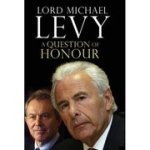
Reading the extracts from Lord Levy’s book in The Mail on Sunday one is struck by just how determined Levy appears to cause maximum damage to Brown. We’re told that Blair thought that Brown couldn’t beat Cameron, was a liar and was responsible for stoking up the cash for honours affair. On top of this, Levy stresses just how much Brown knew about Labour’s fundraising arrangements. There is also a bizarre, rather below the belt anecdote about a lunch Levy had with Brown which seems purely designed to embarrass the Prime Minister. The Prime Minister's staff must be dusting off, the 'we don't do book reviews' line.

Boris should ask his voters to make Paddick their second choice

All the opinion polls show that neither Boris nor Ken have much chance of winning the London Mayoralty on purely first preference votes so the race is going to be determined by second preference votes from people whose candidate failed to make the run-off. The largest of these groups will be Lib Dem supporters. No one is quite sure which way they will jump but if Boris was to announce that his second preference, which will be meaningless as he will be one of the top two candidates, will be for Paddick he might lure some of them over to his side. It would also send the message that he is a Liberal Conservative which is particularly important given the nature of the London electorate.

Tories for Brown

Back in the summer of 2007 when Gordon Brown was riding high in the polls, there was a small but significant ‘Tories for Brown’ movement. It was comprised of those who thought David Cameron lightweight and were drawn towards Brown by his seriousness and belief in the moral value of work. Now, ‘Tories for Brown’ refers to those who think that Gordon is propelling the Tories to victory. Charles Moore sums up this feeling with his typical eloquence in the Telegraph this morning: “But since then, Mr Brown has proved several things, all of them helpful to the Conservatives.  In the era of devolution, he has shown that a Scottish MP irritates the English majority.