James Forsyth

James Forsyth

James Forsyth is former political editor of The Spectator.

‘The end of men’ debate

From our UK edition

Hanna Rosin’s ‘the end of men’ thesis is one of the more interesting socio-economic and cultural arguments out of there. Rosin’s view is that women are simply better suited than men to the new economic environment and thus will increasingly pull ahead of men, reversing old gender dynamics. Rosin points out that, in the US, 13 of the 15 professions expected to grow the most over the next decade are female dominated, that around 60 percent of bachelors and masters degrees are earned by women and that young women earn more than young men. Intriguingly, where parents in US fertility clinics are trying to determine the gender of their child, they are aiming for a girl three quarters of the time.
Princes and politics don’t mix

From our UK edition

Max Hasting’s essay in the Daily Mail about the dangers for the monarchy of Prince Charles becoming king is an important moment. Hastings, who is very much part of the establishment, is reflecting a view that many hold in private: that Prince Charles’s desire to advance his political views is incompatible with a modern constitutional monarchy. As Hastings puts it, ‘he is so set in his ways, so accustomed to not being contradicted — because those who argue with him are swiftly expelled from his counsels — that I am convinced that if he becomes King he will persist in trying to save the world, and thus precipitate a crisis.

How the pursuit of happiness could lead Britain to the right

From our UK edition

How the pursuit of happiness could lead Britain to the right The political mantra that the Young Turks in the Tory party live by is ‘in opposition you move to the centre, in government you move the centre’. Before the last election, they would use the line — often a bit defensively — to justify their passive acceptance of Labour policies. But now that the Tories are in power, albeit in coalition, it has become a cry of triumph. After seven months in government, the Conservatives can justifiably claim to have moved the political centre ground. The coalition with the Liberal Democrats has ended the prospect of a Labour-Liberal realignment for a generation. The Lib Dems who are serving in government have come to hate Labour with a passion.

High Court rejects temporary immigration cap

From our UK edition

The High Court has just declared the government's temporary cap on non-EU immigration is unlawful. Its ground was that the cap was not introduced with proper parliamentary scrutiny. However, the annual cap, which will not be in place until April next year, is not affected by this decision. But without a temporary cap there'll be a spike in applications as people try and beat the cap. It'll be fascinating to see how the PM and the Home Secretary respond to this ruling. At the moment, the government is playing it softly, softly. But there are Tories who think that the government cannot just allow a key part of its flagship immigration policy to be struck down by the courts. The combination of judges and immigration is a red rag to large sections of the Tory party.

Clegg: Sheffield Forgemasters decision could be revisited

From our UK edition

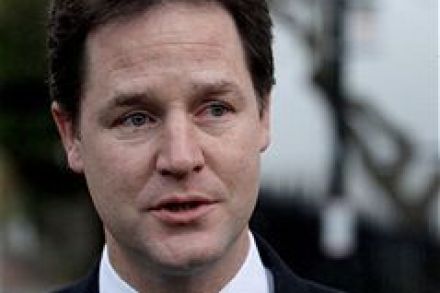
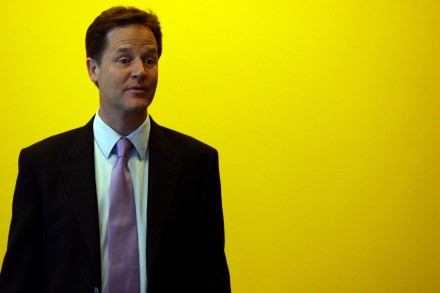
In an interview with Prospect Magazine, Nick Clegg has suggested that the decision not to loan government money to Sheffield Forgemasters ‘could be revisited.’ When pressed on whether the decision to cancel the loan was an odd decision given the coalition’s stated aim of rebalancing the economy and encouraging manufacturing. Clegg replied, “I agree. The trouble is the money that Labour had provided came from a budget in the business department that was running on empty. The treasury and Vince Cable felt it wrong to take money from somewhere else. But the whole issue could be revisited.” This strikes me as a dangerous thing to suggest. If the issue is not revisited, then Clegg will be accussed of a double-betrayal.

Fox’s Sri Lanka visit ‘postponed’

From our UK edition

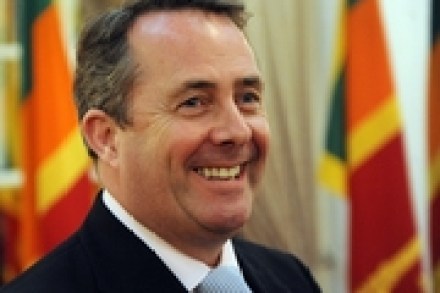
Gary Gibbon has just reported that Liam Fox’s visit to Sri Lanka has been ‘postponed’. His private visit this year has been replaced by the promise of an official visit next year. It was never really tenable that a Cabinet Minister could visit a foreign country to deliver a speech while claiming that the visit was private. William Hague has apparently now persuaded the Defence Secretary of this without damaging the relationship between the two men. When Fox does go to Sri Lanka, it’ll be fascinating to see what he says. Friends of Fox say that he really does believe that the Sri Lankan government’s actions have been justified. But if Fox were too say that on an official visit, that would undoubtedly cause controversy back home.

MPs’ February fear

From our UK edition

When you talk to MPs about the new expenses’ regime there are a whole variety of grumbles you’ll hear, many of them reasonable. For example, it does seem silly that all MPs buy their own printer ink cartridges rather than the Commons buying a job lot and using bulk ordering to obtain a discount. But one of the things that really bothers them is that IPSA will publish all the refused expenses’ requests in February. Now, I expect that most of you think this is reasonable. But MPs do have a point that the way IPSA logs these things means that any enquiry about what you are or are not allowed to claim comes across as an attempt to claim.  David Cameron is being pulled two ways on expenses. His MPs wanted the system changed—and fast.

Johnson’s economic education

From our UK edition

When he took on being shadow Chancellor, Alan Johnson said that he would need to get hold of an economics primer. Judging by his comments in yesterday’s debate about the bi-lateral loan to Ireland, he hasn’t got that far into it. Johnson told the House, ‘The euro had nothing to do with the [Irish] property boom and bust’. This is a bizarre statement. If Ireland had been able to set its own interest rates, they would have been far higher and thus dampened down the property boom.

Cameron tries to reassure colleagues on expenses

From our UK edition

David Cameron has this evening told the 1922 Committee that IPSA will have to change by April 1st next year or be changed. He told the ’22 that he understood the ‘pain and difficulty’ caused to colleagues by the new system and denounced the new system as ‘anti-family.’ He said that IPSA would be given until April next year and if it failed to do so it would be reformed. Tonight’s address was an attempt to defuse an issue that has really rankled with Tory MPs, and has for some become a proxy for the leadership’s perceived lack of regard for them. It is, perhaps, a sign of how strained relations are that Tory MPs are tonight complaining about a Conservative party spokesmen briefing out details of the meeting.

Keeping the troops happy

From our UK edition

A media narrative is rapidly emerging that the Tories are taking advantage of the Liberal Democrats, using them to defend the coalition’s most unpopular polices. On the Today Programme this morning, Justin Webb pressed Paul Burtstow, the Lib Dem health minister, on whose idea it was that he, the Lib Dem, come on the programme to defend the government against the Health Select Committee’s critical report. The implication was clear, that Burstow had been sent on because it was bad news. I think this narrative is a bit shonky. Yes, the Liberal Democrats took the brunt of the criticism over the fees hike but that was because they were breaking an election pledge and because they chose to be out there defending it.

Expect the unexpected

From our UK edition

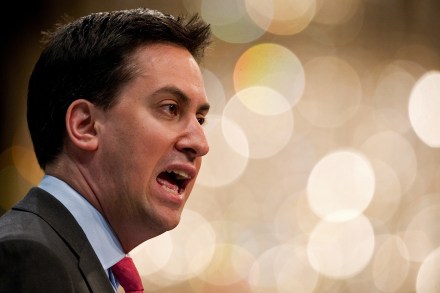
Peter Kellner has an interesting comment piece up on the YouGov site about how we are in the unusual position of having three relatively unpopular party leaders. Nick Clegg’s approval rating is down at minus 29 but that hasn’t helped Ed Miliband who is at minus 15. David Cameron does have a positive rating, but only just. His approval rating is plus one. As Kellner points out, normally when one political leader is unpopular another benefits. But that hasn’t happened this time: a sign of how strong a hold anti-politics has on the public consciousness. This discontent is mirrored by how all three parties are having quite serious debates about what they should be.

Controlling the message

From our UK edition

Shane Warne’s statement on his separation from his wife, which makes no mention of his alleged affair with Liz Hurley, is a classic example of how difficult it is for celebrities—or politicians—to both engage online and control a message. The first comment from a Greg Quinn says, ‘thanks shane for sticking it up the poms’. One imagines this was not the tone that Warne was planning to strike. The second is from someone calling himself Denis Angeleri and is a full-on assault on Warne’s character which includes the allegation that Warne pursued this man’s wife.

The Lib Dem insurgency

From our UK edition

The Liberal Democrats are not like the other two parties. The acitvists still have real power and set the policy agenda of the party. This is what makes Richard Grayson’s intervention in The Observer today so important. Grayson is one of the leading activists on the left of the party. After Nick Clegg's election as leader. he organised a concerted push by the beard and sandals brigade to take over the powerful party committees and thus check the more economic liberally instincts of the party leadership. So his call for Lib Dem members to start cooperating with Ed MIliband is far more than just a cry of pain.

A strength and a weakness

From our UK edition

As with so many things, the coalition’s great strength is also its great weakness. On the one hand, it is two parties working together, politicians putting aside their differences to cooperate in the national interest. This is something that, broadly speaking, the electorate likes. On the other, it is a government that nobody voted for. There’s a danger that the public come to see coalition as an arrangement that just allows both parties to worm out of their manifesto commitments on the grounds that they didn’t win the election.  The coalition’s national interest case is a strong one. But it needs to be made with greater frequency. It cannot be allowed to go the way as the summer of scrutiny of Labour’s record.

Politics: Nick Clegg must reform his party for the sake of democracy – and survival

From our UK edition

Nick Clegg’s tuition fees nightmare was never going to be over after the Commons vote. Nick Clegg’s tuition fees nightmare was never going to be over after the Commons vote. Even if every Liberal Democrat MP followed him into the ‘aye’ lobby, it would still not change the party’s policy on the issue. That fight goes on. The Lib Dem Federal Policy Committee has already shown that it plans to make the Deputy Prime Minister go several more rounds. It declared recently that the abolition of fees remains party policy, whatever its leader might say. At the next Lib Dem spring conference, a motion will almost certainly be tabled (and passed) reaffirming that the party remains committed to the abolition of fees.

Holding the line

From our UK edition

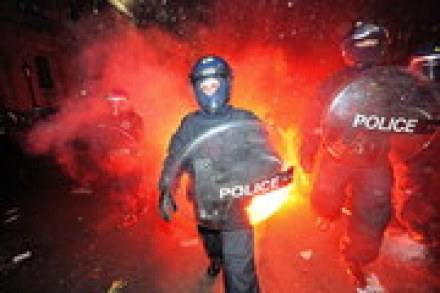
I must admit to being surprised that we haven’t heard of more people—both protesters and police—being injured yesterday. The window of my office here in parliament looks out onto the gates of the Commons and Parliament Square and almost every time I looked up yesterday afternoon the rioters seemed to be charging the rather thick blue line. It wasn’t a crowd surging forward but a full-on medieval style assault. Obviously, it is wrong and worrying if innocent protesters got beaten by the police. But there were so many people intent on violence at yesterday’s protest that the police were in a nigh-on impossible position. If they had not forcefully held the line, I really do not know what the hard core would have known.

The divisions laid bare

From our UK edition

When The Speaker called a division, the Labour side roared a passionate No while the coalition benches delivered a rather muted Aye. I did not see a single Lib Dem open their mouth at this point. Instead, they sat on their benches looking emotionally exhausted. Even those Lib Dems who have been proved right in their warning about the party’s position on fees—notably, David Laws and Jeremy Browne—appeared downcast.   In the end, the government won but with a much reduced majority. 21 Lib Dems voted against the coalition, as did six Tories. Simon Hughes abstained despite Ed Miliband’s entreaties to come with him into the no lobby.   This meant that the Lib Dem’s three senior figures split three ways.

Miliband’s jibes throw Cameron off course

From our UK edition

After last week’s PMQs, Ed Miliband needed a clear win today—and he got one. Cameron, who had admittedly just flown back from Afghanistan, didn’t seem on top of the whole tuition fees debate and kept using lines that invited Labour to ridicule the Lib Dems. When Cameron tried to put Miliband down with the line, ‘he sounds like a student politician—and that’s all he’ll ever be’, Miliband shot back that “I was a student politician but I wasn't hanging around with people who were throwing bread rolls and wrecking restaurants." It was a good line and threw Cameron off for the final exchange.   The rest of the session was not a cracker.

How far our schools have fallen

From our UK edition

Comparing GCSE or A-Level results to previous years is a meaningless exercise. Leaving aside all the arguments about whether or not these exams are getting easier, it doesn’t much matter if children today are doing better academically than their peers a generation ago. What does matter is how they are doing in comparison to children in other countries, the people they’ll be competing with in the global marketplace.   Today’s PISA rankings, the OECD’s comparison of education standards, makes for depressing reading on this front. England has fallen from 7th in reading in 2000 to 25th today, from 8th to 27th in maths and 4th to 16th in science.

Clegg will vote for fees hike

From our UK edition

The wait is over. We have just been told that Nick Clegg will definitely vote for the coalition’s policy on tuition fees. Clegg announced this, according to his spokeswoman, at the meeting of the Lib Dem parliamentary party that is currently going on. He told the meeting that to govern is to choose, and that the coalition had to chosen to invest in early years education rather than in scrapping fees.   Clegg’s spokesperson said that he had urged the party to ‘walk through the fire together’ but that he accepted and respected that not every Lib Dem MP would vote with him. We will, apparently, be told this evening whether or not Lib Dem ministers and PPS will be able to defy the whip and retain their jobs.