James Forsyth

James Forsyth

James Forsyth is former political editor of The Spectator.

Bercow vs McLoughlin

From our UK edition

Iain Dale has news of a remarkable exchange between the Speaker and the Chief Whip last night (see from 22:16:30 in the video above). The coalition were attempting to pass a motion limiting the debate on tuition fees to three hours. Labour was trying to prevent this.   The Labour front bench shouted ‘object’ at the wrong moment so Bercow, with a broad grin on his face, coached them through it. At which point, Patrick McLoughlin heckled, ‘give them an indication, won’t you?’ McLoughlin then goes to leave the Chamber. At which point, Bercow explodes, wagging his finger and ordering the Chief Whip to remain in the Chamber.   This row won’t have done anything for Bercow’s standing on the Tory side of the House.
DD joins the tuition fees rebels

From our UK edition

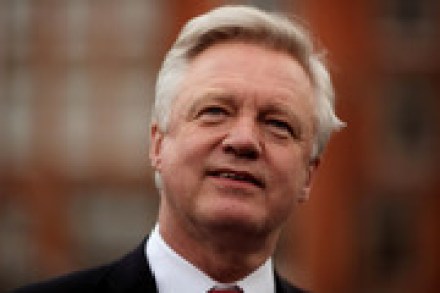
Now, there’s a Tory rebel too. David Davis has told the BBC that he’ll be voting against the coalition at the end of Thursday’s fees debate. Those Lib Dems who do vote for tuition fees can now expect to be mocked as being to the right of David Davis. So far, there’s no sign of other Tories following DD’s lead. One friend of his fears that his decision to rebel against the government on this issue makes him look like a serial rebel and will undermine the effectiveness of his interventions on the constitutional and civil liberties issues he cares so deeply about it. But I expect DD’s stance will strike a chord with more people than the Tory leadership expect.

A day of gaffes

From our UK edition

You really couldn’t make this up: it wasn’t Michael Moore’s PPS who was on the World at One resigning but someone impersonating him. The actual PPS, Michael Crockart, is still trying to make up his mind. I suggest that he doesn’t try and call in to a radio show to announce his decision. (Who would have thought we have lived to see the day when Lib Dem PPSs have impersonators?)   One has to feel sorry for Radio 4 today. It had the whole Jeremy Hunt business this morning on the Today Programme and Start the Week, and now it’s other flagship news programme has been very publicly duped.   The Jeremy Hunt gaffe, though, is catching. People keep unintentionally calling the Culture Secretary that word.

The Lib Dem rebels make themselves heard

From our UK edition

Here in Westminster we are all brushing up on the names of Lib Dem PPSs, as we try and work out who might quit the payroll vote over fees. The latest is that Michael Crockart, PPS to Michael Moore – who is himself the most anonymous Lib Dem Cabinet minister – looks set to walk. But one of the better known Lib Dem ministers has now put his head above the parapet. Norman Baker has told the BBC that quitting over fees is one ‘option’ but he hasn’t yet made up his mind. (Oddly enough, these comments seem to have been made on the South East edition of the Politics Show on Sunday, but only just reported).   Baker has always been a maverick.

What will the Lib Dems say at the next election?

From our UK edition

The rapidly increasing likelihood that the Lib Dem payroll vote will vote to increase the amount that universities can charge in fees to £9,000 is a reminder of how different the next election is going to be. The Lib Dems will not be able to stuff their manifesto with eye-catching but unrealistic commitments designed to grab votes from this or that interest group. The experience of coalition means that their policy positions will receive far more scrutiny than usual and have to be defensible. Already, those around Clegg talk of a very different kind of Lib Dem manifesto at the next election. They drop heavy hints that the empty gestures—like ruling out the use of military force against Iran in any circumstances—will go.

Alan Johnson’s degree in making life difficult for Ed Miliband

From our UK edition

There he goes again. Another Alan Johnson interview, another reiteration of his differences of opinion with his leader and another Tory press release claiming Ed Miliband’s writ doesn’t even run in his own shadow Cabinet. This time, Johnson has told Mary Riddell, “Well, I don’t think [a graduate tax] could [work]. Frankly, there’s a difference of view.” If this was not enough he continued to say, “I feel it’s going to be very difficult to make a graduate tax a workable proposition.” This must be so frustrating for Ed Miliband. First, it takes some of the heat off the Lib Dems who are all over the place this weekend on the whole university funding question.

Will the Milibands’ drama turn into a revenge tragedy?

From our UK edition

‘If this was a play, David would come back in two years’ time and take the crown from Ed,’ one David Miliband supporter whispered to me moments after the Labour leadership result was announced. ‘If this was a play, David would come back in two years’ time and take the crown from Ed,’ one David Miliband supporter whispered to me moments after the Labour leadership result was announced. As we shuffled out of the hall together he chuckled at the thought, at how absurd it was. In real-life, this Miliband family drama was surely a one-act play. Some David supporters, though, are refusing to accept that when the curtain falls, it is time to get off the stage. His supporters are on restless patrol throughout Westminster.

What Germany gets out of the euro

From our UK edition

The Guardian has an intriguing story tonight. It reports that the German Chancellor Angela Merkel told a recent EU Summit meeting that Germany might leave the euro if it didn’t get its way on a bail-out mechanism. The threat is academic as Merkel largely got what she wanted. But there’s one other thing worth remembering: however galling bailing out other euro-zone members is, Germany benefits from the euro. If Germany had its own currency, it would be worth far more than the euro is which is kept down by the problems of the PIGS. A Germany that was still using the Deutschmark would not be able to export anywhere near as much as its exports would be far more expensive on the international market. German economic growth would, in these circumstances, be badly hit.

Woolas loses his appeal

From our UK edition

Phil Woolas has lost his appeal against the election court declaring his victory in Oldham East and Saddleworth. As I understand it, Woolas has not exhausted his legal options and could take the whole matter to judicial review. Word is that no decision will be made on a by-election until it is known whether or not Woolas will appeal.   Interestingly, Woolas was accompanied to court today by John Healey, the shadow Health minister. Healey is extremely popular with his Labour colleagues, he came second in the shadow Cabinet elections, and his decision to stand by Woolas today is a sign of where the emotional energy in the Parliamentary Labour Party is on this issue.

A national embarrassment

From our UK edition

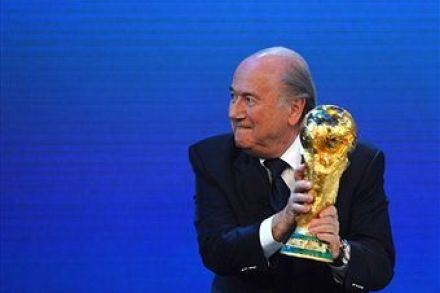
‘We only got two votes, we only got two votes.’ That England’s World Cup bid only mustered two votes is a national embarrassment. All the briefing had suggested that we were in a very competitive position; The Times was predicting that we could win as many as 15 votes. This failure has led to a rapid change of tune from Cameron loyalist MPs. One told me just now that ‘you know how awful the whole process is you saw Panorama.’ But just yesterday, Cameron was proudly holding up the Sun’s BBC-bashing front page (have a look at the spread on pages 4 and 5 of the paper). In truth, we should never have got ourselves involved in this horribly mucky process. Instead, we should have demanded that the FIFA stables be thoroughly cleaned out.

Can the public purse get some of its money back from PFI contractors?

From our UK edition

Asking PFI contractors to voluntarily give back some of the money that they are due from the government might seem like rather a hopeless task. But the PFI-Rebate campaign launched today by Jesse Norman, one of the smartest of the new intake of Tory MPs, has a better chance of success than appears at first blush. Norman is pushing for the contractors to take a 0.5 percent cut which they might well decide is worthwhile to deal with all the negative publicity that further scrutiny of PFI would bring. If these contractors want to take the PFI model global, then they can’t really afford the kind of coverage that a prolonged campaign would bring.

A child of Thatcher

From our UK edition

David Cameron has a complicated emotional relationship with the Conservative party. The party picked him and follows him because it thinks he’s a winner. But it worries that the leader doesn’t love it, that he views the Tory party as a vehicle. So when Ed Miliband threw the ‘son of Thatcher’ line at Cameron today, the Tory benches waited nervously to see how the PM would respond. As Cameron  started off by making a rather lame joke about his mother being able to confirm that she was his mother, the Tory benches looked disappointed. Cameron appeared to be distancing himself from the party’s heroine. But when he changed gear and told Miliband, ‘I’d rather be a child of Thatcher than the son of Brown’, they went wild.

The Lib Dems need to get their act together on tuition fees

From our UK edition

There have been a huge amount of police out in Westminster today. After being caught off-guard by the student demo a few weeks back, the cops are now leaving nothing to chance.   But if the police have now got their act together, the same cannot be said of the Liberal Democrats. They are currently considering whipping their MPs to abstain on tuition fees despite the fact that the government’s policy is one that has been crafted by a Lib Dem Secretary of State, Vince Cable, and a Tory Minister of State, David Willetts.   If the Lib Dems were to abstain, it would play to the worst stereotypes of the party. They would be derided as ditherers of the first degree, incapable of taking a tough decision.

The money that didn’t swing the election

From our UK edition

Before the election, the Tories used to regularly, and with a certain justification, complain about how the vast majority of money that Peter Mandelson’s department was dishing out to businesses via the Strategic Investment Fund went to those based in Labour constituencies. Not a single Tory-held seat benefitted from this £601.5 million of spending. Indeed, 84 percent of the constituencies that benefitted from this money were Labour at the time. But new research on the election result shows that this money doesn’t seem to have made voters much more loyal to Labour. In the 25 seats that benefitted from the fund the swing against Labour was 12 percent. This is only marginally smaller than the 14 percent swing against Labour nationally.

Osborne airs the Tories’ election message

From our UK edition

George Osborne’s autumn statement previewed what I suspect will be the coalition, or at least the Conservatives, re-election message. ‘This government has taken Britain out of the financial danger zone and set our economy on the path to recovery.’   Today’s OBR forecast was a boon for the Chancellor. It suggests that there won’t be a double-dip recession, as his critics suggested there would be. The improved economic numbers allowed him to come to the House and declare that the deficit reduction ‘plan is working’, and that already the coalition has saved the country £19 billion in debt interest. Alan Johnson was his usual self in response.

What’s with the Wiki-fuss?

From our UK edition

The whole Wikileaks scandal reminds me of a recent conversation I had, at his request, with a member of a foreign diplomatic service. The country he represented is a long-standing British ally and I saw no harm in talking to him as I didn’t say anything which I hadn’t said, or wouldn’t say, in print. Most of the chat was the usual stuff: what are Cameron’s prospects, what does he believe, will the Lib Dems last out five years, who are the real powers in Downing Street, what will happen to Andy Coulson, who are the new MPs worth watching etc. I suspect that what we discussed, along with many other conversations this man will have had, will have shaped the analysis he sent back.

What Wikileaks reveals

From our UK edition

The publication of a quarter of a million US diplomatic cables is going to blow the lid on a lot of the world’s diplomatic secrets. So we learn that the Saudis and other Sunni Arab states are urging the US to stop Shi’ite Iran’s nuclear programme by any means necessary. The New York Times’ points out that none of the cables are labeled ‘top secret’, so we are unlikely to find out the most sensitive secrets of American diplomacy. Instead, what we are getting is public confirmation of things we have long suspected. Emblematic of what are learning is confirmation that the Yemenis talked with the Americans about how to deny that they knew about the strikes that were being carried out on their soil.

ANTI politics

From our UK edition

Tim Montgomerie has a thoughtful essay in the Daily Mail about the ANTIs, those who feel so let down by the political status quo that they have given up voting for any of the mainstream parties. These five million people, according to a recent set of research, feel angry at the political class, neglected financially, that their traditional values are being trampled on and worried about large-scale immigration. Obviously, politics can’t just be about these voters. But there’s clearly something substantially wrong when such a large chunk of the country feel so alienated from mainstream politics. One thing that worries me is that I don’t see many political figures who these voters would respect.

Solutions to the Mili-woe

From our UK edition

Ed Miliband’s day today rather sums up his problems. His morning media round has all been seen through a negative prism. Nick Robinson mocks the new leader’s attempt to talk about the squeezed middle by calling it the squeezed muddle. While Ed Miliband’s declaration that he is a socialist, something he has said many times before, is not being treated as a refreshing dose of intellectual honesty but as evidence that he’s just too left-wing. A lot of Ed Miliabnd’s problems come from the fact that the media is in hunting mode. The media, as a rule, don’t like being surprised and Ed Miliband’s victory was not what it expected. So in return the media are giving him a bit of a kicking. This is, of course, a simplification.

The search for peace leads Britain to pay a Taliban impostor

From our UK edition

That the British government paid a substantial sums of money and attention to someone who they thought was Mullah Akhtar Mohammad Mansour, a Taliban leader who was the civil aviation minister in the Taliban government, but who turned out to be a shopkeeper from Pakistan shows just how eager Britain is for some kind of political deal that would make it possible for British troops to leave by 2015, the deadline that David Cameron has set. The Washington Post’s piece on the matter, has the Afghan government blaming the mistake on British ‘haste’ for a political settlement.