James Forsyth

James Forsyth

James Forsyth is former political editor of The Spectator.

Why Spain matters to Britain

From our UK edition

So far Ireland and Greece have been bailed out with relative ease. If Portugal required external assistance, Europe could run to that too. But bailing out Spain would be another matter entirely. As The New York Times points out today, the Spanish economy is twice as big as the Irish, Greek and Portuguese ones combined. Spain’s situation is not yet critical. But as the NYT piece sets out very clearly, there are some extremely worrying signs. The gap between Spanish and German gilt yields is now at the biggest point it has been since the introduction of the euro. Spanish banks are also heavily exposed to Portuguese debt.

How to prevent schools from being hijacked by extremists

From our UK edition

The coalition plan to let parents, teachers and voluntary groups set up schools and be paid by the state for every pupil they educate has the potential to transform education for the better in this country. But this policy also requires the government to prevent these freedoms from being abused by extremist groups who want to teach hate. The revelations on tomorrow night’s Panorama about weekend schools that use Saudi textbooks that ask pupils to list the “reprehensible"  qualities of Jews and teach the Protocols of Zion as fact are  a reminder of how serious this threat is.

Pakistan refuses US request to expand drones’ area of operations

From our UK edition

Part of what makes the war in Afghanistan so complicated is how easily the Taliban can be supplied from over the border in Pakistan. Pakistan has been more cooperative recently but the Washington Post reports today that Pakistan has refused a US request to expand the areas in which its drones can operate. The Pakistanis are also resisting requests from the US to take a military grip on North Waziristan, a base for several of the groups fighting the US in Afghanistan. Worryingly, the Post quotes a senior Pakistani military official as saying, "You have timelines of November elections and July x'11 drawdowns - you're looking for short-term gains," the official said, referring to President Obama's pledge to begin withdrawing U.S. troops from Afghanistan in July.

What Gordon Brown and Sarah Palin have in common

From our UK edition

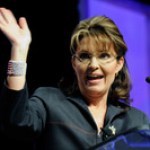
Gordon Brown and Sarah Palin are not two politicians one thinks of as having much in common. But reading Robert Draper’s New York Times magazine essay on Sarah Palin’s political organisation and Rachel Sylvester and Tom Baldwin’s piece on Brown’s Downing Street I was struck by the similarity between the two at least in terms of being disorganised and the boss’s refusal to delegate. It was a reminder of how much of politics is about organisation, about having the right team in place. Of course, no operation is perfect. The Blair one, which was far better than Brown’s, had its own imperfection as Andrew Adonis sets out in his review of Jonathan Powell’s book.

Politics: Miliband’s Labour is in danger of becoming invisible

From our UK edition

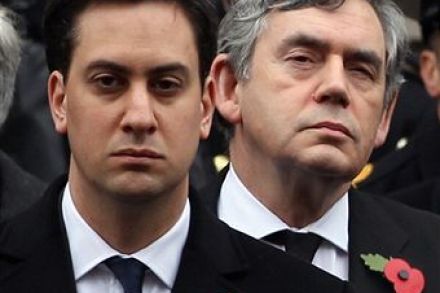
It is hard not to feel sorry for the ex-Cabinet ministers who have stayed on the Labour front bench. It is hard not to feel sorry for the ex-Cabinet ministers who have stayed on the Labour front bench. A year ago newspapers hung on their every word. Now they are lucky to find themselves quoted in the penultimate paragraph of a news story. They are ranked somewhere behind Simon Hughes and right-wing Tory backbenchers on journalists’ call lists. Why have they fallen so far? The simple answer is ‘the coalition’. Whenever the government issues a statement, the press’s first port of call is the other side of the coalition. In these circumstances it is very hard for Labour to make its presence felt.

What the new peerages tell us about the party leaders

From our UK edition

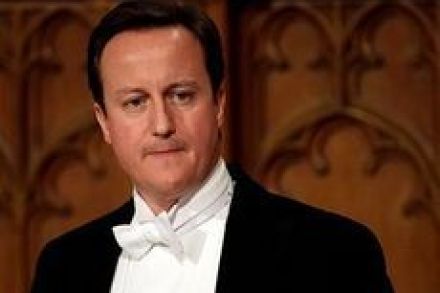
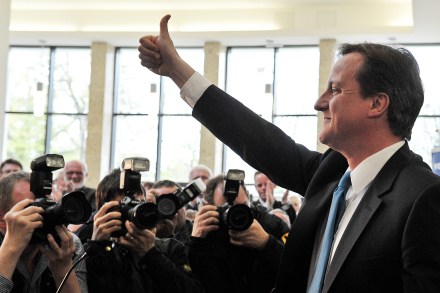
Today’s peerage list contains more interesting names than usual. Jullian Fellowes — Downton Abbey, Gosford Park, Snobs — is the one who will get the most attention. It is a sign of how confident David Cameron is feeling that he has risked the reopening of the whole class question. But perhaps, the most intriguing Tory appointment is Patience Wheatcroft. One imagines that she wouldn’t have taken the role unless it was a way to allow her to serve on the political front line. Howard Flight’s appointment to the Lords rights a wrong: his sacking as a candidate before the 2005 election was as unfair as it was hasty.

Ed Miliband needs to make some noise

From our UK edition

Today’s press will not have made happy reading for Ed Miliband and his supporters. Alan Johnson’s comments to The Times about the need to change the way Labour elects its leader has revived the debate about the legitimacy of Ed Miliband’s victory. Meanwhile in the New Statesman there’s a piece setting out the internal tensions within the party. Intriguingly, Lisa Tremble, who was David Miliband’s press chief during his leadership campaign, has put what could be considered a rather provocative quote on the record. She tells the magazine, ‘David’s rediscovered his excitement in politics…He’s looking forward to the new challenges. He’s not going anywhere.

Bonfire of the vanity photographers

From our UK edition

Today is a very good day to bury bad news. Prince William and Kate Midddleton’s engagement is going to dominate the news and the front pages for at least the next 24 hours. Almost any other story can be slipped out unnoticed in the current circumstances. So it was a convenient time for Downing Street to announce that the photographer and the videographer would be moved off the public payroll and back onto the Tory one. This means that their work will not be able to appear on any government websites. Downing Street’s correction is welcome. But in reality, the damage has already been done by this story. It will be like the car following the bike, a story constantly advanced by those sceptical of the PM.

A Lib Dem to watch

From our UK edition

Tim Farron is a name to remember. Farron has just been elected Lib Dem president and is widely regarded as the brightest hope of the party’s left. Farron is a political natural. He won his seat from a Tory in 2005 and from endless campaigning has turned into as near as you get to a Lib Dem safe seat. At Lib Dem party conference, Farron was a late replacement for Charles Kennedy at the pro-AV rally and delivered the best speech of the night.  At the annual conference Glee Club, a bizarre sing-song that is a throwback to the days when there were very few Liberal MPs, Farron rapped. It could have been a moment of excoriating embarrassment and would have been with nearly any other politician, but he managed to pull it off.

Saluting the fallen in Afghanistan

From our UK edition

It is to be hoped that Prince William’s visit to Afghanistan for Remembrance Sunday was a morale boost to the troops out there, a reminder that the nation appreciates their courage and salutes their dedication to duty. It was a gesture—but a worthwhile and important one. The idea for Prince William to spend Remembrance Sunday in Afghanistan was Liam Fox’s. Fox was keen to have senior representation in theatre to show the troops that they were not a forgotten army and the whole visit was arranged several months ago. Fox and the Prince flew out to Afghanistan on a scheduled military cargo flight yesterday morning. They was nothing grand about the trip, they bedded down around freight boxes and replacement equipment that is heading out to the front line.

Laws and the coalition

From our UK edition

David Laws’ eagerly awaited account of the coalition negotiations contains some great lines. Peter Mandelson’s declaration on being told of the Lib Dem’s desire for a mansions that ‘surely the rich have suffered enough already’ is classic. While William Hague’s description of the Conservative party as an 'an absolute monarchy, moderated by regicide’ is a candidate for the dictionary of quotations. But politically the thing that struck me about it most was what it tells us about Ed Balls. Balls had worked with Gordon Brown for years and had been one of the most ardent Brownite. Yet it was Balls who effectively pulled the plug on the idea of a Lib Lab pact when Brown was still desperate to try and make it work.

Politics: What Dubya taught Dave

From our UK edition

When you think of George W. Bush, ‘philosophical influence’ isn’t the first phrase that springs to mind. When you think of George W. Bush, ‘philosophical influence’ isn’t the first phrase that springs to mind. But the former president has as good a claim as anyone to be a philosophical influence on the Cameron project. Although the intellectual debt was never acknowledged because of Bush’s unpopularity in this country, David Cameron adopted a great number of Bush’s tactics as he tried to detoxify the Conservative brand. Bush had shown Cameron how the right could win in a post-cold war era when the great economic questions appeared to have been settled.

The pledge divide

From our UK edition

Over at the FT's Westminster blog, Alex Barker asks why it is that David Cameron's expensive personal pledge on pensioner benefits has survived the spending review while Nick Clegg's personal pledge to scrap tuition fees, which would have cost roughly the same amount, has been spectacularly ditched. As Alex argues, one reason is that Clegg himself was not particularly attached to his pledge on fees. Indeed, he had tried to change the policy several times in opposition. The other is that George Osborne, who is the Tories' chief election strategist as well as the Chancellor, is determined to protect the Cameron brand.

Can the Greens make good on the yellow’s broken promises?

From our UK edition

One consequence of coalition and the student fees row is, as Nick Clegg said this morning, that the Lib Dems will be more careful about what they sign up to at the next election. This will create political space for a party that is prepared to advocate populist but unrealistic policies such as abolishing tuition fees. I strongly suspect that Labour will choose not to occupy this space, appearing credible will still be the most important thing to them. So, this raises the question of who will try and move into this slot? UKIP aren't ideologically suited to it, although Farage is a canny enough operator that little can be ruled out. But I suspect that it will be the Greens who take over this and other issues that the Lib Dems used to champion.

The Lib Dems are spared by idiotic students

From our UK edition

The violence at today’s student protest is, politically, a boon to the coalition. The story now is not the Lib Dems breaking their word but the storming of Millbank. The violence will also have cost the no-fees cause much public sympathy, we don’t like attempts at aggressive direct action in this country. There are questions that need to be answered after today, why were the cops so unprepared for the protest turning violent? I crossed through the protest at lunchtime and then it was quite clear that there was potential for trouble. I’m also bemused as to why it is taking so long to put a stop to the violence and deal with those involved. Given the political environment, this might well not be the last protest to turn nasty.

The Big Society conundrum

From our UK edition

The children’s minister Tim Loughton is in danger of having ‘gaffe-prone’ become his suffix. After rather putting his foot in it at conference by suggesting that the policy George Osborne had just announced on child benefit could be revisited, he has now suggested that not even ministers know what Cameron’s big idea, the ‘Big Society’ actually is. He told a dinner last night: "The trouble is that most people don't know what the Big Society really means, least of all the unfortunate ministers who have to articulate it.” A friend of Loughton tells me that this was meant as a joke.

Labour’s Woolas trouble

From our UK edition

This Phil Woolas business is fast becoming a rather large problem for Ed Miliband. Those Labour MPs who are organising a fighting fund for Woolas are effectively defying the party leadership. Remarkably, he is on course to raise £50,000 by Friday. There is a whole slew of explanations for why Labour MPs are, to borrow a phrase, standing by Phil. First of all, the idea of judges overturning election results isn’t popular. Second, he’s a well-liked and sociable colleague, and no one who has fought a Lib Dem has much sympathy with their complaints about dirty tactics. But after these explanations, we move into more murky territory.

What about Whig history?

From our UK edition

Simon Schama, who is advising the government on drawing up a new history section of the national curriculum, has an essay in The Guardian today setting out why and what children should learn about our ‘island story’. Schama highlights Thomas Becket’s clash with Henry II, the Black Death and the Peasants' Revolt, Charles the First’s execution, the establishment of the British Raj in India, the opium wars and the Irish question, as things that every school kid should be taught about. But at the risk of being too crudely Whiggish, the most important thing is surely that pupils learn how Britain became a democracy. It will help people understand the importance of their democratic rights, if they know how they were won.

Bush’s Indian legacy

From our UK edition

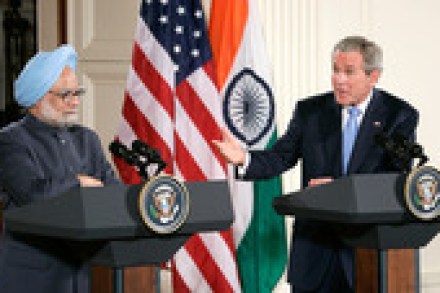
It is appropriate that the US president will be in India on the day that President Bush’s memoirs are published. For President Bush transformed the relations between these two countries, making a strategic alliance possible. This will turn out to be one of Bush’s most important legacies. A strong US-India relationship is vital if this century is going to be one that sees democracy advance. An alliance between the US and India would act as an effective check on China’s attempts to assert its power in Asia. However, I suspect that, for obvious and understandable reasons, most of the coverage of Bush’s memoirs will focus on his comments on 9/11 and its aftermath.

Delay in Oldham is good news for the coalition

From our UK edition

The longer we go before a date is set for the Oldham East and Saddleworth general election rerun, the better it is for the coalition. This delay allows the Tories to give the Lib Dems a head start; Nick Clegg’s party can pour resources into the seat while the Tories do very little until a date is set. There will be a Tory candidate in this election, but I doubt that a Tory victory would be a cause for celebration at CCHQ or in Number 10. The Tory leadership knows that a bad result for the Lib Dems would make their coalition partners jumpy and make it harder for the coalition to govern effectively. A confident Liberal Democrat party would make Cameron’s life a lot easier than one more Tory MP.