James Forsyth

James Forsyth

James Forsyth is former political editor of The Spectator.

Politics: From Red Ed to Steady Eddie

From our UK edition

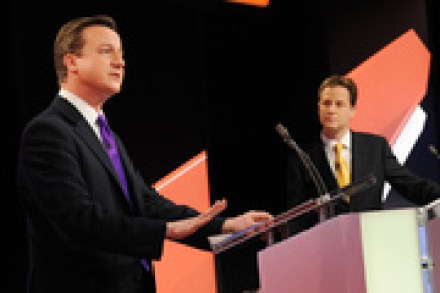
Nick Clegg and Ed Miliband are locked in a political duel, and only one of them can survive. Nick Clegg and Ed Miliband are locked in a political duel, and only one of them can survive. In the new politics, what helps Clegg hurts Miliband and vice versa. This unusual dynamic makes next week’s by-election in Oldham East and Saddleworth especially important: it is, in effect, the first electoral clash between the two men. The result will determine which leader spends the first part of the year fending off questions about their future. It is coalition politics that has created this clash between Miliband and Clegg.
Coalition polling

From our UK edition

As Tim Montgomerie notes, tonight’s Angus Reid poll asks an interesting question about who voters would support if asked to choose between Labour and a Coalition party. This questions pushes up support for Labour with Labour scoring 45 percent on it compared to 40 percent on a normal voting intention question. The increase in Labour support comes from the fact that 46 percent of Lib Dem voters from the 2010 election would in these circumstances vote Labour compared to the 32 percent who’d go coalition. Polling on a hypothetical should, obviously, be treated with caution. But the fact that the coalition together polls worse than the coalition apart is interesting.

David Aaronovitch and the social conservative consensus

From our UK edition

David Aaronovitch is one of the preeminent voices of the liberal-left in this country. He is no social conservative and has been dismissive of those who want a lower time-limit for abortion. But today he wrote something that reminded me of that famous Peggy Noonan column about the Columbine massacre and ‘the ocean in which our children swim.’ Aaronovitch writing about the Times’ investigation into sex gangs says: 'Sometimes I look at what the surrounding culture says to our kids and wonder whether we are mad.

All to play for in Oldham East

From our UK edition

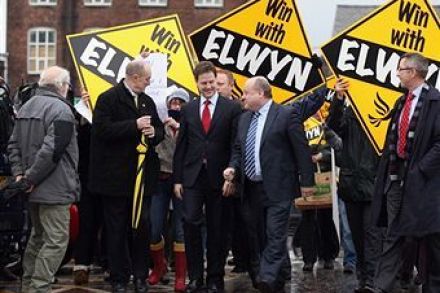
The Oldham East and Saddleworth by-election is fast shaping up to be the event that will set the tone for the first quarter of the political year. The unique circumstances in which the vote was called makes it particularly hard to predict, no one is quite sure whether there’ll be a backlash against Woolas or one against the Lib Dems for going to court to overturn the result. As I say in the magazine tomorrow, if the Lib Dems were to win, it would give Clegg the breathing space he so needs at the moment. Lib Dem worries about what the coalition is doing to them politically would subside, temporarily at least, and Ed Miliband would find himself under pressure.

The VAT argument bubbles along

From our UK edition

Today has been one of predictable political sparring over the VAT increase. But, as one Tory MP said to me last night, the crucial question is how long people keep talking about it. If the public come to blame the VAT rise for every price rise they encounter—as Ed Miliband wants them to—then the coalition has a problem. But if the new VAT rise just becomes a fact of life then the coalition will pay a low political price for the rise. Indeed, if the VAT rise ends up helping provide money for an income tax cut later in the parliament then the coalition could actually benefit from it. (Note Osborne's last answer to Evan Davis this morning.) Alan Johnson, the shadow Chancellor, has not had a good day.

Miliband on the trail

From our UK edition

If you talk to Tory MPs privately and ask them which of the coalition’s budgetary decisions they are most uncomfortable with, they’ll generally indentify the VAT rise and the police cuts (the reductions in the defence and prisons budget are also often mentioned). So it is clever politics for Ed MIliband to be emphasising the VAT rise and the police cuts so heavily in Oldham East and Saddleworth. It enables him to oppose key bits of the deficit reduction programme without sounding like an out of touch left-winger. If Labour do hold the seat, it will be a boost to Ed Miliband. It will add to the sense that he is establishing himself as Labour leader.

A preview of the rebellions to come

From our UK edition

Today’s papers are full of the Tory right asserting itself. In the Mail On Sunday, Mark Pritchard—secretary of the 1922 committee—demands that the Prime Minister and his allies come clean about any plans to create a long-term political alliance between the Tories and the Lib Dems. In The Sunday Telegraph, there’s a report that Tory rebels will vote with Labour to try and defeat the coalition’s European Union Bill. I suspect that these stories presage one of the major themes of the year, an increasingly assertive right of the Tory parliamentary party. For too long, Cameron has neglected his own MPs both politically and personally. The result is a willingness to cause trouble for the government.

Top Republican prepares to leave Obama’s big tent

From our UK edition

When John Huntsman, the Republican governor of Utah, accepted Barack Obama’s offer of the ambassadorship to China it seemed to be further evidence that Obama was going to be a two term president. The ambitious Huntsman, who would stand a good chance in a Republican primary, appeared to have decided that the nomination in 2012 wasn’t worth having. So it is a sign of the shifting political tide that Huntsman is now indicating that he may resign as ambassador to China soon and run for the Republican nomination. With Obama’s approval rating now significantly below 50 percent, the Republican nomination is now a far more appealing prize. There is, unusually for the Republicans, no clear front-runner.

Politics: Get ready for a year of upheavals

From our UK edition

This will be the year of the political identity crisis. This will be the year of the political identity crisis. As we enter 2011, all three major parties are having internal debates about who they are and what they stand for. Add to that the fact that there is discontent in the ranks of all three parties and it makes for a particularly volatile combination. It could turn out to be even more dramatic politically than 2010. The past 12 months have transformed the Liberal Democrats. At the beginning of the year, they were perceived as the most harmless of political parties, the one that actors could safely endorse without hurting their image. Nobody could be bothered to hate them.

Totnes trouble for the Tories

From our UK edition

If you want to know why party managers don’t like open primaries look at page 26 of today’s Guardian. There Sarah Wollaston, the GP who won the Tory open primary in Totnes, warns that Andrew Lansley needs to watch out if his NHS reforms are not to turn into privatisation by the back door. The piece is, to put it mildly, unhelpful from a Tory perspective. For a Tory MP, and one who was a GP, to suggest that Tory health policy could lead to a privatisation of the NHS is a gift to Labour. It is also the last thing that Andrew Lansley needs given the u-turn he has been forced into over a public awareness campaign about the flu and the mounting concerns over his reform plans.

An 80 percent elected Lords would not be a Lib Dem triumph

From our UK edition

The Lib Dem manifesto committed the party to a fully elected House of Lords. The Tory manifesto talked about a ‘mainly-elected’ second chamber and in 2007 David Cameron voted for ‘the other place’ to be 80 percent elected (interestingly, George Osborne voted for a fully elected Lords). The coalition agreement committed the government to a ‘wholly or mainly elected upper chamber’. So it is hard to see how a Lords that retained a twenty percent appointed element could be portrayed as a major Lib Dem triumph as, according to today’s Guardian, the coalition wants. There has been talk in Westminster that Clegg’s consolation prize if the AV referendum is defeated will be a fully elected Lords, a long-standing Liberal aim.

Tzars and advocates

From our UK edition

The coalition’s attempt to talk to two audiences at once is on full display today. The Times reports on the appointment of the Tory Lord Heseltine as a growth czar and his warning against bashing the bankers. Meanwhile, The Guardian reveals that Simon Hughes, the deputy Lib Dem leader, is to be the coalition’s access advocate. Hughes’ appointment is intriguing. On one level, the appointment of Hughes—who abstained in the fees’ vote—is a way of trying to draw a line under the matter within the Liberal Democrats. Clegg clearly hopes that having abstained Hughes will be better able to sell the package to sceptical party activists.

Caught between two great evils

From our UK edition

David Brooks, the great New York Times columnist, recommends the best essays of the year every Christmas. His selection this year includes a brilliant essay by Anne Applebaum, of this parish, on Hitler, Stalin and Eastern Europe. It makes you realise quite how bloody the Eastern Front was—‘On any given day in the autumn of 1941, as many Soviet POWs died as did British and American POWs during the entire war’—and think about the effect on these societies of being caught in the middle of these two extremist ideologies. There is always a tendency for us to discuss how the crimes of Hitler and Stalin compare.

Oldham East will determine whether Clegg or Miliband is the leader under pressure

From our UK edition

A few weeks ago Ed Miliband was the leader under pressure. There was, absurdly, talk of leadership challenges if things did not improve. But now all the pressure is on Nick Clegg, he’s the one facing stories about whether he can cope. Whether the unforgiving media spotlight stays on Clegg or not will be determined by the re-run of the election in Oldham East and Saddleworth. The result of this contest will frame the first quarter of the political year. If the Lib Dems take the seat from Labour, then Miliband will again be the leader under pressure. Clegg will have won the time and the space that he needs. The nerves of his party will be calmed and Clegg’s authority within it enhanced.

Nick Clegg’s balancing act

From our UK edition

Today’s Lib Dem revelations are of the embarrassing, but not explosive, variety. David Heath, the deputy leader of the House, and Norman Baker, the transport minister, hypocritically say they are against tuition fees, despite having voted to let universities charge fees of up to £9,000. Baker also, crassly, compares himself to Helen Suzman, the anti-apartheid campaigner, working from within to change the system. But, beyond that, the remarks are what you’d expect a Lib Dem MP to say to a party supporter complaining about various Tory members of the government. I suspect Nick Clegg will be slightly more worried about Adrian Sanders, the MP for Torbay, issuing a broadside against the Lib Dem leadership. Sanders accuses Clegg & Co.

Paid to deliver

From our UK edition

Payments by results is the key to innovation in the public sector. It will help transform public services from something delivered by a state monopoly into being provided by a variety of suppliers who compete for state funding with best practice rewarded. The work programme to move the unemployed off benefits and back into work – outlined by Chris Grayling today –  is the biggest move to payments by results we have seen in this country. Groups can be paid up to £14,000 for moving the long-term unemployed permanently back into work. This should ensure that groups have an incentive to tailor their programmes to the individual rather than relying on a top-down, centralised model.

Minor indiscretions

From our UK edition

The Telegraph’s latest Lib Dem revelations are embarrassing for the ministers concerned, but won’t cause the coalition much trouble. Ed Davey is caught being critical of the announcement to take child benefit away from higher-rate taxpayers and expressing concerns about the changes to housing benefit. Michael Moore, the Scottish Secretary, is captured expressing regret about the Lib Dem u-turn on tuition fees and saying he couldn’t work with Tories like Liam Fox "for very long." Steve Webb, the highly numerate pensions minister, was trapped into revealing that he had written to the Chancellor about the child benefit changes because "the details aren’t right." There are, the Telegraph tells us, more of these revelations to come.

Broken Cable

From our UK edition

To understand why Vince Cable survived today one has to understand the dynamics of the coalition. The Liberal Democrat rank and file have had to swallow a lot recently, but the idea that one of their Cabinet ministers was going to be moved for being rude about Rupert Murdoch would have been too much to bear. The backlash to shunting Cable sideways would have destabilised the coalition, so he stayed in place. But Cable tonight is a much diminished figure. He has been shown to be eager to be indiscrete, to be overly keen to air the coalition’s dirty laundry in public.

Writing the Laws

From our UK edition

Even out of office, David Laws remains one of the most important figures in the coalition. He was one of only two Lib Dem MPs — the other being Danny Alexander — to attend Nick Clegg’s strategy session at Chevening on Friday morning. He’s also played a crucial role in rolling out the pupil premium, effectively working out of Michael Gove's department.   So it is pretty much certain that he’ll return to government once the Standards’ Commissioner has delivered his verdict. Where Laws will be slotted in is far less certain. Today, the well-sourced James Chapman reports that he’s been lined up for a Minister of State job at the Justice Department.

There’ll be a Tory rebellion over prisoner voting

From our UK edition

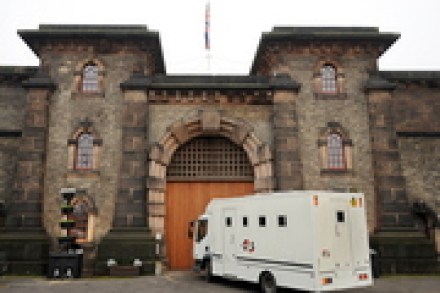
The government’s response to the European Court on Human Rights ruling that the ban on prisoners voting is unlawful is to allow those sentenced to less than four years to vote but to bar them from participating in local elections to prevent the embarrassment of criminals voting for their local police commissioner. I suspect that this will not be enough to head off a fairly sizable Tory backbench rebellion when this package is voted on next year. Giving prisoners the vote is a repellent enough idea to most Tories but giving them the vote because the European Court of Human Rights demands it particularly sticks in the craw. A lot of sensible Tory backbenchers think that the coalition could have responded far more robustly to the Strasbourg court’s decision.