James Forsyth

James Forsyth

James Forsyth is former political editor of The Spectator.

Lansley needs to explain his reforms better

From our UK edition

It is imperative that the coalition keeps its nerves and its composure during the months ahead. 2011 will try the coalition’s fortitude, its deficit reduction plan and its public service reform programme will both come under sustained attack. It is vital that the coalition continues to explain clearly and patiently why it is doing what it is doing. Watching the Andrew Marr show this morning, I was struck by how tetchy Andrew Lansley was during his interview. Right from the off, he seemed irritated at Marr’s questions. Some of this irritation was understandable. Lansley’s reforms are always treated as if they have come out of the blue, when Lansley talked extensively about most of them in opposition.
Egypt, moving from revolt to revolution

From our UK edition

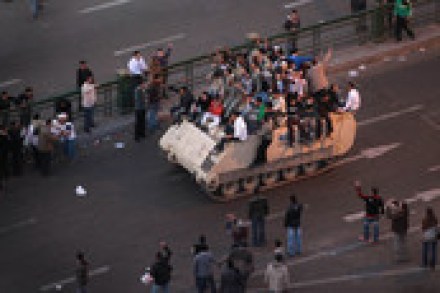
Sitting in London it is hard to know what is going to happen next in Egypt but one particular detail in the New York Times’ latest report makes me think that Mubarak’s fall is fast becoming more likely than not: “In Ramses Square in central Cairo Saturday midday, protesters commandeered a flatbed army truck. One protester was driving the truck around the square while a dozen others on the back were chanting for President Mubarak to leave office. Nearby, soldiers relaxed around their tanks and armored vehicles and chatted with protesters. There were no policemen in sight.

No time for pleasantries. Get ready for Osborne v. Balls

From our UK edition

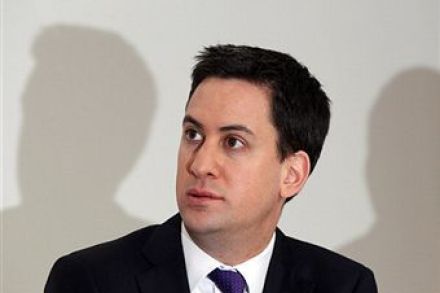
The night Ed Miliband was elected leader of the Labour party, his advisers sent him to bed before midnight and confiscated his mobile phone. The night Ed Miliband was elected leader of the Labour party, his advisers sent him to bed before midnight and confiscated his mobile phone. Half a mile away from where the new leader was sleeping, Ed Balls was holding a wake with his closely knit, leadership campaign team. Here, no one was going to tell him what to do. He was going to sing, sup and speechify for as long as he wanted. In the wee small hours of the morning, Balls kept rallying his troops. His wife Yvette Cooper, her voice shot from the evening’s karaoke, had retreated to the couple’s room at the conference hotel hours earlier. But Balls just carried on.

Gove entrenches his reforms

From our UK edition

In another sign of how the pace of Gove’s reforms is quickening, the education secretary has told local authorities that all new schools should be free schools or academies. This is a big step towards changing the default nature of the system from state-funded and state-run to state-funded but independent.   Local authorities will not be able to open a bureaucrat-controlled school unless they can satisfy the Secretary of State that there is no free school or academy provider willing to step in.   Gove has always argued that once free schools and academies become a significant part of the system it’ll be no more politically possible to abolish them than it would be to take sold-off council houses back into public ownership.

When a leak starts to smell

From our UK edition

Bill Keller, the executive editor of The New York Times, has written a highly readable piece chronicling his paper’s tempestuous relationship with Julian Assange. Keller does a good job defending how The New York Times handled the documents that Wikileaks passed it, the steps it took to minimise the risk posed to the lives of the people mentioned in the documents. But the part of the piece that sticks in the mind is how the man Keller sent to meet Assange described the source to his editor: “He’s tall — probably 6-foot-2 or 6-3 — and lanky, with pale skin, gray eyes and a shock of white hair that seizes your attention,” Schmitt wrote to me later.

Deregulation is the path to growth

From our UK edition

The government’s decision to increase the period which employees have to serve before they can bring a case of unfair dismissal from one to two years is welcome. But if it wants to encourage small and medium sized enterprises, the engine of the economy, to hire more people then they need to take the shears — not nail scissors — to regulation and employee protection laws. Camilla Cavendish has a cracking example of the absurdity of the current system in her column (£) today: 'A London neighbour of mine, Mr B, runs a small business that is doing well. Last year he took over an insolvent company where the staff were about to lose their jobs.

The dignified and undiginified parts of the constitution

From our UK edition

There’s a febrile atmosphere in Westminster tonight. The coalition is poised for a frontal assault on the privileges of the House of Lords and there is an expectation that today’s dramatic developments in the phone hacking saga are the beginning of something not the end. The coalition’s actions on the Lords have been prompted by Labour’s filibustering of the AV bill. But there’s no guarantee that it will succeed. First, it has no majority in the upper house. Second, a lot of Tories peers are worried about just how many Clegg inspired changes to the constitution the coalition is pushing through. On the phone hacking front, there’s a sense that a dam broke today: the rogue reporter defence is no longer operative.

Winning in 2015

From our UK edition

Danny Finkelstein’s column in The Times today (£) is well worth reading. Finkelstein sets out two worries, first that the Tories do not have enough of a strategy for winning re-election and second that the NHS reforms might compromise Cameron’s standing as a different kind of Tory. On the latter point, Finkelstein is echoing the views of an increasing number of Tory MPs and ministers. They worry that these poorly understood reforms have put the NHS back on the political table and that, as is so often the case when this happens, the Tories will suffer. Finkelstein’s first worry is that if the government sets out deficit reduction as its raison d’etre then, when that is achieved, as it should be by the next election, it loses its purpose.

Economy shrank by 0.5 percent in the fourth quarter of 2010

From our UK edition

These provisional GDP figures showing that the economy shrank in the fourth quarter have come as a shock, the consensus was for growth albeit at a slower pace than in the third quarter. These figures can, obviously, be significantly explained by the winter weather which brought the country to a halt. The ONS is saying that without the weather growth would have been flat. George Osborne is stressing that he won’t be ‘blown off course’ by these weather-affected numbers. But it’ll be fascinating to see how Ed Balls responds to these numbers. Does he double-down on his warning of a double-dip recession—which would damage his credibility if it did not come to a pass—or does he play a more careful game?

Does it matter what the government is called?

From our UK edition

Danny Finkelstein has written an interesting post objecting to Channel 4 referring to the ‘Conservative-led coalition’ last night. Finkelstein’s objection, and a valid one to my mind, is that ‘Conservative-led’ makes a judgment about the nature of the coalition. Of course, this whole spat has been set off by a clever letter from Ed Miliband’s communications director Tom Baldwin to broadcasters objecting to their use of the word ‘coalition’ to describe the government on the grounds that it implies that the government is a collaborative enterprise. I suspect that this whole row will rumble on for a while yet. It is tempting to dismiss the whole thing as absurd, as only of interest to a few journalists and spin doctors.

DD’s classy intervention

From our UK edition

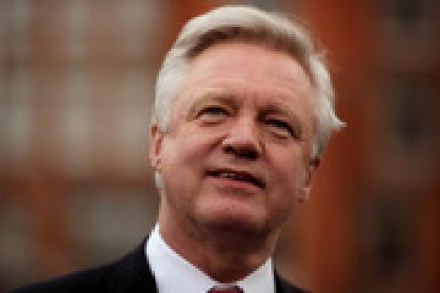
David Davis’ interview on Jon Pienaar’s show this evening has revived the debate about whether or not it matters how posh the Cameron top table is. Andy Coulson was the most senior person there who understood what it is actually like to work your way up the ladder and with him gone that experience is missing. But what matters far more than the personalities involved is the policy outcomes. As I said in the Mail on Sunday, the most important thing for Cameron to do is to deliver for these voters. To cut their taxes and give them public services that offer them value for money.

Sizing up the runners and riders to replace Coulson

From our UK edition

I suspect the identity of the Prime Minister's next director of communications is of far more interest to those who work in Westminster than those in the country at large. But the identity of Coulson's successor will reveal something about the balance of power in the coalition and at the Cameron court. I'm told that the Tories are in no rush to make the appointment, they'd rather take their time and try and find the right person. Despite what Nick Clegg said on Marr this morning, I'm informed that this will be very much a Tory-run selection process. Those in the know say that as with the Coulson appointment, George Osborne will play the crucial role.

Extremism – not just violent extremism – is the problem

From our UK edition

Charles Moore has an important piece in the Telegraph today criticising Baroness Warsi’s muddle-headed speech [a speech which interestingly doesn't appear on her page on the party website]. In it, he reveals that the Prime Minister himself has been devoting much thought to the question of how to deal with Islamic extremism. Charles writes that Cameron will give a significant speech on the matter in the next few weeks in which he’ll argue that the government and society need to tackle extremism per se, not just violent extremism. This is welcome news. To say that extremism only becomes a problem when it turns violent is to miss the point. If you only ever address the symptoms you’ll never cure the disease.

What would Tony do?

From our UK edition

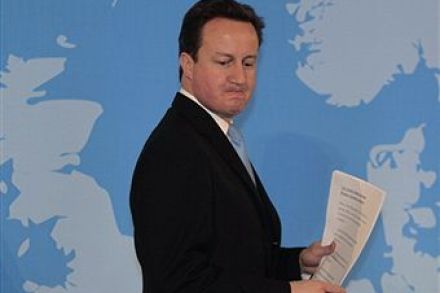
It is easy to tell when David Cameron is wading into trouble during interviews. He becomes defensive, audibly irritated and — as an emergency self-calming measure — tries to force a little laugh. He performed this telltale routine on the radio on Monday, when challenged over his NHS reforms. He had promised the country no more upheavals to the NHS — and had clearly reneged. How to get out of this tight spot? Cite Tony Blair. In a speech later that day Cameron invoked the former PM’s name to justify himself. Bringing in these health reforms was just what Blair would have done. How could any sensible person disagree with that? It might sound like an odd line of argument to the many people who regard Blair as a charlatan.

Two days, two major resignations

From our UK edition

Of the two resignations of the past 24 hours, it is Alan Johnson’s that will change the contours of politics. The appointment of Ed Balls makes the dividing line on the economy far starker. But the Coulson resignation is still a highly significant moment. Those Tories who worked with Coulson are downcast today and will brook no discussion of what the whole episode says about Cameron’s judgment. But there’s little doubt that the PM has been harmed by this episode. Not in any limb-threatening way but harmed nevertheless. Cameron also needs a find to way to organise his operation to both ensure that there is someone at the table who understands the instincts and aspirations of C1 voters, can firefight stories and fulfill the strategic communication role.

Coulson resigns

From our UK edition

Andy Coulson has resigned today. David Cameron has issued a statement paying effusive tribute to his departing communications director. But there will be questions asked about his judgment in appointing Coulson after he had resigned from the editorship of the News of the World over the phone hacking scandal.

Johnson story takes another turn 

From our UK edition

Both The Mail and The Sun are running on their front pages that Alan Johnson’s wife is allegedly having an affair with his bodyguard. There are, though, other rumours referenced in other papers. The Tory view this evening is that they now face a tactically harder fight but a strategically easier one. They fully expect Balls to snap at Osborne’s ankles more effectively than Johnson did. But they think that Balls’ previous on the economy and his oft-expressed views on a double dip and the Darling plan will help them overall. One thing worth noting this evening is that Liam Byrne’s appointment to shadow Iain Duncan-Smith shows that Ed Miliband remains committed to offering broad support to IDS’s welfare reforms.

The Tories waste no time in getting stuck into Balls

From our UK edition

One thing worth noting before we discuss Balls’ appointment is that the reasons Johnson have resigned are personal. It is not about his competence or otherwise. The Tories are wasting no time in getting stuck into Ed Balls. One just said to me, ‘the man who created this economic mess is back. He designed the fiscal rules that failed, he designed the FSA that failed…’ Certainly, the Tory attempt to make Labour’s economic record the premier political issue has just become a lot easier. Balls will be a more aggressive opponent for Osborne. But I suspect that he will prefer facing Balls to Yvette Cooper.

Balls replaces Alan Johnson

From our UK edition

Ed Miliband has just taken the biggest risk of his leadership in appointing Ed Balls as his shadow Chancellor. Balls’ is not a man who take orders and his view on the deficit is noticeably different from Ed Miliband’s. He is also the person most closely associated with Gordon Brown’s economic record. George Osborne will relish this fight. During the vacuum between Ed Miliband winning the leadership and the shadow Cabinet elections, Osborne prepared for facing Balls. He told friends, ‘we’ve circled around each other long enough. It is time to get on with it now.