James Forsyth

James Forsyth

James Forsyth is former political editor of The Spectator.

Politics: Does Cameron actually oppose AV? He should

From our UK edition

Referendums are a very un-British device. Referendums are a very un-British device. They are, as Clement Attlee said, ‘alien to all our traditions’ of parliamentary democracy. Yet in 12 weeks’ time, we are to have the second nationwide plebiscite in our history. Unlike the 1975 vote on whether Britain should stay in the European Economic Community, this one will not exercise the nation. This year’s referendum will be on the alternative vote, a subject that only excites politics lecturers. But the AV vote could have just as profound an effect on our politics as the EEC referendum. If the people chose alternative voting, Britain will be heading for an era of lowest-common-denominator politics. Parties will shy away from bold leaders who divide opinion.
Overall, a win for Gove

From our UK edition

Michael Gove has won on the substance in the judicial reviews of his decisions on Building Schools for the Future. The judge has rejected the claim that Gove acted irrationally and found that he has the authority to make the decisions he did. There will have to be reviews of six of the decisions because of a failure to consult fully and a full equalities assessment will have to be done - yet another example of one of the traps that Labour has left behind and that the coalition needs to scrap as soon as possible. But this is hardly the victory that it is being portrayed as by some. Crucially, the judge has ruled that “the final decision on any given school or project still rests with him [Gove].  He may save all, some, a few, or none.

The Commons rejects prisoner voting rights

From our UK edition

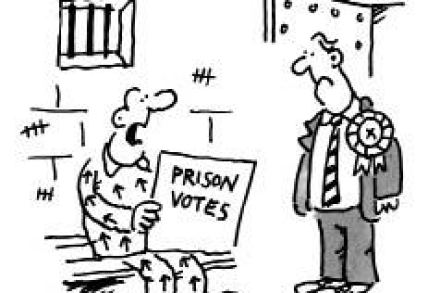
The Davis Straw motion on keeping the ban on prisoner votes has just passed by 234 votes to 22. It is a crushing victory on what was a very good turnout given that both front benches were not voting. The 22 against the motion were a bunch of Liberal Democrats plus the Ulster MP Lady Hermon, the Plaid MPs Jonathan Edwards, Elfyn Llwyd and Hywel Williams, the Green Caroline Lucas,   Labour MPs Barry Gardiner, Kate Green, Glenda Jackson, Andy Love, Kerry McCarthy, John McDonnell, Yasmin Quereshi  and  one Tory Peter Bottomely, David Cameron now finds himself between a rock and a hard place. His MPs hate the idea of giving prisoners the vote and if he tries to force them to do it, he’ll end up in a very messy fight.

Unpicking Oakeshott’s exit

From our UK edition

The resignation last night of Lord Oakeshott, the Liberal Democrat’s Treasury spokesmen in the Lords, over his criticisms of Project Merlin is more important than it might appear. Despite not being a coalition minister, Oakeshott is one of the bigger figures in the Liberal Democrats and is extremely close to Vince Cable, who skis with him. There is a certain nervousness in coalition circles that Oakeshott’s departure over Project Merlin could be a forerunner of Vince quitting over the government’s response to the Vickers’ review on banking. But it should be said that these fears are based more on hunches and suspicions than anything else. Oakeshott has been irritating Clegg loyalists for a while.

Burnham’s slide to the left

From our UK edition

One of the more depressing sights in politics at the moment is how Andy Burnham is leading the Labour party back to its comfort zone on education. Burnham, who The Spectator once named minister to watch, seems to have jettisoned all of his Blairite reforming instincts. He now wants to draw as many dividing lines as possible and side with the vested interests and the status quo at every turn. In last night’s education debate, Barry Sheerman, who chaired the education select committee during the Labour years, pointed out that Gove’s education plans are building on the last government’s incomplete reforms. As Sheerman put it, “I am going to be honest: much of the Bill could have come from the previous Labour Administration.

Despite the difficulties, Project Merlin isn’t at all bad

From our UK edition

Bankers make estate agents look popular and so any government deal with bankers that doesn’t involve kicking them is politically tricky. The Treasury, acutely aware of the politics of all this, are very keen to stress that the government ‘played hardball’ with Barclays, HSBC, Lloyds and RBS in the Project Merlin talks. The actual deal is not a bad one. The promised £10 billion pound increase in lending to small businesses is better than expected. On bonuses, the banks have got off relatively easily. But crucially the bonus pool will be smaller than last year and bank head’s bonuses will be dependent on meeting lending targets for small businesses.

Today’s battlefield

From our UK edition

Today’s PMQs threatens to be overshadowed by the statement on Project Merlin, the government’s deal with the banks, expected at one o’clock. I suspect that Cameron will try and push away any questions on banks with the line that Miliband should wait for the Chancellor’s statement. But PMQs will still be a far livelier affair than last week’s one. Watch to see whether Miliband tries to attack Cameron for hurting the Big Society. Miliband has moved Labour away from ridiculing the idea to embracing it and saying that ‘Tory cuts’ are the threat to it. This is all part of Labour’s strategy to try and ‘recontaminate’ the Tory brand.

Cambridge’s £9,000 a year fees will cause political headaches

From our UK edition

Cambridge University’s decision, leaked to The Guardian’s Nick Watt, to start charging fees of £9,000 a year from 2012 is an irritation for the Liberal Democrats who did not want any university to move to charging the highest fee possible straight away. It also threatens to overshadow Nick Clegg’s efforts to increase the social mix at Britain’s best universities. But the news has also reminded me of how tricky the question of university fees will be for Labour in 2015. If Labour says it is going to reduce the fees universities can charge, it will have to accompany this with a promise to increase state funding to make up the difference. If it doesn’t, I suspect that top universities might threaten to go private.

Osborne v Balls at Treasury questions

From our UK edition

Tomorrow is the first Osborne Balls Treasury Questions clash. It should be a fiery encounter. There’s little love lost between the two men, they are both aggressive despatch box performers  and the two of them know that their clash over the economy is likely to be the major factor in determining the next election result. Balls has a fair amount of material to work with: the disappointing growth—or, more accurately, non-growth—figures for the final quarter of last year, the limited success of the national insurance holiday for new small companies and the failure to publish a growth plan.

Wasting away | 7 February 2011

From our UK edition

The Independent has a remarkable story today which shows just how public money gets wasted. The paper reports that the Department for Energy and Climate Change has employed a firm of headhunters to find it a new chief economist. Tom Peck writes that the headhunters then approached Vicky Pryce about the job. Ms Pryce had until recently worked at the Department for Business, Innovation and Skills but had quit when her then husband Chris Huhne became a Cabinet minister to avoid any appearance of impropriety. What is so revealing about this story is that it suggests that before calling Ms Pryce, the headhunters had seemingly not done the preparatory work to find out why she had left the civil service only a few months ago.

Cameron was right to give the speech he did

From our UK edition

David Cameron’s speech yesterday was one of the most important he has given as Prime Minister. I’d urge you to read the whole text just to see how absurd some of the opportunistic, party political attacks on it have been. As I say in The Mail on Sunday, they’ll be a huge amount of resistance in Whitehall to the course that the PM is charting. But he is surely right that state money and recognition should not be going to any group that does not promote integration and believe in the liberal values on which this country is based. To do anything else would be fundamentally illiberal. A lot of the criticism of the speech seems to come down to the idea that this is an issue best not discussed. This idea is toxic.

An orderly transition in Egypt requires Mubarak’s departure

From our UK edition

It appears almost certain that the protests in Egypt are not going to stop until Mubarak leaves office. For that reason, Mubarak’s departure seems a necessary step to an orderly transition. The New York Times ‘ latest report reveals that the Egyptian military and US officials are discussing how Mubarak could visibly leave while remaining as the titular president: “The country’s newly named vice president, Omar Suleiman, and other top military leaders were discussing steps to limit Mr. Mubarak’s decision-making authority and possibly remove him from the presidential palace in Cairo — though not to strip him of his presidency immediately, Egyptian and American officials said. A transitional government headed by Mr.

Politics: In times such as these, a government needs a proper strategic foreign policy

From our UK edition

The coalition’s approach to foreign policy is not to have a foreign policy. The coalition’s approach to foreign policy is not to have a foreign policy. There is no Cameron doctrine. As events unfold in Egypt, the government does not even know what it wants to happen. Alistair Burt, the Middle East minister, summed up this position rather brilliantly when he said ‘the tide is turning very strongly. It’s not for us to sit here in London and work out where that tide is going to go.’ History had reached a turning point but the coalition wasn’t sure which way it wanted it to turn. It is strange to think that in 2005 David Cameron ran for the Tory leadership as the neoconservative candidate.

Levelling higher education’s playing field

From our UK edition

Last summer I was showing some 17 year olds around the House of Commons. They were bright and engaged and all wanted to go to university. But as they told me what they were doing for A-Levels my heart sank. They were all doing subjects that were going to put them at a massive disadvantage in applying to a top-rank university. The most worrying thing was that they were completely unaware of this. So it is welcome news that the Russell Group, made up of the 20 best universities in the country, has now published a guide advising students on which A-Level subjects are held in the highest regard by universities. This is the kind of information that schools that regularly send children to top universities pass on almost automatically to their pupils.

What to do about IPSA?

From our UK edition

I wish I could tell you that the main topic of conversation in Westminster today is Egypt and the future of the Middle East. But it isn’t. It is those Sally Bercow photos.  But if it wasn’t the picture of the Speaker’s wife naked but for a sheet that MPs were talking about it would be IPSA, the expenses body, following the publication of their claims for September and October. MPs detest IPSA. They believe, with good reason, it to be arrogant and inefficient. So strong is MPs’ opinion on this front, that David Cameron told Tory MPs late last year that if IPSA hadn’t sorted itself out by April, he’d sort it.

Rooting out the cause of the crisis

From our UK edition

David Frum is doing a great series on the Financial Crisis Inquiry Commission report. The report is, obviously, US-centric but its argument that the problem was not with the regulation but the regulators strikes me as highly important: “[W]e do not accept the view that regulators lacked the power to protect the financial system. They had ample power in many arenas and they chose not to use it. To give just three examples: the Securities and Exchange Commission could have required more capital and halted risky practices at the big investment banks. It did not. The Federal Reserve Bank of New York and other regulators could have clamped down on Citigroup’s excesses in the run-up to the crisis. They did not.

Coulson’s replacement

From our UK edition

Downing Street have announced that the BBC’s Craig Oliver will be Andy Coulson’s replacement. Oliver, who has been editor of both the Six and Ten o’clock news, will bring a broadcasting perspective to Downing Street. Former BBC colleagues stress that he knows how to tell a story in pictures and, in contrast, to Coulson is unlikely to ever become the story. Oliver, who is in his 40s, was never obviously political. He won’t provide the kind of counterweight to Steve Hilton that Andy Coulson did. But he will run an efficient ship. Some people are saying that the appointment shows that newspapers are less powerful politically than they used to be. There is some truth to this.

Consensus reigns over PMQs

From our UK edition

A very different PMQs this week: six questions on foreign affairs and almost total consensus between Cameron and Miliband. Miliband’s office had given No 10 advance warning of the topics they wanted to raise and the two agreed on pretty much everything. Miliband argued that ‘the best route to stability is through democracy.’ Cameron agreed but stressed that democracy means more than just elections. You get the picture. At the risk of disagreeing with Pete, I must say that the exchanges were a reminder of just how dull PMQs would be if it was not confrontational.

Reports: Mubarak to say he will step down in August 

From our UK edition

The wires are buzzing with uncomfirmed report that Mubarak will tonight say on Egyptian TV that he won't run for re-election in August and will stand down then. Update: The New York Times  is now reporting that President Obama has pushed Mubarak to say publicly that he won't run again. The end game appears to be rapidly approaching.

Wheeling and dealing over the AV bill

From our UK edition

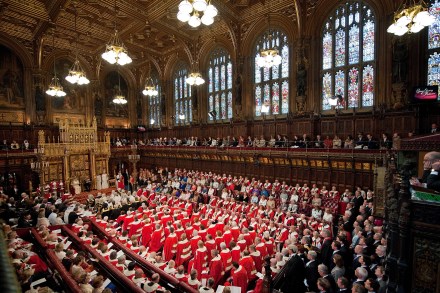
If the AV referendum is to take place on the 5th of May, the legislation paving the way for it needs to have passed by the 16th of February. But this bill is currently being held up in the Lords where Labour peers are objecting to the ‘Tory part’ of the bill which reduces the number of MPs and equalises constituency sizes. The coalition does not have a majority in the Lords, so all the talk of simply ramming the bill through was always slightly unrealistic. But the coalition’s concession that there can be public inquiries into the boundary review has created an expectation that Labour might now drop its opposition. The cross benches, the swing group in the Lords, have been impressed by this concession.