James Forsyth

James Forsyth

James Forsyth is former political editor of The Spectator.

Clarke rebukes May for her comments on sex offenders’ register ruling as Tory split over human rights grows

From our UK edition

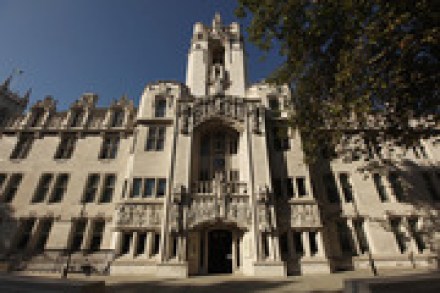
The Conservative side of the coalition is being increasingly split by the issue of the European Convention on Human Rights. After the Supreme Court in London declared that human rights legislation required that sex offenders had to be given a chance to take their names off the register, the Home Secretary and the Prime Minister were appalled. In a statement to the Commons, May made some trenchant criticisms of the court ruling. This, I understand, prompted a furious letter from Clarke, the Justice Secretary, to May reminding her that she was constitutionally obliged to accept the independence of the judiciary. The letter was copied to Downing Street as the Prime Minister himself had used very similar language to May.
How the West became so dominant

From our UK edition

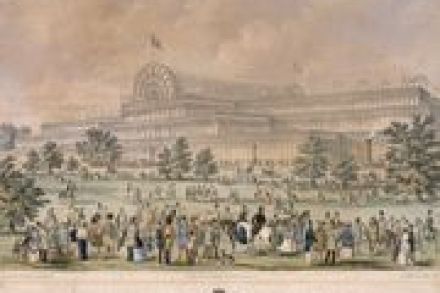
Niall Ferguson has a zippy essay in The Times today previewing his forthcoming TV series and book on why the West became so dominant over the past 600 years. He argues that there are six features of the Western system that gave it its edge: “1. Competition: a decentralisation of political and economic life, which created the launch pad for both nation states and capitalism. 2. Science: a way of understanding and ultimately changing the natural world, which gave the West (among other things) a major military advantage over the Rest. 3. Property rights: the rule of law as a means of protecting private owners and peacefully resolving disputes between them, which formed the basis for the most stable form of representative government. 4.

Politics: Cameron is betting it all on BS

From our UK edition

Those who hoped they had heard the last of ‘the big society’ should look away now. Those who hoped they had heard the last of ‘the big society’ should look away now. A fightback has begun. Normally, power shifts within No. 10 are visible only to those who read between the lines of prime-ministerial speeches. But since Andy Coulson departed, the influence of the big society’s biggest champion, Steve Hilton, can be seen in headlines. This week there was even a ‘big society’ Cabinet meeting — with the Prime Minister and seven Cabinet ministers in attendance — before the normal meeting. Hilton, Cameron’s closest advisor, is now free to pursue his belief that the big society should define his boss.

Even UKIP outspent the Tories in Oldham East and Saddleworth

From our UK edition

The spending figures from the Oldham East and Saddleworth campaign have been released tonight and they show just how much the Tories soft-pedaled their campaign there. The numbers, which Michael Crick has blogged on, reveal that the Tories spent less than half what their coalition partners spent in the content, £39,432 to £94,540. Labour, who held the seat, expended the most, £97,085. Indeed, even the UKIP campaign was more expensive than the Tory one. These figures show just how absurd it was for the Tories to claim that they were fighting a normal, style by-election campaign. There was clearly a deliberate decision to go easy in the seat to give the Liberal Democrat candidate the best chance possible.

Eastern promises | 18 February 2011

From our UK edition

Events in Bahrain are yet another reminder of why the supposed choice between stability and democracy is a false one. The idea that in the medium to long term backing a Sunni monarchy in a Shiite majority country is a recipe for stability is absurd. If this was not enough, by backing the minority monarchy the West is ensuring that, for obvious reasons, the opposition to it will become radicalised and anti-Western. The West is where it is. It, sadly, cannot start again from scratch in the Middle East. But it cannot allow itself to continue being the allies of those who brutally repress the aspirations of their own peoples - a policy that would ensure this troubled part of the world grows even more hostile to Western interests.

In the AV referendum, either Clegg or Cameron has to lose

From our UK edition

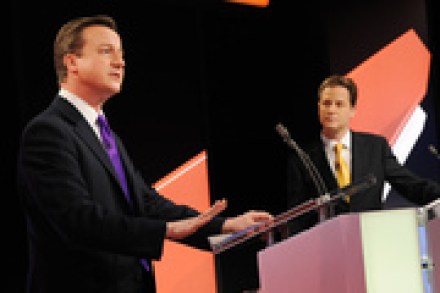
Tomorrow both Clegg and Cameron will give speeches on AV, Clegg for and Cameron against. They’ll be very civil about their disagreement. But the truth is that one of them has to lose in this vote and the loser will have a very unhappy party on his hands. As Steve Richards points out in The Independent today, there’s been a lot more talk of the consequences for Clegg of AV going down than of what happens to Cameron if it passes. But Cameron would have almost as many problems if it passes as Clegg would if it failed. Fairly or not, a large number of Tory MPs will blame Cameron if Britain ends up with AV.

Spelman: I got this one wrong

From our UK edition

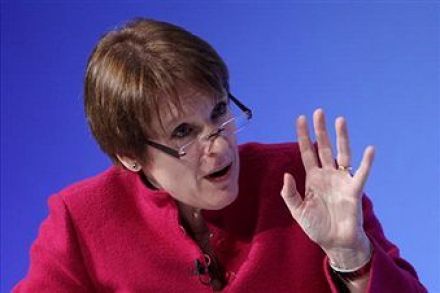
Caroline Spelman has just told the Commons that ‘I am sorry. We got this one wrong.’ The forests u-turn is now complete. Rachel Johnson has successfully duffed up the government. The coalition is trying to make the best of the situation, stressing that this shows that this is a ‘listening’ government. But there’s no getting away from the fact that this is an embarrassing u-turn and one that will encourage other opponents of the coalition’s reforms to redouble their attacks. The coalition cannot — and must not — continue making u-turns like this.

It is not just the Strasbourg Court that is a problem on human rights

From our UK edition

As we wait for the result of tonight’s ping pong between the Lords and the Commons over the forty percent threshold, there is one point worth noting about the row over the court ruling on the sex offenders’ register. The court that ruled that sex offenders sentenced to two and a half years cannot be placed on the sex offenders’ register for life was the British Supreme Court taking its cue from the European Convention on Human Right. This shows that merely pulling out of the jurisdiction of the Strasbourg Court will not be enough to end these human rights cases. The only guaranteed solution would be to remove the convention itself from British law. The coalition will never go that far, the Lib Dems would never stomach it.

Cameron breaks from the norm at PMQs

From our UK edition

PMQs today contained a rare moment: the Prime Minister admitting that he wasn’t happy with government policy. Ed Miliband, who split his questions up this week, asked Cameron if he was happy with his position on forestry and Cameron replied, ‘the short answer to that is no.’ The answer rather drew the sting from the rest of Miliband’s questions on the topic. But it was a rather embarrassing admission for the PM to have to make.    Cameron made quite a lot of news at the despatch box this week. He accused Manchester City Council of making “politically driven” cuts, said that more regulations needed to be scrapped and announced that a commission on the British bill of rights is imminent.

The Sun shines on Miliband

From our UK edition

When Ed Miliband won the Labour leadership, there was much speculation that he’d be ‘Kinnocked’ by The Sun. His brother David had been the favoured News International candidate and ‘Red Ed’, as The Sun dubbed him, offered a fair few targets. But the paper has been giving the Labour leader a hearing in recent weeks. Ed Miliband has been to The Sun for dinner and today’s he written for the paper, attacking Cameron for breaking his promises on crime — classic Sun territory. Partly this rapprochement is a product of the fact that Labour are ahead in the polls. No paper can take the risk of writing Miliband off as a loser in the way that Hague and IDS were.

Amending the AV bill

From our UK edition

Yesterday, the coalition said it would try and overturn all four of the Lords’ amendments to the AV bill. But today it announced that it would accept the one saying that the Isle of Wight should not be combined with anywhere on the mainland. But—and this is where the controversy comes—the Isle of Wight will now be divided into two seats. This is leading to complaints that the Tories are creating an extra seat for themselves as the Isle of Wight is fairly solid Tory territory.

Inflation up again

From our UK edition

CPI inflation running at four percent, twice the bank’s target level is a problem for the Bank of England's Monetary Policy Committee which remains set against a rate increase. I suspect we’ll hear much about how this rise is partly prompted by the one off effects of the VAT rise and the role of global commodity prices in driving inflation. But it is hard to get away from the fact that inflation has been above the two percent target rate for 14 months now. (Personally, I’d favour the scrapping of inflation targeting). The most immediate political consequence of this inflation is that it is hitting living standards.

Obama’s budget proposes cuts

From our UK edition

President Obama’s new budget proposal is an interesting moment as Obama is now admitting that the time for fiscal stimulus has passed and that cuts needs to be made. As one administration official tells The New York Times, “The debate in Washington is not whether to cut or to spend… The question is how we cut and what we cut.” Interestingly, Obama has proposed a ratio of two third spending cuts and one third tax rises. By contrast, the bi-partisan Simpson Bowles commission on the deficit proposed something very similar to the 80 percent spending cuts, twenty percent tax rises model that Osborne is using.

Labour tries to reheat the Building Schools for the Future row

From our UK edition

It was predictable that Labour would use the outcome of the judicial review last Friday to try and re-heat the Building Schools for the Future row. Andy Burnham was in florid form in the House of Commons on the subject. He demanded that ‘Michael Gove apologise to the communities who suffered from the devastating effects of his disastrous decision making.’ Burnham is now writing to the PM to demand that Gove recuse himself from the judge required review of six BSF projects. In truth, most of Gove’s problems in cancelling BSF projects have been a result of the shambolic and wasteful way in which the programme was run. As Gove himself pointed out, one consultant made a million in one year from the project.

The AV referendum hasn’t captured the public’s imagination

From our UK edition

It is odd to think that in just a few months we’ll be having only the second nationwide referendum in our history and no one is particularly excited about it. This is largely because the plebiscite is on AV, an unloved voting system that is a half-way house between first past the post and a proportional system. (Just imagine the level of conversation there would be if the vote was to do with Europe not electoral reform). At the moment, the yes side has a growing lead in the polls http://ukpollingreport.co.uk/blog/archives/3115. But, given the vast number of undecideds, this could change very quickly. The No campaign, though, will have to come up with some clearer, crisper messages to turn the tide.

The big-society counter-offensive

From our UK edition

Last week Steve Hilton set up a war room in Downing Street. In daily meetings, Hilton plotted the ‘big society’ fight-back that started today with Cameron’s op-ed in The Observer. Hilton, who is predominant in Downing Street at the moment, knows that Cameron will never u-turn on the big society. It is what the Prime Minister thinks defines him as a politician. Cameron is desperate to be seen as more than a deficit hawk and the big society is what he wants to be his legacy. The big society is sailing into quite a headwind.

The coming coalition compromise on the banks

From our UK edition

One of the questions that most fascinates Westminster is what would make Vince Cable walk out of the coalition Cabinet. Cable might be a diminished figure and have lost standing on the Lib Dem left by pushing through the tuition fees hike, but his departure would still shift the tectonic plates of politics. As James Kirkup blogs today, banking reform, or the lack thereof, is the most likely cause of Cable going nuclear. Cable is a firm believer that retail and investment banking need to be separated, a view that he pretty much reiterated on Marr this morning. Osborne and the Treasury are far more cautious on this front. Everyone in government is waiting to see what the Vickers Review recommends.

A clue to how Cameron really thinks things are going

From our UK edition

The most interesting question in politics right now is, to my mind, what does David Cameron really think about how his premiership is going? Does he subscribe to the view that the coalition is getting the big things right and that the numerous u-turns that Fraser referred to in his post really don’t matter that much. Or does he worry that the government is failing to communicate a message and that his defining political project—the big society—is coming under rapidly increasing fire. My own view is that the truth rests somewhere between these two statements. But my feeling has been that Cameron is too blasé about how Downing Street is functioning.

It is time for the West to get on the right side of history in Egypt

From our UK edition

The fall of the Mubarak regime marks the end of an inglorious chapter in the history of the West. The decision to back a dictator in Egypt in exchange for stability has proved to be as flawed strategically as it was morally. The challenge for the West now is to get itself on the right side of history in this part of the world. Something that not been helped by the Obama administration’s short-sighted slashing of the US’s democracy promotion budget for Egypt.  There are understandable concerns about whether or not the Egyptian military will ever hand over power. The New York Times reports that neither the field marshal nor the lieutenant general who are now effectively running the country are instinctive reformers or democrats.

A region in flux

From our UK edition

The kaleidoscope has been shaken in the Middle East and it is impossible to know where the pieces will settle. Watching the scenes, one’s inclination is to be hopeful. But as Jeffrey Goldberg notes the challenges facing any new Egyptian order are immense. One thing that is clear is that the autocrats of the Arab world are nervous. The Washington Post reports that the king of Bahrain is giving every family there $2,700 in an attempt to appease opinion before a planned day of protest on Monday. The Algerian government is offering to lift the state of emergency the country has been in for the past 19 years and the Syrians have stopped trying to ban Facebook and Twitter. In Egypt, it seems that Mubarak’s statement on Thursday night was made in spite of reality.