James Forsyth

James Forsyth

James Forsyth is former political editor of The Spectator.

The Tories start to rally around Hunt

Since I wrote my earlier blog, I have been contacted by Tories who are supportive of Jeremy Hunt. One minister argued to me with eloquence and passion that Hunt was not someone who would do anything improper and that would become clear when he faced Leveson. Another Tory told me that ‘Hunt is an absolute star,’ and that it is crucial that he survives as he is one of Cameron’s more effective ministers. Most backbench Tory MPs I have spoken to this evening are supportive of Hunt. But, intriguingly, among Liberal Democrats there is not the same sentiment.
Hunt’s in real trouble

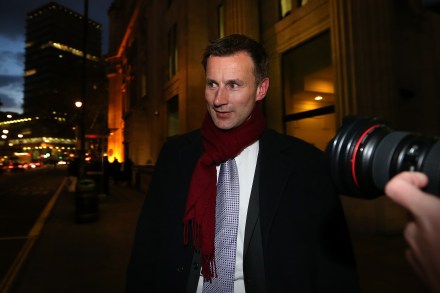
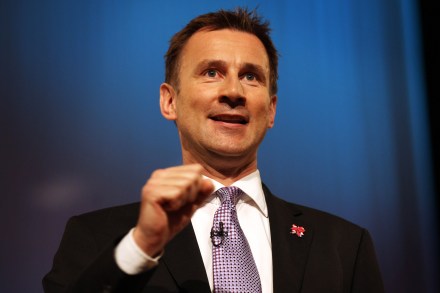
If anyone doubted just how dramatic the Murdochs' evidence to Leveson was going to be, then the five hours of testimony today have settled that argument. In the process, they have also turned Jeremy Hunt into the political equivalent of damaged goods. It is now hard to see how he can be Secretary of State when the Olympics open let alone Tory leader one day. The emails that have just been released show just how deep a hole Hunt is in. He and his special adviser seem to have been rather reckless in their interactions with Murdoch and his representatives, they have certainly opened themselves up to criticism. It should be noted, though, that the accuracy of Michel’s emails may well be challenged by Hunt when he appears before Leveson.

…but Hollande is still the favourite

The best explanation I have seen for why François Hollande should be ranked as the favourite for the French presidency going into the final round comes from the Rue 89 blog. Here, courtesy of a friend who speaks far better French than I, is the key part of the argument: ‘There are no scenarios that lead to a Sarkozy victory. We generously assumed that 50 per cent of Bayrou’s first round votes would go to Sarkozy, with only 20 per cent going to Hollande and 30 per cent abstaining (whereas the latest polls suggest the centrist electorate was divided into three approximately equal parts between these three positions).

Cameron tries to return to the big picture

David Cameron is out doing the media rounds today. He wants to, in his words, get back to the ‘big picture’, the argument over deficit reduction. Indeed, Danny Alexander’s speech today saying that departments have to indentify additional saving seems to have been timed to tee up this argument. Cameron’s Today Programme interview, though, was dominated by Abu Qatada, tax avoidance, Lords reforms and whether or not — in John Humphrys’ words — the PM is ‘a bit lazy.’ On Qatada, Cameron was insistent that the Home Office had ‘checked repeatedly’ with the European Court of Human Rights on the deadline. I expect that the Home Office will have to release details of these contacts today.

Hollande edges Sarko in French first round

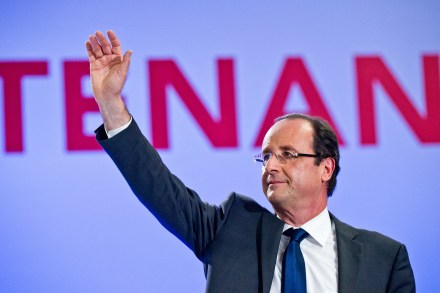
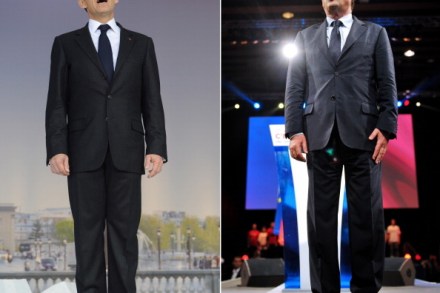
The run-off in the French presidential election will be between the candidates of the two main parties, Nicolas Sarkozy and François Hollande. In a boost to the Socialist’s chances, Hollande topped the poll — but he was only a point and a half ahead of the sitting president. But, in some ways, the story of the night will be the best ever result for the Front Nationale, in terms of share of the vote. Marine Le Pen appears to have scored 20 percent, 3 percent more than her father Jean-Marie Le Pen did when he came second in the first round in 2002. The result is another sign of the crisis of politics aross Europe at the moment. Jean Luc Mélenchon failed to live up to expectations, coming fourth and according to the exit poll scoring only 13 percent.

Clegg stands firm against Lords referendum

In his interview with Andrew Neil on the Sunday Politics, Nick Clegg argued against a referendum on Lords reform on the grounds that the three main parties all agree on it and so, in an absurdly patronising phrase, there’s no need ‘to subcontract to the British people’ the decision. He also added that it would cost several hundred million pounds. Now having been on the wrong side of the AV referendum result, Clegg knows how potent the waste of money charge can be — remember those anti-AV posters. But I suspect that this is going to be a difficult line for him to hold for as supporters of a referendum will simply argue that it should be held simultaneously with the next general election which would cut the costs considerably.

Mid-term blues or something more serious?

The argument in the Cameron circle about what the government needs to do to get back on course has been the story of this week. As I say in the political column, there’s a divide between those who think that this month’s events have been little more than a bit of mid-term blues, and those who worry that they have revealed serious, structural problems that needs addressing if they are not to cripple the government. At a meeting of Conservative Cabinet ministers on Wednesday lunchtime, this divide came clearly into sight.

How would the House of Lords be elected?

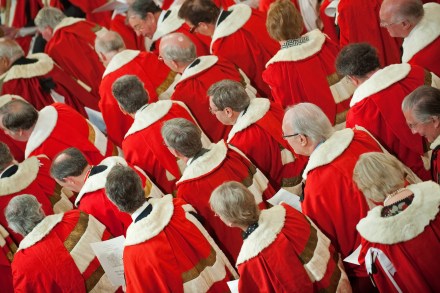
In the debate over House of Lords reform, the Lib Dems are trying to say that they favour an elected House of Lords and anyone who opposes them is a reactionary in favour of the status quo. They believe that this is their best chance of winning the argument. But, in reality, things are more complicated than that. Some of the Tories most sceptical of the Clegg proposals are actually believers in an elected second chamber. They just don’t want it to be done through STV, a system that the Lib Dems favour because it would hand them the balance of power there. The issue of the voting system under which the Lords will be elected will take centre stage next week with the publication of the Joint Committee’s report on the matter.

Politics: Cameron and the civil service coup

There is a split in the Cameron circle. The divide is between those who think that the problems of the past few weeks have been a blip, one that will end when Boris Johnson wins in London, and those — including some of the Prime Minister’s closest friends — who fear the problems are symptoms of a disease that could cripple the government. At stake in this debate is the future strategic direction, and the potential success, of the Cameron project. The Prime Minister, ever the optimist, is in the first camp. He is inclined to think that he is experiencing a normal bout of mid-term turbulence. But some of his closest and oldest political allies are preparing to persuade him that his problems are the result of structural defects in his government.

Job scheme

Chris Grayling’s job is to make sure that British people can get jobs. But he faces a problem. Since the election, 90 per cent of the rise in employment is accounted for by foreign-born workers. As Employment Minister, Grayling is painfully aware that there is a very large difference between importing workers and creating jobs. When we meet in his sparsely decorated ministerial office, he is frank about the scale of the problem. ‘There is no doubt,’ he says, ‘that a young person coming out of school, college or university without the experience [of work] is at a disadvantage compared to someone coming into the UK from overseas.

Britain will contribute again to the IMF

Britain will contribute $15 billion (£10 billion) more to the International Monetary Fund. This means that there will be no need for another parliamentary vote on UK funding of the IMF as it is within the limits set by parliament in its last vote on the matter. This news has emerged in a joint statement by Australia, South Korea, Singapore and the UK; the UK’s $15 billion contribution is in proportion to this country’s voting share in the organisation. In terms of the politics of this decision, it is interesting that the Australian Liberals, the Tories’ sister party Down Under, are going to back the increase in the Australian contribution despite being in opposition.

The depth of Tory feeling over Lords reform

What should worry David Cameron about tonight’s meeting of the 1922 Committee on Lords reform was that it was not just the usual suspects who spoke out against it. The two MPs presenting the case against were members who have never defied the whip: Jesse Norman and Nadhim Zahawi. Those present were particularly struck by some polling data that Zahawi, who used to run YouGov, presented. It showed that when asked what issues were a priority for them zero per cent of the electorate mentioned reform of the Lords. Even when prompted, this number only rose to six per cent. But Zahawi’s polling shows that if reform does go ahead, almost two thirds of the public want a referendum on it.

ECHR reform won’t happen

In Westminster, the debate about the European Convention on Human Rights and the European Court of Human Rights is all being seen through the prism of the Abu Qatada case. Undoubtedly, the whole debate over how many days had elapsed is something Theresa May and the Home Office would have liked to avoid. It has also come at a particularly unfortunate time for the government when people are prepared to believe it has been incompetent even when it hasn't been. But what, I expect, is more significant in the long term than Abu Qatada is the fact that the Brighton conference on the ECHR is not going to deliver the meaningful reforms that David Cameron wants. It is becoming increasingly clear that the aim of reforming the ECHR from within is a pipe dream.

Cameron and the civil service coup

We thought CoffeeHousers might care to read James’s political column from this week's magazine (on sale today), so here it is: There is a split in the Cameron circle. The divide is between those who think that the problems of the past few weeks have been a blip, one that will end when Boris Johnson wins in London, and those — including some of the Prime Minister’s closest friends — who fear the problems are symptoms of a disease that could cripple the government. At stake in this debate is the future strategic direction, and the potential success, of the Cameron project. The Prime Minister, ever the optimist, is in the first camp. He is inclined to think that he is experiencing a normal bout of mid-term turbulence.

Reeves resignation is bad news for Clegg

The departure of his senior aide Richard Reeves is a major blow to Nick Clegg. Reeves, a relative newcomer to the Lib Dems, was far less focused on party structures than many of those in Clegg’s circle and instead concentrated on the party’s long term electoral prospects. Reeves’s view was that there was a space in British politics for a party that was classically liberal on economics and socially liberal on other matters. He wanted to turn the Lib Dems into a party that was as comfortable in government as in opposition. There will be those who want to read something political into Reeves’s departure.

Unemployment is down but are prospects up?

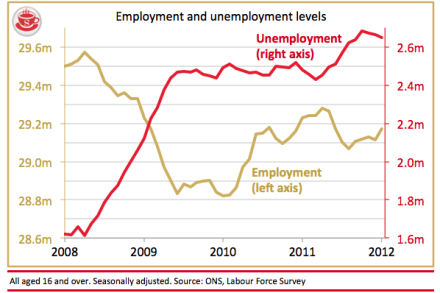
The government has fallen on today’s numbers showing employment up by 53,000 and youth unemployment down by 9,000. This is the first quarterly fall in unemployment for over a year. One coalition source describes the news as a ‘good reminder of what really matters, both economically and politically.’ Certainly, these figures will provide David Cameron with some protection in his first post-Budget PMQs. Ed Miliband won’t be able to make his usual jobs attack. But politically one of the key questions will be who is getting these jobs. One of the worries for the coalition is that a huge amount of the new jobs that are being created are going to foreigners, who are often more motivated than their British counterparts and have more experience.

Another blow against the something for nothing culture

In the aftermath of the riots, the idea of withholding child benefit from mothers whose kids played truant was floated by Number 10. The aim was to link child benefit payments to getting your child to attend schools. This was meant to be part of a broader effort to end the something for nothing culture. Now, 8 months on from the riots — and after months of coalition wrangling — we have some flesh on the bones of this idea. Charlie Taylor, the government’s impressive adviser on behaviour, has proposed (£) that fines for children being persistently truant should be deducted from child benefit payments. At the moment, head teachers can already fine parents for their children being truant.

Encouraging signs from talks with Iran

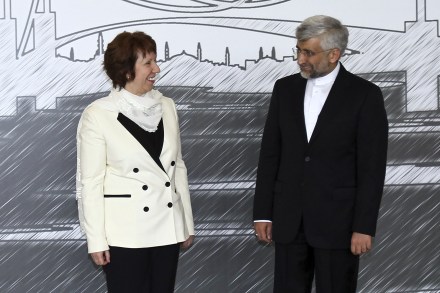
The weekend’s six power talks with the Iranians about their nuclear programme were more fruitful than many, including I, expected. It seems that the EU sanctions on Iranian oil and gas, which are due to come into force in July, have concentrated minds in Tehran. However, we won’t know whether the Iranians are just playing for time again until the next set of talks in Baghdad on the May 23. These six power talks are an imperfect vehicle in that the Russians and the Chinese take a far softer line than the French, British, Germans and Americans. But as James Blitz blogs over at the FT, one of the most striking things is that the Europeans are tougher on Tehran than the Americans who are very keen to avoid having Iran dominate Barack Obama’s re-election campaign.

The ‘22 equation

Next month’s elections to the 1922 Committee of Tory backbenchers have taken on particular importance in the current circumstances. The fact that a couple of the officer positions are held by Cameron’s harshest critics, and that some MPs broadly supportive of the leadership have decided to take on the ‘wreckers’, means that the results will be seen as a sign of where backbench opinion in the party really is. As I write in the Mail On Sunday today, three of the 2010 intake — Charlie Elphicke, George Hollingbery and Priti Patel — have decided to endorse a joint candidate for secretary of the committee. This candidate will stand seeking a mandate to shift the focus of the committee more onto campaigning and policy-work.

Why Lansley might hang on

Perhaps, the biggest question about the post-Olympics reshuffle is what happens to Andrew Lansley. In an interview with The Times (£) today, he makes it abundantly clear that he expects to stay at Health. Now, there are certainly those in Downing Street who would like to see him moved. But I suspect that he’s got a better chance of staying in post than most people realise. There are three reasons for this. First, Lansley is the person who understands best what the bill actually does. Anyone else on the Tory side would face a steep learning curve. Second, it is far from certain that a slicker communicator would actually fare better than Lansley has.