James Forsyth

James Forsyth

James Forsyth is former political editor of The Spectator.

The pressure is now back on Ed

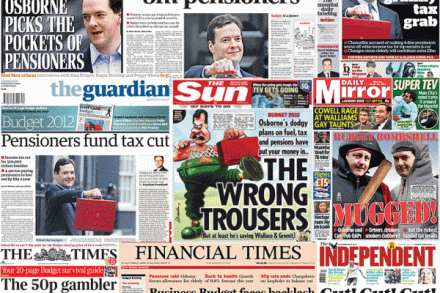
This morning’s front pages are simply awful for the government: every single one is critical of Downing Street. But this morning everyone in Westminster is again talking about Labour and the pressure on Ed Miliband. The Bradford West by-election has, at least for the moment, changed the subject away from pasties and petrol. Bradford West was a sensational result. Galloway, the former Labour MP, increased the Respect vote by more than 17,000 votes. For Labour to lose a by-election now is a major blow. They seemed to have had no answer to Galloway’s demagogic, sectional campaign. It will be little consolation to them that the Tory vote also collapsed, their share of the vote dropping by more than twenty percent.
Cameron needs a proper party chairman

Normally, when a Tory government is in trouble, the party chairman is sent out to put themselves between the bad story and the Prime Minister. But Baroness Warsi and Lord Feldman have been noticeable by their absence in the past few days. As Paul Goodman points out, it has been Michael Fallon — not either of the chairman — who has been touring the broadcast studios trying to hose down this story. This whole episode has been yet another reminder of why Cameron needs a proper party chairman. The party chairman needs to be solid under fire, a good media performer and, for reasons that Tim Shipman explains, an MP. Various names are being touted in Westminster.

Davis takes the opportunity to strike

The fuel tanker strike is fast turning into a critical moment. The government, which has surprisingly few friends in the media, desperately needs something to move the story on from pasties and the politics of class. Cameron, also, has problems with his own side. On the World at One today David Davis, deliberately, hit Cameron where it hurts. He accused the Cabinet of looking like “they’re in a completely different world". One thing that the post-Budget opinion polls have shown is just how shallow support for the coalition is: there’s still no sense of who Cameron’s people are. But I suspect that if this strike is beaten, then the Tories will tick back up in the polls and it will be Ed Miliband who is facing questions about party donors.

The politics of pasties

The row over the so-called pasty tax is a proxy. It is really a row about whether David Cameron and George Osborne get what it is like to worry about the family budget each week.   In truth, I suspect that they don’t. But I think the same probably goes for Ed Miliband, Nick Clegg and the vast majority of journalists. Most of the politics of class in Westminster, as opposed to the country, is the narcissism of small difference.   The best thing the coalition could do now is hold its nerve. The Budget did reveal that support for it is shallow. But, as one leading pollster said to me yesterday, if they handle the tanker strike right, they’ll be ahead again by May — the next time anyone is voting in an actual election.

Osborne opens the door to dynamic costings

George Osborne’s announcement that the Treasury is going to start looking at the dynamic effect of tax changes is significant. The aim, I understand, is for them to gather data on this which could then be used to work out the costs of various tax and spending changes. This would mean that most tax cuts would, in the Budget Red Book, cost the government less. The decision, though, about what system to use is no longer in the Treasury’s hands. The independent Office for Budget Responsibility now does all forecasts and policy costings so the decision on what model to use ultimately rests with them. Osborne made this announcement in his appearance before the Treasury select committee today, an absurd amount of which was taken up by questions about Budget leaks.

Money for Maths

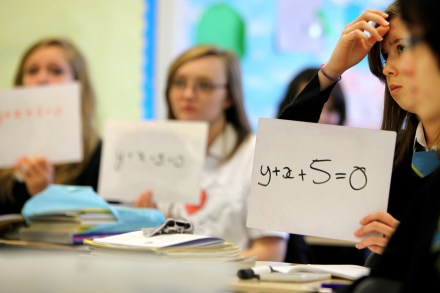
If you get the incentives right, the rest should follow. So Liz Truss’ push for a subject premium should be applauded. If sixth form colleges received more money for pupils studying Maths, it is reasonable to assume that they would encourage more of them to do it. At the moment, colleges receive more money for people doing Media Studies than Maths or English on the grounds that the equipment required to teach the subject makes it more expensive. But, frankly, this is perverse. I expect that nearly every employer, including newspapers, would rather that their employees had Maths A-Level than Media Studies. Truss’ other point is that more money for Maths would enable more schools to hire good quality Maths teachers.

Labour’s baggage stops it from gaining the upper hand

It now seems as if Downing Street is moving towards releasing a list of Chequers guests. This is belated recognition of the fact that their best hope of getting beyond this story is to get everything out there. But as Francis Maude’s feisty performance in the Commons demonstrated, the Tories are not short of mud to throw at Labour. The combination of Labour’s reliance on the Unions and the Ecclestone affair means that it is hard for Labour to get on the front foot. Indeed, Tory sources are claiming that when they approached Labour to see if they would support changes to the Sunday Trading laws for the Olympics, Labour told them to talk to USDAW, the shopworkers’ union, as their position would be key to the party’s.

How will the Lib Dems respond?

The key thing to watch for during Francis Maude’s statement is the Lib Dem reaction. At the moment, the Tories can rebut Labour’s criticisms of them by pointing to both union funding and the Ecclestone affair. But if their coalition partners start turning up the volume on this story, then the Tories are in a far more difficult position. What will drive the Lib Dems is their desire to get a deal on party funding. The Lib Dems are very keen to reduce the advantages that the Torties and Labour have on this front and this scandal presents the perfect opportunity to press for a restrictive cap on donations and more state funding for political parties.

Transparency, not state funding

Cutting the 50p rate was economically the right thing to do, but the politics of it are hugely complicated. The biggest danger is that it bolsters the sense that the Conservatives are the political wing of the privileged classes. For this reason, it is particularly unfortunate for the Conservatives that it is this Sunday that The Sunday Times has done an expose (£) on how potential donors were being lured with the offer of supper with Cameron and Osborne and the chance to influence policymaking. Labour are already trying to link the two, asking the Prime Minister to ‘provide details of all donors who have made representations, both written and orally, on changes to the 50p tax rate’.

Ken’s identity crisis

Jonathan Freedland’s column in The Guardian today, explaining why he can’t vote for Ken Livingstone, is a remarkably direct piece of journalism. Freedland states that he ‘can no longer do what I and others did in 2008, putting to one side the statements, insults and gestures that had offended me, my fellow Jews and — one hopes — every Londoner who abhors prejudice’. Now, as Paul Goodman argues, we shouldn’t overstate the importance of a traditionally Labour supporting Guardian columnist coming out against Ken Livingstone. But Freedland’s reasons for doing so are ones that, I suspect, will resonate with a significant section of opinion. The issue with Livingstone is that his politics are sectional.

Politics: Osborne goes for growth

This Budget was a reminder that political tactics alone are not enough to explain George Osborne’s actions. The most striking thing about it was the political risks that it took for economic growth. If Osborne was the polling-obsessed politician that his critics claim he is, he wouldn’t have gone near the 50p rate — nor would he have backed more toll roads. This is not to say that there isn’t a lot of politics in his political economy. Under­pinning each of Osborne’s Budgets is a desire to turn Britain back into a Conservative country, to undo Gordon Brown’s 13 years of statist social engineering. He believes, rightly, that countries with small states and large private sectors are much more likely to elect centre-right governments.

Cameron’s minimum pricing plan is politically risky

David Cameron’s plan for a minimum price for alcohol is one that several of his Cabinet colleagues, including the Health Secretary, have grave reservations about. But the Prime Minister’s personal enthusiasm for the policy has overridden these reservations. To my mind, a minimum price for alcohol is not a good idea. I expect that the effect of it will be to shift those who are intent on getting drunk, off beer and wine and onto spirits, whose prices will probably remain unchanged. Tory MPs also tend not to like the idea, viewing it as an unnecessary interference with the market. Indeed, I suspect there’ll be a fair few Tory backbenchers who vote against this policy in the Commons. This isn't the only political complication the idea throws up.

Osborne hopes business will see past the bad headlines

Today’s front pages concentrate on the so-called ‘granny tax’, the surprise of the Budget. But the real test of this Budget is going to be whether it delivers growth. If it does, then it will make a Tory majority in 2015 more likely. If it doesn’t, then the decision to cut the 50p rate will become even more politically problematic.   Given that the Budget is fiscally neutral, this growth is going to have come from either the couple of supply side measures in the Budget or by finding a way to unleash those elusive animal spirits. Indeed, I think this desire to boost confidence is one of the main reasons that the 50p rate has been cut.

Tory MPs welcome the Budget

George Osborne and David Cameron have just addressed the 1922 Committee of Tory backbenchers. They received the traditional desk banging reception and Tory MPs seemed in good spirits as they left the meeting. Interestingly, they were nearly all relaxed about the increase in the personal allowance, believing that they would get the credit just as much — if not more than — the Liberal Democrats. One told me that ‘the public view this as a Conservative government when things are going well and a coalition one when things are going badly’. Perhaps the biggest piece of news out of the meeting is that Osborne offered Tory MPs considerable encouragement that the 45p rate will not become a permanent feature of the tax system.

All that matters now is growth

With every Budget, the early Cameron emphasis on greenery and General Well Being not Gross Domestic Product seems a more distant memory. Today’s Budget showed that, to Osborne at least, growth now trumps these more abstract concerns.   So, we saw an announcement that the planning rules would come into force pretty much as planned from next Tuesday. This means that Osborne has simply overridden all the bureaucratic and legal objections from DCLG. Although, I understand that councils who already have a sufficiently pro-development local plan will have a year to adjust to the new rules.   Sunday trading rules, a classic bit of General Well Being paternalism, are also going on the scrap heap.

The Lib Dems are happy with what they got

This Budget told us something interesting about the coalition: that there’s more juice left in it than some of us thought. Judging by recent coalition tensions, one might have expected the two parties to devote their time to blocking each other’s proposals. But, instead, they’ve struck a deal that suits both of their political priorities: the Liberal Democrats have got a sizeable increase in the personal allowance, the Tories a 2p cut in corporation tax and a reduction in the economically destructive 50p rate. Interestingly, close allies of the Deputy Prime Minister are now briefing that ‘differentiation’, pointing out where the Lib Dems disagree with the Tories, will be dialled down a notch.

A Budget by and for the coalition

The coalition has found the second year of co-habitation more difficult than the first and it will find the coming year even more difficult given that House of Lords reform is on the agenda. But today’s Budget is a reminder of the political benefits of coalition. When George Osborne stands up today and announces, for instance, the reduction in the 50p rate he will do so with the support of two parties. Equally, a minority Tory government wouldn’t have been able to get more spending cuts to help finance a tax cut through parliament. It also seems that there should be measures in the Budget to please both Tory and Lib Dem backbenches.

More advance snippets from the Budget

The big Budget news tonight is that the personal allowance will rise to £9,205. This is a larger increase than expected and, intriguingly, will be paid for — in part — by a couple of billion more of spending cuts. So, the Lib Dems see considerable progress on their main budget priority, raising the income tax threshold to £10,000, but this will be partially funded by something Tory MPs have been calling for, more spending cuts. It also appears that the coalition will further increase the pace of its corporation tax cuts as well as introducing a new higher rate of stamp duty for £2 million plus houses. There’ll also be a slew of anti-avoidance measures to accompany the reduction in the 50p rate.

The coalition needs to get a move on

David Cameron’s speech today says all the right things about infrastructure. But the test will be whether Cameron forces these changes through the system.   Already, the planning reforms have been held up by a lengthy consultation. The government will respond to this consultation this week. But that won’t be the end of the matter. For even after the government has set its plans before parliament, there’ll be a ‘transition’ period between the old rules and the new ones.   All of which is a reminder that if Britain, and especially the capital, is going to get the extra airport capacity it so desperately needs, then decisions will have to be taken soon.