James Forsyth

James Forsyth

James Forsyth is former political editor of The Spectator.

The Boris factor

Boris Johnson’s victory in London is a remarkable achievement. He has won re-election in a Labour-inclined city against the backdrop of a Tory-led government making cuts and a country in recession. He has defied the national trend and, indeed, the trend in the capital itself given the results in the assembly elections. This triumph proves his vote-winning credentials in a way that his victory four years ago, secured in very favourable circumstances (Labour was in a poor state as Gordon Brown stumbled from disaster to disaster), did not. In Downing Street, there’s relief that Boris made it over the line; a Labour victory in London would have made this undeniably Ed Miliband’s night. But Boris will now be a force in the land.

The Tories air their grievances

In my unscientific canvass of Tory opinion this morning, there have been a couple of consistent themes. There’s a lot of criticism that the government lacks a narrative, that voters don’t understand why it is doing what it is doing. Another regular demand is for a shake-up of Number 10. Now, undoubtedly some of this is just the acceptable way of criticising the leader. But reinforcements arriving in Downing Street — especially ones with deep roots in the Tory party — would reassure quite a few people, as well as broadening Number 10’s support base in the party. Sayeeda Warsi is also coming in for a lot of stick.

Where we stand this morning

The results so far have been good but not spectacular for Labour. The BBC’s national vote share projection has them on 39 percent, the Tories on 31, and the Lib Dems on 16. These numbers would deliver a comfortable Labour majority on both the old and new boundaries. Strikingly, UKIP is averaging 14 percent in the wards it is standing in. This is an impressive result given that UKIP traditionally doesn’t do that well in local elections where Europe is less of an issue.

The early signs from the local elections

Tonight, there seems to be a general acceptance that Boris has won London. The talk is of a four points plus victory. But it is worth, of course, remembering that no votes have been counted and there’s been no exit poll. But, sadly, it appears that there will be few other mayoralties created this evening. The opposition of the local political establishment appears to have triumphed in nearly all the cities holding referendums on whether or not to have a mayor. Their loss is Liverpool’s gain which will benefit considerably if it is the largest city outside London with a mayor.

Leveson narrows Cameron’s fightback window

During the government’s recent troubles, Cameroons have talked about the ‘window’ for action that David Cameron will have if Boris does win the mayoralty. But that window got a lot smaller with the news that Andy Coulson and Rebekah Brooks are appearing at the Leveson Inquiry on Thursday and Friday next week. Their appearances means that, next week, the media won’t be dominated by discussion of the Queen’s speech but by one of Cameron’s biggest misjudgments: his decision to get so close to News International. If there are anywhere near as many text messages between Cameron and Brooks as Peter Oborne alleges then it will be, at best, horribly embarrassing for the Prime Minister.

The contests that really matter today

For the long-term future of Britain, perhaps, the most important contests today are the mayoral referendums in 11 of Britain’s biggest cities. For elected mayors offer the best chance of urban renewal. As recently as the ‘70s people described Birmingham as the city of the future. No one would say that now. But a mayor might just be able to give Britain’s sclerotic second city the leadership it needs. Indeed, it is hard to imagine how a mayor could be worse than the Tory-Lib Dem council that currently runs the city which opposed education reform for far too long. Liverpool has already decided to have a mayor and is electing one today. None of the candidates are particularly inspirational or impressive.

Politics: It’s grim up North for Tories

It is perhaps inevitable that, after two years in government, the Tories settled on a local election strategy of holding on to as much as they can. It is rare for a governing party to try to expand its political reach in mid-term elections. But this defensive approach means that Conservatives are no closer to tackling one of the biggest obstacles to a majority: their absence from England’s northern cities. Take Newcastle. There are — at the time of writing and, almost certainly, of reading — no Tories on Newcastle City Council. The Newcastle Conservative Federation website is reduced to holding up its chairman, a parish councillor in the village of Woolsington, as ‘the first elected Conservative in New-castle for nearly 20 years’.

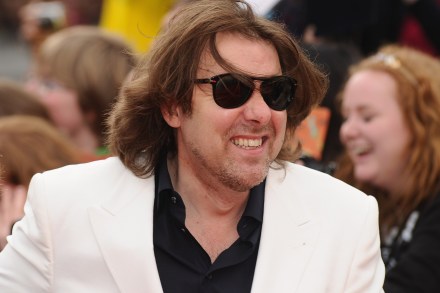
Just in case you need another reason not to vote Benita, she’s now being backed by Jonathan Ross

I doubt that many CoffeeHousers are planning on voting for the independent candidate for Mayor of London, Siobhan Benita. As Leo McKinstry said in this magazine recently, she’s really the civil service, establishment candidate. But fair play to her for standing for election unlike her mentor Gus O’Donnell, Jeremy Heywood or any other members of the permanent governing class. But if any Spectator reader was contemplating voting for Benita, another reminder of why you shouldn’t comes today from Jonathan Ross who has endorsed her on Twitter.

Fears heighten as the Eurocrisis rumbles on

For all the coverage of hacking, pasty tax and the like, the continuing crisis in the eurozone remains the most significant political story. Until it is resolved, it is hard to see how the UK returns to robust economic growth. I suspect that the market reaction to a Hollande victory will be limited as it is already pretty much priced in. Those expecting a degringolade will be disappointed. However, if Hollande does actually try and implement some of his more extreme ideas, the markets could take fright. What is far more worrying than France is Spain. There’s a growing sense of inevitability that the Spanish banks will need a bailout before the autumn.

The political effects of all this hacking talk

I doubt that many votes will be moved by the split report on hacking of the Culture, Media and Sport select committee. This is not a subject that sets the public's pulse racing. But all this hacking talk does create political problems for David Cameron. First, it obscures his attempt to talk about other things that matter more to the electorate. This was rather summed up yesterday when the News at Ten led on him facing questions in parliament about Jeremy Hunt rather than the speech he had had to cancel about the economy. This is a particular problem given that the next six weeks at least are going to be dominated by the appearances of various Cabinet ministers and politicians at the inquiry.

Cameron goes on the attack to defend Hunt

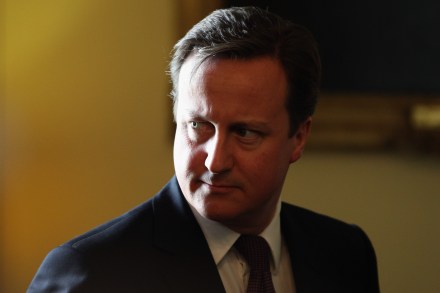
I don’t think I’ve ever seen David Cameron as angry as he was for that urgent question on Jeremy Hunt. He had clearly decided that attack was the best form of defence and went for his Labour critics in the most aggressive manner possible. But he did make one important concession in his opening answer when he said that if there is evidence of wrongdoing by the Culture Secretary, ‘I will not wait until the end of the Leveson inquiry to act’. In other words, Hunt’s appearance before Leveson will decide his fate. The dynamic in the Cameron-Miliband exchanges was genuinely personal. Cameron told the House that ‘we’ve learned something about the Labour leader today and it is something he’ll regret’.

Modernisation comes to the 1922 Committee

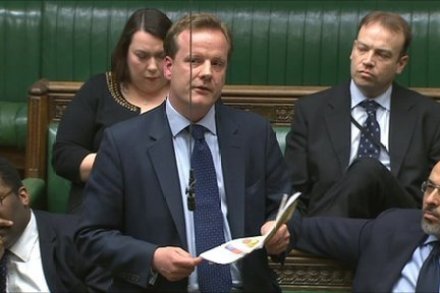
Christopher Chope is the only officer of the 1922 Committee who will be challenged by the 301 Group backed slate of broadly pro-leadership candidates. It is running two candidates for the two posts of secretary: Charlie Elphicke the popular, campaigning MP for Dover and Karen Bradley, the MP for Staffordshire Moorlands. Where the slate is running the most candidates is for the executive, full list below. But here great care appears to have been taken to come up with an inclusive list. For example, the group is supporting Adam Holloway who resigned as a PPS to vote for the EU referendum motion. It is also endorsing Penny Mordaunt, one of the leading Tory opponents of Lords reform.

Cameron’s Euro line

One line jumped out at me in David Cameron’s Marr interview this morning. When Andrew Marr asked him if he thought we were halfway through the Euro crisis or nearing the end of it, Cameron replied: ‘I don’t think we're anywhere near half way through it.’ Cameron clearly does not believe that any resolution to the crisis is in sight. Given that, as long as the Eurozone crisis rumbles on it is hard to see how the British economy returns to robust growth, this is immensely significant. It does, though, make me wonder if the government’s approach to the crisis should now change.

The pensioners’ benefits battle

During the last election campaign, David Cameron repeatedly promised to protect pensioner benefits. In one of the most heated moments in the Prime Ministerial debates, Cameron accused Labour of telling ‘lies’ when they said the Tories would cut things like the winter fuel allowance, the free TV license for the elderly and the like. For this reason, these benefits have, basically, been protected in government despite all the other cuts. But both the Liberal Democrats and Iain Duncan Smith have been arguing behind the scenes that these benefits shouldn’t be protected, that they are not an efficient use of money. It is in this context, that Iain Duncan Smith’s intervention should be seen.

Politics: Cameron’s season of sorrows is not over yet

The black dog has descended on Whitehall. Tory ministers are, as a group, at their lowest ebb since they entered government. When I saw one secretary of state this week, he stopped halfway through our meeting to say, ‘I’m sorry this is such a depressing conversation’. He then continued in the same vein. Even the normally Tiggerish Prime Minister is in a bit of an Eeyoreish mood. I’m told that he seems more tired and down than at any point since he took on the job. This funk is a result of a difficult few weeks for the government. Granny tax was followed by pastygate, which compounded the damage done by the fuel panic, which set the government up for a fall over charity tax.

Fox fires a shot across the aid budget’s bows

As Pete says, Liam Fox’s piece this morning calling for more supply-side reform is broadly helpful to the Chancellor and has been written with his approval. Strikingly, the former defence secretary — who still has a constituency on the right of the party — goes out of his way to back one of the most contentious Osborne decisions, increasing the British contribution to the IMF. But there is one line in the article that carries with it not the air of helpful advice but menace: ‘It must be understood that further reductions in budgets for security, leaving overseas aid untouched, would be met with fury by most Conservatives.’ This is going to be one of the big battle lines for the next spending review, what happens to the defence budget?

Cameron’s diary looks clean

Downing Street was seething last night about allegations that there had been meetings between David Cameron and Rupert Murdoch that it had not declared. They know that any sense that they are trying to cover up just how close Cameron was to the Murdochs and News International would be extremely damaging in the current circumstances. There is enough pain to come for Cameron from Leveson without being acccussed of a cover up too. But the revised evidence submitted by News International does support Downing Street’s version of events.

Hunt still hasn’t answered the main question

In his statement to the House of Commons, I heard no answer from Jeremy Hunt to the most serious question about his handling of the whole News Corp bid: how did Frederic Michel appear to know what Hunt would say to the Commons before he said it? If he was being given a steer on what was to be said or any advance sight then it is hard to see how Hunt can remain in post. This is not a matter that can be dealt with by the resignation of a special adviser. Hunt’s defence — and the Prime Minister’s defence of him — is that the Leveson process must be allowed to play out. But if Hunt cannot answer this question when he faces the inquiry, his position will become untenable.

Hunt’s special adviser resigns

There’s been a resignation this morning, but it is not Jeremy Hunt’s. Instead, it’s his special adviser Adam Smith. Smith’s departure before Hunt’s Commons statement at 12:30 is designed to put a firebreak around the Secretary of State. In his resignation statement, Smith declares that ‘the content and extent of my contact was done without authorisation from the Secretary of State’. This provides Hunt with his response to any questions about the nature of the text messages between Smith and Frederic Michel. But special adviser appointments are very personal. Secretaries of State talk constantly to their special advisers and it is remarkable that Smith and Hunt never discussed what he was telling Michel.

The economy adds to Cameron’s woes

This morning brought the economic news that the coalition has been dreading: the country has double dipped. Now, this is based on preliminary figures which may well be revised up. But, as Pete says, the political impact of this story will be huge. The government’s handling of the economy has now been caught up in this whole argument about competence. It provides quite a back-drop to Rupert Murdoch’s testimony today. PMQs today has now taken on a special significance. Ed Miliband has two massive targets to aim at, the Jeremy Hunt revelations from yesterday and these GDP figures. For Cameron it will be his most testing appearance at the despatch box yet. One other thing to watch is what effect these developments have on the polls in London.