James Delingpole

James Delingpole

James Delingpole reviews television for The Spectator.

Fascinating but flat: Amazon Prime’s Thirteen Lives reviewed

About ten minutes in to Thirteen Lives, Boy came in and asked me whether it was any good. I said: ‘Well, it’s quite interesting, actually. I think they’ve got the actual cave divers playing themselves, so the acting is really dull and uncharismatic and a bit unconvincing but at the same time it gives the drama a sort of echt documentary feel…’ Boy, peering at screen: ‘But that’s Viggo Mortensen. You know, Aragorn from Lord of the Rings. And Colin Farrell, who you liked in In Bruges.’ Me: ‘Oh.’ Does your main duty lie with the drama or with the truth? Director Ron Howard has opted for the latter What I still can’t work out is whether my gut response reflects well or badly on the finished product.

The making of The Godfather was almost as dramatic as the film: Paramount+’s The Offer reviewed

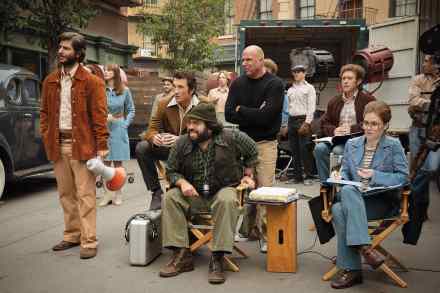
It’s hard to imagine in the wake of GoodFellas, The Sopranos and Gomorrah but there was a time, not so long ago, when the very existence of the Mafia was widely dismissed as an urban myth. What changed was Mario Puzo’s 1969 bestselling novel The Godfather, which sold nine million copies in two years. You might assume, not unreasonably, that the 1972 movie version – now acknowledged as one of the greatest films of all time – was one of the most obvious commissions in Hollywood history. But it was dogged by so much controversy and plagued by so many disasters that it was very nearly stillborn.

Why we should all be dropping acid

Many years ago a man on the end of my cigarette stole my soul. Mr Migarette (for such was his name) wore a tall hat like the one in the Arnolfini Marriage portrait, he smoked a pipe and no matter how often I tried to flick away the glowing fag ash, his evil grinning features remained intact. I have never taken LSD since. But having watched How to Change Your Mind, I think I may have done the drug a disservice. After four or more decades in the wilderness, lysergic acid is now being rehabilitated as a miracle cure for all manner of conditions from cluster headaches to alcoholism and depression.

A thrilling, pacy, well-acted drama: Amazon Prime’s The Terminal List reviewed

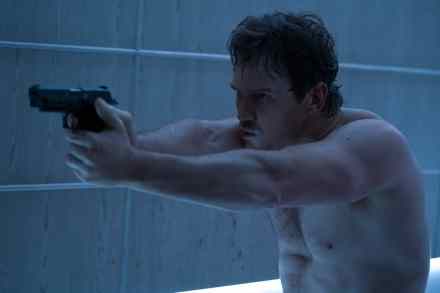
‘The Terminal List is… a dated and drably made eight-part military thriller that offers little intrigue or excitement,’ says the Guardian’s ‘east coast arts editor’ in a corrosive one-star review. Eh? Can we have been watching the same series? Let me give you an example of this ‘little intrigue or excitement’ and allow you to judge for yourself. Navy Seal Lt Commander James Reece (Chris Pratt) is having an MRI scan to determine whether he has suffered brain damage during a disastrous combat mission in Syria in which almost his entire platoon was wiped out. All his colleagues, superiors and family think he’s going mad because his memories of the mission do not remotely accord with the official version of events.

The sad decline of my one-time favourites

I don’t think it’s my imagination: it really is getting harder and harder to find anything worth watching on TV. But then, why should it be otherwise? Entropy has afflicted every aspect of our culture from holiday flights to the supply chain to the efficacy and integrity of our political and legal system to the quality of pop singles, so we should hardly be surprised if the quality of material on the gogglebox has taken a dive too. One metric of this is the decline in quality of long-running TV series. Game of Thrones was not the exception but the rule. Even the series I sometimes consider to be the best thing ever on TV – Sky’s Gomorrah – became simply unwatchable by its fifth and final season.

Ricky Gervais is an achingly conventional Millennial posing as a naughty maverick

Just how edgy and dangerous is Ricky Gervais? There is no one more edgy and dangerous, we learn from no less an authority than one R. Gervais. He keeps reminding you of this at intervals in his latest stand-up special, for which he was reputedly paid $20 million (to go with the other $20 million Netflix paid him for its predecessor). Every few sketches, he’ll announce to his live audience that this one was so offensive there’s just no way Netflix is going to broadcast it. But Netflix has done just that – and yet, quite incredibly, neither it nor Gervais has been cancelled. Funny that. https://www.youtube.com/watch?

Oddly unconvincing: Apple TV+’s The Essex Serpent reviewed

Having now watched it to the end, I would say that Slow Horses (Apple TV+) is by far the best TV drama I’ve seen in at least the last year: superbly acted and directed, ingeniously plotted, refreshingly free of annoyance. Oh, and I’d like to apologise to Mick Herron, author of the original novel series, which I now intend to devour. I’d say his understanding of the intelligence services is at least as jadedly insightful as John le Carré’s and I was quite wrong about his treatment of the ‘far-right’ threat. He gets it totally. The man is a genius. But those hoping that Apple TV+ is going to supplant the increasingly rubbish, excruciatingly modish and content-lite Netflix as the new go-to subscription channel may be in for a disappointment.

The best TV spy drama since Smiley’s People: Apple TV+’s Slow Horses reviewed

How thriller writers must miss the Cold War! Early John le Carré and Len Deighton had it easy when trying to create a convincingly menacing enemy: the Soviets, obviously. But their successors are forced to go through all manner of desperate contortions to generate their bad guy McGuffin. They can’t do Muslims because that’s Islamophobic; they can’t do the Chinese because the entertainment industry (like everywhere) is too in thrall to the CCP. So they end up promoting paper tigers like ‘right-wing extremism’, as Mick Herron does in the first of his Slow Horses series. Herron has been rightly hailed as the new Le Carré.

If you’re tired of Netflix’s agendas, turn to BritBox’s new Agatha Christie

Netflix’s share price has collapsed and a major factor, people are saying, is its relentless pushing of agendas. I think I have the solution. Perhaps it should follow the BritBox model and instead of making dramas it feels that audiences ought to like – e.g. the very creepy-sounding He’s Expecting, a Japanese series about a man who gets pregnant – it should instead capitalise on our growing yearning for a lost age of chocolate-box innocence and relative normality. Why Didn’t They Ask Evans? is a good example.

How did he even fool the Duke of Edinburgh? Netflix’s Jimmy Savile – A British Horror Story reviewed

The only impersonation I can do is my Jimmy Savile impersonation. This is not uncommon among people of my generation: if you were a child or a teenager in the 1970s and 1980s, Savile was quite possibly the most famous person in your entire world. His show Jim’ll Fix It was the most popular on TV with weekly audiences of 20 million. From Top of the Pops to his endless chat-show appearances promoting his relentless work for charidee, he was excruciatingly ubiquitous.

If you want to avoid intrusive anachronisms on TV, you have to go foreign

The iron law of TV these days is that if you want to avoid series that are suffocatingly right-on the only way to go is foreign. Any TV emanating from the Anglosphere is guaranteed to be chock-full of intrusive anachronisms. Bridgerton,which reinvents Regency England as a melting pot of diversity, is an extreme example of this, but even previously immune series have been infected. Season five of The Last Kingdom now has a resident black monk, whose ethnicity no one notices, though such a phenomenon, you might think, would have been considered quite remarkable in 10th-century Wessex. Vikings, too, I gather, has allowed its shield wall to collapse and has been overrun by the forces of skinny soy latte.

Enthralling and unusual – even if you don’t care about Kanye: Netflix’s Jeen-yuhs: A Kanye Trilogy reviewed

The most disappointing pop performance I’ve ever seen – and in the course of my 15-odd years as a music critic I saw an awful lot – was Kanye West at Glastonbury in 2015. Perhaps he was making some kind of ironic statement on the nature of celebrity and fan expectation: blinding lights all focused on himself; no attempts to engage with the crowd; relentless, mechanical rapping but with most of the amusing samples and catchy hooks removed, the better to punish us all by ordeal with loud, righteous verbiage.

Amusing and entertaining – though not very taxing: Amazon Prime’s Reacher reviewed

Jack Reacher is back on the screen and aficionados of the hugely successful Lee Child airport thrillers in which he appears must be hugely relieved. This time he is played not by pint-sized Tom Cruise but by someone much closer to his 6ft 5ins height: a musclebound giant called Alan Ritchson. Not having read any of Child’s 100 million-selling oeuvre (probably because I’m bitterly envious: he’s a Midlands-born ex-media type, like me, but has a slightly larger bank balance), I can’t tell you how true to the original Ritchson is. But he plays him as if he’s on the autistic spectrum — a loner uncomfortable with too much dialogue or human emotion of any kind, who just wants to get the job done. That job is killing all the baddies.

Horrifying but gripping: Netflix’s The Puppet Master: Hunting the Ultimate Conman reviewed

It’s 1993 and you’re studying at a top agricultural college with a bright future ahead of you, perhaps in farming or land management, when a chance conversation with a barman all but ruins your life. The barman tells you that he is an agent working for MI5, spying on an IRA cell in college, one of whose members happens to be your flatmate. You might be sceptical but the agent is very persuasive; and besides, someone from your college has indeed just been arrested for supplying bomb-making equipment to the IRA. When the agent warns you that you and your flatmates are in serious danger and must go on the run, you’re inclined to take him seriously.

A dog’s breakfast but I’m rather enjoying it: Sky Atlantic’s Yellowjackets reviewed

It has taken me a while to watch Yellowjackets because I found the premise so offputting: in 1996 a plane carrying a New Jersey girls’ school soccer team crashes in the mountain wilderness, stranding the survivors for nearly two years. Through flashbacks, we learn that the girls went through some kind of Lord of the Flies horror scenario, perhaps including cannibalism and ritualistic tribal sacrifice. All of which might explain why the forty-something women we meet today are so raddled, bitter, secretive, paranoid and messed up.

Vital, damning docudrama about the Sacklers: Disney+’s Dopesick reviewed

One of my first jobs in journalism was as the arts correspondent of the Daily Telegraph. I’d hop on my motorbike in my greasy leathers (which I used to wear around the office, much to my then editor Max Hastings’s consternation) and zoom off to all manner of exhibition and gallery openings, many of them somehow related to the name Sackler. The Sackler family at the time were the world’s greatest arts philanthropists, with galleries and museums and rooms named after them from New York, London and Paris to the Far East. Like almost everyone, I had no idea of the source of their apparently limitless wealth. But I knew for sure that the Sacklers were a good thing, for art is beautiful and philanthropy admirable, right? That, though, was another time and another world.

Around the World In Eighty Days is the worst TV this Christmas

'In many ways, Phileas Fogg represents everything that's alarming and peculiar about that old sense of British Empire. Potentially, it's a story about an England that should elicit very little sympathy,' says David Tennant, explaining, better than any review ever could, exactly why every fraction of a second's time spent watching him in Around the World In 80 Days (BBC1) is life spent utterly squandered. Truly if David Tennant had been offered the role of a giant, steaming dog turd, he could hardly have approached it with less enthusiasm than he gives to his sour, bloodless, joyless impersonation of Jules Verne's upper class English adventurer.

The Spectator’s best TV shows of 2021

The White Lotus https://www.youtube.com/watch?v=xkLeP3rLJdk Every now and then, you see a new series — Succession, say, or Chernobyl or To the Lake — which reminds you why you watch TV. The latest such joy is The White Lotus (Sky Atlantic), a darkly comic satirical drama created, written and directed by Mike White. It starts with an enticing hook: Shane (Jake Lacy), a handsome, moneyed, basic, mummy’s boy jock in a Cornell baseball cap is in a departure lounge being quizzed by a nosy couple about what we gather was the honeymoon from hell. Meanwhile, a cardboard box marked ‘human remains’ is being loaded into the hold of the aircraft. And where exactly is Shane’s bride?

If you watch one thing this Christmas, make it The Witcher

If you only watch one thing on TV this Christmas, make it The Witcher (Netflix). It’s by turns funny, exciting, scary, moving, dark, exhilarating; the special effects and battle sequences and fantastical walled cities are convincing; the casting and acting are pleasing; the storylines are a perfect balance between the intimate and the epic. I’m completely hooked. But what makes it so vastly superior to, say, the other big sword and sorcery series currently on TV, Amazon’s The Wheel of Time ? What it boils down to, I think, is congruence. The Witcher (being based mainly on a popular video game) knows what its preposterousnesses are and inhabits them like well-fitting armour. It knows its audience and wants to delight them.

Even worse than the book: Amazon Prime’s The Wheel of Time reviewed

A couple of years ago, in that near-forgotten era when we could travel almost freely, I canvassed social media as to what should be my relaxing but involving holiday read during a fortnight in Greece. One suggestion — and this is why you should never trust the literary advice of random strangers — was Robert Jordan’s The Wheel of Time series. I started the first book full of bright hope. It would be my new Tolkien-meets-Game of Thrones. Besides the strong personal recommendation and the slew of five-star reviews on Amazon, what persuaded me was the fact that the late author had served two heavily decorated tours of duty as a helicopter door gunner in Vietnam. Then he went on to do a physics degree and worked for the US Navy as a nuclear engineer.