James Delingpole

James Delingpole

James Delingpole reviews television for The Spectator.

Still the best thing on TV: Apple TV+’s Slow Horses reviewed

Slow Horses is the best thing on television. And it’s now so successful and popular it can afford to launch series three with a sequence worthy of James Bond: Istanbul location budget; spectacular chase sequences involving cars and speedboats with some thrillingly dangerous manoeuvres round a huge container vessel; a beautiful, immaculately dressed female agent meeting (spoiler alert, though to be fair you can see this one coming a mile off) a tragically sticky end. Except it’s better than Bond – not that difficult these days, it must be said – because it is missing all that grim portentousness, over-earnestness and pomposity. The cars are beaten up and gadget-free; the stunts look plausible; and the agents behave like real human beings.

A calculated insult to the viewer: Channel 4’s The Princes in the Tower – The New Evidence reviewed

Major spoiler alert: if you don’t want to know the ending of The Princes in the Tower: The New Evidence, skip the next paragraph. Still with me? Good. The answer is no, Richard III did not order the killing of the two princes. That was just Tudor propaganda. Both boys, the sons of Edward IV, survived, and escaped to Europe. Thence, supported by their aunt Margaret of Burgundy, they made separate, ultimately unsuccessful attempts to regain the throne for the Yorkists, one under the name Lambert Simnel, the other as Perkin Warbeck. I’m telling you this not to be a spoilsport but to spare you 82 minutes of valuable life. Yes, the bare-bones story is fascinating, and researcher Philippa Langley deserves huge credit for her discoveries.

Back to the future: Sunak’s big gamble

45 min listen

On the podcast: It's been a busy week in Westminster. On Monday, Rishi Sunak's first major reshuffle saw Suella Braverman sacked and David Cameron make a surprise return to politics.  Then two days later, the Supreme Court's Rwanda ruling left the government's pledge to 'stop the boats' in tatters. It was meant to be the week in which Rishi Sunak had hoped to stamp his authority on a fracturing party, but it seems to have only added to the narrative of Tory disrepair. Katy Balls writes about Rishi’s last gamble in the magazine this week, and joins the podcast alongside Kate Andrews, The Spectator’s economics editor. (01:01) Also this week:  Svitlana Morenets writes a candid account of the current state of the war in Ukraine for The Spectator.

Incomprehensible and epically anti-climatic: Netflix’s Bodies reviewed

Bodies is another of those ‘ingenious’ time-travel apocalypse mash-ups so tricksy and convoluted that by the time the ending comes you’re praying fervently that the nuclear bomb will go off and everyone will die as punishment for the hours of life you’ve wasted on this angsty, politically correct, humourless tosh. The premise is initially intriguing: four detectives in different time periods – 1890, 1941, the present and the near-future – have to solve the same murder mystery. But it soon becomes clear, as is the way with these things – see, for example, the mind-bending irksomeness of Christopher Nolan’s Inception – that the solution will be simultaneously incomprehensible and epically anti-climatic.

Surprisingly addictive and heartwarming: Netflix’s Beckham reviewed

If you’re not remotely interested in football or celebrity, I recommend Netflix’s four-part documentary series Beckham. Yes, I know it’s about a famous footballer who happens also to be a celebrity and who, furthermore, is married to the famous model/celebrity/whatever who used to be in the world’s most famous girl band, the Spice Girls. But trust me, you’re going to be hooked. One of the things that hooked me was the way it enables you to play catch-up on all the David and Victoria Beckham stories you pointedly ignored during the past three decades because, damn it, that pair were quite overexposed enough already without needing any of your attention wasted on whatever nonsense they’d got up to lately – Beckham’s goal, for example.

I watched it so that you didn’t have to: ITV2’s Big Brother reviewed

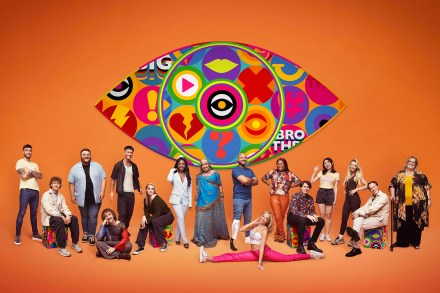
Big Brother is Nineteen Eighty-Four rewritten by Aldous Huxley. The detail that George Orwell got wrong is that far from being terrified and brainwashed into submission by Big Brother, the populace would embrace the all-seeing eye as their route to fame, prosperity and freedom. Some of the populace, at any rate. We met 16 of them – there were 30,000 applicants, allegedly – on ITV on Sunday night, mugging and pratting around and enjoying their newfound semi-celebrity en route to entering the new-look Big Brother house, vying to win a £100,000 prize and, presumably, a career in minor-league showbiz by abasing and humiliating themselves in public. Into monopede DJs with disco lights on their false leg?

Arresting visual spectacle and superb fight scenes: Netflix’s One Piece reviewed

What would you say is the most successful comic-book series in history? If you’re thinking Tintin you’re not even close. (Curiously enough, even the now largely forgotten Lucky Luke scores higher.) If you’re thinking Peanuts, you’re getting warmer. And if you named Asterix, good try but that’s only number two. No, the hands-down winner, with total sales exceeding 516 million, is a Japanese manga called One Piece. One Piece? Me neither. It’s quite unusual these days to chance upon a massive cultural phenomenon – the series has been going since 1997, with 1,093 chapters so far – of which one has never once even heard. But this, I suspect, will be the experience of most viewers approaching the Netflix adaptation.

Why I’m addicted to Australian MasterChef

Why is Australian MasterChef so much better than the English version? You’d think, with a population less than a third of ours, the smaller talent pool would make the Antipodean edition look like thin gruel. But a bit like with the cricket and the rugby, size clearly isn’t everything. UK MasterChef now resembles one of those joyless austerity dishes you cobble together from crusty leftovers you found languishing in the fridge. But the Aussie one has had my entire family addicted and yearning for more for the past fortnight. I suppose it’s partly down to the way Australia sees itself.

Enthralling: BBC4’s Colosseum reviewed

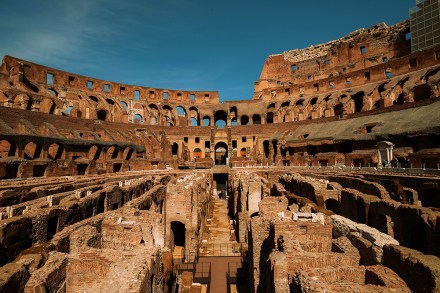
In the year 2023, the Neo-Roman Empire was at the height of its powers. A potentially restive populace was kept in check using a time-honoured technique known as ‘Bread and Circuses’. The ‘Circuses’ part consisted of a remarkable piece of technology in which spectacles could be beamed directly into the homes of the citizenry, filling them with awe, wonder, gratitude and a sense of their insignificance in the sweep of history.

Bags of charm and a gripping plot: Netflix’s The Chosen One reviewed

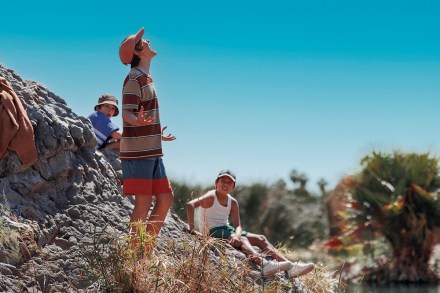
Some years ago, Mark Millar (the creator of Kick-Ass, Kingsman, etc.) hit on yet another brilliant conceit for one of his comic-book stories: a three-part series based on the premise that Bible-believing Christians are right, that the Antichrist walks among us and that only the second coming will save us – eventually – from the horrors depicted in Revelation. Since the late 1960s, screenwriters have tended to give the devil all the best tunes ‘I have nothing but happy memories of growing up as a Catholic, and I wanted to do a book about faith that was both intelligent and respectful,’ said Millar. ‘If we can do a thoughtful take on Batman surely we can do the same with Jesus?

A welcome antidote to UK crime drama: Netflix’s Kohrra reviewed

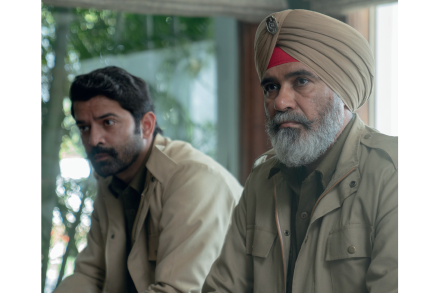
It has been quite some time since I’ve been able to bear watching UK crime drama. All right, I do cheat occasionally with series like the one featuring the delightfully grumpy, chain-smoking Cormoran Strike, but on the whole I can’t stand the mix of predictability and implausibility: all the goodies will be female and/or ethnic; the murderer will always be white, middle class and male; no one ever gets arrested for misgendering someone on Twitter because in the parallel universe of cop TV the police still actually think it’s their job to solve crimes. So, your options are either to watch classic episodes of The Sweeney or to find a cop series from one of those countries where the old values still prevail. India, for example.

University Challenge deserves Amol Rajan

I wish I could say that Bamber Gascoigne would be turning in his grave at what has happened to University Challenge. But unfortunately, I understand from people who knew the Eton, Cambridge, Yale and Grenadier Guards historian, playwright, critic, polymath millionaire and scion of the upper classes that he chose to compensate for his privilege by embracing progressive causes. So, chances are, the shade of Bamber is thrilled to bits at seeing his old quizmaster’s seat occupied by someone who drops his aitches and pronounces ‘h’ where it should be aspirated and landed a mere 2.2 from hearty, insufficiently medieval Downing. Bambi’s successor Jeremy Paxman probably isn’t too bothered either.

Eldorado

The dishonesty of Netflix’s Eldorado: Everything the Nazis Hate

From our US edition

If you don’t subscribe to every last detail of the LGBTQ+ agenda, then basically you are a Nazi. This was the subtle message of Eldorado, a documentary that pretended to inform us about the real-life background sexual milieu to Cabaret and Babylon Berlin, but was really much more interested in promoting its political view that Weimar Germany with its sexual promiscuity, rampant drug use and anything-goes view on "gender" represented some kind of paradise on Earth which we should seek to emulate. A voice-over told us what to think: "They feel intimidated by this rapid change. The pace of change is a source of frustration to just about everybody. If you’re a radical, then change is happening much too slowly for you.

Historically dishonest: Netflix’s Eldorado – Everything the Nazis Hate reviewed

If you don’t subscribe to every last detail of the LGBTQ+ agenda, then basically you are a Nazi. This was the subtle message of Eldorado, a documentary that pretended to inform us about the real-life background sexual milieu to Cabaret and Babylon Berlin, but was really much more interested in promoting its political view that Weimar Germany with its sexual promiscuity, rampant drug use and anything-goes view on ‘gender’ represented some kind of paradise on Earth which we should seek to emulate. A voice-over told us what to think: ‘They feel intimidated by this rapid change. The pace of change is a source of frustration to just about everybody. If you’re a radical, then change is happening much too slowly for you.

Ugly, mechanical, soulless: Apple TV+’s Hijack reviewed

Idris Elba would have made a perfect James Bond. Not the James Bond that we knew and loved when he was played by wry, capable Sean Connery or playful, tongue-in-cheek Roger Moore. But he definitely ought to have been a shoo-in for the horror show that the Bond franchise has become: dour, humourless, pumped up, ponderous, portentous, joyless… In his latest vehicle, Elba plays high-level negotiator Sam Nelson, an ordinary man yet possessed of a very particular set of skills.

Welcome to the jungle: how Malaysia won me over

It’s approaching 6 p.m. at the Datai on Langkawi island, the tropical sun is still warm but no longer burny, and through my binoculars from my poolside lounger I’m watching the hornbills swooping down from the tall tree opposite and the sunbirds delving their long curved beaks in to some sort of exotic, colourful flora. By my side is a barely read copy of a classic work of literature and a half-drunk cocktail. I’m not sure that life gets much better than this. And that’s perhaps the main problem with staying in arguably Malaysia’s loveliest hotel.

Netflix has struck gold: Tour de France: Unchained reviewed

I’m ideologically opposed to bicycles for all the obvious reasons: they don’t have lovely big nostrils which you can blow across gently or stroke inside to feel the soft, delicate skin; they can’t jump hedges; and the kit you’re expected to wear on them is quite hideous – not a smart, black, 18th-century-looking coat but vile, garish, deeply unflattering and unsexy Lycra. Still, after watching a few episodes of Tour de France: Unchained, I’ve softened my position slightly. Say what you like about those infuriating, car-impeding, road-hogging cyclists but the ones who participate in the big international races don’t half have some balls. (Three actually, if the stories I hear about the effects of those uncomfy saddles are correct.

Gratuitously twisty, turny nonsense: Sky Max’s Poker Face reviewed

Imagine if you had the power always to tell whether or not someone was lying. You’d have it made, wouldn’t you? The intelligence services would be queuing up to employ you for interrogations; top law firms would pay you top dollar to act as their adviser; you’d win gazillions in all the poker championships; you’d never buy a dodgy second-hand car, not that you’d need to with all that money you’d have. Admittedly, though, your life and adventures would make for a very boring TV series because everything would be so easy. Hence the tortured premise of Rian Johnson’s Poker Face, in which we are invited to believe that our heroine, Charlie Cale (Natasha Lyonne), has blown her skills spectacularly.

Spooky, classy dystopian sci-fi: Apple TV+’s Silo reviewed

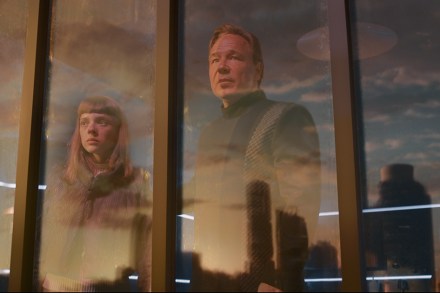
Back once more to our favourite unhappy place: the dystopian future. And yet again it seems that the authorities have been lying to us about the true nature of reality. This time – in Silo – the lie concerns the nature of the world outside the enormous silo in which our heroes and about 10,000 other survivors have been hiding for the past 100-odd years since some nameless apocalypse. Is it really as dangerous as the Powers That Be say? Or is this an illusion, maintained over a century of relentless official propaganda, designed to keep the enclosed populace frightened and in check? Silo began life in 2011 as a self-published short story by Hugh Howey – called Wool, not Silo – which he put out through Amazon’s Kindle Direct.

Purest fantasy but you’ll love it: Tetris reviewed

Tetris is a righteously entertaining movie about the stampede to secure the rights from within the Soviet Union to what would become the world’s bestselling video game. The question you’re going to be asking yourself time and again – especially during the Lada-ZiL chase scene through the streets of Moscow in which our heroes try to elude the hatchet-faced KGB agents – is: ‘How much of this is true?’ And the honest answer is: ‘Not very much, actually.