Isabel Hardman

Isabel Hardman

Isabel Hardman is assistant editor of The Spectator and author of Why We Get the Wrong Politicians. She also presents Radio 4’s Week in Westminster.

When police officers become desensitised to death

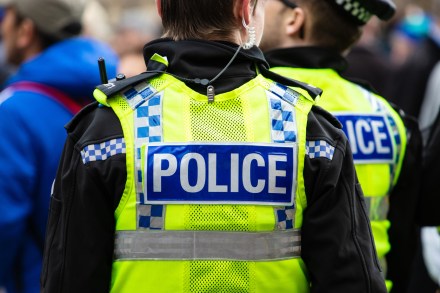
Paul Hardcastle’s son, Paul Jr, was dead when three police officers arrived on the scene of his fatal crash in Ongar earlier this year. One of their colleagues had tried to save him, but when they arrived, they started joking about his death. In bodyworn footage that was uncovered by the Independent Office of Police Conduct as it investigated the police chase of Paul Jr on his motorcycle that led to his collision with a van, the three constables laughed together as one asked colleagues if it was the wrong time to reveal that Paul Jr had complained previously that she’d failed to investigate a road rage incident. Another replied that she could ‘consider that closed’, adding ‘every cloud’.
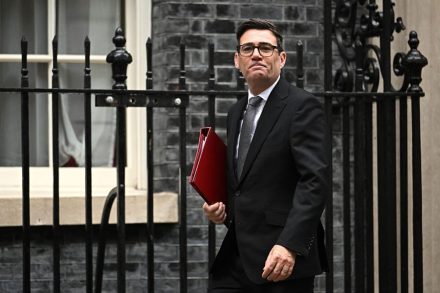
Will Burnham’s war on small irritations pay off?

Is Andy Burnham’s obsession with the small things that annoy voters really going to pay off? Sure, cracking down on loud music on buses, rip-off parking charges and sneaky extra charges by airlines make great talking points, but do they make the Prime Minister seem trivial and powerless over the big things? Kemi Badenoch certainly wants to suggest that, joking this week that ‘the Prime Minister is worrying about loud music on trains’ which was, in her view ‘not serious’.  It’s not as though Burnham is only talking about music on public transport: he started the week by talking about the need to get young people who are not in education, employment or training back into work.

Badenoch and Burnham seemed to enjoy sparring at PMQs

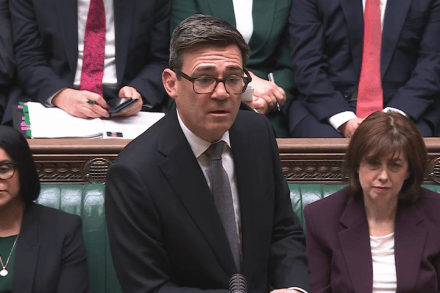
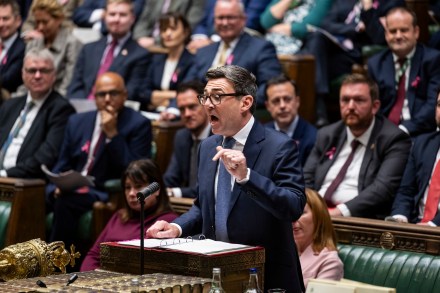
Andy Burnham had a reasonably easy Prime Minister’s Questions today. He didn’t produce any embarrassingly quotable slogans about national security not coming at the expense of social security, and neither did he appear particularly flummoxed by any of Kemi Badenoch’s attacks. The Conservative leader appeared to be enjoying herself as ever, but so was Burnham, who once again had some decent jokes about his opposite number. Badenoch opened her questions by telling the Commons that last week she had asked the Prime Minister to ‘stop faffing about’ and approve the Jackdaw gas field.

Drill Andy drill! – Burnham’s small victory

A week before the budget, and hours after ministers approved drilling at the Jackdaw gas field, Andy Burnham faced off with Kemi Badenoch at Prime Minister’s Questions in what James Heale reckons was the PM’s first win in the Commons since taking office. James and Isabel Hardman join Tim Shipman to dispute the score, pick over what Badenoch missed on welfare and immigration, and work out why John Healey’s budget may be smaller than expected.

Why are ministers ignoring the Covid inquiry?

The latest Covid inquiry report barely caused a ripple in Westminster yesterday. It’s not just that this is the sixth module of the inquiry, which has been running since 2022, but also that the report itself has offered little in the way of revelations. The care sector suffered particularly as a result of poor pre-pandemic planning. Ministers’ claim to have thrown a ‘protective ring’ around care homes was manifestly untrue. Care staff were particularly exposed, given the lack of financial support enabling them to stay away from work if they had symptoms. None of these points had escaped anyone prior to the inquiry opening, let alone before the publication of this report.

Are Andy Burnham’s loose lips becoming a problem?

Andy Burnham was already notorious before he became Prime Minister for flip-flopping, but what was less obvious until recently was how much that flip-flopping is caused by his habit of shooting from the hip initially. He says something on the spur of the moment, then finds himself having to row back because it turns out that once you're in Downing Street, everyone pays attention to your every word. He spent the end of this week insisting that he was absolutely clear on Scottish independence, having been anything but earlier in the autumn.

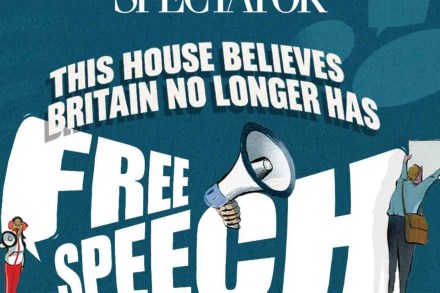
Does Britain still have free speech? | with Jonathan Sumption & Kellie-Jay Keen

24 min listen

This week, The Spectator hosted a debate on the motion: This house believes Britain no longer has free speech.Chaired by The Spectator’s Assistant Editor Isabel Hardman, the debate saw former Sun editor Kelvin MacKenzie and women’s rights campaigner Kellie-Jay Keen propose the motion, with former Supreme Court Justice Jonathan Sumption and politician and commentator Ed Vaizey arguing against it.In this episode, we hear Jonathan Sumption and Kellie-Jay Keen set out their cases before the panel goes head-to-head on cancel culture, the role of the police, overzealous lawyers and the responsibility of the press. To find out more about upcoming Spectator events, visit events.spectator.co.uk.Produced by Abigail Brierley. audio_URL:https://feeds.acast.

Does Britain still have free speech? | with Jonathan Sumption & Kellie-Jay Keen

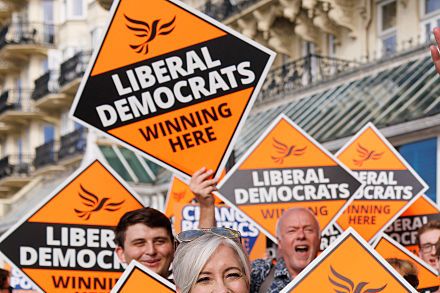
Ed Davey sees off a coup

After last night’s botched coup against the Liberal Democrat leader, Sir Ed Davey, and a rather temperate Prime Minister’s Questions in the House of Commons today, James Heale is joined by Isabel Hardman and Tim Shipman to review the events of the last 24 hours.

Burnham isn’t as tedious as Starmer. But he’s getting there

Both Kemi Badenoch and Andy Burnham had their tails up at Prime Minister’s Questions today. The two main party leaders are both happy with the way conference season has clarified the dividing lines in politics, and were therefore both content to debate welfare reform, Brexit and defence. They both felt it suited them.  Badenoch also wanted to continue embellishing her portrait of the Prime Minister as someone who shoots from the hip, using her first question to return to his comments on Russian interference in the Brexit referendum. She also pointed to delays on defence funding and welfare reform. Did the Prime Minister ever grow tired of putting his foot in his mouth, she asked.

On mental health treatment, the middle ground is right

British healthcare moves in pendulum swings between one extreme and another, often without much material improvement for patients. Just look at how maternity care swung from mostly at home and assisted by midwives before the start of the NHS, to highly-medicalised and doctor-led by the 1960s, and back to a focus on ‘normal birth’ and reducing caesarean rates in more recent years. Very little of that has really helped the women and babies at the centre of the debate. The same is true in mental health, where we have swung from institutionalisation to care in the community without proper resourcing for either, and from stigma and silence to social normalisation, all without many material improvements for the people suffering from severe conditions.

Why Labour doesn’t want to talk about NHS waiting lists

Remember NHS waiting lists? They used to be a political priority for the Labour government, which would claim it was meeting its targets on getting the length of the lists and the amount of time patients were waiting down. Strangely, that chat has all but disappeared lately. Today’s waiting list data from NHS England underlines why. The number of people waiting for elective treatment on the NHS has gone up for a second month running, this time to 7.37 million treatments at the end of August. It’s the highest since October 2025, and the health service’s national medical director Professor Frankie Swords has warned that there are ‘ominous signs of early pressure’ ahead of the traditional winter high demand that the health service experiences.

Why won’t Burnham release the Neets report?

Why has Andy Burnham delayed the publication of Alan Milburn’s review into Neets until after the Budget? The review is something the Prime Minister and his Labour colleagues cite repeatedly as evidence that they are taking the problem of youth unemployment seriously – and yet they seem not to want to take it seriously enough to actually publish the document. It’s almost as if its main purpose is to exist as a future prospect, rather than a real, physical report that would require action from ministers. Much of politics today exists in this illusion of action trap, where the mere existence of a report, royal commission or public inquiry allows leaders to kid themselves and others that they are taking an issue seriously.

The Tory party has a long way to go before it’s election-ready

This year’s Conservative party conference contains a number of examples of a party having some genuinely original thoughts, rather than just running along the same tramlines as everyone else. The Bayeux Tapestry parody that the party has produced in order to attack its opponents is striking because it is a much more creative attack job than the usual amusing mugs, beers and T-shirts that you can normally pick up at a conference. On a much more serious level, Kemi Badenoch’s The Right Way pamphlet is an attempt to show the leader’s working on the big issues facing the country, rather than simply presenting a suite of policies as a fait accompli.

The urgent questions Burnham still needs to answer

Andy Burnham gave Labour activists fire in their bellies at the Labour party conference this week, showing them emotion and a sense of purpose that they’ve not really seen from a party leader in a good while. Tory party leader Kemi Badenoch won’t respond with a similar level of emotion: that’s just not how she’s built as a person. As she says to Tim in this week's magazine, she wants to be ‘the person saying “No”’, the people displeaser. It won’t just be a battle of ideas in politics this autumn, but also a battle of behaviour. But for every bit of energy that Burnham has given his party, he is still going into the autumn with the big, urgent questions unanswered. How is he really going to fund defence? How does he really propose to cut welfare?

Can Andy keep up with his promises?

Andy Burnham delivered his first conference speech as Prime Minister in Liverpool yesterday, promising a sweeping expansion of public services and a fresh look at Brexit, to warm reviews from the hall. Patrick Gibbons is joined by Isabel Hardman and Claire Ainsley, Sir Keir Starmer's former director of policy, to weigh up what was promised and how the party is taking it.

Burnham’s tears alone won’t push through social care reform

Normally when politicians really cry, it’s because they’re on their way out of a big job, rather than just getting settled. Today, Andy Burnham cried on stage at the Labour conference as he explained what he wanted to do and why he wanted to do it. He was talking about his father Roy, who died earlier this month. He told the conference hall that on the day of his father’s death, John Swinney had said that Burnham would be the last prime minister of the United Kingdom. He suspected that the First Minister of Scotland hadn’t yet heard the news of his bereavement, he added, but ‘I want you to know how it made me feel – utterly determined to prove him wrong’.

The problem with Burnham’s specialist rape courts pledge

The meltdown in the criminal justice system has been particularly egregious for victims of rape and sexual violence. They have been forced to wait years for their cases to come to trial, which means they have very little prospect of being able to recover fully from the trauma in the meantime. Their memories are also affected by the passing of time, which doesn't serve them or the wider principle of justice at all, given it undermines the quality of the evidence being heard when the case does eventually reach a court room.

Rebranding net zero is daft

Would renaming the Department for Energy Security and Net Zero really make it easier for the government to persuade the public of the benefits of net zero? The select committee with the same name seems to think so, warning in a new report that the current messaging on the energy transition at the moment is ‘overly technical’ and that the ‘term net zero has lost much of its significant positive association’. The cross-party committee of MPs, chaired by Labour’s Bill Esterson, adds: ‘It increasingly acts as a distraction from the broader aims of the energy transition and as a lightning rod for opposition to climate action.

Why the Lucy Letby Inquiry won’t change the NHS

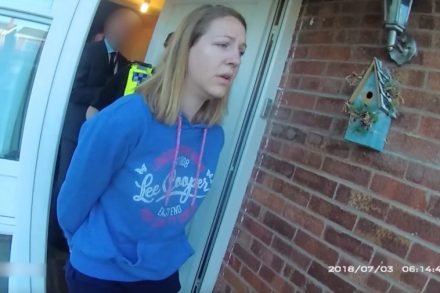
It’s unlikely the families of the babies Lucy Letby was convicted of murdering at the Countess of Chester Hospital will get any closure from today’s Thirlwall Inquiry report. Public inquiries generally don’t offer victims closure, even though many of them campaign for one to be set up in the hope of just that. They often lead to far less change than campaigners have asked for – and that is particularly so in the NHS. In this case, though, there is still a live debate about the convictions themselves, which means even less closure. The inquiry finds serious dysfunction in the hospital that should have been prevented.