
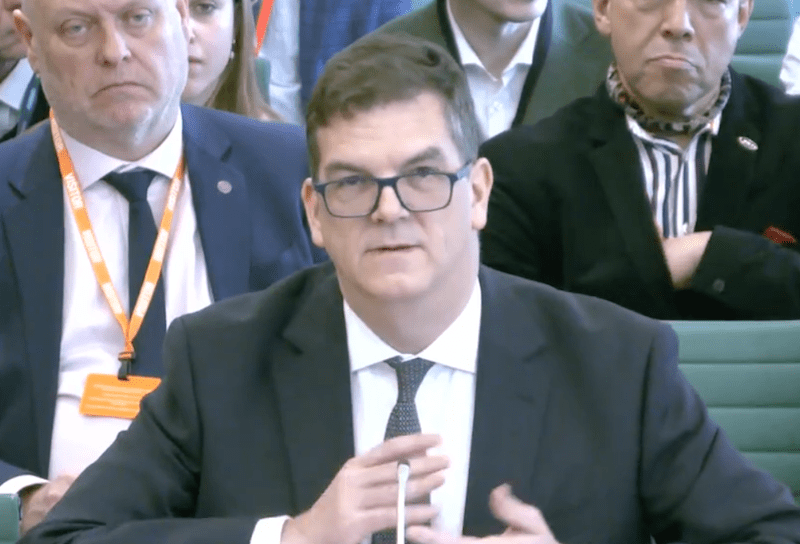
Sir Olly Robbins dropped a series of political bombs throughout his evidence session on Peter Mandelson to the Foreign Affairs Committee. Like all civil servants, he did so in exactly the same calm, polite tone of voice as he would have used when talking about something boring, but the content of that evidence was anything but. It was seriously damaging for Keir Starmer – and it wasn’t just about Mandelson.
The former permanent under-secretary at the Foreign, Commonwealth and Development Office (FCDO) told MPs within minutes of starting his session that, when he began the job, ‘I walked into a situation in which there was already a very, very strong expectation’ that Mandelson needed to be in America ‘as soon as possible’. He accused the government of a ‘generally dismissive attitude to his vetting clearance: the focus was on getting Mandelson out to Washington as quickly as possible’.
On Mandelson, the Prime Minister’s version of events has been seriously challenged
He described an ‘atmosphere’ of pressure and phone calls asking when the vetting would be completed and suggested to the committee that they should take more evidence on whether it really was clear that Mandelson’s appointment was subject to vetting. He also described a stand-off between the Cabinet Office and the FCDO over whether developed vetting was even required – one he said the FCDO won. He also said that he felt ‘sad’ that despite due diligence taking place before the appointment, ‘that the Prime Minister’s nominee went ahead’. He added that:
I regret that the due diligence process, which threw up serious reputational risks, didn’t colour the Prime Minister’s judgement.
When Robbins arrived in the Foreign Office, Starmer had already announced Mandelson’s appointment. Mandelson had been given access to the building, to low-level documents, and, on occasion, to ‘higher classification briefing’ material too.
But it wasn’t just about the demands from Downing Street to get the Mandelson vetting over the line. Later in the session, Robbins casually let off another explosion, telling the committee that in March last year:
There had been several discussions initiated in No. 10 about me potentially finding a head of mission opportunity for Matthew Doyle.
Robbins said he had been ordered by No. 10 not to tell the Foreign Secretary about this process.
That – for those not fully acquainted with Whitehall jargon – meant Downing Street was keen to move Doyle, then their outgoing director of communications, to an ambassador or high commissioner role. Robbins said mildly that he would have found it ‘quite hard’ to ‘explain to the office what the credentials of Matthew Doyle to be in a head of mission role’ would be when he was also in the middle of restructuring the department where senior and experienced diplomats were losing their jobs.
Once again, Robbins delivered all this in the same tone of voice as he might when discussing a typo on the gov.uk website or a problem with a filing cabinet.
What is the impact of this session? It means that Starmer now has to answer questions not just about Mandelson but also about a ‘jobs for the boys’ culture in Downing Street that led to civil servants coming under pressure to keep information from their own secretaries of state.
On Mandelson, the Prime Minister’s version of events has been seriously challenged. Robbins disagreed openly with Starmer’s claim that he should have been given more details of the vetting, saying:
I hope it’s clear from everything I’ve said so far that I believe that’s a misunderstanding and a dangerous misunderstanding of the necessity of the confidentiality of the process.
Robbins explained that ‘you are not supposed to share the findings and reports of UKSV other than in the exceptional circumstances where doing so allows for the specific mitigation of risk’. The very allegations of a ‘dismissive’ approach to the vetting process are damaging for the Prime Minister, given his own pomposity about following due process and doing the right thing. Robbins did, nevertheless, agree that Starmer was right to say ‘due process’ had been followed in this case around the disclosure of the vetting material.
What Robbins has fatally undermined is the suggestion from Starmer that he would never have appointed Mandelson if he’d been aware of the concerns in that vetting material. Of course, that suggestion has always been a weak one: Mandelson was a man who came with the concerns about him in neon lights, not just buried in a Whitehall report.
Would Starmer have really blocked Mandelson’s appointment? Tim Shipman discusses the vetting row on the latest Coffee House Shots podcast:




Comments