Isabel Hardman

Isabel Hardman

Isabel Hardman is assistant editor of The Spectator and author of Why We Get the Wrong Politicians. She also presents Radio 4’s Week in Westminster.

The exodus of experienced MPs will only hurt parliament

Are MPs really fleeing parliament in their droves, having decided that it's just too mean and dysfunctional a place to stay? There have been so many resignations over the past couple of weeks that you might be forgiven for wondering if there will be any MPs, let alone women MPs, in Westminster at all after the next election. There are currently 61 MPs who've said they won't fight again at the next election, double the number who stepped down two years ago in 2017. If you combine these two snap elections, the figure only just passes the 90 who stood down in 2015, which was considered a fairly normal number. So there isn't a horde of members deserting a sinking ship.

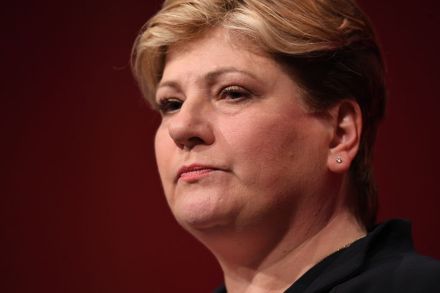
Cabinet minister Nicky Morgan announces she’s quitting as an MP

Nicky Morgan has announced she is standing down as a Conservative MP at the next election. She isn't the first to say she's off, but what's different about this resignation is that Morgan is a serving member of Boris Johnson's cabinet. In her resignation letter, she cites the need to send more time with her family - and the toxic political environment: 'But the clear impact on my family and the other sacrifices involved in, and the abuse for, doing the job of a modern MP can only be justified if, ultimately, Parliament does what it is supposed to do - represent those we serve in all areas of policy, respect votes cast by the electorate and make decisions in the overall national interest.

Amber Rudd’s treatment is a warning to Tory MPs

Amber Rudd was one of the more high profile ex-Tory MPs, quitting the cabinet and the party whip in protest at the way her colleagues who had rebelled on taking control of the order paper had been treated. It is therefore particularly awkward that her status has become the subject of such controversy. This morning, it seemed the Hastings and Rye MP was headed back into the party fold along with the ten colleagues who were handed the whip back last night. Then she announced she was standing down as an MP but hoped to do so with the whip back in place after a ‘good meeting with the Prime Minister’. But shortly after this, Tory chief whip Mark Spencer sent her a letter telling her she wouldn’t be getting the whip back after all, because he didn’t trust her.

Why would anyone normal want to be an MP?

Heidi Allen has announced she is standing down at the election, citing the culture of abuse and intimidation in politics as one of the reasons. In a letter to her constituents, she writes: 'I am exhausted by the invasion into my privacy and the nastiness and intimidation that has become commonplace. Nobody in any job should have to put up with threats, aggressive emails, being shouted at in the street, sworn at on social media, nor have to install panic alarms at home. Of course, public scrutiny is to be expected, but lines are all too regularly crossed and the effect is utterly dehumanising. In my very first election leaflet I remember writing "I will always be a person first and a politician second" - I want to stay that way.

Brace yourselves for a dismal election campaign

Would anyone want an election after witnessing this afternoon’s Commons debate on the matter? Both Boris Johnson and Jeremy Corbyn have just produced rambling, slightly nonsensical speeches arguing their corner. The Prime Minister wants an election. The Leader of the Opposition does not. Neither offered much that was convincing to support those stances.  Johnson’s main theme was that ‘this Parliament has run its course’. This would have made more sense had the government not held a Queen’s Speech introducing its new legislative agenda just two weeks ago.

How Boris’s opponents are making this week much easier for him

The stronger the prospect of a general election, the easier it will be for Boris Johnson to get through the week that Britain was supposed to be leaving the European Union. He had said he would rather 'be dead in a ditch' than miss the deadline, but is now taking a two-pronged approach to distracting everyone from the fact that Thursday will come and go, and Brexit will still not have happened. The first part of this plan is to make sure that it is clear parliament is to blame for missing the 31 October deadline, rather than the Prime Minister who placed so much emphasis on it. So the repeated message from Johnson and his allies is that 'this parliament is broken' and that the 'country is being held hostage'.

How Keith Vaz tried to avoid punishment by claiming male escorts were ‘decorators’

Keith Vaz is facing the longest suspension in history after the Commons Standards Committee found he had breached the MPs' Code of Conduct by paying two male escorts for sex and offering to cover the cost of cocaine for a third man. The Committee - which is made up of MPs and lay members, said he had 'caused significant damage to the reputation and integrity of the House of Commons as a whole', and said it represented 'a very serious breach of the Code'. This brings to an end a row which has gone on since August 2016, when Vaz met the two men in his flat. One of them was covertly recording the encounter, and the story was printed by The Sunday Mirror. It included Vaz describing himself as a washing machine salesman named Jim (which he spelt for the men).

Number 10 drops its threat to go ‘on strike’

One of the defining themes of this week has been the government threatening to do something dramatic, before manifestly not carrying out that threat. We’ve had No. 10 sources claiming Boris Johnson would pull his Withdrawal Agreement Bill if MPs voted down the programme motion, only for the Prime Minister to announce he is 'pausing' it, before then making a bid to the Labour Party to resurrect the legislation with a longer timetable. We’ve also seen the demise of Johnson’s claim that he would rather be found 'dead in a ditch' than delay Brexit beyond 31 October. Though the Prime Minister hasn’t openly acknowledged that he’s missing the deadline, his 12 December election bid was an attempt to move the conversation straight past an awkward admission.

Caroline Flint: why I’m backing this Brexit deal

Nothing in Caroline Flint’s CV would have marked her out as someone who would end up marshalling 19 of her fellow Labour MPs through the ‘aye’ lobby to vote for Boris Johnson’s deal. One of the original ‘Blair babes’, she went on to become Gordon Brown’s minister for Europe. She campaigned for Remain in the referendum but this week she ended up telling MPs that ‘the EU is not God’ while fending off accusations that she is the devil. One commentator called her ‘a heroine for those seeking to turbo-charge Thatcherism’. He didn’t mean it kindly. When we meet in her office, on another one of the supposed Brexit make-or-break days, she is preparing for further battle.

Boris Johnson is dodging scrutiny – but so are MPs

Boris Johnson has cancelled his appearance before the Commons Liaison Committee tomorrow morning, arguing that he feels he should devote himself to trying to secure a Brexit deal. In a rather last-minute cancellation, the Prime Minister has written a personal note to the Committee's chair Dr Sarah Wollaston in which he argues that it would be much better for the MPs to question him when he has been in the job for five to six months, as it did with his predecessors. This is a valid argument, but it would carry more weight if Johnson had made it from the outset, rather than at the sort of time that students start trying to come up with slightly daft-sounding excuses for not handing in an essay that was set months ago.

The clumsy whipping operation playing out in parliament

The debate on the Withdrawal Agreement Bill is as noisy as you might expect, given how high emotions are on both sides. What is less predictable is whether MPs will be debating the legislation tomorrow, or whether the government will pull the bill after losing its programme motion vote tonight.  It’s not clear where the numbers are for this vote on the timetable for scrutinising the legislation. But the Tories have made the threat of pulling the legislation after a defeat and moving to an election. Behind the scenes, whips and No. 10 aides are working feverishly to try to shore up their support, not just from Tory MPs but also those on the opposition benches.

Will MPs block the government’s mad dash to get the Withdrawal Agreement Bill through?

Appropriately, given the length of time it has taken politicians of all colours to continue putting off taking any sort of decision on Brexit, the government has decided to try to break the legislative speed record this week by rushing through the Withdrawal Agreement Bill in just a few days. Leader of the House Jacob Rees-Mogg announced the timetable for the legislation in a business statement to the Commons this afternoon, telling MPs that they will be rattling through the second reading tomorrow, as well as starting the committee stage, which will continue the following day, with all Commons stages wrapping up by Thursday. There are threats to make MPs sit until midnight in order to meet this timetable, which is extraordinarily brisk for such a landmark piece of legislation.

Why everyone benefitted from Bercow’s refusal to allow today’s meaningful vote

It was hardly a surprise that this afternoon John Bercow ruled out allowing the government to bring back its meaningful vote on Brexit. Still less of a surprise that this ruling took up nearly an hour in the Commons of points of order from MPs on all sides making points which changed the minds of no-one, and certainly not the Speaker. The Speaker's argument was as the one the Tories had been preparing for over the weekend: he ruled that it would be 'repetitive and disorderly' to hold a second vote on the same motion. What they perhaps hadn't prepared for was the Speaker doing a series of impersonations of former parliamentary greats such as Tony Benn and Willie Whitelaw. Nevertheless, the session went well for almost everyone there.

The question for wavering MPs: do they really trust Boris Johnson?

Boris Johnson is still pursuing today's vote as a decisive moment for the Brexit deal, rather than the start of yet another delay, with the Letwin amendment meaning the real meaningful vote could be moved to Tuesday. His opponents are speaking in a similar vein, framing the choice facing those MPs yet to make up their minds as being one concerning how trustworthy the Prime Minister is. Perhaps the most powerful argument against trusting Johnson came from DUP Westminster leader Nigel Dodds, who told the Chamber that: 'It was once said that no British prime minister could ever agree to such terms and indeed those who sought the leadership of the Tory party said so at our conference'.

Boris Johnson ‘very confident’ MPs will back his deal

Boris Johnson has just given a very upbeat press conference about his Brexit deal, despite the DUP being clear that they will not back it. The Prime Minister hinted that he would be seeking the support of MPs across the Commons instead, saying: 'I'm very confident that when MPs of all parties look at the deal, they will see the merit of supporting it, getting Brexit done on October 31st, honouring the promises that were made repeatedly and giving us all the chance to move on'. Downing Street is working hard on Labour, independent and ex-Tory MPs to try to garner their support, and Johnson tried to address some of the concerns set out by Jeremy Corbyn about protections for workers and the environment. He told journalists that the government had made 'commitments gladly' on these issues.

The shifting Tory dynamics behind the party’s Brexit deal dilemma

It is not currently looking hopeful that Boris Johnson's Brexit deal will pass in the Commons. The Prime Minister will need to convince a good number of Labour MPs and independents in order to get over his lack of a majority and the DUP's current refusal to support the government. There are also a number of internal Tory dynamics at play here. The European Research Group has not yet announced its official position on Boris Johnson's Brexit deal, but already there is a strong chance it could diverge from the DUP. The Brexiteer group was split at the third vote on Theresa May's deal, with dozens of its members voting with the government rather than following the DUP into the 'No' lobbies.

Will Labour MPs do anything now Louise Ellman has quit?

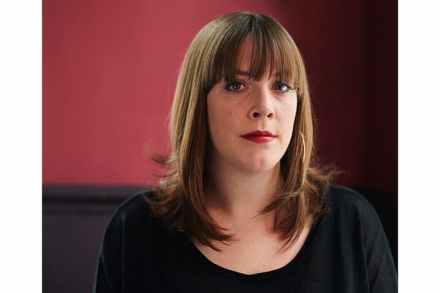
Another female Jewish MP has left the Labour party, apparently bullied out of the movement she has worked in for decades. Louise Ellman, MP for Liverpool Riverside, announced in a letter last night that she 'cannot advocate a government led by Jeremy Corbyn' because he 'is not fit to be Prime Minister'. She complains that 'anti-Semitism has become mainstream in the Labour Party' and that the leader 'has attracted the support of too many anti-Semites'. It is a damning letter, and one that has widely been tweeted by the colleagues Ellman has left behind as proof that something needs to change in the party. The problem is that we've seen this before: the same MPs made the same sort of comments when Luciana Berger quit earlier this year.

John McDonnell is taking back control

Over the past few weeks, rumours have swirled in Westminster that the Labour party has acquired a new leader — that John McDonnell, the shadow chancellor, has almost completed a long, stealthy campaign having stolen more and more power from his beleaguered and exhausted boss. While there has been no announcement, plenty in the party believe that there certainly has been regime change: Corbyn in office, but McDonnell in power. While Corbyn has always seemed like an eccentric grandad who potters about in his allotment, there is something steely and not altogether comforting about McDonnell.

Did anyone take the Queen’s Speech seriously?

If today's Queen's Speech was meant to offer a preview of what the next general election and life after it will look like, you might be forgiven for wishing you were somewhere far, far away from British politics. The debate in the House of Commons this afternoon was turgid and pointless. It was almost as if everyone involved couldn't quite be bothered to rise to the occasion of a new legislative programme because they knew that it was more of a political messaging operation. Jeremy Corbyn gave one of his least convincing speeches as Leader of the Opposition, which is plumbing quite some depths. He managed to both dismiss the whole event as a charade, while indulging in line-by-line analysis of the Speech.

Can ministers really hold their nerve on Brexit this week?

Boris Johnson is now in what's known in cricket as the 'Nervous Nineties', when a batsman becomes so anxious about reaching his century that he takes unusually conservative decisions - or is so nervous he accidentally gets himself out. We are now in what could be the final few days of the Brexit negotiations, and the Prime Minister is trying to be unusually cautious about what's said and done. Ministers are being urged to hold their nerve rather than make comments which could push the talks off course, and No. 10 is remaining very tight-lipped. In a cabinet call this afternoon which a number of ministers described as 'businesslike', Johnson updated his top team but made clear that there wasn't a great deal to say at this time.