Isabel Hardman

Isabel Hardman

Isabel Hardman is assistant editor of The Spectator and author of Why We Get the Wrong Politicians. She also presents Radio 4’s Week in Westminster.

Emily Thornberry’s leadership pitch: Corbynism, but neater

Emily Thornberry is the straggler in the Labour leadership contest. Unlike Keir Starmer and Lisa Nandy, she's not going to get on the ballot with trade union nominations. She currently only has two nominations from constituency Labour parties, and doesn't poll well with members. She needs a breakthrough moment - or at least an explanation of why she's standing. This evening she had her grilling with Andrew Neil, where she struggled once again to explain how she would take the Labour Party on a different course, away from its catastrophic election defeat. Her main pitch seems to be that a Thornberry-led party would be Corbynism but without the disorganisation.

Hall of Shame: How three Tory MPs wasted time at PMQs

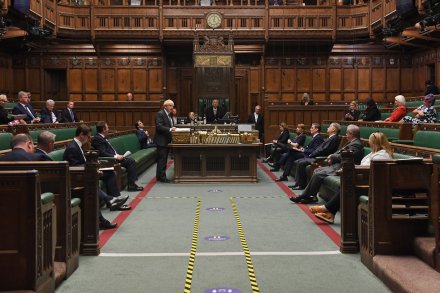
Speaker Lindsay Hoyle is very keen that Prime Minister's Questions last its allotted half an hour, rather than turning it into the hour-long drone-fest that John Bercow indulged in during his tenure. Today he had to cut off one MP who was asking a question that wasn't just pointless (the Speaker doesn't adjudicate on the quality of interventions, more's the pity), but that was also taking longer than one of Bercow's famous soliloquies about himself. This most pointless question of the session - indeed the year so far - came from new Tory MP Sarah Dines, who asked this: 'My right hon. Friend will know that the quarries of the Peak district provide a huge proportion of the national building and mineral needs of this great nation.

What is Lisa Nandy’s route to victory in the Labour leadership contest?

With Lisa Nandy making it onto the ballot paper in the Labour leadership contest, the competition has just got rather less predictable. It had previously been assumed that the final fight before the membership would consist of a battle between Corbynism and not-Corbynism in the form of Rebecca Long-Bailey vs Keir Starmer. Now, presuming Long-Bailey makes it too, there will be a much wider debate. So far, though Nandy hasn't had any nominations from constituency Labour parties, while Starmer and Long-Bailey have got 15 and five respectively. While they don't need to get the required 33 CLPs if they already have three affiliate organisations, including two trade unions, the candidates will still want to show they have local party support.

Jess Phillips drops out of the Labour leadership race: what went wrong?

In the past few minutes, Jess Phillips has confirmed that she is pulling out of the Labour leadership race, saying the party needs a candidate who can unite people across its movement. In a video message, she said: 'I have to be honest with myself, as I said I always would be throughout this campaign, that at this time that person isn't me. In order to win the country, we need to find a candidate in this race who can do all that and then take that message out to the country of hope and change for things to be better.' https://twitter.com/jessphillips/status/1219635765698678784?

Keir Starmer makes it onto the Labour leadership ballot: who else will join him?

Keir Starmer has made it through to the final round of the Labour leadership contest, having secured the backing of shop workers' union Usdaw. The party's rules state that a candidate needs to get the backing of three affiliated organisations, of which two must be trade unions (or the nomination of at least 33 constituency Labour parties), and along with the earlier backing of Unison and Labour's Environment Campaign SERA, Starmer has made it. Usdaw also nominated Angela Rayner for the deputy leadership, and she is now also through to the final round of her contest. This is a big week for nominations from affiliates, with both the GMB and Unite unions holding hustings with the candidates on Tuesday and Friday respectively.

Jess Phillips vows to toughen up her approach to the Labour party

Jess Phillips' campaign slogan is 'speak truth, win power', but in yesterday's party hustings, she seemed to think that the extent of the truth that the Labour Party needs to hear is that it needs to win elections again and it had a few duff ideas in its manifesto that voters didn't believe. The candidate herself didn't appear happy with her performance when she popped up on Pienaar's Politics this morning, confessing: 'I think that maybe I have started to decline in telling people what they don't want to hear a little bit and I decided yesterday after the hustings the I'm going to actually just be myself again.

Leadership hopefuls play it safe at Labour’s first hustings

The first hustings of the Labour leadership campaign was not particularly inspiring. It did not suggest that any of the candidates either believed their party would win the next election or that they were capable of telling the membership what it really needs to hear in order to get as close as possible to winning. One of the problems was the format: candidates had 40 seconds to answer each question and couldn't interrupt one another or take one another up on points they had made. It meant everyone could make their point properly, which was useful, but it also took a lot of the energy out of the session, and the leadership hopefuls struggled to inject their own passion.

Is Labour heading for another Kinnock moment?

'You end in the grotesque chaos of a Labour council – a Labour council - hiring taxis to scuttle round a city handing out redundancy notices to its own workers.' One of Neil Kinnock's most famous and admirable moments was when he turned on the Militant tendency in his party from the stage at the 1985 Labour conference in Bournemouth. When he reached this section in the speech, he was heckled from the floor by Derek Hatton, the deputy leader of Liverpool Council, who called him a 'liar' for his attack on Liverpool council's conduct. Kinnock then addressed Hatton directly, saying: 'I'm telling you, and you'll listen - you can't play politics with people's jobs and with people's services or with their homes.

MPs need an alternative career path to just becoming a minister

Parliament feels rather quiet at the moment, and it's not just because there are no longer constant knife-edge votes on Brexit. One of the reasons there is less bustle is that select committees aren't currently meeting, because they need to be re-elected at the start of the new parliament. There are quite a few vacancies, as well as committees where there is a chair still in parliament but a chance someone else could contest the spot. Tory MPs are jostling to head up the Transport Select Committee, not least because this policy area will be such a big part of the work the new Conservative majority government does over the next few years. There are big decisions coming up on the Northern Rail franchise, for instance.

Rebecca Long-Bailey narrowly ahead in new Labour leadership poll

Do we already know the top two candidates in the Labour leadership contest? Tonight a poll by Survation for LabourList puts Rebecca Long-Bailey narrowly ahead of Keir Starmer for first preference votes on 42 per cent and 37 per cent respectively. There is a huge gap between these two and the other contenders: Jess Phillips is on 9 per cent, Lisa Nandy on 7 per cent and Emily Thornberry on 1 per cent. The most powerful effect of a poll like this would be to polarise the contest so that members who want to stop the continuity Corbyn candidate, who is Long-Bailey, will think that Starmer is the only game in town.

Hall of Shame: This week’s pointless questions at PMQs

There were two obviously planted questions at today's Prime Minister's Questions. Both were clearly designed to help the government with its very tricky forthcoming decision on Huawei helping build some of the UK's 5G infrastructure. Both pointed towards the government taking the decision in favour of Huawei, despite American entreaties to the contrary. The first came early doors in the session, with Sir Geoffrey Clifton-Brown asking: 'The Conservative manifesto promises in relation to roll out of broadband and mobile phone signal are incredibly welcome, but would my right hon.

Inside the Labour leadership campaigns: who is running the show?

Now that the second phase of the Labour leadership contest is underway, the five candidates are finalising their campaign teams. Some of them, of course, have had some kind of infrastructure running for a good long while before the December election was even called. Others are just announcing their big hires and co-chairs now. Here's who is working on each campaign, and what the line-up says about the pitch their candidate is making. Keir Starmer Jenny Chapman is the chair. She is the former MP for Darlington, in a nod to the importance of winning back seats Labour had formerly considered its heartlands. Her analysis of the election result is that Labour only pitched to 'about a third of the electorate and those people that live in cities who are fairly well-off people'.

Emily Thornberry scrapes through in the Labour leadership contest

Emily Thornberry has made it through to the second round of the Labour leadership contest, having secured the required number of nominations from MPs and MEPs at the eleventh hour. As I explained this morning, Thornberry had struggled to gain support from colleagues because of strained interpersonal relationships and her - somewhat unfair - reputation for sneering at working class voters. But her claim yesterday that she did have the numbers to get her over this threshold turned out to be true, and she will be the fifth candidate to go through to the next round. The others are Keir Starmer, Rebecca Long-Bailey, Lisa Nandy and Jess Phillips. Clive Lewis pulled out shortly before the 2.30pm deadline.

Why is Emily Thornberry so unpopular with Labour MPs?

There’s a dramatic day ahead in the Labour leadership contest, with the first stage of the process closing this afternoon. The candidates must have secured the nominations of at least 22 MPs or MEPs by 2.30pm in order to proceed to the next step. And while Keir Starmer, Rebecca Long-Bailey, Jess Phillips and Lisa Nandy have all passed that threshold, Emily Thornberry and Clive Lewis are desperately trying to persuade colleagues to back them in the next few hours. Thornberry seems more confident than Lewis that she’ll make it.

Why Hague and Jolie’s sexual violence scheme went wrong

If you needed an illustration of why short-termism in politics is a very bad thing, look no further than the report from the Independent Commission for Aid Impact today into the UK government's preventing sexual violence in conflict initiative. This is more popularly known as William Hague and Angelina Jolie's drive to end rape as a weapon of war, and garnered huge attention when the pair launched it back in 2012. Their aims were noble: to bring to justice those using sexual violence in conflict, to prevent such crimes from happening in the first place and to reduce stigma for survivors. But the report from the ICAI on whether those aims were realised makes miserable reading. The campaign didn't meet its objectives and may have even harmed some of the survivors it worked with.

What’s behind Barry Gardiner’s botched ‘leadership campaign’ launch?

Is Barry Gardiner running for Labour leader or not? The question is almost as confusing as whether Prince Harry and Meghan Markle have resigned from the Royal Family. In the former case, two journalists had the story that Gardiner was standing and would be backed by Len McCluskey, who has become unhappy with Rebecca Long Bailey's current prowess. In the latter, the couple issued a statement saying they would step back as 'senior royals' and work to become financially independent. But then in both cases, the story took a very awkward twist. Buckingham Palace then issued a statement saying the discussions were at an 'early stage', with briefings suggesting the couple hadn't consulted any other royals on their announcement.

Hall of Shame: The most pointless questions at PMQs

Prime Minister's Questions might be shorter now that Lindsay Hoyle is the Speaker, but that doesn't necessarily mean that the quality of the session is any better. There are still MPs who don't really see it as an opportunity to ask the Prime Minister a question, preferring instead to compliment him. Today's worst offender was Michael Tomlinson, the Conservative MP for Mid-Dorset and North Poole, who asked this: 'For social justice, for life chances, for opportunities for the next generation, education is the key, and that is why the Prime Minister’s pledge for additional funding is so welcome, especially for historically underfunded areas such as Dorset and Poole; but equally important are discipline and standards.

Keir Starmer wins big union backing in Labour leadership contest

Keir Starmer, clearly the frontrunner in the Labour leadership contest, has just secured the backing of trade union Unison. This is the first union endorsement in the contest and is a huge boost to a campaign that is already going very well. Unison was among Jeremy Corbyn's backers in the 2016 contest, and has the potential to deliver more votes than the other affiliated trade unions. Starmer is also steaming ahead with nominations from MPs and MEPs, with 23 members publicly backing him. Far behind him in second place is Rebecca Long Bailey, with seven nominations currently.

Did Boris dodge Corbyn’s questions on Iran?

Why didn't Boris Johnson update the Commons on the tensions between Iran and the US, instead of sending his Defence Secretary Ben Wallace to give a statement this afternoon? Jeremy Corbyn thought this was worth complaining about when he responded, telling the Chamber that the Prime Minister was 'hiding behind his Defence Secretary'. He demanded that Wallace explain 'where the Prime Minister is and what he is doing that is so much more important than addressing parliament on the assassination of Iranian General Qassem Suleimani’. Wallace's retort was that Johnson was 'running the country'. He also accused Corbyn of producing 'the usual tripe about "this is about Trump, this is about America",' which he described as being 'all the usual anti-imperialist guff'.

How will new Tory MPs deal with constituency problems?

MPs are back in Parliament today after the Christmas recess, and for some of them, this is the first real week of work after spending their first few days in the Commons reeling after winning their seats. New MPs are still waiting to be given offices, and are starting to hire new staff so they can start up with constituency work and trying to understand what's happening next on the parliamentary agenda. All new members go through a period of trying to work out what sort of MP they're going to be, but it's a particularly interesting question for the Conservative MPs who won former Labour 'red wall' seats in the December election.