Isabel Hardman

Isabel Hardman

Isabel Hardman is assistant editor of The Spectator and author of Why We Get the Wrong Politicians. She also presents Radio 4’s Week in Westminster.

Can Boris really run the country from his hospital bed?

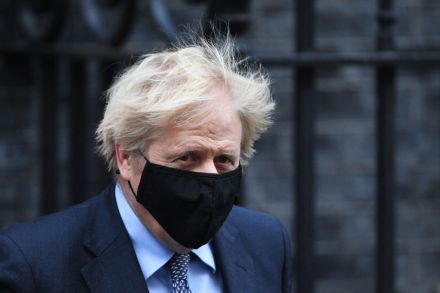
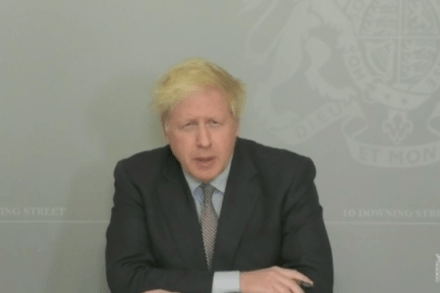
Despite many of his colleagues urging him to take a step back and rest now that he is in hospital, Boris Johnson is continuing to receive his red box of papers while being treated for the persistent symptoms of coronavirus. The Prime Minister’s official spokesman told journalists this lunchtime that the PM ‘remains in charge of the government’, that he has been in touch with No. 10 colleagues, and that he ‘had a comfortable night and he is in good spirits’. Given how sick patients tend to be by the time they are admitted to hospital, it sounds rather odd that the Prime Minister is really attempting to work while receiving treatment. No.

Does Matt Hancock really think banning all exercise is a good idea?

Matt Hancock has threatened that the government will ban all forms of outdoor exercise if a ‘minority’ of people continue to ignore social distancing rules. Ministers had been worrying that this weekend, which is sunny and warm, would see people trying to get around the lockdown by congregating in parks. Yesterday there were reports – not all of them hugely reliable or conclusive – of large numbers of people turning up to their local parks, with police forces dispersing groups and stopping people from sunbathing. Lambeth Council has announced Brockwell Park in London will be closed today after too many people converged on it.

How will Keir Starmer use his ‘huge mandate’ to lead?

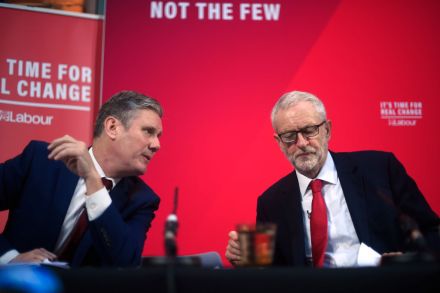
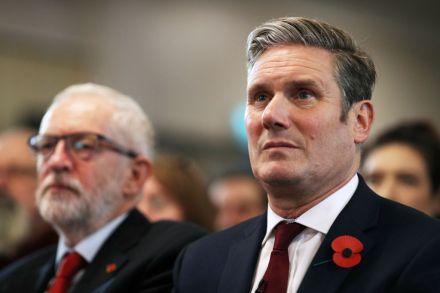
After both his victories in the two Labour leadership elections he faced, Jeremy Corbyn boasted about his 'huge mandate' from members to reshape the Labour Party. Today, Sir Keir Starmer has a similarly resounding backing from the party as leader: he won 56 per cent of the vote in the first round, compared to Corbyn's 59 per cent and 61 per cent in 2015 and 2016 respectively. Just as Corbyn’s leadership success was followed by the left taking over key parts of the party’s organisation, including the ruling National Executive Committee, so Starmer has seen signs of a fight-back from the centrists. In the past few minutes, the party has announced the results of elections for three places on the NEC. The ‘moderates’ won a clean sweep.

The oddest thing people are stockpiling? Hens

Is there nothing people won’t panic-buy during this crisis? Having stripped shelves of food and toilet roll, shoppers are now turning to chickens. Coop company Omlet reports a 66 per cent rise in sales, and breeders have sold out of pullets. The British Hen Welfare Trust, which rehomes caged hens, has stopped taking new customers out of fear that the people bidding for their birds were either planning to eat them or didn’t really know how to look after them. Keeping chickens does seem like a really good way of avoiding going to the shops. A good layer will give you an egg almost every day at this time of year and having a flock in your back garden will mean you’ll never run out.

The truth behind ‘do not resuscitate’ orders

Coronavirus is revealing many good things about our society: the number of people willing to volunteer to help tackle the outbreak and help the isolated, the number of former doctors and nurses keen to return to the front line, and the number of businesses that have switched to making equipment and protective clothing for those healthcare workers. But it has also revealed our ignorance about many matters that are still important outside of a pandemic. Today's example comes, inevitably, from our general reluctance to think about what old age and end-of-life care look like.

Overzealous police are taking the lockdown too far

This is an exceptionally difficult time for those working in the emergency services. They are having to respond to situations they never expected to be involved with, often risking being infected with coronavirus themselves. That much is true. What is also true is that this crisis has brought out an interfering tendency in some people which goes along the lines of neighbours calling the police to demand they arrest someone who appears to be going out for a 'second run', or sitting on Twitter waiting to pounce on someone who appears to have flouted the rules by buying chocolate bars.

Britain enters coronavirus lockdown

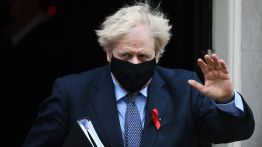
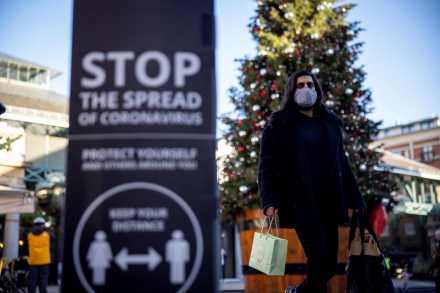
In the past few minutes, Boris Johnson has announced that the UK is going into lockdown from this evening. In a statement in Downing Street (which you can read in full here), he announced that people will not be allowed to leave their homes unless they are doing so for the following: - shopping for basic necessities - one form of exercise a day such as a run, walk or cycle and either alone or with other members of the same household - medical needs or caring for a vulnerable person - travelling to or from work but only when absolutely necessary. The police will be given the power to fine people and disperse gatherings and all non-essential shops and events such as weddings and baptisms will be banned.

Why hasn’t Boris Johnson announced a coronavirus lockdown?

This weekend has been dominated by photos of people having a jolly good time in groups at the park, or strolling along Columbia Road Flower Market as though nothing has changed. Sunday's Downing Street press conference was therefore dominated by questions about whether the government would clamp down on this behaviour to stop coronavirus spreading still further. But while Boris Johnson urged people to stop ignoring social distancing rules, telling them that 'even if you think you are personally invulnerable, there are plenty of people you can infect and whose lives will them be put at risk', he only suggested that there could be 'further measures if we think that is necessary'.

The ugliness of coronavirus shaming

In the early years of the First World War, a man out of uniform had a reasonable chance of being stopped in the street by a young woman and handed a white feather. This campaign of social shame encouraged those who had not yet enlisted to do so using white feathers as a symbol of cowardice. It may have had noble roots – encouraging everyone who could serve their country to do so – but it quickly became ugly. Men who had come home for a few days' leave, men discharged after being injured fighting, and men in exempted professions such as doctors and train drivers, were often handed feathers by indignant, self-righteous women who had come to regard the practice as a hobby.

Brexit, Boris and the battle to be Labour leader: Lisa Nandy interviewed

The Labour leadership contest has been going on for so long that two of its candidates, Lisa Nandy and Rebecca Long-Bailey, have taken to counting down the hours they have left. The race to succeed Jeremy Corbyn started in early January, and will finally finish on 4 April. When we meet, Nandy is feeling run-down — not because of coronavirus, but the sheer length of a contest that she had initially thought should run beyond May’s now-cancelled local elections. She regrets calling for that now. A long contest should have helped the Wigan MP. When it started, she was not as well-known as the other candidates, and needed time to establish a reputation with party members.

Why has coronavirus not closed parliament?

Why hasn't parliament been closed after Health minister Nadine Dorries contracted coronavirus? Why isn't the government demanding the cancellation of large events and school closures to help limit the spread of the illness? Why isn't it copying other countries who have introduced much more draconian measures, to the extent that Atlético Madrid fans arriving in Liverpool are watching a game that would have been closed to them in their home country? Health Secretary Matt Hancock updated the Commons on the outbreak this evening, and ended up having to answer all of these questions.

How Rishi Sunak outshone Corbyn’s five years in one speech

If Jeremy Corbyn had been saving his energy by giving a poor performance at PMQs, he wasn't saving it for his Budget response. He sounded bored, almost as though he too is fed up of waiting for the Labour leadership contest to trundle to an end so that he can pack off and not have to respond to economic statements. Beside him, John McDonnell looked a little envious that the final big fiscal event of the duo's time at the top of the party was the one Corbyn got to respond to, rather than the Shadow Chancellor. He even failed to notice that the debate was being chaired - as it always is - by the deputy speaker Eleanor Laing, and spent much of his speech referring to 'Mr Speaker’.

Corbyn racks up another lacklustre PMQs

If a Prime Minister's Questions before a Budget is rather lacklustre, then this is normally easily excused as being the Leader of the Opposition not putting as much prep as usual into a session that no-one will watch. But while today's performance from Jeremy Corbyn was indeed lacklustre, it wasn't any different from his offerings over the past few months. The Labour leader decided to focus on the lot of women in this country, given it was International Women's Day at the weekend. He started with what seemed a pretty reasonable opener, which was demanding sick pay for those on zero hours contracts, particularly care workers who will need to self-isolate if they have coronavirus symptoms for the safety of those they look after.

Why Matt Hancock’s cross-party social care talks aren’t as promising as they sound

Does anyone really think the solution to the social care crisis will be found in cross-party talks? If you read the letter penned by Matt Hancock this afternoon, you might be forgiven for thinking that the Health Secretary is the one person who does. Hancock wrote to all MPs and peers 'to begin the process of seeking to build a cross-party consensus on social care’. He rightly observes that 'since 1997, successive governments have tried and failed to find a long-term solution to funding social care' – though he doesn't mention that one of the bigger failures came when the Tories pulled their support for Labour's social care plans in 2009.

Why were there so many loyal questions at PMQs today?

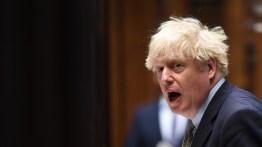
This week's Prime Minister's Questions had Tory MPs bursting out of their seats to ask Boris Johnson some lovely easy questions. There were more than usual whose contribution to the session was merely to ask him to agree with them that he had the right priorities and was doing a great job.  Claire Coutinho, recently-elected as Conservative MP for East Surrey, gave the Prime Minister a chance for a breather right after his stint sparring with Jeremy Corbyn with this question: 'My constituents in East Surrey care enormously about climate change. Does my right hon.

Leadsom delivers a parting shot at Bercow

Andrea Leadsom has just given a rather long and very comprehensive personal statement in the Commons following her sacking in last month's reshuffle. She took no parting shots at Boris Johnson at all, preferring instead to focus any anger on former Speaker John Bercow, with whom she had a very long-running feud. Why did she bother giving a personal statement at all if it was just to look back on the past few years at work? Someone with very little knowledge of what has happened in Westminster in the past few years might have been forgiven for thinking that Bercow was the one responsible for her leaving government, rather than the Prime Minister.

Is Andrew Sabisky an example of ‘cancel culture’?

Dominic Cummings said he wanted to hire ‘weirdos’ and ‘misfits’ to improve Whitehall, but new adviser Andrew Sabisky (more on whether he’s actually an adviser shortly) isn’t so much a misfit in Westminster as he is a sore thumb, standing out for his views on eugenics, race and unplanned pregnancies. Today a No. 10 spokesperson refused 32 times to say whether Boris Johnson shares Sabisky’s views, and wouldn’t even comment on the conditions under which he had been employed.

The latest fad: eating your way to better mental health

Which fad diet have you chosen to follow this year? One that helps you lose weight, or one that cures your mental health problems? Chances are that if you’re really following food trends, you’ll be discarding the piles of ‘clean eating’ recipe books in your kitchen in favour of a whole new swath of literature on dieting for mental health. There’s the ‘Mad Diet’, which promises ‘easy steps to lose weight and cure depression’, the ‘Anti-Anxiety Diet’, which is a ‘Whole-Body Programme to Stop Racing Thoughts, Banish Worry and Live Panic-Free’, or ‘Food and Mood: Eating Your Way Out of Depression’. Just like the clean eating trend that came before, each mental health diet has its own mantras.

How Boris Johnson could reach his target on cutting violent crime

Can Boris Johnson really cut violent crime by 20 per cent? James reported recently that the Prime Minister has set his Cabinet this target, and is demanding that every department get involved in realising it. Most people have focused on the most salient political problem, which is knife crime. But if the Prime Minister is really serious about driving the overall violent crime statistics down, then he already has a piece of 'oven-ready' legislation which could help him do this - if he's prepared to spend a bit more money on it. The Domestic Abuse Bill is returning to Parliament very soon, after just making it through all the prorogation jamboree in the autumn.