How the EU’s vaccine rhetoric could backfire
12 min listen
Another day, another dig from across the channel on the UK's vaccine reliability. Isabel Hardman talks to James Forsyth and Katy Balls about how this rhetoric could backfire.

Isabel Hardman is assistant editor of The Spectator and author of Why We Get the Wrong Politicians. She also presents Radio 4’s Week in Westminster.
12 min listen
Another day, another dig from across the channel on the UK's vaccine reliability. Isabel Hardman talks to James Forsyth and Katy Balls about how this rhetoric could backfire.

Is the government making the most of its landmark Domestic Abuse Bill? The legislation is currently at committee stage in the House of Lords, with peers discussing hundreds of amendments. Some have little chance of success, but others point to serious gaps in the Bill which could undermine its overall clout. One of the most popular amendments has been tabled by Conservative peer Lord Polak and has support from across the House. It calls for public authorities to have a statutory duty to commission support in the community for victims of abuse. Currently, the bill only creates a statutory duty to provide for victims who are in a refuge or supported accommodation.

If last year was the one where people started to notice the beauty of the wildlife right on the doorstep during lockdown, this should be the one where we start to get to know some of the best wild places in our own country, rather than presuming that all that is rare and interesting can only be found abroad. Of course, you could head to the famous, crowded and well-trodden nature spots like the New Forest or the Lake District. But then you’d miss out on the joy of really exploring the sort of wild places that naturalists like to keep secret. So here’s a guide to some lesser-spotted wild places around Britain: just don’t tell anyone else about them.
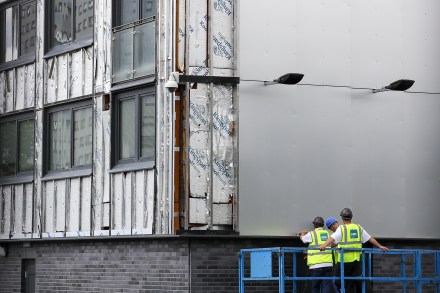
The government was never going to come out well from Monday afternoon's cladding debate in the House of Commons, given it has taken so long to address the crisis facing tens of thousands of leaseholders trapped in dangerous and unsellable flats or holding bills for tens of thousands of pounds. Secretary of State for Housing, Communities and Local Government Robert Jenrick stayed away entirely, leaving housing minister Chris Pincher to respond at the start and junior housing minister Eddie Hughes to do the wind-up. This gave the impression that ministers do not see this as a priority, despite it developing into a huge scandal that will blight the lives of many of the people the Tories should see as their kind of voters.
10 min listen
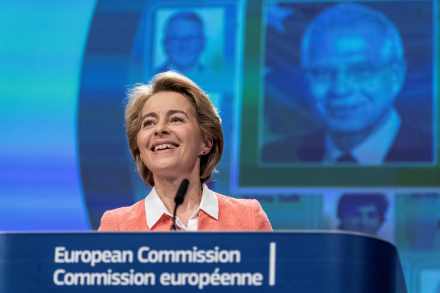
The EU's row with AstraZeneca came to a head on Friday, with the bloc publishing its contract with the pharmaceutical giant and introducing vaccine export controls. With the UK's rollout continuing at pace, where will the vaccine debate go next? Isabel Hardman speaks to James Forsyth and Katy Balls.
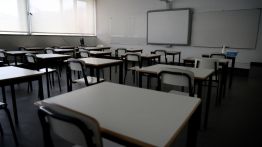
How can ministers stop one of the worst legacies of the pandemic being a generation of children left behind after a year out of the classroom? This week, when Boris Johnson confirmed 8 March as the earliest schools will return, he also announced money to help pupils catch up and a long-term plan for education. There's a glimpse of the scale of the task facing the government as it develops a long-term plan in this report from the Education Endowment Foundation, which found not only a significant fall in attainment for primary age pupils as a result of the disruption to the school year, but also a 'large and concerning attainment gap between disadvantaged pupils and non-disadvantaged pupils'.
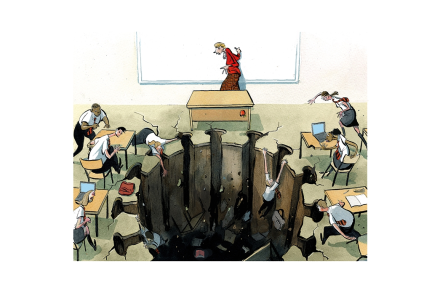
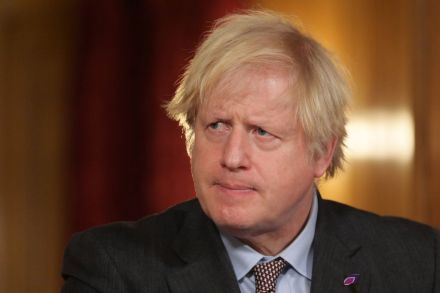
If there's one lesson you'd think Boris Johnson might have learned from his handling of the pandemic so far, it would surely be that it is too risky to set a date by which things will start returning to normal. And yet this evening the Prime Minister found himself talking about a date for schools returning, despite the timetable repeatedly slipping. Of course – as Johnson himself made clear at the Downing Street coronavirus briefing – 8 March is the earliest by which schools might start to return, rather than his deadline for anything happening. Johnson was asked whether he was once again being too optimistic by talking about this date, but said that 'opening schools is a huge priority for us all'.
16 min listen
In his statement to the Commons today, Boris Johnson suggested March 8 as a date for schools to return. This is earlier than some predictions but certainly later than many were expecting when schools were shut earlier this month. Katy Balls talks to James Forsyth and Isabel Hardman about what this tells us about when a more general lockdown easing may happen.
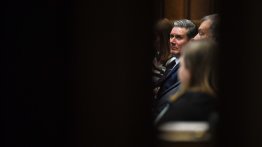
Boris Johnson had a very difficult backdrop to today's Prime Minister's Questions, having marked 100,000 deaths in the coronavirus pandemic last night. But, strangely, he didn't have a particularly difficult session in the Commons. Sir Keir Starmer did, as you might expect, lead on the death toll, asking the Prime Minister repeatedly why he thought the UK had such a high death rate, and why he wouldn't learn the lessons from the pandemic now so that the government didn't repeat its mistakes. Johnson was able to deal with this reasonably easily, arguing that while he did think there would be a time to learn the lessons of what happened, that time wasn't now. The public, he said, want politicians to come together and focus on rolling out the vaccine and protecting the health service.
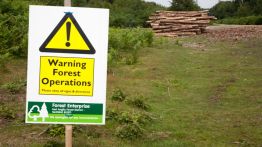
Tree planting is one of those motherhood-and-apple pie policies that it's quite hard to argue with. We have a climate crisis, and a dreadful decline in biodiversity, and more trees will help with that. They will restore our denuded landscape to something more natural, and they're good for our mental health. Only a curmudgeon could carp about tree planting, which is presumably why the main political parties spent the last election having a plant-off about how many trees they want to get in the ground. The government has a target of 30,000 hectares a year across the UK by 2025, and Boris Johnson has been linking his tree ambitions to all kinds of other problems. Last week, he said he wanted the government to move faster with its planting programme to fight the risk of floods.
Labour had an urgent question about schools reopening in the Commons this afternoon, but once again it wasn't the Opposition that really increased pressure on the government but Conservative backbenchers. They are getting increasingly agitated by the prospect of classrooms remaining empty for many weeks longer than ministers had originally suggested, and were keen to convey their concerns to schools minister Nick Gibb. Gibb had to field questions about rising mental health problems among young people who've spent the best part of a year trying to learn at home, about parents struggling to work and home-school their children, and about the criteria for reopening.

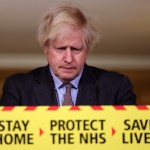
Boris Johnson, Chris Whitty and Simon Stevens held a very sombre press conference in Downing Street this evening to mark the awful milestone of more than 100,000 UK deaths in this pandemic. The Prime Minister offered his 'deepest condolences to everyone who has lost a loved one', and promised that 'when we have come through this crisis, we will come together as a nation to remember everyone we lost, and to honour the selfless heroism of all those on the front line who gave their lives to save others'. He also pledged that 'we will make sure that we learn the lessons and reflect and prepare'. This was the closest the Prime Minister came to talking about taking responsibility for the high death toll.
10 min listen
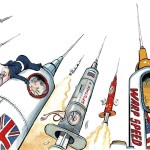
In the last 24 hours, the EU has threatened to place export controls on vaccines manufactured in the EU; while a German paper has been corrected by Berlin for misreporting that the German government thought the Oxford-Astrazeneca jab was only eight per cent effective in over-65s. Isabel Hardman talks to Katy Balls and James Forsyth about what's going on and whether it could impact Britain's supply.
12 min listen
The government's Covid-O group will be making a decision on the UK's border restrictions imminently. On the podcast, Isabel Hardman talks to James Forsyth and Katy Balls about what is being considered and why now.

This evening's Downing Street coronavirus press briefing showed that ministers are still focused on enforcement of existing restrictions, rather than introducing even tighter curbs. Home Secretary Priti Patel announced £800 fines for people attending house parties, which will double for each repeat offence, up to a maximum of £6,400. Patel said the police would target the 'small minority that refuse to do the right thing', and warned that the police were increasingly enforcing the rules. Speaking alongside her, NHS England regional medical director for London Dir Vin Diwakar issued a moral warning to members of the public who think it is acceptable to flout the rules.
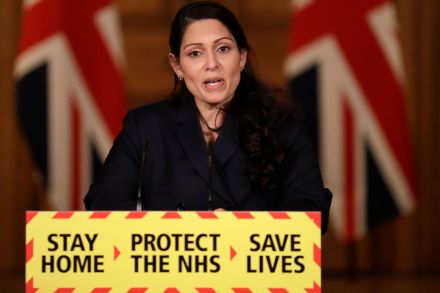
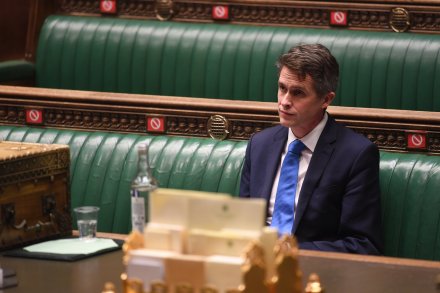
Why has Labour chosen today to call for Gavin Williamson to resign as Education Secretary? This morning, shadow education secretary Kate Green released a statement saying 'it is time for Gavin Williamson to go', arguing that his 'record throughout this pandemic has been shambolic' and 'he has bounced from one crisis to another without learning from his mistakes or listening to the parents, pupils and hard-working education staff who have been left to deal with the fallout'. It is unlikely that he will stay in the job when Boris Johnson carries out his next reshuffle It's true that Williamson has had probably the worst pandemic out of any minister and that the rows and mistakes don't seem to be going away, either.
14 min listen
Today the Commons debates the 'genocide amendment' to the Trade Bill, which would allow judges to restrict the government's ability to sign trade deals with countries deemed guilty of genocide. It's a clear swipe at China and its treatment of the Uyghur minority, and on the podcast, Katy Balls discusses with James Forsyth and Isabel Hardman what this means for the Conservative party's new stance on China.
Labour's opposition day motion calling on the government not to drop the £20 uplift in Universal Credit has just passed in the Commons – because the government abstained on the vote. This was expected, but what was more of a surprise was that there was a vote at all: no one was there to oppose the motion, to the extent that the tellers were all Labour MPs, who had all voted for the motion (normally two tellers are from the ayes and two from the noes). So why was there a division at all? As usual, the Speaker asked for those who supported the motion to say 'aye', which they did, and then for those who opposed it to say no'. Strangely, there were shouts of 'no!' from MPs who then went on to support the motion.

Of all the government ministries grappling with the impact of the pandemic, the Department for Education has probably had the most torrid – and least impressive – time. There is currently no sign that things are improving, either: in the past week, ministers have had to deal with a highly politically-toxic row over the quality of free school meals for children during lockdown. That row formed the backdrop to today's education questions in the Commons, where Gavin Williamson and his colleagues were very visibly licking their wounds. Williamson was accused – as he is every time he appears in the Chamber – of being 'incompetent', with Labour's Kate Green complaining that the food parcels were 'entirely in line with the government's own guidance.
12 min listen
The Commons will today see a debate over extending the universal credit uplift. While Thérèse Coffey, the work and pensions secretary, wants the weekly increase to remain, Rishi Sunak wants to replace it with a one-off £500 payment. Isabel Hardman talks to James Forsyth and Katy Balls about the Tory split.