Isabel Hardman

Isabel Hardman

Isabel Hardman is assistant editor of The Spectator and author of Why We Get the Wrong Politicians. She also presents Radio 4’s Week in Westminster.

Rishi Sunak bows to the Online Safety Bill rebels

Rishi Sunak and Michelle Donelan will this afternoon bow to the inevitable and accept rebel changes to the Online Safety Bill. They are doing so after it became obvious that the government was going to lose a vote on the legislation, due to have its remaining stages in the Commons later today. The Online Safety Bill has already been significantly changed in order to get past Tory MPs Tory backbenchers Bill Cash and Miriam Cates have said they won't be pressing their amendment to a vote after reaching an agreement with ministers. Their proposals, which had the support of at least 50 Conservative MPs, as well as the backing of the Labour Party, would have meant tech bosses would face jail if they failed to protect children from harmful content on their platforms.

The looming challenge on police protest powers

MPs and peers are going to spend the next few weeks in an almighty fight about strikes and protests. Today the Commons debates the second reading of the Strikes (Minimum Service Levels) Bill. Business Secretary Grant Shapps and Labour's deputy leader Angela Rayner are going head-to-head on legislation requiring unions in key sectors to provide minimum service levels even during strike action – or face being sued. In the Lords, peers will soon be debating the final stage of the Public Order Bill, which today gains a big new amendment that gives the police more powers to stop protests from becoming disruptive.  The amendment could give a lot of powers to the police that end up clamping down on peaceful and legitimate protest The protests amendment is a big deal.

What will be on the agenda at Davos?

12 min listen

It's looking like a busy week in Westminster. So busy in fact that prime minister Rishi Sunak will not be attending the annual Davos meeting, organised by the World Economic Forum. His opposite number Kier Starmer will be making the trip however, is this a shrewd move from Labour?  Also on the podcast, amended plans to widen police powers when it comes to public protests are being introduced to parliament today, what impact will the Public Order Bill have on civil liberties? Will the government come to regret this?  Katy Balls speaks to Isabel Hardman and Kate Andrews.  Produced by Oscar Edmondson.

Rishi Sunak should welcome lively MPs, not shun them

Rishi Sunak has a rebel problem: we already know that. He's got factions of Tory MPs prepared to vote against the government on a range of issues, and the Prime Minister knows that on each issue, there are different rebels, rather than just one easy-to-identify awkward squad. Even when he is, as Katy explains in the magazine this week, focusing on issues that unite the party rather than reforms that will provoke some rebels such as planning reform, he still has trouble on his hands.  The current trouble comes in the form of the Online Safety Bill, which has a phalanx of Conservatives prepared to vote against their party whip in order to toughen up the legislation.

Keir Starmer is learning to love controversy

For a politician who has set much store by being pretty boring, Keir Starmer seems to be enjoying his current provocative spell. His desire to shake up the 'nonsense' bureaucracy in the NHS makes the Sunday Telegraph splash and was a key feature of his interview this morning with Laura Kuenssberg. He argued that 'the reason I want to reform the NHS is I want to preserve it' and 'I think if we don't reform the health service it will be in managed decline'.  https://www.youtube.com/watch?

Is the Princess of Wales right about talking therapy?

The Princess of Wales is in hot water for some remarks she made while visiting the Open Door charity in Birkenhead, which helps teenagers with their mental health problems through arts and dance. She is reported to have said: ‘Talking therapies don’t work for some people, they’re not for everybody. It’s so important to have a range of therapies.’ Her remarks have naturally been interpreted as being a veiled swipe at her estranged brother-in-law and his use of psychotherapists. I’m not sure whether it is more po-faced to do that or take her at face value, but she does have an interesting point if she’s not thinking about her privacy-loving family author.

Could the NHS meltdown lead to another Mid Staffs scandal?

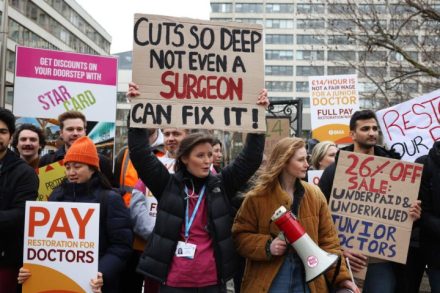
Matilda played with her mother's stethoscopes when she was a child. As a teenager, she pored over anatomy books. She devoted her early twenties to medical school and has been cramming for postgraduate exams well into her thirties. Last summer, she jacked it all in. Being a doctor 'was turning me into a bad person,' she explained to her nonplussed friends.Many medics will recognise Matilda's fear that her job was making her less caring, both to her patients and her family. The meltdown in the NHS is leaving doctors feeling even more burnt out than during the pandemic. The effect this is having on patients is frightening.

Why did Sunak change tack on private healthcare?

10 min listen

Rishi Sunak has finally answered questions over his healthcare arrangements with a statement in Prime Minister's Questions, stating that he is currently registered with an NHS GP but has used private healthcare in the past. Is this change in tack an admission that he should have answered the question sooner? Katy Balls talks to Isabel Hardman. Produced by Cindy Yu.

Sunak changes tack on private healthcare

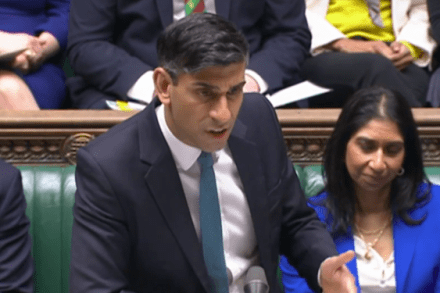
He was going to change his line at some point. Finally, at today's Prime Minister's Questions, Rishi Sunak dropped his refusal to discuss his family's healthcare arrangements and admitted he has gone private. He used the first question of the session, from Labour's Cat Smith, to 'answer the lady directly' and say: 'I am registered with an NHS GP. I have used independent healthcare in the past and I am also grateful to the Friarage Hospital for the fantastic care they’ve given my family over the years.

Striking paramedics pose a problem for Sunak and Starmer

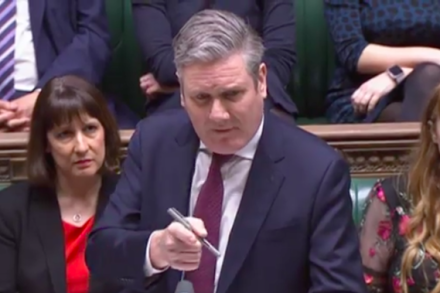
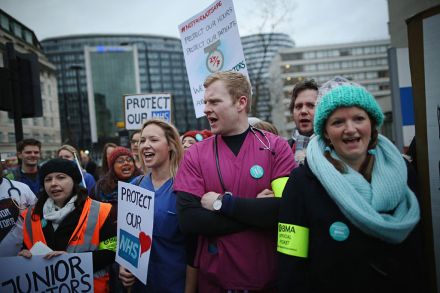
It's the first Prime Minister's Questions of the year and strikes will undoubtedly dominate. Both sides feel they have a political advantage. Rishi Sunak sees his anti-strike laws requiring minimum service levels as a way of uniting his party and claiming that Labour don't care about the basic safety of the public. Keir Starmer sees the walkouts as symptomatic of a wider government failure to protect public services. Both men have weaknesses. The government hopes that the public will lose patience, even with highly-respected healthcare workers Labour's analysis about the public sector being on its knees even when workers aren't on picket lines has a fair bit of currency.

Is No. 10 trying to ban strikes?

13 min listen

Business Secretary, Grant Shapps has introduced a bill proposing a minimum level of public sector work during strike action for six key industries. Labour's Angela Rayner told the Commons these plans are 'insulting and utterly stupid'. As a policy that Tories largely agree on, could this bill bring the party together? Also on the podcast, Isabel Hardman reacts to Ken Clarke's suggestion that the middle class should pay fees to use the NHS, and why has former minister Claire Perry O'Neill torn up her Conservative party membership?James Heale speaks to Katy Balls and Isabel Hardman. Produced by Natasha Feroze.

Should Sunak use an NHS GP?

9 min listen

In an interview on Sunday, Rishi Sunak refused to tell Laura Kuenssberg whether he has a private GP. Could this question come back to haunt him amid accusations he is 'out of touch'? As Parliament returns from recess, ministers are holding talks with unions to avoid further public sector strikes. However, with strike action still set to go ahead, the expectation of these talks by union bosses may not coincide with reality. Is the government fighting a losing battle?  Also on the podcast, could a Boris Johnson comeback be on the cards? Isabel Hardman speaks to Katy Balls and Fraser Nelson. Produced by Natasha Feroze.

Can Barclay and Sturgeon get a grip on the NHS crisis?

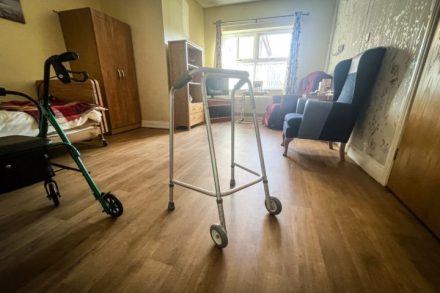
Both the Westminster and Scottish governments are trying to show they have a grip on the crises in their respective National Health Services today. Neither currently find themselves politically in a strong place on the winter crisis.  English Health Secretary Steve Barclay is giving a statement to the House of Commons when it returns this afternoon in which he will reheat two existing policies. He will confirm details of a £200 million plan for speeding up the discharge of patients from hospitals and into care settings. This was something the government did fund during the early months of the Covid pandemic, but which the Treasury quickly shut down, despite abundant evidence that the money made a lot of difference and freed up beds.

Sunak’s NHS position is on life support

Rishi Sunak is still refusing to say that the NHS is ‘in crisis’. He’s held meetings on ‘NHS recovery’ this weekend, and will have been told in no uncertain terms by healthcare leaders that this is a crisis, probably the worst one the health service has faced in its history. He told Laura Kuenssberg in an interview broadcast this morning that ‘the NHS is under pressure’, and there were ‘unacceptable delays’ in emergency care, but would not accept the ‘crisis’ word. This is because, as I’ve said before,  it is hard for the Tories to blame anyone else for said crisis at this stage of the political cycle.  The line that is making the headlines is Sunak’s refusal to answer questions on whether he has a private GP for his family.

How long before Rishi Sunak goes off his own pledges?

When I was a student, my housemates and I would buy our groceries from a shop that offered only days of the week as the best before. We had a lettuce that went off on ‘Tuesday’, bread that would go stale on a ‘Thursday’, and so on. It was useful for the shop, and useful for a bunch of cash-strapped students as we could effectively decide which Tuesday the food would spoil by, rather than throwing it out.  I thought of that lettuce this week when Downing Street decided to make one of Rishi Sunak’s five ‘immediate priorities’ – to have NHS waiting lists falling – impossible to meet. The release accompanying the Prime Minister's speech said ‘by March, NHS waiting lists will fall’. Which March?

Why did Starmer steal ‘take back control’?

12 min listen

Keir Starmer said this morning that communities would ‘take back control’ under a Labour government. In a speech delivered just down the road from where Rishi Sunak spoke yesterday, the Labour leader promised to expand devolution. Is his vision radical enough? Max Jeffery speaks to Isabel Hardman and James Heale.

Keir Starmer promises to take back control

Keir Starmer’s new year speech was better than Rishi Sunak’s. It’s easier to give a speech about fixing problems when you’re in opposition and someone else has caused them. But it was just more interesting than what the Prime Minister had to say yesterday. There was the politically audacious decision to pick up Vote Leave’s ‘take back control’ mantra, not just as a slogan but also in the form of a ‘Take Back Control Bill’ which will devolve new powers to local communities and give them the right to request more authority from central government.

Is Starmer’s lack of ambition holding Labour back?

The battle of the New Year launch speeches enters its second day, with Labour leader Keir Starmer giving his own address in East London. Rishi Sunak said yesterday he had five 'immediate priorities' for fixing Britain. The Labour leader is offering a similar repair job this morning, while also trying to reassure voters this won't involve his party spending vast sums of money. Starmer will say that, while his party will 'give people a sense of possibility again', this is not 'code for Labour getting its big government chequebook out again'.

Are Sunak’s five pledges enough to sort Britain out?

11 min listen

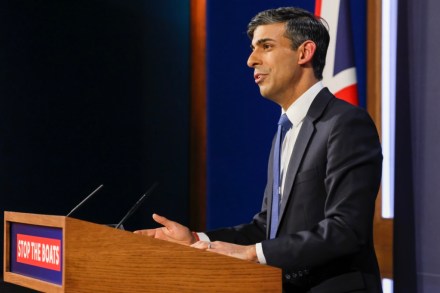
Rishi Sunak made five pledges to fix Britain in a speech in London today. Inflation will halve, the economy will grow, debt will fall, NHS waiting lists will be cut, and the government will pass laws to tackle the small boats crisis. Is the PM promising too much, or not enough? Max Jeffery speaks to Isabel Hardman and James Heale.

Sunak: judge me on my priorities

Rishi Sunak’s new year speech was more about what he wants to fix rather than how he plans to fix it. That is generally what start-of-the-year speeches intend to do, painting in broad strokes rather than going into endless policy detail. The Prime Minister came to office with a promise to fix the turmoil left by Liz Truss, but now his challenge is to give a sense he's here to do more than just keep the markets calm. He set out five 'immediate' priorities, some of which may happen regardless of any new policies the Prime Minister introduces. Sunak claimed that they are 'the people's priorities', and listed them as follows:  1. Halve inflation this year.2. Grow the economy.3. National debt falling.4. NHS waiting lists will fall and people get the care they need more quickly.5.