Isabel Hardman

Isabel Hardman

Isabel Hardman is assistant editor of The Spectator and author of Why We Get the Wrong Politicians. She also presents Radio 4’s Week in Westminster.

Reshuffle 2014: where is the new centre of gravity in the Tory party ?

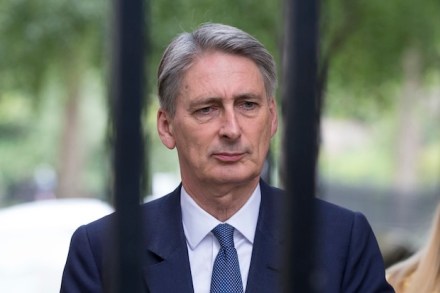
After a night of firing, we should start to see a round of hiring in David Cameron's government from around 8.30 this morning. Only one post has been filled - Philip Hammond moving to the Foreign Office - and yet some observers are already trying to pin down the new centre of gravity in the Tory party. Labour seems to have given its MPs a line to take that the is a lurch to the right and the end of moderate Tory governing. Without wishing to begrudge the Opposition a decent, disciplined line on a day when it's very difficult to attract attention away from the other party doing the shuffling, it is far too early to make this sort of judgement, and there is insufficient evidence to do so.

Lady Butler-Sloss steps down from child abuse enquiry

It is not a surprise that Lady Butler-Sloss has stepped down as chair of the independent inquiry panel into child abuse: a critical mass of stories had built up against her which meant it was impossible for her to continue leading an inquiry that is partly about conspiracy theories without herself becoming the target of conspiracy theories which would eventually weaken her findings. A resignation before the inquiry has even kicked off is a serious blow to the government, which had been trying so hard to play conspiracy whack-a-mole, to stay ahead of the critics by acting fast and appointing big names to lead big investigations into historic allegations. But it is not quite right to say that this is a blow to David Cameron's authority.

Reshuffle 2014: Cameron’s key challenges

What does David Cameron need his reshuffle to do? As has been the case with every reshuffle in this Parliament, the changing of the guard, which is expected to start later today (Coffee House will have a liveblog full of the action and gossip when it all kicks off), is being billed as a 'reshuffle of the women'. But as I explained in my post last night about the Prime Minister considering voluntary all-women shortlists, even the incredibly talented crop of female Conservative MPs can't stop Labour billing any shuffle as a disappointment for women, which it is ready doing before any jobs have changed hands. Cameron also needs to shore up his relations with the Eurosceptic right wing of his party.

Cameron could introduce ‘voluntary’ all-women shortlists

David Cameron could introduce 'voluntary' all-women shortlists if the Conservatives continue to struggle to recruit female MPs, senior Tory sources have said. The Prime Minister has also set party chairman Grant Shapps 'on the case' to remedy the current situation, whereby women are less likely to be selected for safe seats. But he is also interested in local associations using all-women shortlists on a voluntary basis after the next election if his party fails to make sufficient advances. Cameron does not want to impose shortlists on constituency parties, although of course 'voluntary' can cover a multitude of sins: many people 'voluntarily' work longer hours than those stipulated on their contract, but have little choice about the matter.

Mental health and benefits: ministers get the wrong end of the stick

Every so often when ministers are considering a policy, they send a little kite up to see how it's received. Sometimes it gets hit by a lightning bolt of fury from a party's target voters, and is never heard of again. Sometimes it flutters about and no-one plays a blind bit of notice. And sometimes the kite gets rapturous applause. There seems to be a mixed response to the kite flown today that people with anxiety and depression could be forced to have a talking therapy such as cognitive behavioural therapy or risk losing their benefits. On the one hand, it's welcome that ministers want to help people with mental health conditions that can be managed so that someone can go back to work. Unemployment is hardly conducive to good self-esteem and strong mental health.

Is cross-party agreement on surveillance legislation a good thing?

So all three party leaders agree that it's worth rushing through emergency surveillance legislation. While David Cameron and Nick Clegg were holding their rare joint press conference, Ed Miliband released a joint letter with Yvette Cooper in which he said 'we have been guided by our firm conviction that it is essential to maintain the security of our citizens and also ensure people's privacy is protected'. The Prime Minister and Deputy Prime Minister both needed to make the case for the emergency legislation today but Nick Clegg also needed to make the case for his support for it, given he had rejected the full Communications Data Bill.

Will Ed Miliband attack over Lady Butler-Sloss’s appointment as head of the child abuse inquiry?

Will Ed Miliband decide to attack David Cameron on the appointment of Lady Butler-Sloss to chair the child abuse inquiry when he stands up at Prime Minister's Questions in a few minutes? The government has been playing a desperate game of whack-a-mole on this issue, and it looked as though Butler-Sloss was an ideal answer to conspiracy theorists. Appointing Lady Butler-Sloss, a judge, to chair the inquiry, answered complaints about this not being a judge-led inquiry. Appointing Richard Whittam QC, a senior Treasury counsel, as the independent legal adviser who will oversee the review of the review quelled mutterings about documents held by the intelligence services because Whittam already has security clearance.

Inside the whips’ ‘dirt books’

So all three parties are to trawl their 'dirt books' held by the whips and disclose any evidence that they find of child abuse. The role of the whips was raised by Lisa Nandy in the Commons on Monday, when she quoted former Tory chief whip Tim Fortescue, who told Michael Cockerell's documentary on the whips: ‘Anyone with any sense, who was in trouble, would come to the whips and tell them the truth, and say now, 'I'm in a jam, can you help?'. It might be debt, it might be... a scandal involving small boys, or any kind of scandal in which... a member seemed likely to be mixed up in, they'd come and ask if we could help and if we could, we did.' In May 1995, Cockerell wrote a Spectator cover story on this documentary.

‘Hopeless’ Warsi ‘resisting’ David Cameron’s fight against extremism

The government has failed to produce an adequate strategy to tackle non-violent extremism because the minister in charge of it is said to disagree with the Prime Minister's approach, sources have told Coffee House. Baroness Warsi is alleged by multiple sources in and out of government to have consistently resisted calls to develop a proper strategy on integration and tackling extremism at its roots, even though this is the Prime Minister's policy and part of her job at the Communities and Local Government department. One source says: 'Sayeeda made clear when she got the job at CLG that she didn't agree with the Prime Minister and that she simply wasn't going to do this bit of her job.

Harriet Harman’s push for gender equality – and her own career

Harriet Harman's scathing attack on the top men in politics for their failure to advance gender equality has certainly annoyed Damian McBride, who argues that Labour's deputy leader is talking 'utter bilge'. It's utter bilge from Harriet, done to make her attack on Dave look non-partisan. And shameful timing given the work GB is doing in Nigeria. — Damian McBride (@DPMcBride) July 8, 2014 The Standard reports that Harman will say at an event tonight: 'And imagine the consternation in my office when we discovered that my involvement in the London G20 summit was inclusion at the No10 dinner for the G20 leaders' wives.' Presumably she is talking about this dinner, which included the spouses and 'leading women' such as Naomi Campbell and Baroness Grey-Thompson.

The Home Office acts busy, hoping to avoid a ‘tide of public anger’

Theresa May updated the Cabinet this morning on the inquiry she has launched into how public bodies have dealt with allegations of child abuse. The name of the inquiry panel chair and the terms of reference haven't yet been announced, but when the Prime Minister's official spokesman was asked when they might emerge, he said 'I would expect an announcement on the chair of the panel soon'. Asked to define 'soon', the spokesman said 'pretty soon', which suggests that we will get more answers either before the Home Office Permanent Secretary Mark Sedwill sits down at 3.15pm to give evidence to the Home Affairs Select Committee, or that these announcements will form part of his evidence.

Universal Credit ‘hasn’t been signed off’ – what does that mean?

Is Universal Credit progressing as well as it should? Yesterday Sir Bob Kerslake, who is not consistently helpful to political colleagues, dropped a bit of a bombshell during a Public Accounts Committee hearing. Discussing the Treasury and the business case for Universal Credit: 'We shouldn't beat about the bush: it hasn't been signed off.' Labour got very excited about this, with Chris Bryant pointing out that last week Esther McVey told Rachel Reeves in a parliamentary answer that 'the Chief Secretary to the Treasury has approved the UC Strategic Outline Business Case plans for the remainder of this Parliament'. The DWP argues that this is wrong, and that the Treasury has 'approved all funding to date'.

Theresa May announces independent inquiry into child abuse allegations

Theresa May has just given as comprehensive a response as possible to the allegations of child abuse in the Commons. Insisting the government will leave no stone unturned in pursuit of the allegations, the Home Secretary told MPs that there will an independent inquiry panel, along the lines of the Hillsborough inquiry, which will examine not just how the Home Office dealt with allegations, but also how the police and prosecutors dealt with information handed to them. As a non-statutory inquiry, it will be able to begin its work sooner and will be at a lower risk of prejudicing criminal investigations because it will begin with a review of documentary evidence. May also said that the government will convert this to a full public inquiry if necessary.

Labour is falling in love with localism – but is it ignoring the individual?

Today's New Deal for England announcement by Labour doesn't just underline how much of the political action is in the regions at the moment, but how the party is coming to terms with some of the mistakes that it made when it was last in government. The significant devolution of power and spending to local government announced today by the Local Government Innovation Taskforce is a clever way for Ed Balls to save money, but it's also a recognition across the party that a centralised state did not delve the sort of results it should have done in the party's 13 years of power, and so something must change. It was initially a conviction of a few key party thinkers that was resisted vigorously by equally key colleagues, but is now the prevailing philosophy.

Theresa May to give ‘significant’ statement on child abuse row

What can we expect from the government response to the growing child abuse dossier row? Government sources are stressing this morning that Theresa May's Commons statement will be 'significant' and that its content will be broader than simply naming the QC looking at the Home Office dossier. Based on David Cameron's handling of previous historic cases such as Bloody Sunday and Hillsborough, the Prime Minister will want to give every impression that this government is doing everything it can to go where previous governments may have failed to or refused.

Tristram Hunt won’t condemn the NUT’s strike, but is he ready for a confrontation?

Tristram Hunt is getting a fair bit of stick from the Conservatives for refusing to condemn the strike action planned by the National Union of Teachers on this morning's Andrew Marr Show. The Shadow Education Secretary merely said 'it's not up to me to tell trade unionists what to do - what I want is teachers in classrooms in a conversation with the Secretary of State so we get over these kind of hurdles'. He said the current stand-off was 'as a result, partly, of some of the incendiary language from the Secretary of State'. Certainly when you read some of the NUT's literature around its industrial action, it's difficult not to conclude that this isn't as much about a dislike of Michael Gove as it is a particular policy.

James Clappison didn’t stand down: his association pushed him

There is a fair bit of excitement in Westminster today that Boris Johnson could take over the Hertsmere seat of James Clappison now that the Tory MP has announced he is standing down at the 2015 election. But one thing that this announcement misses is that Clappison has not voluntarily stood aside. MPs are being told to stick to his statement, in which he said: 'By May 2015, I will however have served as a Member of Parliament for a full 23 years: a generation of time. It is difficult letting go but I do feel now is the time to move on. There is a world elsewhere.' But many parliamentarians know that the truth is that Clappison was not re-adopted by his association, who want a different candidate.

Phone hacking: Andy Coulson jailed for 18 months

Andy Coulson has this morning been jailed for 18 months for conspiracy to hack phones. He was sentenced at the Old Bailey along with four colleagues: Greg Miskiw and Neville Thurlberk were given 6 months, James Weatherup was jailed for four months, suspended for 12 months, and ordered to do 200 hours unpaid community work, and Glenn Mulcaire was jailed for six months, suspended for 12 months, and ordered to do 200 hours unpaid community work. There are still outstanding cases to be heard, but it has been interesting to see how little political impact this case has had. There seemed to be a sense in Westminster that the hacking trial, regardless of verdict, had been factored into the pressures on the PM and therefore Coulson's guilty verdict was less of a threat to him.

A lesser role in the EU for national parliaments is bad news for Cameron’s renegotiation

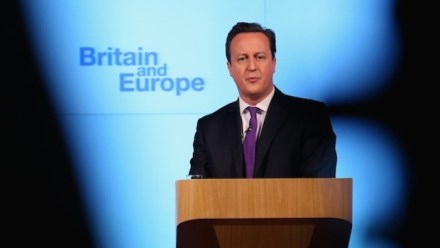
David Cameron may have got away with his failure to block Jean-Claude Juncker as president of the European Commission, but that doesn't mean that his MPs aren't agitated about the way things are going in Europe. One aspect of last week's European Council meeting that most people missed was a document setting out what appears to be a significantly reduced role for national parliaments in the EU. The Strategic Agenda was published as an annex to the European Council conclusions last week. It says: 'The credibility of the Union depends on its ability to ensure adequate follow-up on decisions and commitments. This requires strong and credible institutions, but will also benefit from closer involvement of national parliaments.

Labour wants to stay in its NHS comfort zone and ignore immigration and the economy

PMQs taught us a number of things about Labour and the Conservatives. The first is that while Labour has a bumper economy week underway, it does not feel sufficiently confident to attack the Conservatives on this issue in an aggressive forum like PMQs. This is probably quite sensible, given the attack that Cameron launched towards the end of the session on Ed Balls. Looking very chipper indeed, the PM said: 'What is my idea of fun? It is not hanging out with the Shadow Chancellor! That is my idea of fun! And so, I feel sorry for the leader of the Opposition because he has to hang out with him all of the time.