Isabel Hardman

Isabel Hardman

Isabel Hardman is assistant editor of The Spectator and author of Why We Get the Wrong Politicians. She also presents Radio 4’s Week in Westminster.

Alex Salmond: We are not splitting the SNP vote

Is Alex Salmond feasting on the misery of an SNP that, having hit its high watermark, is now having to work hard to hold onto its Westminster seats? Not at all, according to the Alba leader, who told Andrew Neil on Times Radio today that he was in fact trying to help the cause of his former party by going after pro-independence voters who would otherwise have stayed at home. In so doing, of course, he was not-so-subtly suggesting that the SNP aren’t giving voters a reason to turn out at all.  There’s 20 per cent of people who are either going to stay at home or going to vote for a unionist party.

Labour is breaking one of the last taboos in politics

Labour has decided to lean into the £2,000 tax hike claim by the Tories, and turn it into a row about lying. Keir Starmer yesterday accused Rishi Sunak of ‘lying’, saying: ‘That’s why the choice at the next election is starker now than it was yesterday. It’s a choice between chaos and confusion, the sort of thing we’ve seen now for 14 years, and now lies on top of it. Or turn the page and rebuilding with Labour.’ The problem is that this £2,000 tax claim is not out of the ordinary It is not a strategy without risk: it allows the £2,000 claim to be repeated. But given that was going to happen anyway, the party has decided to try to recover from its leader’s flat-footedness in Tuesday’s TV debate.

Who won the first leaders’ debate?

17 min listen

Last night, Rishi Sunak and Keir Starmer went head-to-head in the first TV debate of the campaign. They clashed on a variety of topics, including housing, the NHS, and immigration. But who came out on top? Katy Balls speaks to Kate Andrews and Isabel Hardman. Produced by Megan McElroy.

Labour is paying the price for Starmer’s failure to refute the £2,000 tax claim

The Tories have had their first good 24 hours of the election campaign. The £2,000 tax claim made by Rishi Sunak (which we crunch here) is dominating the chatter following last night's TV debate, and the amount of energy Labour frontbenchers are putting into refuting it shows they feel Keir Starmer failed to squash it in the debate itself. When Andrew Mitchell, the Deputy Foreign Secretary, was interviewed about the figure by Andrew Neil on Times Radio just now, he suggested that the calculation was probably an ‘understatement’. Significantly, though, he refused to repeat the claim made by Energy Secretary Claire Coutinho this morning that the figure came from ‘independent civil servants’. ‘No,’ he said, firmly, when Neil asked him directly to say the same thing.

What would it take for Sunak to have a breakthrough?

13 min listen

Some Conservatives have put their hopes on tonight's TV debate as a breakthrough moment for the lacklustre and disorganised Tory campaign, but will it really be a gamechanger? James Heale talks to Isabel Hardman about why she's sceptical, and to the pollster Chris Hopkins at Savanta about why the Tories just aren't closing that poll gap. Produced by Megan McElroy and Cindy Yu.

Why are the Tories playing Farage’s game?

How should Rishi Sunak respond to the unwelcome insertion of Nigel Farage into the election campaign? The Prime Minister called the election for 4 July in part because he hoped it would wrong-foot Reform, but that hasn’t worked, with Farage electrifying the challenger party and near-electrocuting many Tory MPs who were already terrified of losing their seats.  The response from the centre has been to move even further into Reform’s territory. Home Secretary James Cleverly was out and about this morning talking about immigration, and dropping hints that the Conservatives could make leaving the European Convention on Human Rights a manifesto commitment.

Labour comes out of Scottish debate on top

There is a truism in British politics that things would be much more civil if there were more women in the room. Tonight’s all-male Scottish leaders’ debate undermined that: the exchanges were far less vehement and aggressive than they had been when Nicola Sturgeon was SNP leader and when she was facing other female leaders. The real reason for this had nothing to do with the gender of the leaders standing in the STV studio, or indeed much to do with a new era of kinder, more civil politics and everything to do with the fact the wind has gone out of the SNP’s sails. John Swinney reminded the audience that he hadn’t expected to be in this position just five weeks ago, but that he wanted to ‘protect Scotland in these tough times’.

George Galloway: Labour is the ‘number one enemy’

George Galloway would be happy if his Workers' Party of Britain denied Labour the chance of an outright majority at the election because it would mean that whoever was in power would have to listen to the smaller parties. That was his message today when interviewed by Andrew Neil on Times Radio: the former Labour MP does not see a Labour government as being at all worthwhile over and above a Conservative one. He is standing in Rochdale, which he won in a by-election earlier this year after Labour messed up with its own candidate.  'We are a threat to Labour in at least 100 places.

Kemi Badenoch isn’t alone in dodging the issue of social care

Elections aren’t just fights between the parties over policy. They also include conspiracies of silence where neither side will benefit from talking that much about an issue. Social care is one of those toxic problems: it is a key driver of inefficiency in the NHS, and should have been reformed three decades ago. It is also expensive, complicated and little-understood by voters, who resent any iteration of reform because all involve someone shelling out money when many people think it is free currently (it is not), or that it somehow should be.

Starmer’s safety-first campaign is backfiring

The problem with spending an election campaign saying as little new as possible is that it does leave a big gap that can easily be filled with rows over process and mistakes. Labour has a safety-first approach to its campaign, wanting to reassure voters that it has changed rather than being too exciting, but this makes the row over Diane Abbott all the more pronounced because there is little else to talk about. Yesterday, the party wanted to talk about its pledges on the NHS, but none of them were particularly new or striking. Instead, its frontbenchers were all asked repeatedly about the way the party has handled Abbott’s case. It was very clear few of them were happy about it.

Starmer’s ‘why Labour’ message needs to get slicker

Keir Starmer has been considerably less discombobulated by the election announcement than the party that made it, but he still has some catching up to do. The Labour leader knows that he has to answer the question of ‘why Labour’ to voters who have already largely accepted that there is a strong reason to change from the Tories. To that end, his speech this morning was an attempt to explain to the public what Labour now stands for. Slightly improbably, Starmer started by telling the audience that they really should visit Oxted. The reason for this was that Starmer sees Oxted as being the way he can explain his politics and what he stands for. He was starting with his biography (again).

Who dares, wins? Not Michael Gove

Michael Gove has just announced he is standing down at the election. He spent the past few days agonising privately over the decision, and published a letter on Twitter paying tribute to the Conservative party’s legacy in government – mostly his legacy, in fact. He names education reform, funding for modernising prisons and rehabilitation, progressive environmental policies, levelling up, housing reform, Brexit and building safety. It is notable that he says he was ‘pleased to be able to introduce the most wide-ranging reforms to leasehold, social housing, and supported housing in a generation’. That is true, but the leasehold reforms did not go as far as Gove had wanted, and his attempts to reform the private rented sector were also frustrated by colleagues.

Why has the election been called now?

15 min listen

Less than 24 hours after Rishi Sunak's surprise election announcement, we look ahead to the parties' campaigns. What has been the fall out? How have Labour responded to the shock news? And why didn't Rishi have an umbrella? James Heale is joined by Isabel Hardman and former Labour adviser John McTernan to discuss.  Produced by Patrick Gibbons.

Sunak hints at why he opted for a snap summer election

There is no good answer to the question of why Rishi Sunak called the general election for 4 July, other than that it comes at a time when things are marginally better than they were and before things could get a lot worse. There is, by the way, no good answer to the question of when would be a good time for the Conservatives to hold the election because they are 21 points behind in the polls and largely hate one another and the responsibility of government.  Sunak wants to make it about his record This morning, Sunak insisted on his broadcast rounds that the answer to 'why now?' was that he had reached a moment of economic stability.

If only Starmer had answered his own questions at PMQs

Is Rishi Sunak going to announce the election date later today? Speculation was – once again – so rife that the Prime Minister might be about to make some kind of announcement that the question came up at Prime Minister’s Questions. And he didn’t answer it. When SNP Westminster group leader Stephen Flynn asked him, Sunak replied that there would be a general election in the second half of the year – which we already know because he cannot now call one for sooner than July anyway.  Keir Starmer did not ask about the election. The Labour leader focused on the recommendation in this week’s infected blood inquiry report that a duty of candour be made statutory across the public sector.

Can the Tories ensure the infected blood scandal never happens again?

Are the compensation payments announced today for victims of the infected blood scandal a just response to what happened? Paymaster General John Glen announced that on top of the £100,000 interim payments already made to victims, an additional £210,000 will be paid within 90 days. Glen explained the urgency: ‘I recognise that each week members of the infected blood community are dying from their infections. There may be people – indeed, there will be people – listening today who are thinking to themselves that they may not live to receive compensation, so I want to address those concerns, too.’ Families and carers for those infected will be able to claim in their own right, and an arms-length body administering the compensation will be set up immediately.

The stressful world of the Chelsea Flower Show

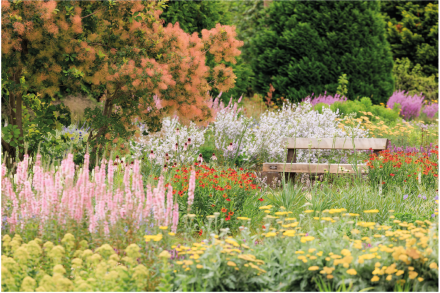
The man in the Post Office was a bit bemused by the three enormous boxes I was trying to send from my home just outside Edinburgh down to London. He’d asked what the value of the packages was. In one sense, they were worthless, I explained. But I really needed to make sure they got to the Chelsea Flower Show on time because in another sense, they were worth their weight in gold. It didn’t help when I explained that the contents were in fact just dead leaves.  The dehydration of the bog myrtle became a proxy for the way the team were feeling These dead leaves have become a total obsession ever since I was offered a place as a volunteer on one of the show garden builds for this year’s Chelsea.

Sunak apologises during ‘day of shame’

Rishi Sunak’s Commons apology for the contaminated blood scandal was reasonably comprehensive. The statement opened with him saying he wanted to speak directly to the victims and their families, and ‘make a wholehearted and unequivocal apology for this terrible injustice’. The Prime Minister listed what the government was apologising for: the failure in blood policy and blood products, the repeated failure of the state and medical professionals to recognise the harm caused; for the institutional response to the failings, including denying and attempting to cover them up. He said: ‘This is an apology from the state to every single person impacted by this scandal. It did not have to be this way. It should never have been this way.

Infected blood scandal was ‘no accident’, says report

17 min listen

The Infected Blood Inquiry has finally concluded after a five-year investigation. This lunchtime, the inquiry’s chair Sir Brian Langstaff said thousands of deaths could have been prevented and the ‘worst ever’ NHS scandal, which saw thousands of Britons between 1970 and 1998 become infected by contaminated blood, could ‘largely, though not entirely, have been avoided’. Will the NHS change after change after this latest scandal?  James Heale speaks to Katy Balls and Isabel Hardman.

Will the NHS change after the infected blood scandal?

The victims of the infected blood scandal have had to wait a very long time for there to be a public inquiry into what happened to them and the loved ones they lost, let alone for the report itself. The reason they wanted a public inquiry was that it would have the powers that other independent inquiries would not. They have also hoped it will lead to proper compensation, to conclusions that will stop another scandal with similar roots, and to a line being drawn under an injustice that has been ignored by the establishment, including the NHS, for too long. It is not yet clear if any of those things will happen, though.