Isabel Hardman

Isabel Hardman

Isabel Hardman is assistant editor of The Spectator and author of Why We Get the Wrong Politicians. She also presents Radio 4’s Week in Westminster.

The two-child benefit cap row is Starmer’s first big test

Can Keir Starmer hold the line on backing the two-child benefit cap? The row about the policy, introduced by the Conservatives and vociferously opposed by most people in the Labour party, is going to be a significant problem for the Prime Minister, even in his honeymoon period. The King’s Speech this week is unlikely to contain a surprise commitment to scrapping the policy, with Starmer and his Chancellor Rachel Reeves still saying that it is not yet affordable. Both say they want to get rid of it when the public finances allow, but that is not good enough for many of their MPs.  There has already been pressure on Labour backbenchers from the SNP, which had been threatening an amendment to the King’s Speech calling for the cap to be scrapped.

How will Starmer keep his backbenchers busy?

One of Keir Starmer’s very nice problems to have is that his majority is so big and many of his new MPs so experienced that he needs to work out how to keep them occupied. The Prime Minister gave a partial answer to that last night, appointing a number of figures who have only just entered parliament to the government. This would be remarkable were it not for the fact that those new MPs really have got a lot of experience in government from previous jobs. Kirsty McNeill was made a parliamentary under-secretary of state in the Scotland Office – the most junior ministerial job. She worked for Gordon Brown in Downing Street, and the former prime minister will have made a strong argument for her to join the government this week.

Spare a thought for our departing MPs

The MPs who lost their seats spent yesterday clearing out their offices. Their passes stop working later this week, and then they have a few months to wind up their offices and constituency work before truly becoming ex MPs. It is a brutal experience, not least because Westminster is buzzing with newly-elected members. There is always a risk that someone congratulates a member they think has come back as a victorious MP – only to find out they are in fact on their way to pack their working life into cardboard boxes and make their staff redundant. Before an election, some MPs choose to clear out their offices early, just in case they’re not coming back.

Why Wes Streeting is ‘optimistic’ he can win his battle with junior doctors

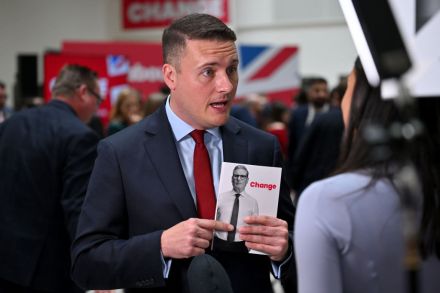
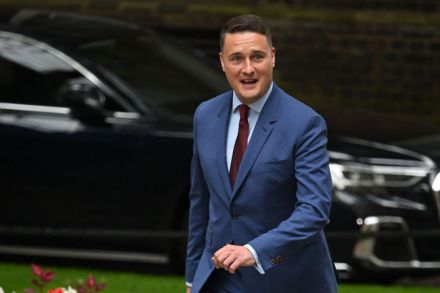
Wes Streeting has just emerged from his first set of talks with junior doctors over their pay, saying he is ‘optimistic’ that the government can bring the dispute to an end. The Health Secretary reiterated that ‘this government has inherited the worst set of economic circumstances since the Second World War’ but that ‘both sides have shown willingness to negotiate and we are determined to do the hard work required to find a way through’. They are meeting again next week.

Can Wes Streeting end the NHS strikes?

14 min listen

Health Secretary Wes Streeting declared the NHS 'broken' over the weekend. With a creaking in-tray of issues, he opened up negotiations with the BMA today to try and solve one: the pay dispute with junior doctors. With ambitious reforms planned, and a workforce with low morale, how successful will Labour be?  Isabel Hardman and James Heale join Cindy Yu to discuss.  Produced by Patrick Gibbons and Cindy Yu.

What Keir Starmer revealed in his first Commons speech as PM

Keir Starmer has just made his first Commons speech as Prime Minister. Both he and Rishi Sunak spoke at the election of the Speaker Lindsay Hoyle this afternoon in what was, by tradition, a largely jovial occasion. He paid tribute to Hoyle’s work in the previous parliament, and also cracked a joke about Sir Edward Leigh, now the Father of the House, writing a book of quotations dating back to 3000 BC – ‘which might be said to cast some light on the Tory mind - after the last six weeks, I think it might be time for a new addition’. He was also careful to praise Diane Abbott, now the Mother of the House.

Starmer is prioritising experience in picking his ministerial team

Keir Starmer has finally filled the women and equalities brief in his government with Bridget Phillipson and Anneliese Dodds. Phillipson is the minister for women and equalities, along with her role as Secretary of State for Education. Dodds is minister of state for women and equalities, and has also been appointed a minister of state in the Foreign Office. Starmer is trying to underline that this is a government with bags of experience even after 14 years of Labour in opposition This is an interesting move given how thorny this policy area has become in the past few years. Dodds is well-known within the Labour party for being much more in favour of reform of gender recognition processes – something gender critical feminists are concerned about.

Keir Starmer is leaning on experienced ministerial hands

Keir Starmer waited for the football to finish before announcing his latest tranche of ministerial appointments. A few of them are confirmations of the roles held by shadow ministers in opposition: Matthew Pennycook is housing minister, Jim McMahon is in the same department as local government minister, and Dan Jarvis remains in the Home Office brief. Other announcements involve moves: Ellie Reeves has gone from justice to the Cabinet Office. Then there's a new/old face: Douglas Alexander, back as an MP and tipped during the campaign to take over as foreign secretary from David Lammy. That didn't happen and Alexander is instead a minister of state in the Business and Trade department. And a surprise: Jacqui Smith will be an education minister, meaning the ex-MP will be in the Lords.

Labour should ignore the Lib Dems on social care

Politics is a goldfish bowl, and not in the sense that it’s small and everyone is watching you intensely. It's more that the inhabitants of the bowl have a three-second memory. That’s the only explanation for the Liberal Democrats saying they will use their 71 MPs to push Labour for cross-party talks on social care.  Care and the health service was one of the key themes of Ed Davey’s campaign, so it’s not a surprise that his party is briefing that social care will be an early focus. And there is a crisis in social care that we’ve known about for 20 years and that is seriously hampering the ability of the NHS to treat patients in a timely and dignified fashion. The problem is that we have been here before on cross-party talks so many times.

Streeting declares: ‘the NHS is broken’

Wes Streeting has just given a striking statement on arrival at the Department of Health and Social Care in which he announced that ‘from today, the policy of this department is that the NHS is broken’. Parties make campaign threats that there are ‘24 hours to save the NHS’, but this description of Labour’s sacred cow as ‘broken’ goes far beyond that. It recognises the seriousness of the situation for the health service and is a declaration of Streeting's intent to reform. Streeting has become health secretary during an existential crisis. Voters are still committed to the principles of free healthcare but increasingly losing satisfaction with the way the NHS tries to deliver that.

Jeremy Corybn and the rise of the Gaza independents

A counterpoint to the main story of Labour’s election victory is the way Gaza has cost the party at least five seats - and ran it very close in others. Jon Ashworth’s shock loss to independent Gaza campaigner Shockat Adam in Leicester South was the most high profile but there were three other losses to independents standing on a similar platform. Jeremy Corbyn was returned as an independent in Islington North, referencing Gaza in both his campaign literature and acceptance speech. It won’t just be on Gaza that Starmer now comes under pressure to move Khalid Mahmood, a Labour MP who has campaigned against Islamist extremism, was beaten in Birmingham Perry Barr by an independent, Heather Iqbal was beaten in Dewsbury and Batley, and Kate Hollern lost Blackburn.

Boris swoops in late to help out Tories

Boris Johnson has tonight made a surprise appearance at a ‘stop the supermajority’ Conservative rally to warn of the dangers of Keir Starmer. The former prime minister, who has spent most of the election campaign on holiday, came on stage in Central London to chants of ‘Boris! Boris’ and told the crowd of party activists that: ‘I'm really, absolutely clear that I was glad when Rishi asked me to help. Of course, I couldn't say no, and I'm here for one reason and one reason only, which is the same reason as all of you, all of us are here. We're here because we love our country.’ He warned that giving Labour a ‘supermajority’ would ‘make us nothing but the punk of Brussels, taking EU law by dictation with no say on how that law is made’.

How will Starmer handle reshuffles?

Will Keir Starmer keep David Lammy on as foreign secretary? That sort of question would not normally be at all relevant until about midday on the day after an election, but the result has become such a foregone conclusion that everything has sped up. The Labour leader was today asked whether Lammy would go into the Foreign Office after the election, given there have been persistent rumours that he won’t.  Starmer replied that: I’m not going to be lured through your question into naming cabinet if we get that far.

Who cares what Keir Starmer does with his Friday nights?

As part of their vote-Tory-or-the-kitten-gets-it final push, the Conservatives have spent the past 12 hours pushing the idea that Keir Starmer would ‘clock off’ at 6 p.m. as prime minister. This was based on a radio interview the Labour leader gave where he said he would try to protect Friday evenings for his family: his wife is Jewish and they raise their children in that tradition. Labour has been pushing back pretty hard against the Tory attacks on this matter, saying Starmer didn’t suggest in the interview that he would refuse to take important calls on a Friday night, and pointing to the full transcript where he also argued that working non-stop isn’t good for decision making.

Fear and loathing (and door-knocking) with the SNP

The SNP is having a very normal election: its first really normal one in a long time. It’s just short of a decade since the party nearly swept away all traces of other political parties in the 2015 election, leaving just three non-nationalist MPs in place. Many of the candidates who won back then are now in the fight of their lives to hold on.  In Scotland’s Central Belt, most seats are on what the candidates themselves describe as a ‘knife edge’. The various MRP polls are predicting Labour wins in many SNP constituencies, including my local ones of Livingston, currently held by Hannah Bardell, and Linlithgow and Bathgate, where Martyn Day is the MP. Both were first elected as SNP MPs in 2015.

Why is Sunak proud of his defensive campaign?

Rishi Sunak isn’t lacking in energy as he goes into his final few days of election campaigning. He is, though, using that energy in some quite futile ways. He spent much of his interview with Laura Kuenssberg this morning arguing with the way she phrased questions and getting irritated that he wasn’t being given enough time to explain himself on key policy areas. That tetchy impatience – something Sunak never recognises in himself – has long been one of his visible flaws.  It isn’t necessarily the kind of visible flaw that puts voters off a prime minister. The problem for Sunak was not whether he had eaten enough breakfast and was a bit too hangry, but what he could offer up to voters as evidence that backing the Conservatives on Thursday is a good idea.

The pointlessness of the junior doctors’ strike

Junior doctors are back out on strike in England today, walking out this morning for five days. The timing of this particular strike is highly political, given medics will return to work just before polling day – but it is also highly pointless: something NHS leaders have been quick to highlight. The election campaign is the one period when no politician can resolve the dispute over doctors’ pay. Rishi Sunak is not going to change his mind and award the doctors the 35 per cent raise they have been demanding, but neither could he if he wanted to because of the election purdah rules. Labour, on the other hand, aren’t in power.

Sunak vs Starmer round two – who won?

16 min listen

Isabel Hardman and Katy Balls speak to Patrick Gibbons following the second, and final, debate between Keir Starmer and Rishi Sunak. With a week to go until the general election, who came out on top and did we learn anything?

Why is Mel Stride always doing the broadcast round?

It’s a day ending in ‘y’, so it must be time for Mel Stride to make one of his appearances on the broadcast round. Stride is one of the few ministers who have been prepared to go out and about for the Tories during this campaign, alongside Grant Shapps. They seem to perform slightly different functions. Shapps will walk into the studios with a striking warning about how badly the election is going for the Tories, while Stride is the genial character who tries to mollify everyone and exit the interview without creating any news.  This morning, Stride's job was to try to move on from the gambling row.

Steve Baker speaks as though the Tories have already lost

It’s pretty unusual to hear a minister speaking during this election campaign: other than Mel Stride, the rest seem to have gone to ground entirely, either because they want to save their own seats or because they don’t want to be associated with the campaign at all. So when Steve Baker popped up on Andrew Neil’s show on Times Radio this lunchtime, that in itself was pretty remarkable. The Northern Ireland minister then accepted that the Tory betting scandal looked ‘terrible’, and did not bother to defend the delay in suspending the two Tory candidates who are alleged to have placed bets on the election date.