Isabel Hardman

Isabel Hardman

Isabel Hardman is assistant editor of The Spectator and author of Why We Get the Wrong Politicians. She also presents Radio 4’s Week in Westminster.

Net migration target becomes an ‘aim’ or ‘objective’

When is a target not a target? Theresa May seems quite keen for us to think that Tory pledge to bring migration down to the tens of thousands was a 'comment' or an 'aim', now that it doesn't look as though that's going to be possible in time for the election. Today Number 10 did insist that there had been no change in the target, but also refused to call it a 'promise'. The Prime Minister's official spokesman said: 'There's no change. That remains the objective towards which the Prime Minister and others are working… It has always been the objective. There's been no change, the tens of thousands by the end of this Parliament.

European Arrest Warrant vote mired in confusion

The government's vote on the European Arrest Warrant this evening is becoming rather confused. The motion does not include a mention of the warrant itself, which ministers had hoped would have a psychological effect on MPs considering how to vote, as the division would not be solely about the most contentious measure. The motion is as follows: 'That the draft Criminal Justice and Data Protection (Protocol No. 36) Regulations 2014, which were laid before this House on 3 November, be approved.' The chairmen of three select committees last week described the voting arrangements for this evening.

May cautious on net migration target

Judging by how happy she is to talk about the case for remaining within it, Theresa isn't expecting a big rebellion on the European Arrest Warrant later today. She may have driven down some of the numbers by not talking about the measure in the motion that's before the Commons, but really it's a combination of her behind the scenes talks with MPs to persuade them she has secured reform and a desire on the part of backbenchers not to make the story about Tory revolts when things are going so badly for Labour that's swung it. There is, as ever, internal Conservative grumbling that the rebel whips haven't been sufficiently well- organised.

Labour unrest: What Ed Miliband can learn from David Cameron’s struggles with the Tories

Well, the Labour party certainly knows how to give the appearance of a fight when its back is against the wall. Many MPs and supporters have spent quite a lot of this fine autumn day tweeting frantically that this morning's unpleasant headlines (summarised in their full gory glory by James here) are a plot by the media to stop their thoroughly decent leader making it to Downing Street and why aren't we all writing about the problems that David Cameron has with the Conservative party instead? They protest too much: if lobby journalists were organised enough to compile time sheets, most of us would quite clearly have spent the bulk of our time since the 2010 election writing about Tory misery, not Labour.

Tory eurosceptics plot to use loss in Rochester to pressure Cameron

Labour might be mired in misery this week, but at least it can take comfort that around the corner is the Rochester by-election, which the Conservatives look set to lose. Not one MP returning from campaigning against their former colleague Mark Reckless honestly thinks they'll win, even if they tweet nice things and post aggressive videos. Let's just remind ourselves of why losing this constituency is particularly painful for the Conservatives. They spent their conference calling Reckless a 'dickhead' and saying they thought they could win the by-election because he was a liar, and he didn't have the same personal appeal as Douglas Carswell in a constituency considered far less Ukip-friendly.

Tory MPs react to Osborne’s ‘EU bill deal’

So are Tory backbenchers happy with what George Osborne claims to have brought back from Europe after his talks on that £1.7 billion bill? While the government argues with the European Commission about what it has and hasn't secured this afternoon, the Right of the Tory party have already been working out what they think. Some had set a very low limbo bar of £400 million, and Britain certainly will end up paying more than that. The first thing is that they're naturally not happy with the idea that Britain is paying anything. The basic view of those in the No Turning Back and Cornerstone groups is that Osborne should have turned around to the Commission and say 'sorry chaps, we'll see you in court about this', given the court action would take place after the election.

Why Labour unrest is getting so much attention

Labour types are in an aggressive mood this morning. Why are the newspapers and the BBC setting such store by just two MPs who apparently want their leader gone when the Tory party has around ten times that number of committed malcontents, they grumble? Peter Hain was particularly defensive this morning, suggesting that all Ed Miliband's supposed woes are actually part of a plot by the Daily Mail. First, here's an attempt to explain the media excitement about the threat to Miliband.

How serious is the threat to Ed Miliband?

There are apparently two Labour MPs who have called for Ed Miliband to step aside. That just two from Ed Miliband's party are openly moving against him while some estimates put the number of letters calling for a vote of no confidence in David Cameron at 22 shows the difference in personality and practice between the two parties. Labour is markedly unhappier than the Tories (who don't resemble sunbeams themselves at present), and Ed Miliband polls below his party, while the opposite is true for David Cameron. Labour is not a party that manages to pull off pre-election regicide that effectively. For the past few years in opposition, it hasn't even been a party where open dissent is that common.

European Arrest Warrant rebels predict only 30 will defy government

In the Commons this morning, William Hague confirmed Coffee House's story that the government will hold its vote on opting back into the European Arrest Warrant on Monday. He said the joint committee working on the relevant statutory instrument hadn't finished working, but that the House of Commons would vote on it on Monday. But the troublesome pre-Rochester rebellion is apparently shrinking, MPs tell me. Those on both sides expect only around 30 rebels against the government now, where previously up to 100 had been expected. There are a number of reasons for the fall in numbers.

Miliband promotes allies in post-Murphy Shadow Cabinet reshuffle

The post-Jim Murphy Labour reshuffle has arrived, and while it's not particularly seismic, it still tells us some interesting things about Ed Miliband's thinking. The Labour leader has replaced the former Shadow International Development Secretary with Mary Creagh, which means it can't be described as a consolation prize (something development campaigners were wary of as they'd rather someone who wanted the job, thank you). Creagh has a reputation in her party for being formidably well-briefed (although she managed to disappoint regional newspapers recently), and was particularly impressive in her last role but one as Shadow Environment Secretary when the horse meat scandal broke.

The cruel kernel of truth in Jean-Claude Juncker’s huffing and puffing

David Cameron's desire to renegotiate Britain's relationship with Europe means we'll hear plenty of huffing and puffing from various bigwigs on the continent over the next few years. The trick for Cameron, as James said on Monday, is to work out when this huffing is just bluffing and when it's actually an expression of a serious intention. Today's grouching from Jean-Claude Juncker, in which the new president of the European Commission complained about 'certain Prime Ministers' objecting to the extra bills foisted upon them two weeks ago, probably doesn't tell us a great deal about the outcome of the Prime Minister's renegotiation.

Tories to lose nine seats to Labour in latest Ashcroft poll

Lord Ashcroft's polls are, as a rule, very rarely good news for the Tories these days - the peer clearly hopes that he's at least warned the party before it goes over the top - and his latest tranche of surveys in marginal seats proves that rule. The peer examined 12 marginal seats where the Conservatives lead Labour with majorities as low as 1,936 and as high as 3,744. Here's what you need to know: 1. Across the 12 seats, Labour led the Tories by 36 per cent to 33 per cent, with just three seats remaining with the Tories: Loughborough (Nicky Morgan), Kingswood (Chris Skidmore) and Blackpool North & Cleveleys (Paul Maynard). But the Labour leads are very slim. The biggest was a 9 per cent lead on a 7 per cent swing in Bury North. 2.

Sajid Javid tries to cool mobile phone row with Theresa May

If Theresa May wants to have a public row with Sajid Javid, the Culture Secretary doesn't seem particularly keen on continuing it. He tried his best to avoid jumping into a war of words with the Home Secretary, whose leaked correspondence warning that his plan to make mobile phone companies fill in 'not-spots' (areas with no coverage) could make it more difficult for intelligence agencies to thwart terrorist attacks are splashed over the front of the Times. Javid said: 'The Home Secretary, like every other member of the Government, fully supports this strategy that we’re setting out today. Well, the reason this is a consultation is because this stage we want to look carefully at each solution.

Ed Balls outflanked by Tory backbenchers at Treasury questions

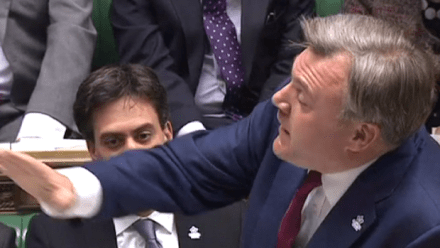
Ed Balls had two great lines of attack today at Treasury questions, but didn't really manage to get any traction with either. He started his stint in the Chamber by trying once again to push the Chancellor on when the Treasury knew about the 'surprise' £1.7 billion EU bill, then moved on to the Conservatives' failure to meet their net migration target. The first attack simply led to George Osborne saying this: 'First of all, may I say that it is very good to see the shadow Chancellor in his place? We had heard disturbing rumours that there was going to be a shadow Cabinet reshuffle. We waited nervously by the phones, but we are absolutely delighted that he is still in his place. 'Let me answer the shadow Chancellor’s question directly.

Lynne Featherstone replaces Baker as Osborne mocks ‘conspiracy theorist’

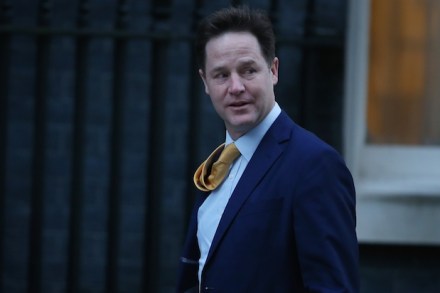
Lynne Featherstone is to return to the Home Office to replace Norman Baker as Minister of State for Crime Prevention, Nick Clegg has announced. This is interesting because Damian Green named Featherstone as one of the ministers who worked effectively rather than caused trouble. The minister herself said this afternoon that she has 'always had a very constructive relationship with Theresa May', so perhaps the deliberate strategy of antagonism is over for a while. At least we know what the Tories think of Baker's departure. At Treasury Questions today, George Osborne slipped in a cheeky reference to his former Coalition colleague, saying: 'There's now a vacancy, because the hon. member for Lewes has resigned, for a conspiracy theorist at the Home Office.

European Arrest Warrant vote could be held next Monday

David Cameron promised that the European Arrest Warrant vote would be held before the Rochester by-election on 20 November, but so far no date has been set. I now hear that the government plans to hold the vote next Monday. Nothing has been confirmed, and won't be until tomorrow night. The size of the rebellion seems to have reduced a little since that PMQs announcement, with some troublesome MPs who are not die-hard rebels concluding that since the measure, which will see Britain opting back into the EAW, will pass on the strength of Labour and Lib Dem votes anyway, this would be a wasted rebellion.

What Norman Baker’s departure tells us about the Coalition – and about Theresa May

What does Norman Baker's exit from the Home Office tell us about the coalition? In many ways, the situation in that department was quite unlike any other, but if another Lib Dem does fancy going in a blaze of fury, then Justice Minister Simon Hughes was assigned to his department for similar trouble-making reasons, and apparently ranks second in the great league table of problematic coalition relationships. But Norman Baker was sent in to antagonise a Home Secretary notorious for micromanaging ministers from her own party, let alone those from another. As Damian Green pointed out on the Today programme, Baker had told his local paper he was the 'Lib Dem Home Secretary' and had acted accordingly once installed in the department.