Isabel Hardman

Isabel Hardman

Isabel Hardman is assistant editor of The Spectator and author of Why We Get the Wrong Politicians. She also presents Radio 4’s Week in Westminster.

Can pavement politics save some Scottish Labour MPs?

If some polls are to be believed, Labour won’t exist in Scotland after next week. All suggest it will be a considerably pruned branch of the party. Whatever happens, the campaign Scottish Labour has had to fight since the referendum shows a party coming to terms with the shocking realisation that safe seats cannot stay safe if you don’t bother to talk to voters in them. One Labour MP is notorious among colleagues for boasting in the years before this election that his canvassing involved walking around in the high street of his constituency and marking down people who greeted him as Labour voters. What a shock this election, where the party is having to go to those voters’ homes, knock on their doors and make an effort with them, must be.

Labour’s ‘secret plan’ attack exploits Tory silence on welfare cuts

A common technique in gothic horror novels is to avoid describing whatever monster the author is trying to scare readers with. The imagination is even more powerful than the pen, and silence on the details of the beast means those reading will concoct their own personal nightmare as they read on. This was always the risk with the Tory refusal to set out the detail of the £12 billion of welfare cuts they plan to make in the next Parliament. Ed Miliband is trying to exploit that lack of detail today by launching a ‘dossier’ that sets out the ‘secret plan’ the Tories have on welfare cuts. In his speech this morning, the Labour leader said: ‘Today we show what another five years of Tory government would mean. A Tory secret plan.

Why does Ed Miliband need his lectern in a back garden?

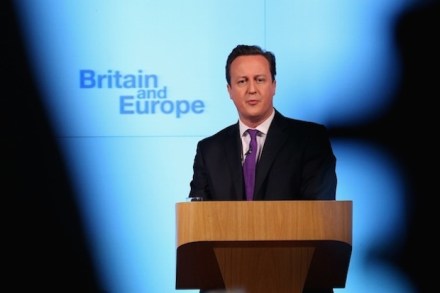
Ed Miliband has clearly decided that a lectern is the way to help voters imagine him as a Prime Minister, and the Tories have clearly decided that it’s something worth mocking. Here, in case you ever need it, is a graph setting out how often Miliband has used a lectern, and how often David Cameron has. [datawrapper chart="http://static.spectator.co.uk/Jl2hJ/index.html"] It certainly seems a bit odd that the Labour leader needed a lectern in a back garden, or indeed a field, though the official line is that the only reason he has it is that he needs something to hold his notes. However, the party has been trying to play catch up on the question of who would make the best Prime Minister, which Miliband does not do well on. [datawrapper chart="http://static.spectator.co.

Trident has become a political weapon in certain constituencies

One constituency where the Tory attacks about a possible deal between Labour and the SNP work very well is Barrow and Furness, where Labour’s John Woodcock is standing for re-election. The seat includes shipyards where the new Trident submarines would be built, and so any suggestion that Labour might scale back its commitment to Trident is hugely potent for the local campaign. A couple of days after Michael Fallon launched his poorly-received attack on Ed Miliband, in which the Defence Secretary warned that the Labour leader had stabbed his brother in the back and could therefore quite easily stab the UK in the back by forging a deal with the SNP, a letter on the same subject went out to voters in Barrow. It was sent to 20,000 households, and was from Fallon.

Why slow GDP figures could be good for the Tories

Are today’s GDP figures really a blow to George Osborne as some of his critics are claiming? The Office for National Statistics said today that GDP grew by just 0.3 per cent in the first quarter of this year, which is half what it was in the last three months of 2014. [datawrapper chart="http://static.spectator.co.uk/oNkRJ/index.html"] What’s holding growth back is weak output in the construction, industrial and services sectors. Ed Balls managed to resist launching into his Ed Balls Day celebrations too early and said ‘these figures show they have not fixed the economy for working families’. [datawrapper chart="http://static.spectator.co.uk/FUzL6/index.html"] The figures do suggest that the economy isn’t going gangbusters.

Will Cameron’s ‘10 days to save the Union’ message work?

David Cameron continues his anti-SNP campaign today, launching what the Times calls his ‘strongest attack so far’ on a Labour-SNP government. The Prime Minister tells the paper that there are ‘ten days to save the United Kingdom’, which is an echo of Tony Blair’s ‘24 hours to save the NHS’ and William Hague’s less successful ‘last chance to save the pound’. The Conservatives are increasingly talking about the SNP and spending money on billboards featuring a thieving Alex Salmond because they say this message is cutting through in marginal constituencies. But the SNP’s retort is that even if people are bringing the SNP up on the doorstep, it may make little difference to how they vote.

PM pumps up the passion after porridge and panic

David Cameron is known as the ‘essay crisis’ Prime Minister, and today he did little to dispel that impression. With just 10 days to go until the election, Cameron produced a passionate, excited speech in which he insisted that he was ‘pumped’ about the election and about fighting Labour. Afterwards, when asked what he’d had for breakfast, he roared ‘PORRIDGE!’ with alarming fervour. This is the second furiously enthusiastic speech the Prime Minister has given in as many days, and it represents a significant shift in his tone after accusations of a boring and lacklustre campaign. Boring is, of course, the way Lynton Crosby would rather have it.

David Cameron insists Tory campaign has ‘the most positive vision there could possibly be’

There’s nothing wrong with negative campaigning in an election. If you think your opponents would damage the country, then you should point it out. What’s wrong with negative campaigning is when it’s the only sort of campaigning you’re doing, or when the balance appears to be tipping in its favour in terms of your key messages and big attention-seeking posters. The Tories are currently facing accusations that they are doing too much negative campaigning, and so today David Cameron tried to defend that campaign when he appeared on Sky's Murnaghan programme.

This is a social media election. But in the most miserable, sinister way

A friend of mine was notorious at university for photoshopping every single photo of her that went onto Facebook. Every snap in a nightclub or lounging on the beach went through the same changes in RGB levels so that her tan appeared better. And she did look good, at first glance. To those who knew and loved her, though, she seemed rather sad and brittle, so uncomfortable in her own skin that she thought a warmer glow to her pictures might make people respect or like her more. Four weeks into the official election campaign, and the main parties are behaving in the same brittle manner. They hope that the photo opportunities that they craft will make voters think they’re popular and happy.

Do Labour voters hate the SNP enough to save the Lib Dems?

For someone who might be about to lose her seat, Jo Swinson seems very perky as she walks the streets of Bishopbriggs in her constituency. The Lib Dem, who is standing for re-election in East Dunbartonshire in Scotland, is busy trying to persuade people who have received their postal votes this week to back her. The weather is sunny and warm and the Business and Equalities Minister cheerful, but the outlook isn’t quite so good when you take a glance at the numbers. A poll by Lord Ashcroft last week put the SNP on 40 per cent, with Swinson trailing behind on 29 per cent. That’s a 19.5 per cent swing to the SNP in the seat which Swinson first won in 2005 with a 4,061 majority, which then reduced to 2,184 in 2010.

Ed Miliband thinks Libya’s failure is so obvious he’s barely mentioned it until now

With less than two weeks until polling day, it’s nice to see that Ed Miliband has discovered foreign policy as an important issue worth discussing. The Labour leader will attack the Tories today on a failure of post-conflict planning for Libya which has contributed to the migrant crisis in the Mediterranean. The Conservatives have decided to get very cross about this, claiming that the overnight briefing on this included Labour spinners saying the Tory party was responsible for the deaths. They have decided to make this about Miliband’s fitness to be Prime Minister.

Breaking: Politician spotted talking to a real voter

I've just witnessed an extraordinary moment on the campaign trail in Edinburgh. No, it's not this, but a political party leader talking to a real voter. This is Ruth Davidson, Tory leader, talking to a random voter in Edinburgh. I know he was a random voter because I ran after him to check. You never know, after all. He wanted to ask Davidson some questions about migrants drowning in the Mediterranean. So he wandered up to her and asked them. And she answered. What's more, the answer seemed natural, he said. Well, this is strange. Strange, at least, for this campaign.

Jim Murphy rallies Labour activists in Edinburgh

Jim Murphy held a street rally in Edinburgh today. Given many of the election events from the main parties have been behind closed doors, the Scottish Labour leader deserves credit for pitching up right outside the Scottish National Gallery and standing for about an hour in a space where real genuine members of the public were walking.  He was, of course, protected by a rubber ring of activists wearing T-shirts with key Scottish Labour pledges on it, such as ending exploitative zero hours contracts and lowering tuition fees. They had placards with #toriesout splashed across them. And given the rally was secret and only advertised to the media before it happened, there wasn’t much of an opportunity for real genuine members of the public to plan to pop by and ask questions.

Boris is being careful with his dinner invitations

One of the main risks of wheeling Boris out this week was that he was never just going to be asked about this election in interviews. The Mayor and candidate for Uxbridge ended up saying 'in the dim and distant future, it would be a wonderful thing to be thought to be in a position to be considered for such an honour’ when asked about becoming Tory leader. He knows as well as anyone else that the way this campaign is going, that this ‘wonderful thing’ might get underway within a month, or indeed in the more distant future. His allies in Parliament have been very careful to refrain from courting support during the campaign. Their mantra has long been ‘low key and loyal’.

Why identikit lines on the SNP are important for the Tories

This morning when George Osborne defended the way the Tories were fighting the election campaign, there was something slightly odd about what he said in response to John Humphrys’ first question: ‘We’re two weeks to go to this election and it’s coming down to a very clear choice on the economy, and on 8 May we can either get straight back to work with a clear plan that is delivering for our country or we face this deeply unstable Miliband/SNP government committed to much more borrowing, and that leads to a dangerous cocktail which increasingly, international investors say will lead to higher mortgage rates, higher taxes and lost jobs, and we have got to avoid that outcome having achieved so much in Britain over the last five years.

Tired Tories call for ‘pizzazz’ in election campaign

Are the Tories having a bad campaign? It certainly doesn’t seem to be as slick and upbeat as some had expected. Many Tories had expected the polls to stay right where they are until polling day, but others had assumed that there would at least be some signs of a public panic about Ed Miliband by now. Instead, normally gloomy Labour types say their leader is becoming less of a problem on the doorstep. That’s damning with faint praise, still, but the Tories had assumed things would be getting worse for Labour now, not better. The Tories I’ve spoken to over the past couple of days talk of the need to ‘hold our nerve’, which suggests a risk of getting nervous but certainly not outright panic.

The Tories are gaining momentum with their ‘Labour-SNP pact’ message

Complain all you like about the way the Tories are campaigning at the moment, but it's getting the message across. The party has hit on the SNP, which is fascinating the media anyway, as the best line of attack to undermine Labour. Tory candidates report being pleasantly surprised by how much cut-through the Labour-SNP message is getting, while pollsters now say members of their focus groups are raising the issue unprompted. Focusing on the SNP may well have a number of serious side effects for the Tory party. It may reinforce the perception that they are a nasty, negative party. It may mean they do not give voters sufficient reason to back them, even if they succeed in putting them off Labour.

Why are all the manifestos so rubbish?

So all the manifestos are now out for voters to pore over. Given the amount of fuss the parties have made about these documents, you’d think they might outsell Fifty Shades of Grey. Sadly the reality is that these verbose tomes are less bonkbuster and more borebuster: they’re not written for voters to read, only for sad politicos who are paid to pore over them for fine details. They are getting longer and longer as the years go on, yet politicians don’t seem to be doing a better job at impressing voters, or indeed winning elections. The Tory 2015 manifesto has 82 pages and 34,000 words, up from 28,000 in 2010. Nick Clegg may end up with only 30 MPs after the election, but he inflicted 157 pages of promises and 36,000 words on the electorate.

Labour’s gamble for SNP support

The SNP launches its manifesto today in Edinburgh. Nicola Sturgeon will be arguing that the policies in the document are for the benefit of the whole of the United Kingdom, which is a way of reassuring former no-voters who might back the SNP, and also of appealing to the left wing faction of the Labour party. Scottish Labour will be claiming that many of those policies such as voting for lower tuition fees in England are in fact a theft from their own party's ideas, and that the SNP is in fact using Labour as a think tank for its own manifesto. But what is also interesting is how the party that is scrutinising Sturgeon’s claims today could end up working with her parliamentary colleagues from May.