Isabel Hardman

Isabel Hardman

Isabel Hardman is assistant editor of The Spectator and author of Why We Get the Wrong Politicians. She also presents Radio 4’s Week in Westminster.

Prison overcrowding triggers emergency measures

15 min listen

The fallout from the riots continues as the numbers being processed by the justice system have led to emergency measures being triggered by the government. What does this mean and, given the prison system was at breaking point even before the riots, what happens next?  Also on the podcast, the six Tory leadership contenders have found something they all agree on: opposition to Labour's proposed change to winter fuel allowance. What does this tell us about future political battles?  James Heale and Isabel Hardman join Cindy Yu to discuss. As Cindy mentions in the episode, the journalist Chris Atkins - who was jailed for five years for tax offences - appeared on The Spectator's food and drink podcast Table Talk to talk about his experience.

Can Labour really tame the unions?

11 min listen

Less than 48 hours after Transport Secretary Louise Haigh hailed a new deal with train drivers... the rail union Aslef announced further strike action. So what happened to Labour's 'relationship reset' with the unions? And with recent pay deals, what incentive is there for workers to compromise with the government? Fraser Nelson and Isabel Hardman join James Heale to discuss. Produced by Patrick Gibbons.

Immersive and spectacular: Piet Oudolf’s new borders at RHS Wisley reviewed

Piet Oudolf’s long borders at Wisley were worn out. The famous designer had in fact become a bit embarrassed by them: they’d done well for 20 years but in that time his own style had evolved – and so had people’s tastes. Oudolf is now such a household name that his pointillist landscaping is considered fine art on paper, let alone when actually planted up. (There are weighty coffee-table books exploring his art.) But the long borders had become, well, just borders, on either side of a long grassy walk up the hill from the Wisley glasshouses. Many of the people who visit Wisley for a walk – rather than to peer at plants – were perfectly capable of ignoring the whole lot.

Does ‘artistic swimming’ truly describe the world’s hardest sport?

Synchronised swimming isn’t really a sport, is it? It’s ‘artistic swimming’ now, of course, though many athletes don’t like that term precisely because it makes the Olympic event sound less like a real sport. But by the end of Swimming Pretty, Vicki Valosik’s meticulous history of synchronised swimming, it’s difficult to think of it as anything other than one of the toughest sports we’ve been watching in Paris – and wonder why anyone would disagree. That question is one that Valosik addresses in her book, along with making the case for the sheer discipline and power of a synchronised swimmer. Her skill is in doing both without ever sounding plaintive or chippy. Besides, the story she tells is so remarkable that it doesn’t need any forced drama.

Could Robert Jenrick overtake Kemi Badenoch?

13 min listen

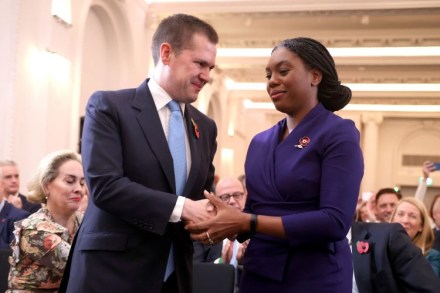
Kemi Badenoch is the favourite in the Tory leadership race at the moment, which is partly why she's been subject to a fair amount of scrutiny and some mud-slinging this week. But could Robert Jenrick actually overtake her as the frontrunner on the right of the Conservative party? Cindy Yu talks to Katy Balls and Isabel Hardman. Produced by Cindy Yu.

Why Labour’s social care surprise matters

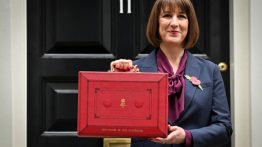
A much bigger story than Rachel Reeves cancelling the winter fuel payment is her announcement today that she is finally killing off the beleaguered cap on social care costs. Reeves told the Commons that the Conservative government had not funded its reforms to social care, so they weren’t going to happen. She said: Adult social care was also neglected by the previous government. The sector needs reform to improve care and to support staff. In the previous parliament, the government made costly commitments to introduce adult social care charging reforms, but they delayed them two years ago because they knew that local authorities were not ready and that their promises were not funded, so it will not be possible to take forward those charging reforms.

The junior doctor pay deal won’t end the government’s NHS headache

The government has offered junior doctors a pay rise worth up to 20 per cent over two years in a bid to end the strikes that have seriously hampered the NHS. Rachel Reeves is expected to confirm later today that the doctors have struck a deal with their ministers that will include a backdated rise of 4.05 per cent – on top of the existing 8-10 per cent raise – for 2023/24. Then pay will rise again by 6 per cent in 2024/25, as well as doctors receiving an additional £1,000. The cost of the deal is £1 billion. GPs are now threatening to bring the NHS to a ‘standstill’ The overall 20 per cent hike is much closer to the 35 per cent that the British Medical Association had demanded – and that both this government and the previous had argued was unaffordable.

What’s behind Wes Streeting’s quality care reforms?

One of the big themes of Keir Starmer’s government could well end up being accountability in the public sector, which sounds boring until you look at examples of where that is sorely lacking. Take the Care Quality Commission (CQC), the NHS regulator. Today, Health Secretary Wes Streeting declared it ‘not fit for purpose’ after an interim report found some hospitals had never received a rating, that others hadn’t been reinspected for up to ten years, and that some inspectors seemed to have even less experience of healthcare settings than the average member of the public. That included inspectors who had never been in a hospital before, and ‘an inspector of a care home who’d never met a person with dementia’.

Sunak gives Starmer an easy ride at first PMQs

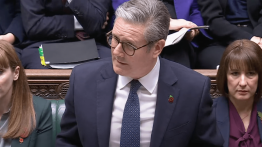
Another week, another Prime Minister’s Questions featuring Keir Starmer and Rishi Sunak arguing across the Commons. Except, of course, the men had swapped sides, with Starmer taking his first session as prime minister, and they were – possibly for the first time ever – quite nice to each other. All the old grudge match lines had gone. There were plenty of references to how civil they were being to each other, plenty of ‘I’m glad to hear the prime minister’ and ‘I will reach out across this House’.  Sunak focused all his questions on Ukraine and international affairs, which made it much easier for the two men to be pleasant.

Starmer’s plan to deal with Labour’s hard left

14 min listen

Three weeks in for the new government and we have had our first Labour rebellion. In a vote last night on an SNP amendments to axe the two child benefit cap, seven Labour MPs revolted and have subsequently lost the Labour whip. Parliament’s new awkward squad includes some familiar faces of the Labour left, such as John McDonnell and Zarah Sultana. The cast list is such that it’s unlikely Keir Starmer’s inner circle will lose much sleep about these MPs being without the whip for six months. The bigger question is, will they actually get it back?  Oscar Edmondson speaks to Katy Balls and Isabel Hardman.  Produced by Oscar Edmondson.

Has Keir Starmer just empowered the Labour rebels?

Keir Starmer has laid down a marker by suspending seven Labour MPs from the whip. The question is: What sort of marker? Will it benefit the Prime Minister in the long run? It is not normal to suspend the whip from an MP for rebelling on a non-confidence matter. The two-child benefit cap is also being retained out of fiscal necessity rather than because it is a key part of Starmer’s vision for the country. So it is an unusual matter to take such a hard line on.  The ones who were suspended were what most people would regard as the usual suspects It used to be the case that removing the whip from an MP was the nuclear option, but this has changed in recent years.

Streeting hammers Tories on NHS

We know that the NHS is broken: Wes Streeting announced that it was now the official policy of this government when he entered the Department of Health and Social Care. Today he had a chance to elaborate on just what exactly he thought was broken – and of course to point the finger at who was responsible. It was his first departmental questions in the House of Commons, and like every other incoming Secretary of State, Streeting made sure he laid on the ‘Tories broke this’ line as thickly as cream on a scone. Pointing to shadow health secretary Victoria Atkins, he described the hospital building programme: I once again say to the Opposition that they handed over an entirely fictional timetable and an unfounded programme. The hon.

How has Yvette Cooper started as home secretary?

Labour are now making daily pronouncements on the latest policy area where the last government left things in a worse state than it let on. The latest is immigration. Yvette Cooper came to the Commons this afternoon to make a statement on border security. Even though she is now the Home Secretary, she sounded strikingly like she was still in opposition. She was the one responsible for that delay. Anyway, Cooper told the Commons that ‘I have reviewed the policies, programmes and legislation that we have inherited from our predecessors and I have been shocked by what I have found.’ The added: ‘Not only are there already serious problems but on current policies the chaos and costs will likely get worse.

How much trouble will the benefit cap row cause Starmer?

If you wanted an idea of where the noisiest opposition to Keir Starmer’s government will come, the list of amendments to the King’s Speech is pretty handy. As I reported last week, there are a lot of amendments on the two-child benefit cap from different groups. The Greens have got one, independent MP Shockat Adam has tabled his own (also signed by the Greens and other independent MPs including Jeremy Corbyn), and the SNP have got theirs. Then there’s the amendment from within Labour, tabled by left-wing MP Kim Johnson. It currently has 29 signatures, of which 19 are Labour backbenchers.

Starmer accuses Tories of ‘dereliction of duty’

Keir Starmer used his press conference at the end of the European Political Community summit to further cement his narrative that the Tories have broken everything and that the situation is much worse than he had thought before entering government. This line is, Labour strategists believe, essential to the party having a chance of securing a second term, much as the Tories won the 2015 election with their campaigning in their first few months of governing in 2010. He accused the previous government of a ‘dereliction of duty’ on immigration, saying: ‘We’ve had a Home Office who has been dedicated to a gimmick that didn’t work.

Pat McFadden and Ed Davey probed at Post Office Inquiry

At what point does a minister decide they are being lied to? That was the question Pat McFadden and Ed Davey had to consider as they gave evidence to the Post Office Inquiry. Both were confronted with evidence of Post Office figures assuring them nothing was wrong when subpostmasters and their MPs were raising concerns – and of their own officials repeating those assertions as fact, rather than checking for themselves. At one stage, one of the lawyers asking questions took Davey to a document written by the Post Office, and then asked him to compare it to a briefing then prepared by his officials: The entirety of the information in the sections that I’ve read to you appears to be a cut and paste from the Post Office briefing.

Rishi Sunak looks much happier in opposition

When Rishi Sunak was prime minister, he often appeared merely to be commentating on events, rather than in charge of them. Perhaps that is why he looks so comfortable as leader of the opposition now. He has been giving very good speeches since losing the election, and both he and his party look rather relieved to be out of government. They are currently in the opposition honeymoon period, before the reality of no-one being interested in what you have to say really hits. Sunak’s response to the King’s Speech today was generous and thoughtful. It included some amusing jokes, including his advice to the rising stars on the opposite benches: ‘Life comes at you fast. Soon you might be fortunate enough to be tapped on the shoulder and offered a junior ministerial role.

Starmer announces child poverty taskforce to stave off revolt

Keir Starmer has tried to stave off a revolt on the two-child benefit cap by announcing a child poverty taskforce. The Prime Minister told the Commons that the taskforce would ‘devise a strategy to drive the numbers down’, and that it would not just focus on one policy area. He was responding to an intervention on his King’s Speech address to the Commons from one of his own backbenchers, Sarah Owen, who asked him for assurances that he ‘personally takes this issue very seriously’. It was the first intervention on Starmer’s speech, and underlined the strength of feeling on the Labour benches, let alone across the House of Commons, about the government's failure to scrap the benefit cap in today’s Speech.  Owen didn’t look very convinced by the answer.

Everything you need to know about the King’s Speech

The big theme of today’s King’s Speech is ‘mission-led’ government, with economic growth, house building, workers’ rights and devolution the key elements. King Charles told the House of Lords that ‘taken together these policies will enhance Britain’s position as a leading industrial nation and enable the country to take advantage of new opportunities that can promote growth and wealth creation’. There are six bills designed to deliver these plans. One of the things about a King’s Speech is that what follows in the parliamentary session often bears little resemblance to what the monarch has said The Budget Responsibility Bill will force every fiscal event to be subject to an independent assessment from the Office for Budget Responsibility.

Two-child benefit cap row – Starmer’s first big test?

13 min listen

Keir Starmer is coming under pressure to commit to scrapping the two-child benefit cap, introduced in 2017 by the Conservatives. Plaid Cymru, the Greens, Nigel Farage, the SNP, and now some Labour backbenchers are all calling for its removal. Can Starmer hold the line? Elsewhere: in Wales, First Minister Vaughan Gething has resigned after four months in the job, and in the US, Donald Trump has chosen the junior senator from Ohio J.D. Vance as his nominee for Vice-President. What could these developments mean for Labour?Lucy Dunn speaks to Katy Balls and Isabel Hardman.  Produced by Patrick Gibbons and Oscar Edmondson.