Isabel Hardman

Isabel Hardman

Isabel Hardman is assistant editor of The Spectator and author of Why We Get the Wrong Politicians. She also presents Radio 4’s Week in Westminster.

Labour must hold the Tories to account on Brexit

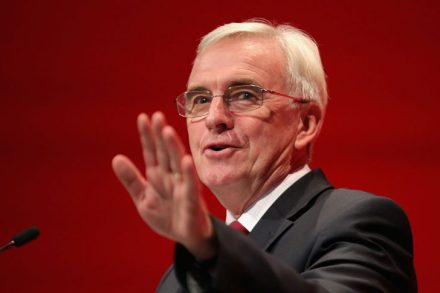
John McDonnell is now speaking at the Labour conference, and will pledge to match the regional funding that communities will lose as a result of Brexit. This has been billed as 'one of the Labour Party's biggest policy statements since the Brexit vote', which is another way of saying 'one of the Labour Party's only policy statements since the Brexit vote'. The turmoil in the party since that vote and its dismal performance in the polls (which, despite urban legend, was the case before the attempted coup against Corbyn) means that it's largely pointless to evaluate this policy statement as though it might actually happen. Labour isn't going to be in government any time soon. But what Labour can do right now is hold the Tories to account on Brexit.

How long will the brittle peace at Labour’s conference survive?

Labour conference is now firmly underway in Liverpool, as is the ‘World Transformed’ festival organised by Corbynite grassroots organisation Momentum. Labour MPs and long-time activists are wandering about in a state of bewilderment at the change forged in their party over the past year, perhaps best embodied by the joyful appearance of former Militant bigwig Derek Hatton in the conference hall. Hatton was wearing a press pass, which will leave Corbynistas bewildered: aren’t they supposed to hate journalists? Everyone is trying to appear to be terribly nice to one another now that Corbyn has his even bigger mandate.

Jeremy Corbyn’s fresh start doesn’t sound convincing

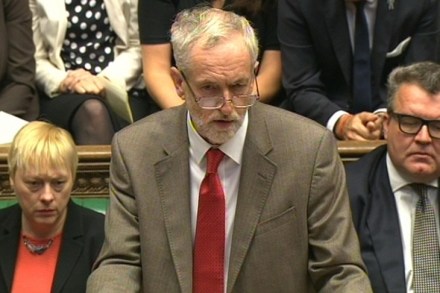
If Jeremy Corbyn set out in his Marr interview to reassure his critics in the Labour Party that this is the beginning of a new era for the leadership and the wider party, he didn't do a great job. The Labour leader refused to rule out mandatory reselection of his MPs, saying that most of them would be fine. He 'wished them well' and said: 'Let’s have a democratic discussion and I think the vast majority of MPs will have no problem whatsoever.' Perhaps to some, that sounded reassuring. But what it actually says to the handful of MPs facing battles in their seats, such as Peter Kyle and Stella Creasy, is that the leader won't protect them and they somehow brought this on themselves.

Labour women attack Theresa May as ‘no sister’. How very un-feminist.

The Labour Party is in a sour mood at present, that much we already know. Usually, most of the sourness expressed by MPs is directed at their own party comrades. But this afternoon, at the Labour Women’s Conference, speaker after speaker decided to turn fire on Theresa May. Angela Rayner congratulated her on being the second female Prime Minister of this country, but said ‘I cannot celebrate her arrival’. Kezia Dugdale attacked both May and Nicola Sturgeon for not being real feminists, saying: ‘Look at Theresa May - she has the audacity to wear a ‘this is what a feminist looks like’ T-shirt.

Jeremy Corbyn wins the Labour leadership again, with a stronger majority

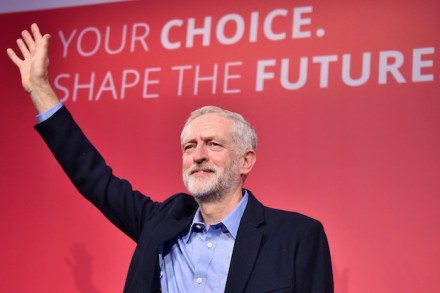
As expected, Jeremy Corbyn has just beaten Owen Smith in the Labour leadership race with 62pc of the vote, higher last year's 60pc. So this means he has redoubled his authority - and probably his reach within the structures of the party as moderate members shrug their shoulders and give up. 'Let's wipe the slate clean from today,' he said in his victory speech - something intended to sound emollient, but could have just as easily sounded like a threat. Isabel Hardman and Marcus Roberts discuss Corbyn's victory on Coffee House shots Overall Corbyn beat Smith in every category, receiving 313,209 votes while his rival amassed just 193,229.

What will Labour MPs do once Jeremy Corbyn is re-elected?

Tomorrow just before noon, Jeremy Corbyn is set to be crowned leader of the Labour party for a second time, possibly, according to insiders, with an even bigger mandate than the one he’s spent the past year waving at his own party. And after months of resignations, fighting, and a leadership contest where the challenger failed to capture the Labour membership’s imagination, Labour MPs are considering what they should do now. Their options are as follows: 1. Leave the party, either by defecting to another or setting themselves up as an independent Labour MP on the benches in the Commons. There is no suggestion that any MP is seriously considering doing this.

Leaked Corbyn abuse list shows the unbridgeable gulf in Labour

The leaking - accidental or otherwise - of a list of Labour MPs allegedly guilty of abusive behaviour towards Jeremy Corbyn is yet another illustration of quite how divided the party is, and quite how messy things are going to be when Corbyn tries to reassert his authority following what looks certain to be his re-election to the top job. We now have MPs such as Neil Coyle consulting legal opinion on whether to sue their party leader. If you wanted the antonym of ‘happy ship’, the Labour Party is a pretty good option. The Labour leader and John McDonnell today took questions on the matter after a speech on the economy and public services (awkwardly trailed as ‘pubic services’ in a press release), and both insisted they were trying to heal the party.

Greening takes dovish tone on government’s schools plan

Is Theresa May planning an epic battle with some of her own MPs to introduce new grammar schools in England? When Justine Greening gave her statement in the Commons this afternoon, she repeated many of the Prime Minister’s own lines about selection already existing through house prices and so on. But her language was much more conciliatory, with the Education Secretary telling MPs that ‘this is the beginning of a consultation that sets out a debate that we need to have’.

Owen Smith: UK could join euro and Schengen

Why on earth did Owen Smith say that he might consider re-joining not just the European Union but also the euro and Schengen? Some of the Labour leadership contender’s colleagues have been asking the ‘why on earth’ question a fair bit this summer, not least when he made the interesting decision to out-Corbyn Corbyn on the small matter of Islamic State. But today the Pontypridd MP told Andrew Marr that if certain conditions, such as a further recession, privatisation of the NHS and so on, were met, ‘I think the sensible and responsible thing for a Labour government to do is to say we’re better off in the European Union’.

Labour’s ex-frontbenchers make the most of life outside the shadow cabinet

What can you fill your time with if you’re a former Labour frontbencher left twiddling your thumbs as a result of Jeremy Corbyn’s leadership? Well, as Caroline Flint and Chuka Umunna have shown this week by launching themselves into campaigns to replace Keith Vaz, chairing a select committee is a pretty attractive option, particularly when it is one as prestigious as the Home Affairs Committee. But both have also shown over the past few months that it is possible to be a forlorn former frontbencher and still achieve something. Umunna was on the airwaves on Monday morning talking about migration controls: a slot his Shadow Cabinet colleagues might only dream of.

Could Theresa May’s grammar school plans trigger an early election?

Predictably, Theresa May’s speech on new grammar schools and expanding selection across the education system has attracted some strong criticism from within her own party, particularly from former Education Secretary Nicky Morgan. The controversial nature of the reforms announced today - and let’s not forget the proposal to lift the cap on the proportion of pupils that faith schools can admit from their own religion, which will cause a Commons row for a number of reasons - means the Tory whips are going to be very busy indeed over the next few months.

Tory backbenchers toe the line on grammar schools – for now

There were two striking things about today’s urgent question on grammar schools. The first was that MPs were told far less by Education Secretary Justine Greening than the 1922 Committee of backbench Conservative MPs was told by the Prime Minister last night. As James revealed yesterday, Theresa May explained the policymaking process for new grammars to her MPs, but today Greening would merely say that: ‘We are looking at a range of options, and I expect any new proposals to focus on what we can do to help everyone go as far as their individual talents and capacity for hard work can take them.

Are the boundary reforms really good for democracy?

One of the big political rows of the autumn will be over the proposed changes to constituency boundaries. Labour is unhappy about this (and everything else) because the proposed changes could lose the party around 30 seats which it could ill afford at the best of times. And this is the worst of times. But though the recalculation will help the Tories, there are nerves about whether every Conservative MP who wants to stay in Parliament will be guaranteed a seat. There are also grumblings that this change is not being proposed alongside a reduction in the number of ministers, which will make the executive loom even more powerful in Parliament, thereby weakening the legislature’s ability to scrutinise and hold ministers to account.

Theresa May’s stilted second PMQs performance

If the purpose of the first few Prime Minister’s Questions sessions that a new leader faces is to assert their authority, both over the Opposition and their new party, then Theresa May managed that today. She didn’t do it with a great deal of panache, though: the Prime Minister was much less fluent and confident today than she was in her all-conquering first stint at the Dispatch Box before the summer. Her scripted jokes sounded a little less comfortable and natural, too.

Theresa May clearly wants to pick a fight on grammars

The most interesting thing about the accidentally-revealed grammar schools briefing document is not so much that the government is planning to press ahead with the change to the schools system, but that it is considering passing a new law in order to do it. A brave move for a government with such a small majority. This means Justine Greening and her junior ministers in the Education dept are in for a rocky few months, something the memo itself acknowledged. It said: ‘I simply don’t know what the PM thinks of this, but it sounds reasonable to me, and I simply can’t see any way of persuading the Lords to vote for selection on any other basis.

Labour MPs back call for Shadow Cabinet elections

Labour MPs have just voted 168 to 34 in favour of bringing back Shadow Cabinet elections. This doesn’t mean there will be elections for the Labour top team straight away: the measure, proposed by Clive Betts, now goes to the party’s ruling National Executive Committee, which is now dominated by Corbynites. If the NEC so chooses, it can propose the rule change at the party’s conference. This is, however, another example of the PLP, which had been fading as a parliamentary force compared to the Tory backbench 1922 Committee, asserting itself against Jeremy Corbyn.

May and Davis split on single market comments

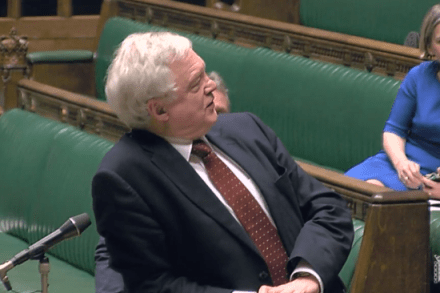
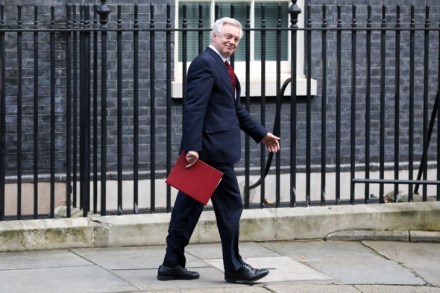
Theresa May didn’t choose a quiet life when she appointed David Davis as the Brexit Secretary, Liam Fox as the International Trade Secretary and Boris Johnson as the Foreign Secretary. Mostly, the men have bickered amongst themselves up to this point. But today the Prime Minister’s official spokeswoman put some distance between May and her minister charged with Brexit negotiations. Yesterday Davis had told the Commons that he thought it unlikely that Britain would be able to retain single market access while also controlling EU migration. He said: ‘This government is looking at every option but the simple truth is that if a requirement of membership is giving up control of our borders, I think that makes it very improbable.

Are you ready for the 2017 Labour leadership contest?

Running through the summer like the writing in a stick of rock was the continually disappointing and dismal performance of Owen Smith in the Labour leadership contest, and Jeremy Corbyn’s spectacular ability to make party members love him more by confecting his own rows about trains and women going out for drinks. The post-match analysis in the Labour moderate camp has already begun, with few bothering to make any greater defence of the Smith campaign than ‘it might be a bit closer than the polls suggest’.

Vaz not going down without a fight

Keith Vaz has just asked a second question in the House of Commons, despite it being unclear whether he can continue as chair of the Home Affairs Committee for the long term following allegations about his private life in the Sunday newspapers. The Leicester East MP, who has a meeting with his committee tomorrow afternoon, is clearly not going down without a fight: he wouldn’t be standing up in the Commons, otherwise. When a scandal-hit MP stands up in the Commons in the days after lurid newspaper headlines, they are normally either mocked and heckled by jubilant colleagues on the other side of the house, or welcomed with supportive noises from MPs who think the coverage unfair and intrusive.

Theresa May’s honeymoon period comes to an end

The Prime Minister and her colleagues are very slowly starting to reveal what they think they mean when they say ‘Brexit means Brexit’. This afternoon the Secretary of State for Exiting the European Union David Davis will give a statement to Parliament on what the terms of negotiation might resemble for Brexit - or at least what the terms that ministers have come up with over the summer are. It may be that the Government isn’t actually ready to set very much out at all, but is just trying to avoid an urgent question from a hostile MP by giving a statement.